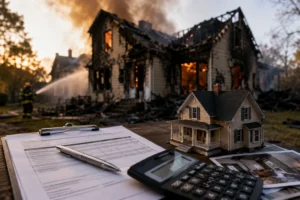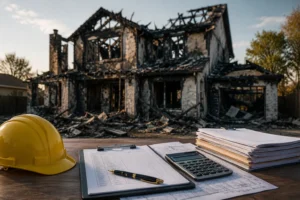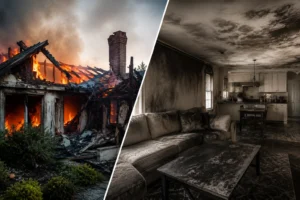

Smoke damage can create serious challenges during an insurance claim. While visible soot may be easy to spot, much of the damage often remains hidden behind walls, inside HVAC systems, and within personal belongings. Therefore, understanding how to document smoke damage for insurance is essential if you want to maximize your claim and avoid disputes with your insurance company Proper documentation helps establish the full extent of the loss. Moreover, it creates a clear record that supports repair costs, cleaning expenses, and personal property replacement. Whether the smoke originated from a house fire, neighboring structure, electrical malfunction, or wildfire, collecting strong evidence from the beginning can make a significant difference.
What Is Smoke Damage?
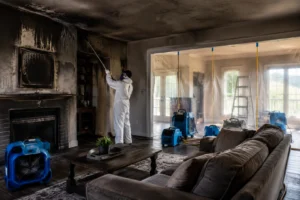
Before discussing how to document smoke damage for insurance, it is important to understand what smoke damage actually involves. Many homeowners associate smoke damage with black stains on walls and ceilings. However, smoke contamination often extends far beyond visible residue. Tiny particles travel throughout the property and settle on surfaces, penetrate materials, and create lingering odors. consequently, areas that appear unaffected may still require professional cleaning or restoration.
Understanding How Smoke Affects a Property
Smoke can impact nearly every part of a building. Commonly affected areas include:
- Walls and ceilings
- Flooring materials
- Furniture
- Electronics
- Clothing
- HVAC systems
- Insulation
- Cabinets and storage areas
- Personal belongings
Furthermore, smoke particles can remain trapped in porous materials long after the visible residue disappears.
Types of Smoke Damage
Different fires produce different types of smoke. Each type leaves unique contamination patterns and may require specialized cleaning methods.
| Smoke Type | Characteristics |
|---|---|
| Wet Smoke | Sticky residue from low-temperature fires |
| Dry Smoke | Powdery soot from fast-burning fires |
| Protein Smoke | Nearly invisible residue often caused by cooking fires |
| Fuel Oil Soot | Dense residue produced by oil-burning systems |
| Wildfire Smoke | Fine particles and odors that travel significant distances |
Because each type behaves differently, proper identification can help determine the scope of cleaning and restoration.
Why Smoke Damage Is Difficult to Assess
Unlike structural damage, smoke contamination is often hidden. For example, smoke can travel through:
- Air ducts
- Attic spaces
- Wall cavities
- Crawl spaces
- Insulation
Additionally, smoke behavior is influenced by temperature changes, airflow, and heat transfer. Concepts such as Enthalpy help explain how heat energy moves during combustion events, allowing smoke particles to spread throughout a structure. As a result, initial inspections frequently overlook areas requiring remediation.
Why Documentation Matters in Smoke Damage Insurance Claims
Insurance companies rely heavily on evidence when evaluating claims. Therefore, the quality of your documentation often influences the outcome of the settlement. The stronger your evidence, the easier it becomes to demonstrate the extent of the damage.
The Insurance Company’s Need for Evidence
Insurance adjusters must determine:
- What was damaged
- How the damage occurred
- Whether the loss is covered
- The cost of restoration or replacement
Without proper evidence, these questions become difficult to answer. Consequently, incomplete documentation can slow the claim process and create unnecessary disputes.
Risks of Inadequate Documentation
Failing to document smoke damage thoroughly may result in:
- Delayed claim approval
- Underpaid settlements
- Disputed repair costs
- Missed damage items
- Additional stress during negotiations
In many cases, homeowners discover hidden damage months later. Unfortunately, proving that the damage originated from the original loss becomes more difficult over time. For that reason, documenting everything early is critical.
Immediate Steps to Take After Discovering Smoke Damage
The first few days following a loss are often the most important. During this period, evidence remains intact and documentation opportunities are at their highest.
Ensure Safety First
Before entering the property:
- Confirm the structure is safe
- Follow instructions from emergency personnel
- Use appropriate protective equipment if necessary
Most importantly, do not place documentation ahead of personal safety.
Notify Your Insurance Company
Next, contact your insurance carrier as soon as possible. When reporting the loss, request:
- Claim number
- Adjuster contact information
- Documentation requirements
- Temporary mitigation guidelines
Additionally, keep detailed records of every conversation. Document:
- Dates
- Times
- Names of representatives
- Discussion summaries
This information may become valuable later.
Prevent Additional Damage
Most insurance policies require homeowners to take reasonable steps to prevent further damage. Examples include:
- Tarping damaged roof sections
- Boarding broken windows
- Securing exposed areas
However, avoid extensive cleaning before documentation occurs. Otherwise, important evidence could be lost. Always photograph conditions before making temporary repairs. Furthermore, save every receipt related to emergency mitigation efforts.
How to Document Smoke Damage for Insurance
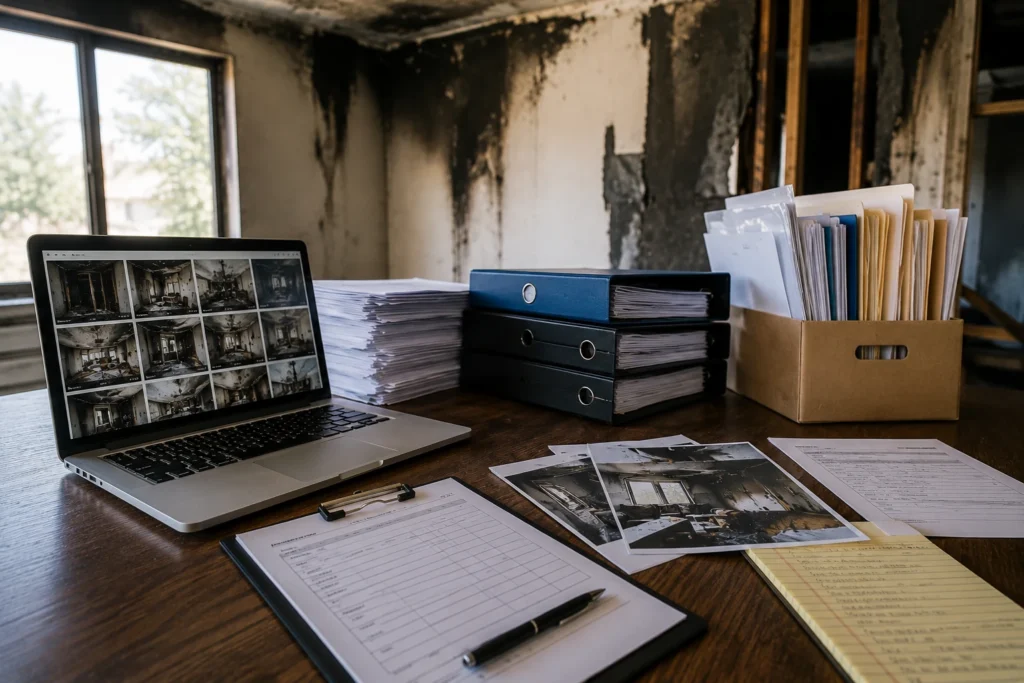
Now we reach the most important part of the process. If you are wondering how to document smoke damage for insurance, the goal is simple: create multiple forms of evidence that support your claim. Photographs are valuable. Videos are valuable. Written records are valuable. Together, they create a compelling picture of the loss.

Take Extensive Photographs
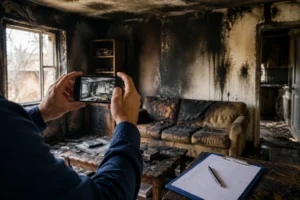
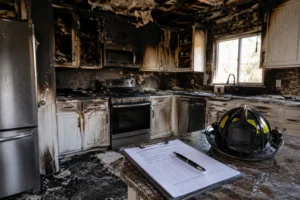
Photography remains one of the strongest forms of claim evidence. Therefore, take more photographs than you think you need. Capture:
- Entire rooms
- Individual damaged items
- Smoke residue
- Soot accumulation
- Ceiling staining
- HVAC vents
- Cabinets and storage areas
Use both wide-angle and close-up photographs. Wide-angle images provide context. Close-up images provide detail. Together, they tell a more complete story. Detailed photography plays a major role in documenting smoke contamination. In fact, the same principles used in Photogrammetry a technique that creates measurements and models from photographs, demonstrate why capturing images from multiple angles can improve the accuracy of property damage records.
Record Video Evidence
While photographs freeze individual moments, videos provide a broader perspective. Walk through the property slowly. Narrate observations as you move through each room. Discuss:
- Visible smoke damage
- Odor concerns
- Soot accumulation
- Damaged contents
- Areas requiring cleaning
Additionally, create separate videos for major rooms whenever possible. This approach helps organize evidence and makes future reviews easier.
Create a Detailed Damage Inventory
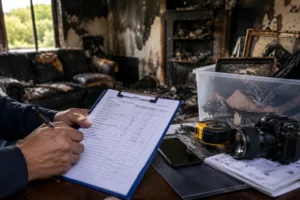
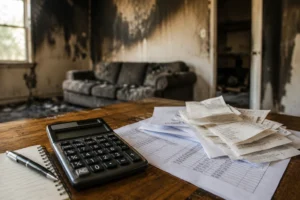
Another critical aspect of how to document smoke damage for insurance involves creating a comprehensive inventory. Work room by room. Document every affected item.
| Category | Examples |
|---|---|
| Furniture | Sofas, tables, beds |
| Electronics | TVs, computers, gaming systems |
| Clothing | Jackets, shoes, formal wear |
| Appliances | Refrigerators, microwaves |
| Decorative Items | Artwork, mirrors, lamps |
For each item, include:
- Brand name
- Model number
- Approximate age
- Purchase price
- Estimated replacement cost
Furthermore, attach photographs whenever possible. The more detailed the inventory becomes, the easier it is to support reimbursement requests.
Document Smoke Odors
Odor documentation is often overlooked. However, persistent smoke odor may indicate contamination that requires extensive remediation. Therefore, keep records of:
- Areas with noticeable odors
- Dates odors were observed
- Changes over time
- Professional odor assessments
In many smoke damage claims, odor concerns become a major factor in restoration decisions.
Keep a Damage Journal
Finally, maintain a detailed damage journal throughout the claim process. Record:
- Adjuster inspections
- Contractor visits
- Restoration recommendations
- Communication with the insurance company
- New damage discoveries
Additionally, include names, phone numbers, and dates whenever possible. A well-maintained journal creates a clear timeline and helps support your position if disagreements arise later.
Special Attention Areas Often Missed by Homeowners
Many of the most expensive smoke-related issues are not immediately visible. Consequently, homeowners often overlook areas where significant contamination exists.
HVAC Systems
Smoke frequently spreads through the HVAC system. Inspect:
- Air handlers
- Ductwork
- Registers
- Filters
- Ventilation components
If contamination remains inside the system, smoke particles may continue circulating throughout the property.
Attics and Insulation
Because heat rises, smoke often accumulates in attic spaces. Look for:
- Soot deposits
- Smoke staining
- Odor retention
- Insulation contamination
In severe situations, insulation replacement may become necessary.
Cabinets, Closets, and Storage Areas
Closed spaces should never be ignored. Smoke particles can enter:
- Kitchen cabinets
- Bedroom closets
- Linen storage
- Pantry areas
Therefore, inspect and photograph these locations carefully.
Electronics and Appliances
Smoke residue can damage sensitive electronic components even when devices appear operational. Affected items often include:
- Computers
- Televisions
- Audio systems
- Smart home devices
- Kitchen appliances
Consequently, professional inspection reports can provide valuable support when seeking replacement or repair coverage.
Gathering Supporting Documentation
Photographs and videos provide a strong foundation. However, supporting documents often strengthen a smoke damage claim even further.
Fire Department Reports
Fire reports provide independent verification of the incident. These reports may contain:
- Incident details
- Cause information
- Response timelines
- Property observations
Therefore, request copies as soon as they become available.
Restoration Company Evaluations
Professional remediation companies frequently identify damage that homeowners overlook. Their reports often include:
- Cleaning recommendations
- Smoke contamination findings
- Odor treatment requirements
- Restoration estimates
As a result, these evaluations can become some of the strongest supporting documents in a smoke damage insurance claim.
Documenting Personal Property Damage
Smoke damage claims often involve more than structural repairs. In many cases, personal belongings represent a significant portion of the loss. Therefore, documenting personal property thoroughly is essential.
Building a Comprehensive Inventory
Begin by creating a room-by-room inventory. Rather than relying on memory alone, physically inspect each area and list every affected item. Your inventory should include:
- Item description
- Brand name
- Model number
- Purchase date
- Estimated replacement cost
- Current condition
For example, instead of writing “television,” write:
- Samsung 65-inch Smart TV
- Model Number QN65Q80
- Purchased in 2022
- Smoke contamination throughout exterior and ventilation openings
The more detailed your inventory becomes, the stronger your documentation will be.
Finding Proof of Ownership
Next, gather supporting evidence showing ownership. Helpful documents include:
- Purchase receipts
- Credit card statements
- Warranty paperwork
- Product registration records
- Family photographs showing items before the loss
Additionally, online purchase histories from retailers can often help reconstruct ownership records. Even if receipts are unavailable, alternative evidence may still support your claim.
Using Technology to Simplify Inventory Creation
Fortunately, modern technology makes inventory creation easier than ever. Consider storing documentation in:
- Cloud storage platforms
- Spreadsheet applications
- Inventory management apps
- Secure digital folders
As a result, you can access claim information quickly whenever adjusters or contractors request it.
Common Mistakes When Documenting Smoke Damage
Even homeowners who act quickly sometimes make costly documentation errors. However, these mistakes can often be avoided with proper planning.
Cleaning Before Documentation
One of the biggest mistakes is beginning cleanup too soon. While it is understandable to want your property restored immediately, cleaning can remove critical evidence. Therefore, always photograph and document conditions before any cleaning occurs.
Throwing Away Damaged Items Too Soon
Similarly, many homeowners dispose of smoke-damaged belongings prematurely. Unfortunately, discarded items cannot be inspected later. Instead, keep damaged items until:
- The insurance company has reviewed them
- Documentation is complete
- Disposal approval is obtained
Whenever possible, photograph items extensively before removal.
Missing Hidden Damage
Visible soot is only one piece of the puzzle. Smoke often affects:
- Duct systems
- Insulation
- Electrical components
- Wall cavities
- Attic spaces
Consequently, focusing only on obvious damage may result in underreported losses.
Failing to Keep Receipts
Expenses can add up quickly after a smoke event. Keep receipts for:
- Temporary repairs
- Cleaning supplies
- Hotel stays
- Meals
- Storage costs
- Restoration services
These records may support reimbursement requests under certain policy provisions.
Accepting Initial Damage Assessments Without Verification
Insurance inspections are important. However, they are not always comprehensive. Therefore, compare the carrier’s findings against contractor reports, remediation assessments, and your own documentation If discrepancies exist, additional evidence may be necessary.
How Public Adjusters Help Document Smoke Damage Claims
Some smoke damage claims remain relatively straightforward. Others become highly complex. When disputes arise, public adjusters often provide valuable assistance.
Independent Damage Evaluation
Unlike insurance company adjusters, public adjusters work on behalf of policyholders. Therefore, they conduct independent evaluations focused on identifying all covered damage. This often results in a more comprehensive assessment.
Identifying Hidden Smoke Damage
Smoke contamination frequently extends beyond visible surfaces. Public adjusters often investigate:
- HVAC contamination
- Insulation damage
- Odor migration
- Secondary smoke effects
As a result, hidden damage that might otherwise be overlooked can become part of the claim.
Organizing Evidence for Insurance Carriers
Documentation alone is not enough. Evidence must be organized effectively. Public adjusters often assist with:
- Damage inventories
- Photographic evidence
- Repair estimates
- Supporting reports
- Claim presentations
Consequently, insurance companies receive a clearer picture of the loss.
Supporting Supplemental Claims
In many cases, additional damage is discovered after the initial inspection. When that happens, supplemental claims may become necessary. Supporting documentation often includes:
- New photographs
- Additional contractor findings
- Remediation reports
- Updated estimates
Strong supplemental documentation can significantly impact settlement outcomes.
Negotiating Fair Settlements
Finally, documentation serves little purpose if it is not presented effectively. Public adjusters use evidence to support negotiations and address disagreements regarding:
- Scope of damage
- Cleaning requirements
- Repair costs
- Replacement needs
Ultimately, thorough documentation strengthens the policyholder’s position.
Smoke Damage Claims Following Wildfires
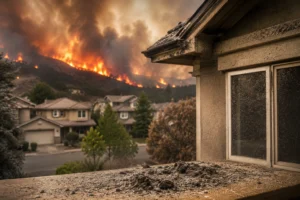
Wildfires create unique insurance challenges. Unlike structure fires, wildfire smoke may affect properties located miles away from the actual flames. Therefore, documentation becomes even more important.
Unique Documentation Challenges
Wildfire smoke damage often involves:
- Fine particulate contamination
- Indoor air quality concerns
- Odor penetration
- Exterior residue accumulation
Because the source of damage may not be immediately obvious, detailed evidence becomes essential.
Outdoor Smoke Intrusion
Document all signs of smoke entering the property. Examples include:
- Openings around doors
- Window seals
- Ventilation systems
- Attic vents
Photographs and videos can help demonstrate how contamination entered the structure.
Lingering Odors and Air Quality Concerns
Odor complaints frequently become a major component of wildfire smoke claims. Therefore, keep records regarding:
- Areas affected
- Odor intensity
- Duration of exposure
- Occupancy concerns
Professional air quality testing may also strengthen the claim.
Additional Evidence That May Be Needed
Wildfire-related claims often benefit from:
- Air quality reports
- Environmental testing
- Smoke residue sampling
- Local wildfire reports
- Remediation contractor evaluations
Together, these documents help establish the extent of contamination.
When to Seek Professional Assistance
Not every smoke damage claim requires outside help. However, certain situations may justify professional involvement.
Signs the Claim May Become Complicated
Consider seeking assistance if you encounter:
- Extensive smoke contamination
- Large personal property losses
- Hidden structural damage
- Disputed claim findings
- Delayed claim responses
The more complex the loss becomes, the more important accurate documentation becomes.
Large Losses
When significant financial amounts are involved, even small documentation mistakes can become costly. Therefore, professional guidance may help protect your interests.
Disputed Damage Scope
Sometimes the primary disagreement involves how much damage actually exists. In these situations, additional inspections and expert reports often become valuable.
Extensive Smoke Contamination
Properties requiring large-scale remediation frequently generate complex documentation needs. As a result, professional assistance can help ensure nothing is overlooked.
Delays or Underpayments
If communication stalls or settlement offers appear inadequate, a thorough review of the documentation may reveal missing evidence that strengthens the claim.
Final Thoughts
Smoke damage is often far more extensive than it initially appears. Therefore, homeowners who understand how to document smoke damage for insurance place themselves in a much stronger position during the claims process. Photographs, videos, inventories, reports, and written records all play important roles. Moreover, documenting damage early helps preserve evidence before conditions change. In the end, the goal is simple: create a complete and accurate record of the loss. The stronger your documentation, the easier it becomes to support a fair settlement and move forward with confidence.