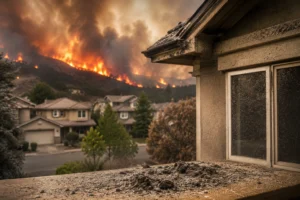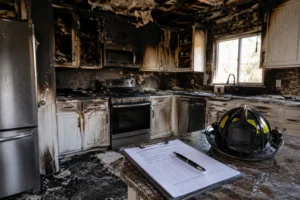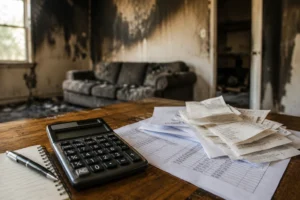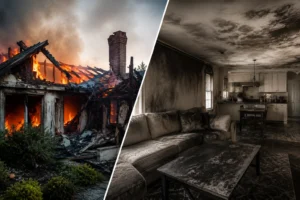

A devastating fire can leave homeowners facing difficult decisions almost immediately. Beyond the emotional impact, the financial recovery process can feel overwhelming. However, understanding the Total Loss Fire Claim Process can help you navigate the situation with greater confidence and avoid costly mistakes. Unlike smaller fire claims, a total loss claim often involves rebuilding an entire property, replacing personal belongings, documenting expenses, and negotiating significant settlement amounts. Therefore, knowing what to expect at every stage is essential for protecting your financial interests and securing a fair outcome.
What Is a Total Loss Fire Claim?
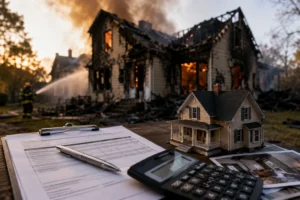
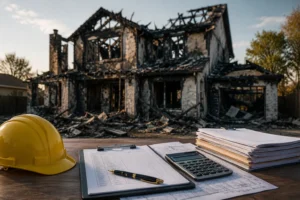
A total loss fire claim occurs when a home has been damaged so severely that repairing it is either impossible or financially impractical. Generally, insurance companies classify these losses in one of two ways:
- Actual total loss
- Constructive total loss
An actual total loss means the structure has been completely destroyed. A constructive total loss means repairs may technically be possible, but the cost of restoring the property exceeds reasonable financial limits established by the insurer or policy terms. Either way, the Total Loss Fire Claim Process becomes significantly more complex than a standard property damage claim. Texas hailstorms can destroy a roof in minutes. But many homeowners wait weeks or even months before asking the big question: how long do you have to file a hail claim in Texas? That delay can become expensive. Insurance companies expect policyholders to report damage quickly.
Common Causes of Total Loss Fire Claims
Several events can result in catastrophic fire damage Common examples include:
- Electrical fires
- Kitchen fires
- Lightning strikes
- Heating equipment failures
- Gas explosions
- Wildfires
- Smoking-related incidents
Although the causes vary, the claim process that follows is often similar.
Why Total Loss Claims Are Different
A partial fire claim typically focuses on repairing damaged portions of a property. A total loss claim is different. Instead, the insurance company must evaluate:
- The entire structure
- Personal property contents
- Additional living expenses
- Debris removal costs
- Demolition expenses
- Building code upgrades
Consequently, total loss claims often require more documentation, more investigation, and more time to resolve.
Immediate Steps After a Total Loss Fire
The first few days after a fire can feel chaotic. Nevertheless, the actions taken during this period can have a significant impact on the outcome of your claim.
Prioritize Safety First
Before anything else, focus on safety. Follow instructions from emergency responders and local authorities. Even if a structure appears stable, hidden dangers may still exist. Potential hazards include:
- Structural instability
- Toxic smoke residue
- Electrical risks
- Hidden hot spots
Accordingly, never re-enter the property until authorities confirm it is safe to do so.
Notify Your Insurance Company
Next, contact your insurance carrier as soon as possible. During the initial claim report, you may be asked to provide:
- Policy information
- Property address
- Date of loss
- Basic description of the fire
In addition, keep detailed records of every communication. Document:
- Claim numbers
- Names of representatives
- Dates of conversations
- Phone numbers
- Discussion summaries
Later, these records may prove extremely valuable if disputes arise.
Secure the Property
After the fire, insurers generally expect homeowners to take reasonable steps to prevent additional damage. This may include:
- Temporary fencing
- Boarding exposed openings
- Site security measures
- Restricting unauthorized access
Before any temporary work begins, photograph the property thoroughly.
Create a Claim File
Organization becomes critical during the Total Loss Fire Claim Process. Therefore, establish a dedicated claim file immediately. Store:
- Photographs
- Emails
- Investigation reports
- Receipts
- Contractor estimates
- Temporary housing expenses
The more organized your records become, the easier it will be to support your claim later.
Understanding Your Fire Insurance Coverage
Many homeowners discover after a major fire that they do not fully understand their insurance policy. Unfortunately, that realization often comes at the worst possible time. Therefore, reviewing your coverages early is an important step.
Dwelling Coverage
Dwelling coverage typically protects the home’s physical structure. This often includes:
- Walls
- Roof systems
- Floors
- Built-in fixtures
- Attached garages
Furthermore, many policies provide coverage for debris removal and demolition costs associated with a total loss.
Personal Property Coverage
Replacing an entire household can be surprisingly expensive. Personal property coverage may apply to:
- Furniture
- Electronics
- Clothing
- Appliances
- Jewelry
- Tools
- Sporting equipment
As homeowners begin documenting losses, they often realize how quickly replacement costs add up.
Additional Living Expenses (ALE)
If the home is uninhabitable, Additional Living Expenses coverage may help offset temporary costs. Examples include:
- Hotel stays
- Rental housing
- Restaurant meals
- Laundry expenses
- Storage units
- Transportation costs
Most importantly, save every receipt. Even modest expenses can accumulate into substantial reimbursement amounts over time.
Other Structures Coverage
Many policies also provide separate protection for structures detached from the main residence. Examples include:
- Detached garages
- Storage sheds
- Workshops
- Gazebos
- Fencing
Whenever possible, document these losses separately from the primary structure.
Ordinance and Law Coverage
Building codes change frequently. As a result, rebuilding a destroyed home often requires upgrades that were not part of the original construction. Ordinance and Law coverage may help pay for:
- Code-required electrical upgrades
- Structural improvements
- Accessibility requirements
- Energy efficiency mandates
Without this coverage, homeowners may face unexpected out-of-pocket expenses during reconstruction.
The Fire Damage Investigation Process
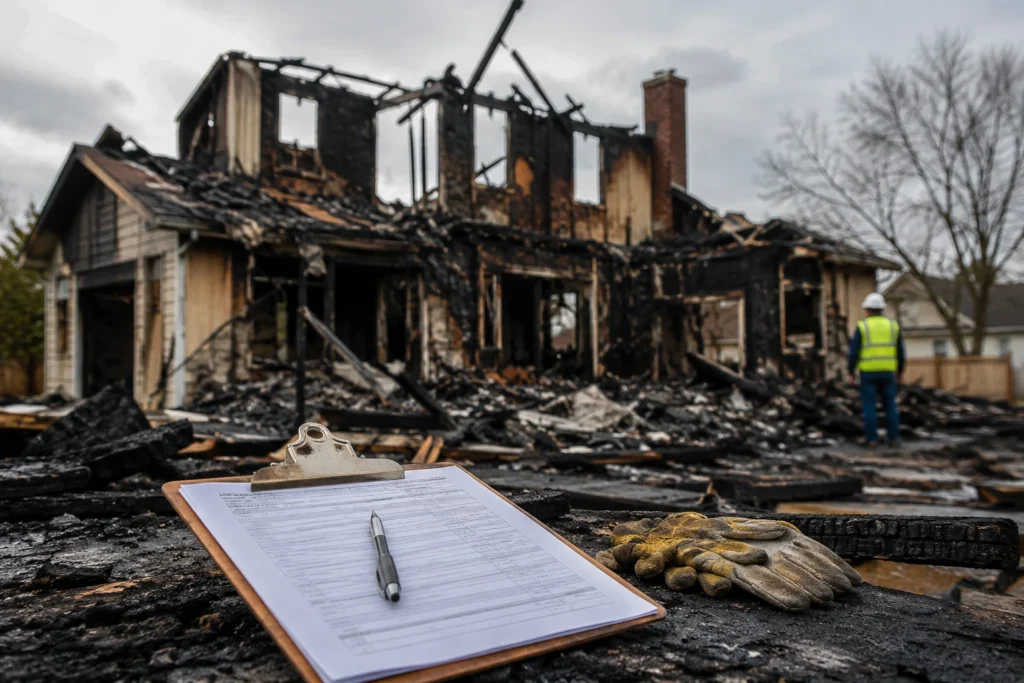
Most total loss claims involve a formal investigation. While this can feel frustrating, the process serves an important purpose. Insurance companies must determine both the origin and cause of the fire before finalizing significant claim payments.
How Fire Investigations Work
Investigators evaluate numerous pieces of evidence. These may include:
- Burn patterns
- Structural conditions
- Electrical systems
- Appliances
- Witness interviews
- Fire department reports
In complex cases, experts may use techniques similar to those employed in forensic science to analyze evidence and reconstruct the events surrounding a fire.
What Investigators Are Looking For
Several critical questions typically guide the investigation:
- Where did the fire start?
- What caused ignition?
- Was the loss accidental?
- Was defective equipment involved?
- Could another party be responsible?
The answers can significantly affect claim handling and potential recovery efforts.
Why Investigations Can Delay Settlement
Many homeowners expect settlement discussions to begin immediately. However, insurers often wait until the investigation reaches a conclusion. Depending on complexity, this stage can take weeks or even months. Consequently, patience becomes an important part of the process.
Cooperate While Protecting Your Interests
Generally, homeowners should cooperate with reasonable requests from investigators. At the same time, maintain copies of everything submitted. This includes:
- Photographs
- Reports
- Statements
- Correspondence
- Supporting documents
Maintaining complete records helps reduce misunderstandings and strengthens your position throughout the claim.
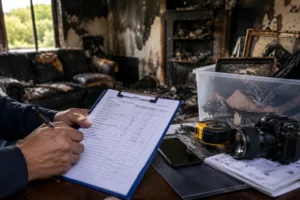
Building the Personal Property Inventory
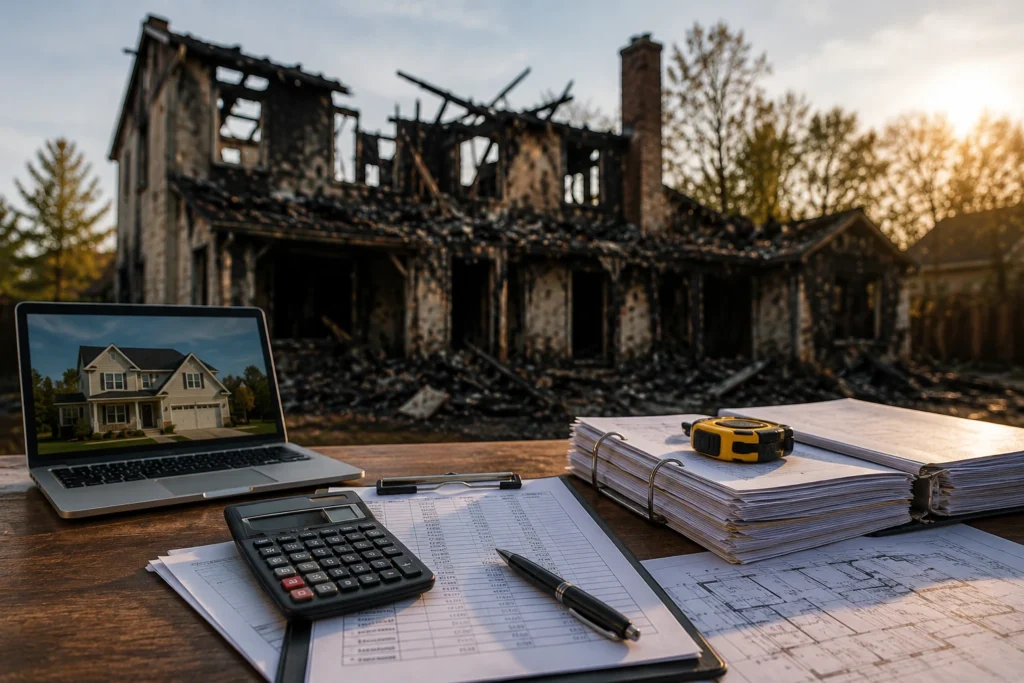
Few parts of the Total Loss Fire Claim Process require more effort than the contents inventory. Yet few tasks are more important. The inventory often represents a substantial portion of the final settlement.
Why Inventory Matters
Insurance companies need documentation before paying for personal property losses. The inventory serves as evidence that supports ownership, value, and replacement costs. Without adequate detail, reimbursement may be reduced.
Information to Include
Whenever possible, document the following:
| Item Detail | Example |
|---|---|
| Description | Leather Sofa |
| Brand | Ashley Furniture |
| Model | Manufacturer Number |
| Purchase Date | Approximate Year |
| Original Cost | Estimated Price Paid |
| Replacement Cost | Current Market Value |
The more specific your inventory becomes, the stronger your claim generally becomes.
Sources That Help Rebuild an Inventory
Many homeowners worry they cannot remember everything they owned. Fortunately, several resources can help. Examples include:
- Family photographs
- Home videos
- Credit card statements
- Bank records
- Online purchase histories
- Warranty registrations
- Social media posts
Furthermore, creating an organized inventory often resembles taxonomy Where items are grouped into categories to improve accuracy and completeness.
Common Inventory Mistakes
Several mistakes routinely reduce claim values. These include:
- Vague descriptions
- Missing items
- Unsupported values
- Incomplete documentation
- Rushed inventory preparation
Therefore, take your time. A detailed and accurate inventory often leads to significantly better claim outcomes than one prepared hastily.
Determining the Value of Your Total Loss Claim
Once the inventory and investigation stages are underway, the next major step in the Total Loss Fire Claim Process involves determining the value of the loss. This is where many disputes begin. After all, the amount paid by the insurer directly affects your ability to rebuild, replace belongings, and recover financially.
How Insurers Calculate Building Value
Insurance companies typically evaluate several factors when estimating reconstruction costs. These may include:
- Square footage
- Construction materials
- Labor costs
- Local building costs
- Architectural features
- Current building code requirements
However, reconstruction costs are not always the same as market value. A home worth $400,000 on the real estate market may cost significantly more or less to rebuild after a fire. Therefore, homeowners should understand how their insurer arrived at its valuation.
Replacement Cost Value vs. Actual Cash Value
Most fire policies use one of two valuation methods.
Replacement Cost Value (RCV)
Replacement Cost Value generally pays the amount necessary to replace damaged property with similar materials at today’s prices. This is often the more favorable option for policyholders.
Actual Cash Value (ACV)
Actual Cash Value factors in depreciation. As a result, older items may receive lower payouts because age and wear are deducted from their value. Understanding which valuation method applies to your policy is critical during the Total Loss Fire Claim Process.
Factors That Affect Settlement Amounts
Several variables can influence claim value. These include:
- Material shortages
- Labor market conditions
- Regional construction costs
- Inflation
- Policy limits
- Coverage endorsements
Consequently, two seemingly similar homes may receive substantially different settlement amounts.
Common Challenges During the Total Loss Fire Claim Process
Unfortunately, not every claim proceeds smoothly. Even when coverage exists, disputes and complications can arise.
Underestimated Reconstruction Costs
One of the most common issues involves rebuilding estimates that fail to reflect actual construction expenses. For example, estimates may overlook:
- Specialty finishes
- Custom features
- Code upgrades
- Material price increases
As rebuilding progresses, these omissions can become expensive problems.
Missing Personal Property Items
Homeowners often remember additional items weeks or months after creating an inventory. This is understandable. After all, few people can immediately recall every item they owned. Nevertheless, missing items can significantly affect settlement amounts.
Coverage Limit Issues
Sometimes the total value of the loss exceeds available policy limits. This can occur because of:
- Rising construction costs
- Home improvements not reported to the insurer
- Insufficient coverage purchased years earlier
Therefore, reviewing policy limits before a disaster occurs is always a wise decision.
Delays in Claim Handling
Large losses generate extensive documentation. As a result, delays sometimes occur due to:
- Investigation timelines
- Engineering reports
- Inventory reviews
- Contractor estimates
- Settlement negotiations
While delays can be frustrating, staying organized often helps move the process forward.
Disputes Over Scope and Value
Insurers and homeowners do not always agree. Common disagreements involve:
- Repair costs
- Replacement costs
- Inventory values
- Building code requirements
- Temporary living expenses
When disagreements arise, documentation often becomes the deciding factor.
Emotional Stress and Decision-Making
A total loss affects more than property. It affects families. Consequently, emotional stress can lead homeowners to make rushed decisions or accept settlements before fully understanding the long-term impact. Taking time to evaluate options carefully is often beneficial.
How Public Adjusters Help With Total Loss Fire Claims
Because total loss claims involve substantial financial stakes, many homeowners seek professional assistance. This is where public adjusters can play a valuable role.
What a Public Adjuster Does
A public adjuster works exclusively on behalf of the policyholder. Unlike insurance company adjusters, their responsibility is to represent the homeowner’s interests. Their services may include:
- Policy analysis
- Damage documentation
- Inventory assistance
- Claim preparation
- Settlement negotiations
Areas Where Public Adjusters Commonly Assist
Policy Review
Insurance policies contain numerous provisions, endorsements, and exclusions. A detailed review helps identify applicable coverages and potential limitations.
Damage Documentation
Thorough documentation strengthens claim support. Public adjusters often assist with:
- Photographs
- Scope development
- Cost evaluations
- Supporting evidence collection
Inventory Preparation
Contents inventories can become overwhelming. Professional assistance often improves accuracy and completeness.
Settlement Negotiation
Perhaps most importantly, public adjusters help negotiate disputed claim values. This can be especially valuable when large financial differences exist between parties.
Why Total Loss Claims Require Extensive Documentation
The larger the loss, the more evidence becomes necessary. As claim values increase, scrutiny often increases as well. Therefore, detailed documentation frequently becomes one of the strongest tools available to homeowners.
When Homeowners Seek Professional Help
Many policyholders consider professional assistance when:
- Claim values are substantial
- Settlement offers appear low
- Coverage disputes arise
- Reconstruction costs are questioned
- The claim process becomes overwhelming
Every situation is different, but larger losses often justify a closer review.
Mistakes to Avoid During a Total Loss Fire Claim
Even strong claims can suffer from avoidable errors. Fortunately, many of these mistakes can be prevented.
Accepting the First Settlement Too Quickly
The first offer is not always the final offer. Therefore, carefully review settlement calculations before agreeing to any payment.
Discarding Damaged Evidence
While cleanup may be necessary, preserving evidence whenever possible is important. Photographs alone may not always capture every detail.
Failing to Track Additional Living Expenses
Many homeowners overlook reimbursable expenses. Consequently, they miss opportunities for compensation. Keep receipts for:
- Hotels
- Meals
- Transportation
- Laundry
- Storage
- Pet boarding
Creating an Incomplete Inventory
A rushed inventory frequently leads to missed compensation. Instead, take time to verify records and review photographs carefully.
Missing Deadlines
Insurance policies often contain reporting requirements and deadlines. Therefore, respond promptly to requests and maintain organized records.
Relying Entirely on Memory
Memory fades. Documentation lasts. Use photographs, receipts, online accounts, and financial records whenever possible.
Timeline of a Typical Total Loss Fire Claim
Although every claim differs, most follow a similar progression.
| Claim Stage | Typical Activities |
|---|---|
| Initial Response | Emergency services, claim reporting |
| Investigation | Cause and origin determination |
| Documentation | Inventory preparation and inspections |
| Valuation | Building and contents evaluation |
| Negotiation | Settlement discussions |
| Payment | Initial and supplemental payments |
| Reconstruction | Rebuilding and code compliance work |
Some claims resolve within months. Others may require significantly more time. Patience and persistence are often necessary.
Tips for Maximizing Your Total Loss Fire Claim Settlement
Fortunately, homeowners can take several steps to strengthen their claim position.
Document Everything
Photograph every stage of the loss. Save all correspondence. Maintain organized records.
Understand Your Policy
Coverage details matter. The better you understand your policy, the better equipped you are to evaluate settlement offers.
Keep Detailed Expense Records
Every reimbursable expense should be documented. Small costs often become substantial over time.
Obtain Independent Evaluations
When significant differences exist between estimates, obtaining independent opinions may provide valuable perspective.
Stay Organized
The Total Loss Fire Claim Process generates a tremendous amount of information. Organization helps prevent critical details from being overlooked.
Seek Professional Guidance When Needed
Complex claims often benefit from experienced assistance. A knowledgeable professional can help identify issues that might otherwise go unnoticed.
Final Thoughts
Ultimately, the Total Loss Fire Claim Process is about far more than repairing property. It is about restoring financial stability after a devastating event. Therefore, take the time to document thoroughly, understand your coverage, and stay organized throughout every stage of the claim. While the process can be challenging, informed homeowners are often in the strongest position to pursue a fair and accurate settlement.
FAQs
The timeline varies depending on the complexity of the loss, but many total loss claims take several months to resolve fully.
A property is generally considered a total loss when it is completely destroyed or when repair costs exceed practical or policy-related limits.
Coverage depends on your policy limits and endorsements. Some policies provide replacement cost coverage, while others may have limitations.
Focus on safety first, notify your insurance company, secure the property if possible, and begin documenting everything related to the loss.
Many homeowners’ policies include Additional Living Expenses coverage, which may help pay for temporary housing and other necessary costs while the home is being rebuilt.
Insurers typically evaluate items based on either actual cash value or replacement cost, depending on the policy language and coverage selected.
In many cases, yes. Homeowners often discover additional lost items as they continue reviewing records, photographs, and purchase histories.
You can request clarification, provide additional supporting documentation, seek an independent evaluation, or consult a public adjuster for assistance.
Yes. Receipts for lodging, meals, storage, transportation, and other related expenses can help support reimbursement requests under your policy.
No, but some homeowners choose to work with a public adjuster when claims become complex, involve large losses, or require extensive negotiation.