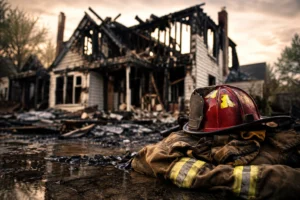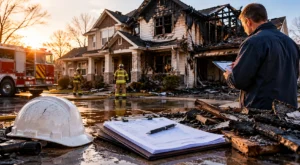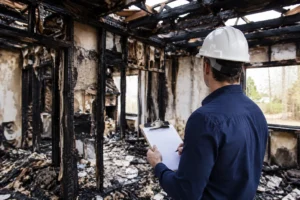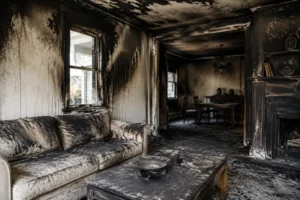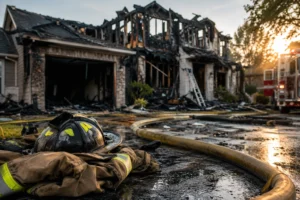

A house fire can turn your life upside down in a matter of minutes. Once the flames are out, the recovery process begins. Understanding the House Fire Insurance Claim Process can help you avoid costly mistakes, protect your rights, and pursue a fair settlement. The process involves much more than reporting damage. It requires documentation, organization, and careful review at every stage. This guide walks through the entire process from the first hours after a fire to the final settlement.
Understanding the House Fire Insurance Claim Process
The House Fire Insurance Claim Process is designed to help policyholders recover financially after a fire loss. However, fire claims are often among the most complex property insurance claims because they can involve structural damage, smoke contamination, water damage from firefighting efforts, temporary housing expenses, and personal property losses. Several professionals may become involved throughout the claim, including insurance adjusters, contractors, restoration companies, engineers, and fire investigators. The more organized you are from the beginning, the easier it becomes to navigate the process.
Step 1: Prioritize Safety and Secure the Property
Your first responsibility is ensuring everyone is safe. If anyone was injured during the fire, seek medical attention immediately. Even minor smoke exposure can cause symptoms that develop later. Once authorities determine the property is safe to access, take reasonable steps to prevent additional damage. Most insurance policies require homeowners to protect the property after a loss. Common emergency measures include:
- Boarding broken windows
- Installing roof tarps
- Securing entry points
- Removing standing water
- Preventing theft or vandalism
Keep receipts for all emergency services and temporary repairs. These expenses may be reimbursable under your insurance policy.
Step 2: Notify Your Insurance Company
One of the first formal steps in the House Fire Insurance Claim Process is reporting the loss. Contact your insurance company as soon as possible. Most insurers have 24-hour claim reporting services. You will typically need to provide:
- Your policy number
- Property address
- Date and time of loss
- General description of the damage
- Current contact information
Keep the conversation simple and factual. Do not speculate about the cause of the fire. Do not estimate repair costs if you are unsure. Simply provide accurate information and allow the investigation process to proceed. After the claim is reported, you will receive a claim number and be assigned an adjuster. Create a dedicated claim file immediately. Save every email, letter, estimate, photograph, invoice, and note related to the claim.
Step 3: Review Your Insurance Coverage
Many homeowners do not fully understand their coverage until a loss occurs. Take time to review your policy carefully. Most fire insurance claims involve several coverage categories:
| Coverage Type | What It Covers |
|---|---|
| Dwelling Coverage | Structural repairs and rebuilding |
| Personal Property Coverage | Furniture, electronics, clothing, and belongings |
| Additional Living Expenses (ALE) | Temporary housing and increased living costs |
| Other Structures Coverage | Detached garages, sheds, and fences |
| Ordinance and Law Coverage | Required code upgrades during reconstruction |
Understanding these coverages will help you identify what may be reimbursable during the House Fire Insurance Claim Process.
Step 4: Document All Damage
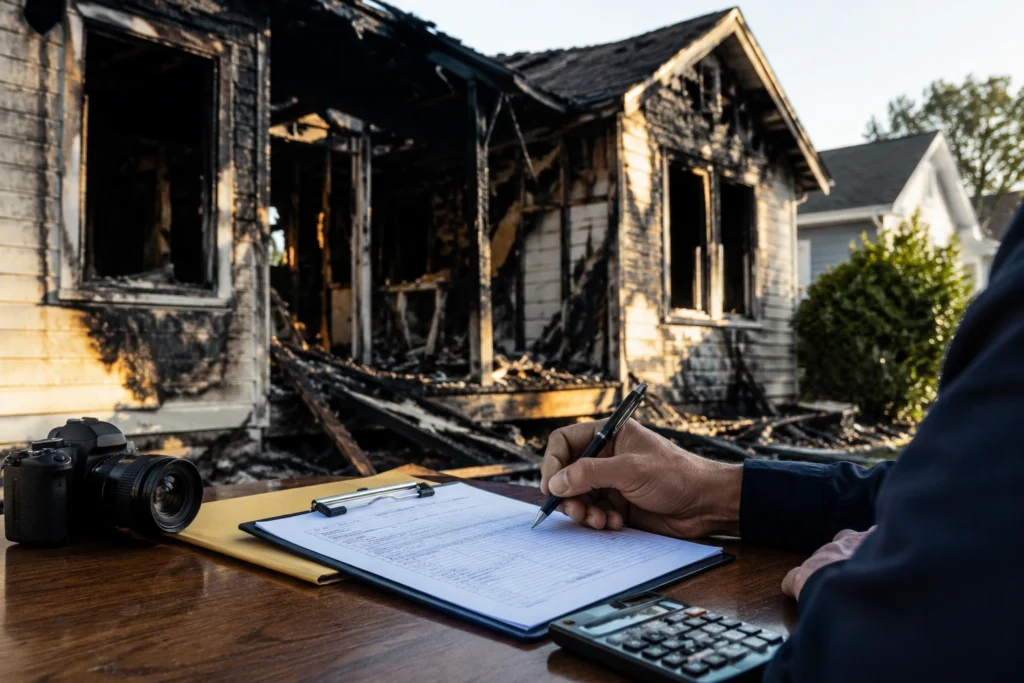
Documentation is one of the most important parts of a successful claim. The more evidence you have, the easier it becomes to support your losses. Photograph and video:
- Fire damage
- Smoke damage
- Water damage
- Structural damage
- Damaged personal property
- Exterior and interior conditions
Capture wide-angle images and close-up photographs. Comprehensive documentation is critical. Similar to techniques used in Photogrammetry, detailed visual records help establish accurate conditions and support later evaluations. In addition to photographs, create a written inventory of damaged belongings. Include:
- Item descriptions
- Brand names
- Approximate age
- Original cost
- Estimated replacement value
Do not discard damaged property until your insurance company authorizes disposal.
Step 5: Meet With the Insurance Adjuster
After the claim is reported, an insurance adjuster will inspect the property. The adjuster’s inspection often forms the foundation of the insurer’s estimate. Prepare for the inspection by:
- Organizing photographs
- Creating a damage list
- Gathering receipts
- Listing concerns and questions
Whenever possible, walk through the property with the adjuster. Point out damaged areas and ask questions. Do not assume every issue will be automatically identified. Commonly overlooked items include:
- Smoke contamination
- HVAC system damage
- Electrical system impacts
- Insulation contamination
- Hidden structural damage
- Water intrusion behind walls
A thorough inspection can help prevent disputes later in the claim.
Areas Commonly Missed in Fire Claims
| Item | Why It Matters |
|---|---|
| Insulation | Absorbs smoke and odors |
| HVAC Systems | Can spread contaminants throughout the home |
| Electrical Wiring | Heat may compromise safety |
| Cabinets and Built-Ins | Hidden smoke damage is common |
| Attic Components | Often difficult to inspect |
| Ventilation Systems | Smoke residue can accumulate |
Step 6: Review the Insurance Estimate Carefully
Receiving an estimate does not mean the claim is complete. Review every line item carefully. Compare the insurance estimate with contractor proposals when possible. Pay attention to:
- Missing repairs
- Incorrect measurements
- Incomplete room evaluations
- Omitted smoke remediation
- Missing code upgrades
- Underpriced labor or materials
A common issue during the House Fire Insurance Claim Process is an incomplete scope of damage. If something appears missing, ask questions and request clarification. Careful review now may prevent significant problems later.
Step 7: Build a Complete Contents Inventory
Personal property claims often require substantial documentation. Start by creating a room-by-room inventory. Document:
- Furniture
- Electronics
- Appliances
- Clothing
- Jewelry
- Tools
- Sports equipment
- Household goods
Supporting documentation may include:
- Receipts
- Credit card statements
- Online purchase histories
- Warranty registrations
- Family photographs
Many homeowners are surprised by how valuable ordinary household items become when totaled together. A thorough inventory strengthens the House Fire Insurance Claim Process and helps ensure personal property losses are properly evaluated.
Understand Replacement Cost and Actual Cash Value
Policyholders often receive claim payments in stages. Two common terms appear in fire claims:
Actual Cash Value (ACV)
Actual Cash Value reflects the depreciated value of an item at the time of loss.
Replacement Cost Value (RCV)
Replacement Cost Value reflects the amount required to replace an item with a comparable new item. Many policies initially pay Actual Cash Value and release additional depreciation once replacement occurs. Understanding the difference can help avoid confusion during settlement discussions.
Step 8: Track Additional Living Expenses
If the home becomes uninhabitable, your policy may provide Additional Living Expense coverage. This coverage may help pay for:
- Hotel accommodations
- Temporary rental housing
- Increased food expenses
- Laundry services
- Storage costs
- Pet boarding
Keep detailed records. Save every receipt. Maintain a spreadsheet if possible. The House Fire Insurance Claim Process becomes significantly easier when expenses are documented and organized from the beginning.
Step 9: Cooperate With the Fire Investigation
Many fire losses involve an investigation to determine the origin and cause. Fire marshals, insurance investigators, and other experts may examine the property. The investigation helps determine:
- How the fire started
- Whether coverage applies
- Whether additional parties may be responsible
Remain cooperative throughout the process. Provide accurate information and avoid speculation. Many investigations rely on highly analytical methodologies, similar to disciplines that use Bayesian inference to evaluate evidence and reach conclusions based on probability and available data. Allow the evidence to guide the investigation.
Step 10: Negotiate the Settlement
The first settlement offer is not always the final settlement. As repairs progress, additional damage may be discovered. Contractors may identify:
- Hidden structural issues
- Additional smoke contamination
- Electrical damage
- Water-related deterioration
- Code upgrade requirements
These findings may support supplemental claims. If the estimate appears incomplete, request revisions supported by documentation. Successful negotiations are built on facts, photographs, expert reports, and contractor estimates. Strong evidence often produces stronger outcomes.

How a Public Adjuster Can Help
Large fire claims can quickly become overwhelming. A public adjuster represents the policyholder rather than the insurance company. Their responsibilities may include:
- Reviewing policy coverage
- Documenting damage
- Preparing claim information
- Reviewing estimates
- Supporting supplemental requests
- Negotiating claim settlements
For complex losses, professional assistance can help homeowners better understand the claim and identify potential issues before they become larger problems.
Common Mistakes That Can Hurt a Fire Claim
Avoiding mistakes can protect the value of your claim. Common errors include:
Throwing Away Damaged Property Too Soon
Damaged items often serve as evidence. Wait for approval before disposing of them.
Failing to Document Damage
Incomplete documentation may lead to overlooked losses.
Accepting the First Offer Without Review
Always review estimates carefully and compare them with contractor assessments.
Missing Claim Deadlines
Policies contain important reporting and documentation requirements.
Failing to Track Expenses
Unrecorded expenses may be difficult to recover later.
Typical House Fire Insurance Claim Timeline
| Stage | Typical Timeframe |
|---|---|
| Claim Reporting | First 24 Hours |
| Initial Inspection | Several Days to Two Weeks |
| Estimate Preparation | One to Four Weeks |
| Contents Documentation | Several Weeks |
| Supplemental Reviews | Ongoing |
| Reconstruction | Several Months |
| Final Resolution | Varies by Complexity |
Every claim is different. Simple losses may resolve relatively quickly, while large fire losses can take months to fully settle.
Final Thoughts
The House Fire Insurance Claim Process can feel overwhelming, especially during the first few weeks after a fire. However, homeowners who stay organized, document thoroughly, and understand their coverage are often in a much stronger position throughout the claim. Focus on safety first. Document everything. Save receipts. Review estimates carefully. Ask questions whenever something seems unclear. Most importantly, remember that the process does not end with the first inspection or the first estimate. Fire claims often evolve as repairs begin and additional damage becomes visible. By understanding every stage of the House Fire Insurance Claim Process, you can make informed decisions, protect your interests, and move forward with greater confidence as you rebuild and recover.
FAQs
The first step is ensuring everyone’s safety and contacting emergency services if necessary. Once the property is secure, notify your insurance company and begin documenting the damage.
You should report the loss as soon as possible after the fire. Prompt reporting helps prevent delays and allows the insurer to begin its investigation quickly.
Most policies cover smoke damage and water damage caused by firefighting efforts when the fire itself is a covered loss. Coverage details can vary by policy.
Many homeowners’ policies include Additional Living Expense coverage that may pay for temporary housing and certain increased living costs during repairs.
Keep photographs, videos, receipts, contractor estimates, hotel invoices, correspondence, and any records related to damaged belongings and repairs.
Additional damage found after the initial inspection can often be submitted through a supplemental claim. Supporting documentation from contractors or restoration professionals is usually helpful.
Insurance companies typically use either Actual Cash Value or Replacement Cost Value, depending on your policy coverage and the type of property involved.
Yes. If you believe damage was missed or undervalued, you can provide supporting evidence and request a review of the estimate.
The timeline depends on the severity of the loss and the complexity of the claim. Smaller claims may resolve in weeks, while major fire losses can take several months.
A public adjuster may be beneficial if the claim involves extensive damage, complicated coverage issues, or disagreements regarding the scope or value of the loss.