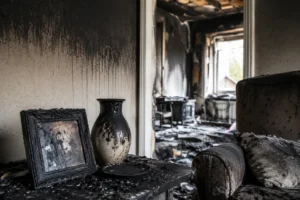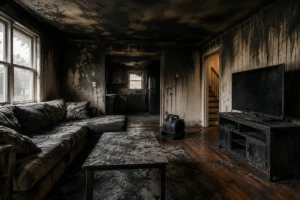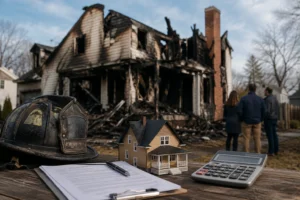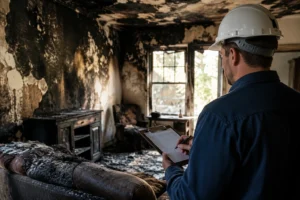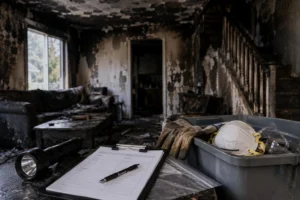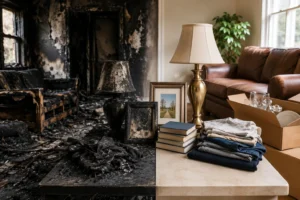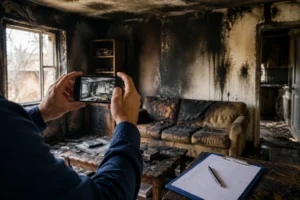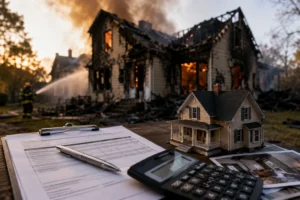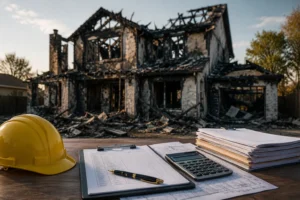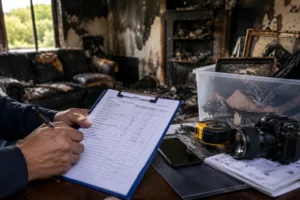

A fire can leave behind far more damage than flames alone. In fact, soot often spreads throughout a property, contaminating walls, furniture, electronics, and even areas untouched by the fire itself. Consequently, understanding soot damage insurance is essential for property owners who want to recover fully after a loss. Whether you’re dealing with a small kitchen fire or a major structural event, knowing how soot damage is evaluated and covered can help you protect your claim and avoid costly mistakes.
What Is Soot Damage?
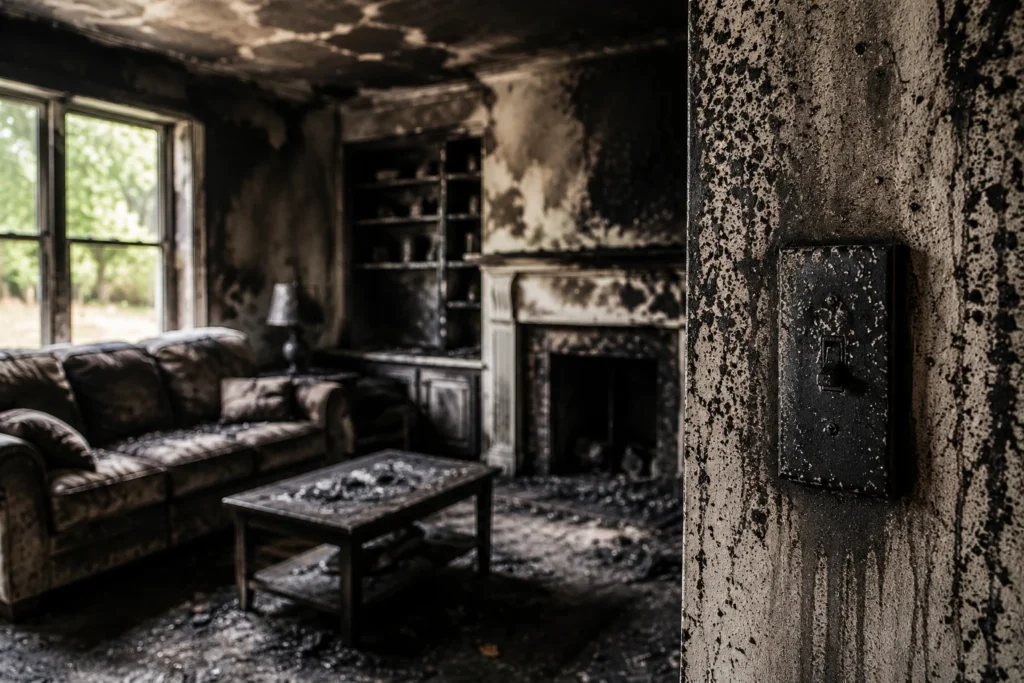
Soot is a residue produced when materials burn incompletely. While most people associate soot with black stains on walls or ceilings, the problem runs much deeper. Soot particles are microscopic and can travel throughout a property within minutes. Common sources include:
- Wood
- Plastic
- Paper
- Fabrics
- Electrical wiring
- Household chemicals
- Building materials
As a result, even a relatively small fire can create widespread contamination.
Different Types of Soot
Not all soot behaves the same way. Therefore, restoration professionals often identify the specific type of residue before beginning cleanup. Common categories include:
| Type | Characteristics | Typical Source |
|---|---|---|
| Dry Soot | Powdery and easy to spread | Fast-burning fires |
| Wet Soot | Sticky and difficult to remove | Slow-burning fires |
| Protein Residue | Nearly invisible but produces strong odors | Kitchen fires |
| Fuel Oil Soot | Thick and greasy | Heating system malfunctions |
Each type requires different cleaning methods. Consequently, proper identification can significantly affect the outcome of a soot damage insurance claim.
Why Soot Causes More Damage Than Most People Realize
Many property owners initially view soot as a cosmetic issue. However, soot can create extensive and expensive damage throughout a building. Because soot particles often contain acidic compounds, they can begin damaging surfaces almost immediately after a fire. For example:
- Metals may corrode.
- Paint may discolor.
- Plastics may deteriorate.
- Fabrics may become permanently stained.
- Electronics may suffer internal damage.
Therefore, delaying remediation can increase restoration costs substantially.
Damage to Building Materials
Structural materials frequently absorb soot contamination. Affected areas may include:
- Drywall
- Ceilings
- Wood trim
- Flooring
- Cabinets
- Countertops
Furthermore, soot can penetrate porous materials, making complete removal more difficult over time.
Damage to Electronics
Electronics represent one of the most commonly overlooked categories of damage. Although devices may appear functional immediately after a fire, soot particles can settle on internal components and cause problems later. Potential issues include:
- Corrosion
- Electrical shorts
- Circuit board damage
- Overheating
- Premature equipment failure
Consequently, professional evaluation of electronics is often necessary before determining whether cleaning or replacement is appropriate.
Indoor Air Quality Concerns
In addition to physical damage, soot can create indoor air quality issues. Microscopic particles often remain suspended in the air or settle inside HVAC systems. As occupants move throughout the property, those particles may become airborne again. Interestingly, the movement of soot particles through indoor air can resemble a phenomenon known as Brownian motion, where microscopic particles move unpredictably through fluids and gases. Therefore, proper remediation involves much more than simply wiping down visible surfaces.
How Soot Spreads Throughout a Property
One of the most surprising aspects of soot damage is its ability to travel. Even when a fire is contained to a single room, soot contamination may affect the entire building.
HVAC Systems Spread Contamination
Heating and cooling systems often act as distribution networks. Once soot enters ductwork, particles can spread into:
- Bedrooms
- Living rooms
- Bathrooms
- Closets
- Attics
- Storage areas
As a result, contamination frequently extends far beyond the original fire location.
Air Pressure Changes During a Fire
During firefighting efforts, pressure changes occur throughout the structure. Additionally, open windows, ventilation systems, and fire suppression activities can move soot into unexpected locations. Therefore, professional inspections generally involve evaluating the entire property rather than only the visibly damaged areas.
Hidden Areas Commonly Affected
Some of the most significant contamination occurs in places property owners rarely inspect. Examples include:
- Wall cavities
- Attic spaces
- Crawl spaces
- Mechanical rooms
- Behind cabinetry
- Above suspended ceilings
Because these areas are often overlooked, they can become major points of dispute during a soot damage insurance claim.
Does Homeowners Insurance Cover Soot Damage?
In many cases, yes. Most homeowners insurance policies include coverage for fire-related damage, which often extends to soot and smoke contamination. However, coverage ultimately depends on the specific policy language and circumstances of the loss.
Structural Damage Coverage
Structural coverage generally applies to damage affecting the building itself. This may include:
- Walls
- Ceilings
- Flooring
- Roofing materials
- Electrical systems
- Built-in fixtures
Consequently, cleaning, restoration, and replacement costs may all qualify as covered expenses.
Personal Property Coverage
Many policies also provide coverage for personal belongings. Examples include:
- Furniture
- Clothing
- Electronics
- Appliances
- Artwork
- Household goods
However, insurers frequently evaluate whether items can be cleaned rather than replaced. Therefore, documentation becomes critical when pursuing a soot damage insurance settlement.
Additional Living Expense Coverage
Sometimes a property becomes temporarily uninhabitable. When that occurs, additional living expense coverage may help pay for:
- Hotel accommodations
- Temporary rentals
- Restaurant meals
- Laundry services
- Increased living costs
As restoration projects become more extensive, this coverage can become increasingly valuable.
Situations Where Coverage May Be Limited
Although many soot losses are covered, certain situations can create challenges.
Maintenance-Related Issues
Insurance policies are generally designed to cover sudden and accidental losses. Consequently, ongoing maintenance problems may receive different treatment. Examples include:
- Neglected heating systems
- Long-term contamination
- Existing property conditions
In these situations, coverage disputes may arise.
Policy Exclusions
Every insurance policy contains exclusions. Therefore, property owners should carefully review their policy language to understand any limitations that may affect their claim.
Coverage Limits and Deductibles
Even covered claims may be subject to:
- Deductibles
- Coverage caps
- Personal property limits
- Special policy provisions
Accordingly, understanding these limits early in the process helps set realistic expectations.
Replacement Cost vs. Actual Cash Value
The way damaged property is valued can significantly impact claim outcomes.
Replacement Cost Coverage
Replacement cost coverage generally pays the amount required to replace damaged property using today’s market pricing. As a result, policyholders often receive greater financial protection.
Actual Cash Value Coverage
Actual cash value considers depreciation. Therefore, older items typically receive lower settlements. Consider the following example:
| Item | Replacement Cost | Actual Cash Value |
|---|---|---|
| Television | $1,500 | $600 |
| Sofa | $2,000 | $900 |
| Refrigerator | $3,000 | $1,400 |
Because of these differences, valuation methods can dramatically affect a soot damage insurance claim.
Immediate Steps to Take After Discovering Soot Damage
The actions taken immediately after a fire often influence the entire claim process. Fortunately, several practical steps can help protect your interests.
Prioritize Safety First
Before entering the property:
- Obtain clearance from local authorities
- Watch for structural hazards
- Be aware of air quality concerns
- Follow professional recommendations
Above all, personal safety should remain the priority.
Document Everything Thoroughly
Documentation is one of the strongest tools available during a claim. Take:
- Wide-angle photographs
- Close-up photos
- Video walkthroughs
- Images of damaged belongings
- HVAC contamination photos
Importantly, document conditions before cleaning begins whenever possible.
Create a Detailed Inventory
Next, create a room-by-room inventory. Include:
- Item descriptions
- Estimated values
- Purchase dates
- Photographs
- Receipts when available
The more organized your records, the stronger your claim position becomes.
Notify Your Insurance Company Promptly
Finally, report the loss as soon as practical. Provide:
- Date of loss
- Cause of loss
- Initial damage description
- Contact information
- Supporting documentation
Prompt reporting not only helps move the claim forward but also preserves important rights under your policy.
The Soot Damage Insurance Claim Process
Understanding the claims process can reduce uncertainty and help property owners make informed decisions. Although each situation differs, most soot damage insurance claims follow a similar path.
Step 1: Filing the Claim
The process begins with claim reporting. Insurers typically request:
- Policy information
- Fire reports
- Property details
- Initial photographs
- Damage descriptions
Therefore, organized documentation can significantly streamline the process.
Step 2: Insurance Inspection
An adjuster will usually inspect the property. During the inspection, they may evaluate:
- Visible soot contamination
- Structural damage
- Personal property losses
- Cleaning requirements
- Restoration needs
Because these findings often influence settlement amounts, thorough inspections are essential.
Step 3: Damage Estimation
After the inspection, repair and restoration costs are estimated. Potential expenses include:
- Structural cleaning
- Odor removal
- Content restoration
- Replacement costs
- Specialized remediation services
However, estimates do not always capture the full extent of contamination. For example, some consultants use scientific analysis methods similar to spectroscopy when evaluating contamination patterns and material impacts following complex losses. Consequently, property owners should review all estimates carefully before accepting settlement offers.
Step 4: Settlement Review and Negotiation
Once estimates are prepared, the insurer calculates the proposed settlement. At this stage, policyholders should compare:
- Scope of repairs
- Cleaning recommendations
- Replacement decisions
- Personal property valuations
Doing so can help identify overlooked damages before the claim is finalized.
Common Challenges in Soot Damage Insurance Claims
While many claims proceed smoothly, others encounter obstacles that can delay recovery or reduce settlement amounts. Therefore, understanding common challenges can help property owners prepare more effectively.
Hidden Contamination Is Often Missed
One of the biggest issues in a soot damage insurance claim involves contamination that isn’t immediately visible. Insurance inspections often focus on obvious damage. However, soot frequently spreads into hidden areas. Examples include:
- HVAC ductwork
- Attic insulation
- Wall cavities
- Crawl spaces
- Electrical panels
- Mechanical systems
As a result, initial estimates may fail to account for the full scope of restoration work required.
Cleaning Costs Are Sometimes Underestimated
Professional soot removal is a specialized process. Unfortunately, some estimates assume basic cleaning methods are sufficient when more extensive remediation is necessary. For example:
| Area | Basic Cleaning | Professional Remediation |
|---|---|---|
| Walls | Surface wiping | Deep cleaning and sealing |
| HVAC System | Filter replacement | Full duct cleaning |
| Furniture | Spot cleaning | Specialized restoration |
| Electronics | Visual inspection | Diagnostic testing |
Consequently, restoration costs can increase significantly once hidden contamination is discovered.
Replacement vs. Cleaning Disputes

Another common issue involves disagreements over whether items should be cleaned or replaced. Insurance companies may determine that cleaning is adequate. However, restoration professionals may identify permanent contamination, odor retention, or damage that makes replacement the more practical solution. Items commonly involved in these disputes include:
- Mattresses
- Upholstered furniture
- Electronics
- Children’s belongings
- Clothing
- Area rugs
Therefore, obtaining independent evaluations can be valuable when disagreements arise.
Electronics May Fail Later
Soot-related damage is not always immediate. In many cases, electronic devices continue operating for weeks or months before internal corrosion causes failure. This creates a challenge because the damage may not be obvious during the initial inspection. Consequently, professional testing and documentation often become critical components of a successful soot damage insurance claim.
Why Professional Soot Remediation Matters
Many property owners consider handling cleanup themselves. While that may seem like a cost-saving approach, soot restoration is often more complicated than expected.
DIY Cleaning Can Create Additional Damage
Soot particles are extremely fine. Improper cleaning methods can:
- Spread contamination
- Push soot deeper into surfaces
- Cause permanent staining
- Damage delicate materials
- Increase restoration costs
For example, wiping soot from painted drywall with the wrong products can actually embed residue into the surface. nAs a result, professional restoration is frequently the safer option.
Specialized Restoration Methods
Professional remediation companies use techniques designed specifically for soot contamination. Common methods include:
HEPA Filtration
High-efficiency particulate air (HEPA) filtration removes microscopic airborne particles. This helps improve air quality while preventing further contamination.
Dry Sponge Cleaning
Specialized chemical sponges remove soot from walls, ceilings, and other surfaces without spreading residue.
Thermal Fogging
Thermal fogging neutralizes odors by allowing deodorizing agents to penetrate areas affected by smoke and soot.
Air Scrubbing
Air scrubbers continuously filter indoor air during the restoration process. Consequently, these systems help remove contaminants that traditional cleaning methods cannot address.
Professional Documentation Strengthens Claims
Beyond cleaning, restoration companies provide valuable documentation. This may include:
- Damage assessments
- Restoration reports
- Moisture readings
- Air quality testing
- Equipment logs
- Photographic evidence
Therefore, professional reports often help support claim negotiations.
How a Public Adjuster Can Help With a Soot Damage Insurance Claim
Many policyholders assume the insurance company’s adjuster represents everyone involved. In reality, insurance adjusters work for the insurer. A public adjuster works exclusively for the policyholder.
Understanding the Public Adjuster’s Role
Public adjusters evaluate damages independently and advocate on behalf of property owners throughout the claims process. Their responsibilities may include:
- Reviewing insurance policies
- Documenting damages
- Preparing estimates
- Coordinating inspections
- Negotiating settlements
Consequently, they provide a different perspective than the insurer’s representatives.
Comprehensive Damage Documentation
One of the most valuable services a public adjuster provides is thorough documentation. Rather than focusing solely on visible damage, they often investigate:
- Hidden contamination
- HVAC impacts
- Contents losses
- Code upgrade requirements
- Replacement cost issues
This detailed approach can significantly affect claim value.
Assistance With Claim Negotiations
Negotiations are often where large differences emerge. For example, disputes may involve:
- Cleaning versus replacement
- Scope of repairs
- Contents valuation
- Additional living expenses
- Supplemental claims
Therefore, experienced representation can help ensure all damages receive appropriate consideration.
When Hiring a Public Adjuster Makes Sense
Not every claim requires professional representation. However, a public adjuster may provide substantial value when:
- Losses are significant
- Claims become disputed
- Damage is widespread
- Settlement offers appear insufficient
- Hidden contamination is involved
In these situations, professional advocacy may help policyholders achieve a more accurate settlement.
Preventing Future Soot Damage Losses
Although no one can eliminate every fire risk, proactive measures can reduce the likelihood of future losses.
Maintain Smoke Detection Systems
Smoke alarms remain one of the most effective fire safety tools available. Property owners should:
- Test alarms monthly
- Replace batteries regularly
- Follow manufacturer recommendations
- Install alarms throughout the property
Schedule Electrical Inspections
Electrical failures remain a leading cause of property fires. Accordingly, periodic inspections can identify potential issues before they become dangerous.
Maintain Heating Equipment
Heating systems should receive routine servicing. This includes:
- Furnace inspections
- Chimney maintenance
- Ventilation checks
- Fuel system evaluations
Regular maintenance helps reduce fire risks and may prevent soot-related losses.
Protect Important Records
Documentation becomes invaluable after a loss. Therefore, consider maintaining:
- Digital inventories
- Cloud-based photo storage
- Electronic receipts
- Backup copies of important documents
These records can significantly simplify future insurance claims.
Frequently Asked Questions About Soot Damage Insurance
Does homeowners insurance typically cover soot damage?
In many cases, yes. Standard homeowners insurance policies often cover soot damage when it results from a covered fire loss.
Can soot damage electronics that still appear to work?
Yes. Corrosion can develop over time, causing delayed failures even when devices initially seem functional.
Should I clean soot before the insurance inspection?
Generally, it’s best to document conditions first and consult professionals before beginning major cleanup efforts.
Can soot spread into rooms unaffected by flames?
Absolutely. HVAC systems, airflow patterns, and pressure changes can distribute soot throughout a property.
Are smoke odors considered damage?
In many situations, persistent smoke odors are part of the covered loss and may require professional deodorization.
What if the insurance estimate seems too low?
Review the estimate carefully and compare it with contractor or restoration assessments to identify potential omissions.
How long does a soot damage claim take?
Timeframes vary depending on the severity of the loss, documentation requirements, and any claim disputes.
Can HVAC systems require cleaning after a fire?
Yes. Ductwork often becomes contaminated and may require specialized cleaning to prevent ongoing particle circulation.
When should a public adjuster become involved?
Many property owners seek assistance when claims become complex, disputed, or involve significant losses.
What documentation helps support a claim?
Photographs, inventories, receipts, restoration reports, inspection findings, and professional estimates all strengthen claim documentation.
Conclusion
Ultimately, soot damage insurance claims involve much more than visible stains and smoke odors. Soot can spread throughout a property, affect valuable belongings, and create hidden contamination that remains long after a fire is extinguished. Therefore, prompt documentation, professional evaluation, and a thorough understanding of your policy are essential. By taking a proactive approach and carefully reviewing every aspect of the loss, property owners can place themselves in a stronger position to recover the full benefits available under their insurance coverage.
FAQs
In many cases, homeowners’ insurance covers soot damage when it results from a covered fire or smoke event. Coverage depends on the specific terms and limits of the policy.
Soot should be addressed as soon as it is safe to do so because acidic residues can begin damaging surfaces within hours or days after a fire.
Yes. Soot particles can travel through HVAC systems and air currents, contaminating areas far from the original fire source.
No. Document all damaged items with photos and videos before disposing of anything, as they may be important evidence for your insurance claim.
Often, yes. If smoke odors result from a covered fire loss, deodorization and restoration services may be included in the claim.
Insurers often evaluate whether damaged items can be restored at a lower cost than replacement. However, some items may require replacement if cleaning cannot fully remove contamination.
Yes. Soot can cause internal corrosion and damage sensitive components, leading to failures weeks or months after the fire.
Helpful documentation includes photographs, videos, receipts, inventories, restoration reports, contractor estimates, and fire department reports.
A public adjuster may be beneficial when losses are significant, damages are complex, or you believe the insurance settlement does not fully reflect the extent of the damage.
The timeline varies depending on the severity of the loss, the amount of documentation required, and whether any disputes arise during the claim process.