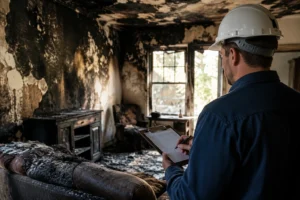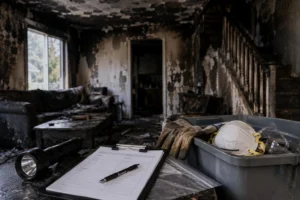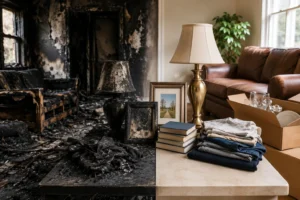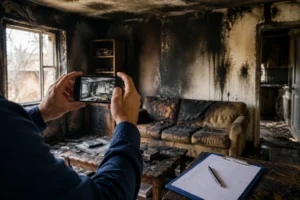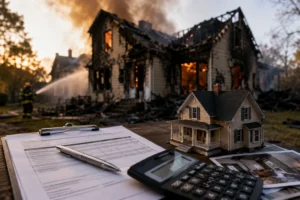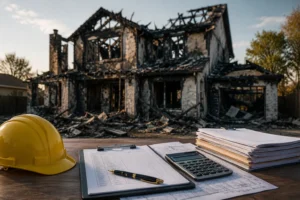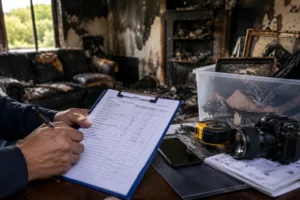

A fire can leave behind more than burned materials. In fact, smoke often spreads throughout a property, affecting areas that never came into direct contact with flames. As a result, property owners may face extensive cleaning, restoration, and repair costs long after the fire is extinguished. Understanding a smoke remediation insurance claim is therefore essential for protecting your investment and pursuing the compensation needed to restore your property properly.
Understanding Smoke Damage After a Fire
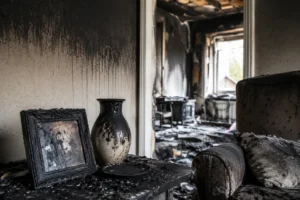
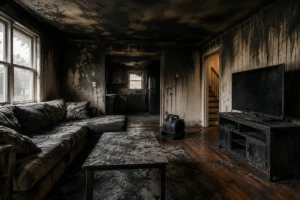
Smoke damage extends far beyond what you can see. While black soot stains may be the most obvious sign of contamination, smoke particles can travel through an entire structure in a matter of minutes. Consequently, rooms untouched by flames may still experience significant damage.
Smoke Damage Is More Than Soot on Walls
Many property owners focus on visible residue. However, smoke can penetrate:
- Drywall
- Insulation
- Upholstery
- Carpeting
- HVAC systems
- Electrical components
Furthermore, smoke particles often contain acidic compounds that continue causing damage after the fire has ended. Odors can also become trapped inside porous materials. Therefore, even after surfaces appear clean, contamination may remain hidden beneath the surface.
Types of Smoke Damage
Not all smoke behaves the same way. Different fuel sources produce different forms of contamination, each presenting unique restoration challenges.
| Smoke Type | Characteristics | Common Sources |
|---|---|---|
| Wet Smoke | Sticky, heavy residue with strong odor | Plastics, rubber, synthetic materials |
| Dry Smoke | Fine powdery residue | Wood and paper fires |
| Protein Smoke | Nearly invisible residue | Kitchen and cooking fires |
| Fuel Oil Soot | Thick oily contamination | Furnace malfunctions |
| Wildfire Smoke | Fine airborne particles | Outdoor wildfire events |
Because each type of smoke affects materials differently, restoration methods often vary significantly.
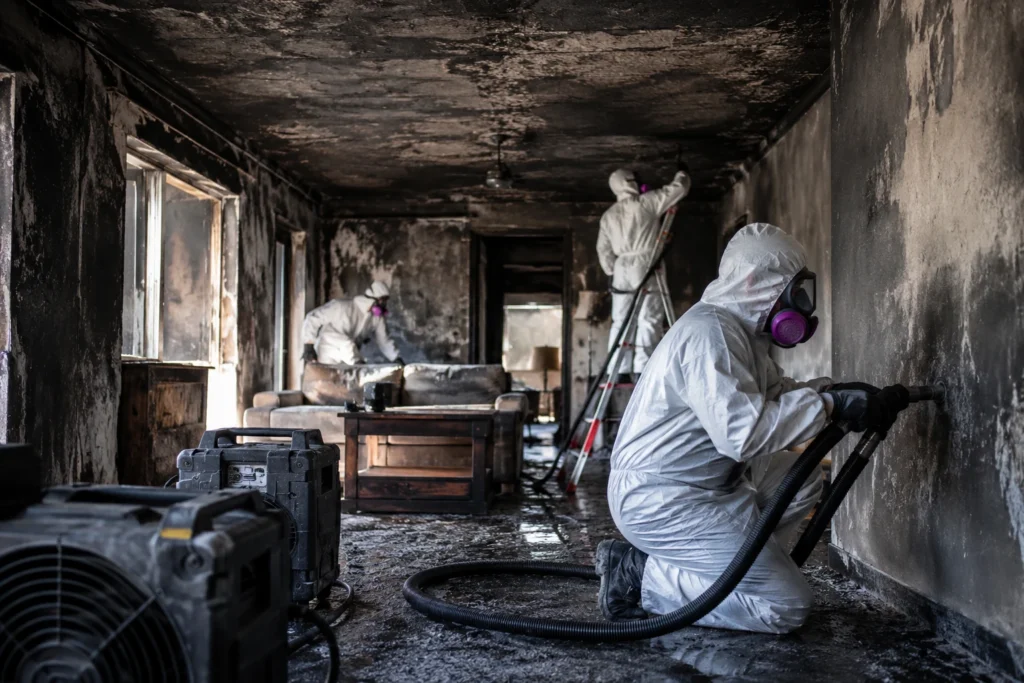
Why Different Smoke Types Matter
The type of smoke contamination directly influences remediation costs. For example, dry smoke can sometimes be removed using relatively straightforward cleaning procedures. On the other hand, wet smoke often penetrates deeper into materials and may require extensive restoration efforts. Consequently, identifying the type of contamination early helps establish a more accurate scope of work for a smoke remediation insurance claim.
What Is a Smoke Remediation Insurance Claim?
A smoke remediation insurance claim is a request for coverage related to smoke contamination caused by a covered loss event. Although many people associate insurance claims primarily with fire damage, smoke damage often represents a substantial portion of the overall loss.
Smoke Cleanup Versus Smoke Remediation
These terms may sound similar. However, they represent different levels of restoration. Smoke cleanup generally focuses on removing visible residue from surfaces. Smoke remediation is much more comprehensive. It may involve:
- Structural cleaning
- Odor elimination
- Air quality restoration
- HVAC decontamination
- Contents restoration
- Replacement of unsalvageable materials
Therefore, a complete remediation plan addresses both visible and hidden contamination.
Common Areas Covered by Insurance
Depending on policy language, insurance coverage may extend to several categories of smoke-related damage. Potentially covered items include:
- Structural repairs
- Smoke and soot removal
- Deodorization services
- Personal property restoration
- Temporary housing expenses
- Professional inspections
- Specialized cleaning services
Nevertheless, coverage details vary by policy, making a careful review of policy provisions extremely important.
How Smoke Claims Differ From Fire claims
Fire damage is often obvious. Smoke damage, however, can be much harder to identify and quantify. A burned wall clearly demonstrates the need for repairs. By comparison, smoke contamination hidden inside insulation, ductwork, or electronic equipment may require specialized testing and inspections. As a result, proving the full extent of smoke damage frequently becomes one of the biggest challenges during a smoke remediation insurance claim.
Signs That Smoke Damage May Be More Extensive Than It Appears
Visible soot only tells part of the story. In many situations, the most serious smoke-related problems remain hidden from view.
Lingering Odors
Persistent smoke odors are often a warning sign. Even after initial cleaning, odors trapped inside building materials may continue to spread throughout the property. Therefore, lingering smells should never be ignored.
Surface Discoloration
Smoke contamination can leave behind:
- Yellow staining
- Brown discoloration
- Gray film
- Black soot deposits
Although these signs may seem cosmetic, they frequently indicate deeper contamination.
HVAC Contamination
Heating and cooling systems can distribute smoke particles throughout an entire building. Warning signs may include:
- Odors when the system operates
- Soot near air vents
- Increased dust accumulation
- Reduced indoor air quality
Consequently, HVAC inspections often play a critical role in smoke remediation projects.
Corrosion of Electronics
Smoke residue contains contaminants that may damage sensitive electronic components. Affected items may include:
- Computers
- Televisions
- Security systems
- Appliances
- Smart home devices
In some cases, equipment may appear functional initially but fail weeks or months later.
Damage to Furniture and Personal Property
Furniture, clothing, artwork, books, and other personal belongings can absorb smoke contamination. Some items may be successfully restored. Others may require replacement. Therefore, each item should be evaluated individually during the claims process.
Why Professional Assessment Matters
Professional inspections frequently uncover damage that property owners overlook. A qualified evaluation may identify:
- Hidden contamination
- Air quality concerns
- HVAC impacts
- Structural odor penetration
- Contents damage
As a result, professional assessments often provide valuable evidence supporting a smoke remediation insurance claim.
The Smoke Remediation Process
Successful remediation follows a structured process designed to remove contamination and restore the property safely.
Initial Inspection and Damage Assessment
Every remediation project begins with a detailed inspection. During this phase, professionals evaluate:
- Smoke migration patterns
- Affected materials
- Structural damage
- Air quality concerns
- Contents contamination
This information helps establish the scope of restoration work.
Documentation and Inventory Creation
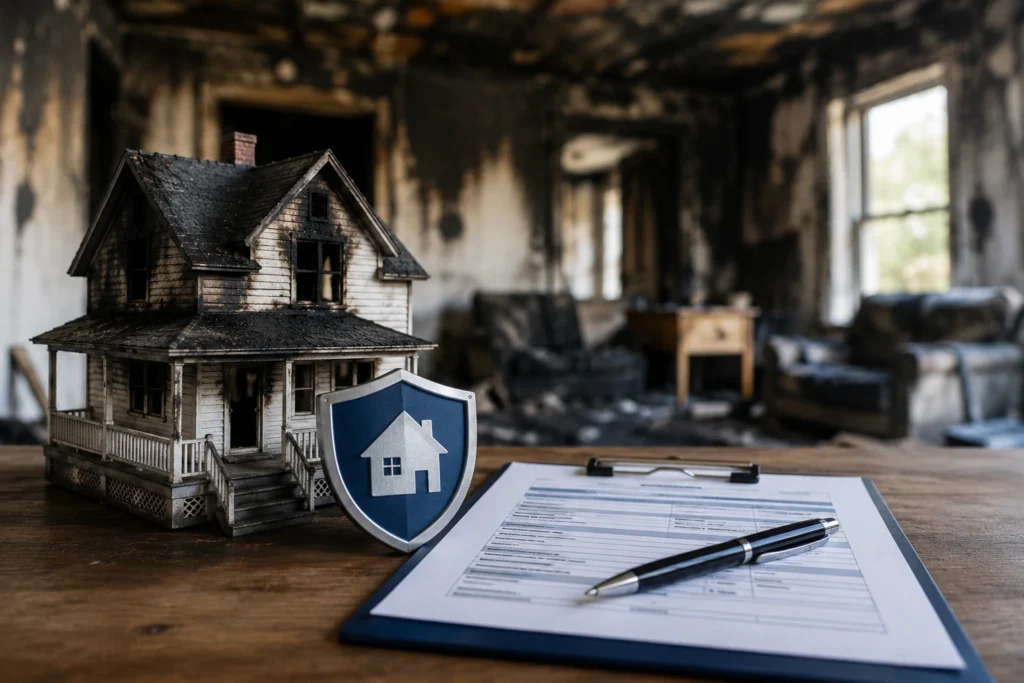
Next, thorough documentation becomes essential. Property owners should gather:
- Photographs
- Videos
- Inventory lists
- Inspection reports
- Contractor assessments
In addition, maintaining organized records can significantly strengthen a claim. Modern inspection methods sometimes incorporate concepts similar to Photogrammetry, where multiple images help create highly accurate records of property conditions before restoration begins.
Smoke and Soot Removal
Cleaning methods depend on the type of smoke involved. Common techniques include:
- HEPA vacuuming
- Specialized chemical cleaning
- Surface wiping
- Dry cleaning methods
- Encapsulation treatments
The goal is not simply to improve appearance but to remove contamination completely.
Odor Elimination Procedures
Odor removal requires specialized equipment. Depending on the situation, restoration professionals may use:
- Thermal fogging
- Hydroxyl generators
- Ozone treatments
- Air scrubbers
These systems help eliminate odor-causing particles embedded deep within materials.
HVAC Cleaning and Air Quality Restoration
Because HVAC systems can spread contamination, cleaning these systems is often necessary. Services may include:
- Duct cleaning
- Filter replacement
- Coil cleaning
- Airflow testing
Without proper HVAC remediation, smoke particles may continue circulating throughout the property.
Final Verification and Testing
Finally, restoration professionals verify that remediation goals have been achieved. This may include:
- Surface inspections
- Air quality testing
- Odor evaluations
- Cleaning verification
Only after successful verification should the remediation process be considered complete.
What Insurance Policies Typically Cover
Although coverage varies by insurer and policy type, several categories commonly apply to smoke-related losses.
Dwelling Coverage
Dwelling coverage generally addresses damage to structural components such as:
- Walls
- Ceilings
- Floors
- Roofing systems
- Built-in fixtures
Therefore, smoke contamination affecting structural materials may qualify for restoration or repair coverage.
Personal Property Coverage
Many policies also provide coverage for personal belongings. Examples include:
- Furniture
- Clothing
- Electronics
- Appliances
- Household goods
However, disputes often arise regarding whether certain items should be cleaned or replaced.
Additional Living Expenses
If a home becomes temporarily uninhabitable, Additional Living Expense (ALE) coverage may help pay for:
- Hotel accommodations
- Rental housing
- Increased meal costs
- Transportation expenses
Accordingly, keeping detailed expense records becomes extremely important.
Commercial Property Considerations
Business owners face additional challenges after smoke damage. Smoke contamination may affect:
- Inventory
- Equipment
- Tenant improvements
- Operational capabilities
As a result, commercial claims often involve significantly higher financial stakes.
Policy Limitations and Exclusions
Not every smoke-related expense will automatically be covered. Potential limitations may include:
- Deductibles
- Coverage limits
- Policy exclusions
- Specific claim conditions
Therefore, understanding policy language early can help prevent unexpected issues later in the claims process. Additionally, restoration professionals often rely on specialized cleaning techniques and material analysis. In some situations, understanding principles similar to Tribology can help explain how contaminants interact with various surfaces during the cleaning and restoration process.
Challenges Property Owners Face During a Smoke Remediation Insurance Claim
Unfortunately, filing a smoke remediation insurance claim is rarely as simple as submitting photos and waiting for payment. Smoke damage often creates disputes because much of the contamination cannot be seen immediately.
Hidden Damage Is Frequently Underestimated
Insurance inspections sometimes focus on visible damage first. However, smoke can travel into:
- Attics
- Crawl spaces
- Wall cavities
- HVAC systems
- Insulation
Consequently, initial estimates may not fully account for all affected areas.
Cleaning Versus Replacement Disputes
One of the most common disagreements involves whether damaged materials can be cleaned or should be replaced. Insurance carriers may favor cleaning when possible because it costs less. Property owners, meanwhile, may have concerns about:
- Lingering odors
- Reduced functionality
- Appearance issues
- Long-term contamination
As a result, these disagreements can significantly affect claim values.
Incomplete Restoration Scopes
Not every estimate captures the full scope of work. Missing items may include:
- Duct cleaning
- Air quality testing
- Odor treatments
- Specialty cleaning services
- Contents restoration
Therefore, reviewing estimates carefully is critical.
Delays in Claim Processing
Large fire losses often generate substantial documentation requirements. Additionally, inspections, contractor reports, and negotiations can extend timelines. The longer a claim remains unresolved, the more stressful the process often becomes for property owners.
Contents Cleaning vs. Replacement: A Major Claim Issue
After a fire, personal belongings frequently become one of the largest areas of dispute. Some items can be restored successfully. Others cannot. Determining the difference is not always straightforward.
How Restoration Professionals Evaluate Items
Several factors influence whether an item can be salvaged. These include:
- Material composition
- Smoke exposure level
- Cleaning feasibility
- Restoration costs
- Health concerns
For example, a hardwood dining table may be restored successfully, while a smoke-saturated mattress may require replacement.
Commonly Restored Items
Many belongings can often be cleaned and deodorized. Examples include:
- Metal furniture
- Glass items
- Some electronics
- Hardwood furniture
- Certain clothing items
Professional cleaning methods frequently achieve excellent results.
Items Often Requiring Replacement
Certain materials absorb smoke deeply and may remain contaminated despite cleaning. Examples may include:
- Mattresses
- Pillows
- Some upholstered furniture
- Severely damaged electronics
- Smoke-saturated insulation
Consequently, replacement may represent the safer and more practical option.
Why This Matters Financially
The difference between cleaning and replacing dozens or hundreds of items can create a significant gap in claim value. Therefore, careful evaluation of contents damage remains essential during a smoke remediation insurance claim.
The Importance of Thorough Documentation
Strong documentation frequently becomes one of the most valuable tools available to property owners. Simply put, documentation helps transform observations into evidence.
Photographs and Videos
Immediately after a loss, property owners should document:
- Smoke residue
- Soot deposits
- Damaged belongings
- Structural impacts
- Affected rooms
Furthermore, wide-angle photos and close-up images provide valuable context.
Smoke Damage Inventories
Creating a detailed inventory can help support reimbursement requests. A useful inventory may include:
| Item | Approximate Age | Condition | Replacement Cost |
|---|---|---|---|
| Sofa | 4 Years | Smoke Contaminated | $1,500 |
| Television | 2 Years | Smoke Exposure | $900 |
| Dining Table | 6 Years | Soot Damage | $1,200 |
Detailed inventories often strengthen negotiations.
Contractor and Restoration Reports
Independent evaluations may identify damage missed during initial inspections. Consequently, professional reports often provide important support for claim documentation.
Air Quality Testing
In some situations, air quality testing may reveal contamination levels that are not immediately apparent. These findings can help demonstrate the need for additional remediation measures.
Expense Tracking
Property owners should also keep records of:
- Hotel expenses
- Rental costs
- Meals
- Transportation
- Temporary repairs
Because reimbursement often depends on documentation, organized recordkeeping remains extremely important.
How Public Adjusters Help With Smoke Remediation Insurance Claims
Many property owners have never experienced a major insurance claim. As a result, navigating the process can feel overwhelming. This is where public adjusters may provide meaningful assistance.
Independent Damage Evaluation
Public adjusters work on behalf of policyholders. Their role often includes evaluating:
- Structural damage
- Smoke contamination
- Contents losses
- Additional living expenses
This independent perspective can help identify overlooked damages.
Policy Review
Insurance policies can be lengthy and complicated. A public adjuster may help interpret:
- Coverage provisions
- Policy limitations
- Endorsements
- Applicable benefits
Consequently, property owners gain a clearer understanding of available coverage.
Documentation Development
Building a strong claim often requires extensive documentation. Public adjusters frequently assist with:
- Inventories
- Damage reports
- Supporting evidence
- Cost estimates
This organized approach may improve claim presentation.
Negotiating With Insurance Carriers
Perhaps most importantly, public adjusters negotiate directly with insurance companies. Their goal is to pursue a fair settlement based on documented damages.
Identifying Missed Damage
Smoke contamination is often widespread. Therefore, independent evaluations can uncover hidden issues that may otherwise remain unresolved.
Texas-Specific Challenges in Smoke Damage Claims
Texas property owners face unique circumstances when dealing with smoke-related losses.
Large Residential Fire Losses
Texas homes can vary significantly in size and construction. Larger homes often require:
- More extensive cleaning
- Additional contents inventories
- Larger remediation scopes
Consequently, claim complexity often increases with property size.
Commercial Property Smoke Damage
Commercial properties frequently involve:
- Specialized equipment
- Large inventories
- Tenant improvements
- Business interruption concerns
As a result, commercial smoke claims often require detailed evaluation.
Wildfire Smoke Exposure
Although direct fire damage receives the most attention, wildfire smoke can also create significant contamination issues. Smoke particles may travel long distances and affect properties located far from the fire itself.
Building Code Upgrades
Restoration projects sometimes trigger building code requirements. Potential upgrades may include:
- Electrical improvements
- Ventilation modifications
- Safety enhancements
These additional costs can influence claim values significantly.
Contractor Availability
Following major fire events, demand for restoration contractors often increases dramatically. Consequently, delays and increased costs may occur. Understanding local market conditions can therefore become an important factor during the claims process.
Common Mistakes Property Owners Should Avoid
Even strong claims can encounter problems when critical mistakes occur. Fortunately, many of these issues are avoidable.
Disposing of Damaged Items Too Early
Damaged belongings often serve as evidence. Therefore, property owners should avoid discarding items until documentation and inspections are complete.
Failing to Document Thoroughly
Incomplete records can make proving damages more difficult. Instead, document everything.
Delaying Professional Inspections
The longer contamination remains undocumented, the more difficult it may become to establish the full extent of loss. Accordingly, prompt inspections remain beneficial.
Accepting Initial Estimates Without Review
Initial estimates may not always reflect every necessary repair or restoration expense. Therefore, reviewing estimates carefully can help identify omissions.
Ignoring Hidden Contamination
Visible damage rarely tells the entire story. Smoke may remain inside ductwork, insulation, and building materials long after surface cleaning appears complete.
Steps to Strengthen Your Smoke Remediation Insurance Claim
Although every claim is unique, several strategies consistently improve claim preparation.
Schedule Professional Inspections Quickly
Early inspections help preserve evidence and establish a clear damage record.
Preserve Physical Evidence
Whenever possible, retain damaged items until evaluations are complete.
Keep Detailed Records
Maintain organized files that include:
- Photos
- Videos
- Receipts
- Reports
- Communications
Obtain Independent Estimates
Independent evaluations provide useful comparisons and may reveal overlooked costs.
Review Policy Coverage Carefully
Understanding available benefits helps property owners make informed decisions throughout the process.
Maintain Consistent Communication
Finally, keeping detailed records of conversations, emails, and claim updates can help reduce misunderstandings and improve claim organization.
Conclusion
A smoke remediation insurance claim involves much more than cleaning visible soot. Smoke contamination can affect structures, personal belongings, HVAC systems, and indoor air quality in ways that are not immediately obvious. Therefore, thorough documentation, professional evaluations, and a complete understanding of policy coverage are essential. By taking a proactive approach and addressing hidden damage early, property owners can place themselves in a stronger position to achieve a fair and comprehensive claim outcome.
FAQs
Many homeowners’ insurance policies cover smoke damage when it results from a covered peril, such as a fire. Coverage details vary by policy, so reviewing your policy language is important.
The timeline depends on the extent of damage, documentation requirements, and claim complexity. Some claims may be resolved within weeks, while larger losses can take several months.
Yes, many smoke-damaged items can be professionally cleaned and restored. However, heavily contaminated or porous materials may require replacement.
Document the damage with photos and videos, protect the property from further harm, and notify your insurance company as soon as possible.
In many cases, persistent smoke odors are considered part of the covered damage because they indicate contamination that requires remediation. Coverage depends on policy terms and the cause of loss.
If the property becomes uninhabitable due to a covered loss, Additional Living Expense (ALE) coverage may help pay for temporary housing and related expenses.
Yes, smoke residue can cause corrosion inside electronic components. Devices may continue working initially but develop problems later.
Helpful documentation includes photographs, videos, inventories of damaged property, contractor reports, receipts, and records of additional living expenses.
A public adjuster may be beneficial for large, complex, disputed, or underpaid claims. They can help evaluate damages, prepare documentation, and negotiate with the insurance company.
You can request a detailed explanation of the estimate, obtain independent assessments, and provide additional documentation supporting the full scope of necessary remediation work.