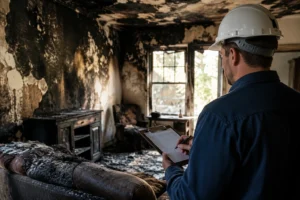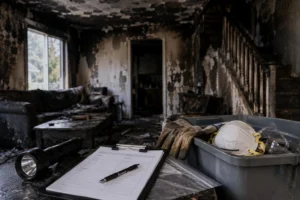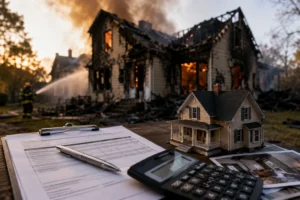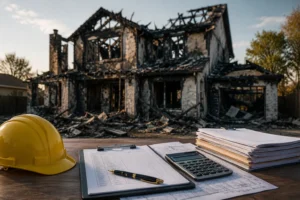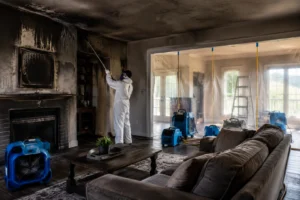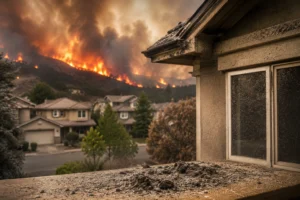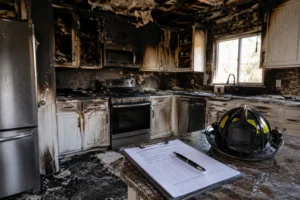

A fire doesn’t have to consume an entire property to create a significant insurance claim. In many cases, Soot Damage Insurance Claims arise from relatively small fires that leave widespread contamination throughout a home or business. While flames often receive the most attention, soot can cause extensive damage to walls, furniture, electronics, clothing, and HVAC systems. Therefore, understanding how soot damage affects insurance claims can help property owners protect their rights and pursue a fair settlement.
Understanding Soot Damage
What Is Soot?
Soot is a residue created by incomplete combustion. It consists of microscopic particles that become airborne during a fire and settle throughout a structure. Although soot may appear harmless initially, it can quickly damage surfaces and personal belongings.
Types of Soot Found after a fire
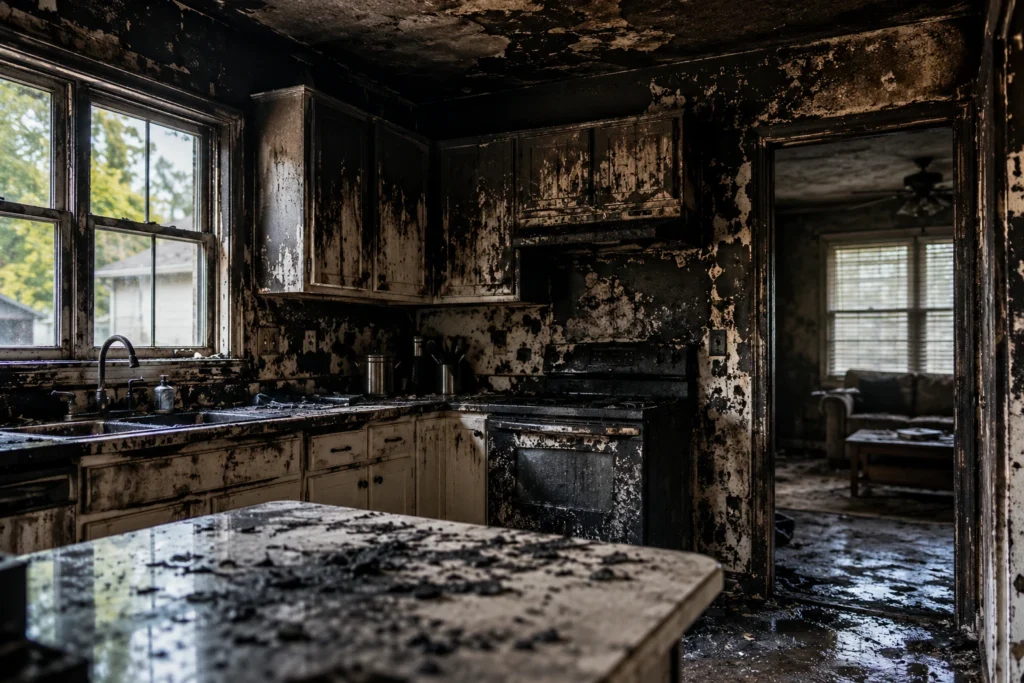
Different fires create different forms of soot. Common examples include:
- Dry soot
- Wet soot
- Protein residue soot
- Fuel oil soot
- Electrical fire residue
Because each type behaves differently, restoration methods may vary considerably.
Why Soot Causes Significant Damage
Unlike ordinary dust, soot often contains acidic compounds. As a result, soot can cause:
- Permanent staining
- Metal corrosion
- Paint discoloration
- Persistent odors
- Electronic damage
The longer contamination remains untreated, the greater the risk of permanent loss. Furthermore, soot particles can behave in surprisingly complex ways once airborne. In some situations, their movement resembles principles studied in Brownian motion, where microscopic particles move unpredictably through gases and liquids.
How Soot Damage Spreads Throughout a Property
The Hidden Nature of Soot Contamination
One of the biggest challenges in Soot Damage Insurance Claims is that contamination often extends beyond visible fire damage. As smoke travels through a structure, soot follows. Additionally, HVAC systems can circulate particles into rooms that never experienced direct fire exposure. Consequently, contamination may appear in:
- Bedrooms
- Closets
- Attics
- Storage rooms
- Air ducts
- Cabinets
Areas Commonly Affected
Soot can impact nearly every surface within a property.
| Property Component | Potential Damage |
|---|---|
| Walls and Ceilings | Staining and odor absorption |
| Flooring | Discoloration and contamination |
| Furniture | Embedded residue |
| Electronics | Corrosion risks |
| Clothing | Permanent staining |
| HVAC Systems | Distribution of contaminants |
Therefore, a comprehensive inspection is often necessary to determine the true extent of damage.
Does Insurance Cover Soot Damage?
Fortunately, many homeowners insurance policies provide coverage for soot-related losses. Insurance claims often look complete on paper. Then repairs begin. Contractors uncover additional damage. Roofing components are missing from the estimate. Code upgrades appear unexpectedly. Suddenly, homeowners realize what carriers commonly miss in their scope can create serious financial problems during the repair process.
Typical Coverage Areas
Coverage often includes:
- Dwelling damage
- Personal property losses
- Smoke and soot contamination
- Additional living expenses
However, policy language and claim circumstances always matter.
Common Covered Fire Events
Many Soot Damage Insurance Claims originate from:
- Kitchen fires
- Electrical fires
- Appliance failures
- Dryer fires
- Furnace malfunctions
Even a small incident can create substantial contamination.
Common Coverage Disputes
Nevertheless, disagreements frequently occur. Typical disputes involve:
- Cleaning versus replacement
- Scope of contamination
- Electronics damage
- Hidden soot exposure
- Content valuation
For this reason, proper documentation becomes essential.
Immediate Steps After Discovering Soot Damage
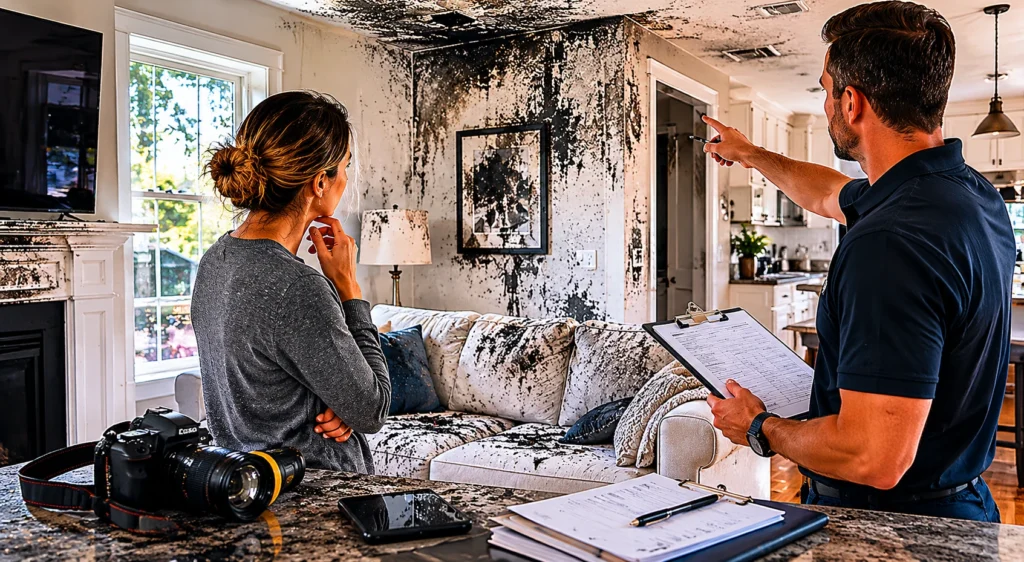
Ensure Safety First
Before entering the property:
- Confirm fire department clearance
- Address structural hazards
- Secure unsafe areas
Most importantly, prioritize safety over cleanup.
Contact the Insurance Company
Next, report the loss promptly. Be sure to:
- Obtain a claim number
- Document all communications
- Request inspection details
- Understand claim deadlines
Prevent Further Damage
Meanwhile, take reasonable steps to protect the property. Examples include:
- Boarding damaged openings
- Installing temporary tarps
- Securing vulnerable areas
Keep all receipts associated with emergency services.
Avoid Cleaning Too Soon
However, avoid aggressive cleaning before documentation is complete. Premature cleanup may:
- Destroy evidence
- Spread contamination
- Complicate claim evaluations
Instead, photograph everything first.
How to Document Soot Damage for an Insurance Claim
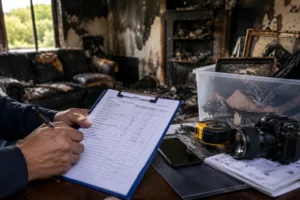
Take Comprehensive Photographs
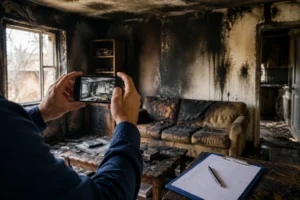
Strong documentation often strengthens Soot Damage Insurance Claims. Capture:
- Wide-angle room photos
- Close-up damage images
- HVAC contamination
- Damaged contents
Additionally, video walkthroughs can provide valuable evidence.
Create a Detailed Inventory
Your inventory should include:
- Item descriptions
- Brand names
- Model numbers
- Purchase dates
- Estimated replacement costs
The more detail provided, the better.
Gather Supporting Records
Helpful documents may include:
- Receipts
- Credit card statements
- Product registrations
- Warranty information
Maintain a Claim Journal
Finally, keep a written record of:
- Phone calls
- Emails
- Inspections
- Deadlines
- Agreements
This organized approach can become invaluable if disputes arise later.
Common Challenges in Soot Damage Insurance Claims
Even when coverage exists, challenges often emerge.
Cleaning Versus Replacement Disputes
Insurance companies may favor cleaning damaged items whenever possible. However, some belongings cannot be restored effectively. Factors often considered include:
- Material type
- Severity of contamination
- Manufacturer recommendations
- Restoration success rates
Therefore, professional evaluations can play a critical role.
Hidden Soot Damage
Not all contamination is immediately visible. For example, soot may affect:
- Insulation
- Wall cavities
- Air ducts
- Mechanical systems
Consequently, significant damage may remain undiscovered without thorough inspections.
Electronics Damage
Electronics deserve special attention. Although devices may initially appear functional, corrosive soot residue can cause delayed failures. Commonly affected items include:
- Computers
- Televisions
- Security systems
- Smart home equipment
Content Valuation Issues
Likewise, disputes often arise regarding personal property values. Questions may involve:
- Depreciation
- Replacement costs
- Comparable products
- Item age
Detailed inventories frequently help resolve these disagreements.
The Soot Damage Inspection Process
Initial Insurance Inspection
Typically, insurance adjusters evaluate:
- Fire origin areas
- Visible contamination
- Structural damage
- Content losses
However, initial inspections may not reveal every issue.
Independent Restoration Assessments
Therefore, many property owners seek additional evaluations. Restoration professionals may perform:
- Surface testing
- Odor assessments
- HVAC inspections
- Contamination mapping
Moreover, modern restoration investigations sometimes involve concepts similar to spectroscopy, which is used to analyze materials based on their interaction with electromagnetic radiation.
Expert Reports
Expert reports may come from:
- Restoration contractors
- Engineers
- Environmental consultants
- Electronics specialists
As a result, these reports often strengthen Soot Damage Insurance Claims.
Additional Living Expenses During Soot Restoration
When ALE Coverage May Apply
If a home becomes temporarily uninhabitable, Additional Living Expense coverage may help. Covered situations often involve:
- Extensive contamination
- Unsafe living conditions
- Ongoing restoration work
Expenses Often Covered
| Expense Type | Example |
|---|---|
| Housing | Hotel or rental home |
| Meals | Increased food expenses |
| Laundry | Off-site services |
| Pet Care | Boarding costs |
| Transportation | Additional travel expenses |
Proper Documentation Matters
Meanwhile, save all:
- Receipts
- Invoices
- Rental agreements
- Expense records
Proper documentation improves reimbursement accuracy.
How Public Adjusters Help With Soot Damage Insurance Claims
Identifying the Full Scope of Damage
Public adjusters often review:
- Hidden contamination
- Structural impacts
- Contents losses
- Additional living expenses
Consequently, they may uncover damages that were initially overlooked.
Preparing Thorough Documentation
Strong claim preparation may include:
- Inventory development
- Damage assessments
- Estimate reviews
- Supporting evidence collection
Negotiating With the Insurance Company
Furthermore, negotiations may address:
- Scope disputes
- Replacement issues
- Supplemental claims
- Valuation disagreements
Managing Complex Claims
Large Soot Damage Insurance Claims frequently involve:
- High-value contents
- Commercial properties
- Extensive contamination
- Multi-room losses
These situations often require specialized claim management.
Mistakes That Can Hurt Your Claim
Avoid these common mistakes:
Throwing Away Damaged Property Too Soon
Failing to Document Damage Thoroughly
Accepting the First Settlement Without Review
Missing Important Deadlines
Performing Major Cleanup Before Inspection
Although these errors may seem minor, they can significantly impact claim outcomes.
Signs Your Soot Damage Claim May Be Undervalued
Watch for warning signs such as:
- Missing contents on estimates
- Limited cleaning allowances
- HVAC contamination exclusions
- Electronics denied without testing
- Incomplete restoration scopes
If these issues appear, an independent review may be worthwhile.
Conclusion
Ultimately, Soot Damage Insurance Claims involve far more than visible fire damage. While soot contamination may seem minor at first, it can affect nearly every area of a property. Therefore, thorough documentation, detailed inspections, and organized claim management are essential. By acting promptly and understanding the claims process, property owners can place themselves in a stronger position to pursue a fair settlement after a fire.
FAQs
In many cases, homeowners’ insurance covers soot damage when it results from a covered fire event. Coverage depends on the policy language and the circumstances of the loss.
Yes. Even a minor kitchen or electrical fire can spread soot throughout a property and contaminate areas far from the fire source.
It’s generally best to document the damage thoroughly before performing major cleanup. Premature cleaning may remove evidence needed to support the claim.
Yes. Soot residue can be corrosive, and some electronics may fail days or weeks after exposure despite functioning initially.
Take wide-angle photos of each room, close-up images of damaged items, and videos showing the overall condition of the property and contents.
The timeline varies based on the extent of damage, the complexity of the claim, and whether any coverage disputes arise during the process.
Cleaning involves restoring an item to its pre-loss condition, while replacement is necessary when contamination or damage cannot be effectively removed.
Yes. HVAC systems can circulate soot particles throughout a building, causing contamination in rooms that were not directly affected by the fire.
Keep photographs, receipts, invoices, estimates, inspection reports, and notes from all communications related to the claim.
A public adjuster may be helpful when the claim is large, complex, disputed, or when you believe important damages have been overlooked or undervalued.