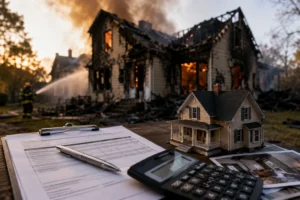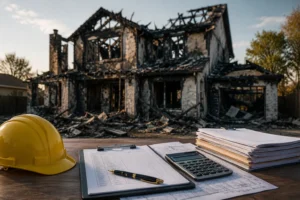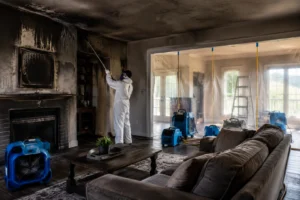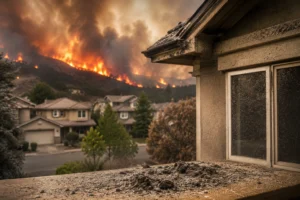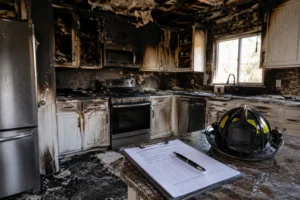

A fire may last only minutes, but smoke damage can affect a property for months. Moreover, the damage often reaches far beyond the area touched by flames. That’s why many homeowners underestimate the scope of their loss. A smoke damage insurance adjuster helps identify hidden damage, document losses, and support a fair insurance settlement. Whether the fire was small or catastrophic, understanding how smoke damage claims work can help protect your financial recovery and reduce costly mistakes.
Understanding Smoke Damage After a Fire
When people think about fire damage, they usually picture burned walls, destroyed belongings, and visible soot. However, smoke damage is often more widespread and difficult to detect. Smoke particles are microscopic. As a result, they can travel throughout a structure, settle in hard-to-reach locations, and contaminate materials that appear undamaged at first glance. Even a relatively minor fire can leave behind extensive smoke-related issues.
What Is Smoke Damage?
Smoke damage refers to the contamination caused by smoke, soot, and airborne particles produced during a fire. Unlike direct fire damage, smoke damage frequently affects rooms and belongings that never came into contact with flames. Consequently, homeowners are often surprised to discover damage throughout the property. Common effects include:
- Smoke staining on walls and ceilings
- Lingering odors
- Contaminated furniture and fabrics
- Reduced indoor air quality
- Corrosion of electronic components
- HVAC system contamination
Furthermore, much of this damage may not be immediately visible.
How Smoke Travels Through a Property
Smoke naturally seeks paths of least resistance. Therefore, it can move through:
- Hallways
- Air ducts
- Attics
- Wall cavities
- Crawl spaces
- Open doorways
In some cases, smoke migration patterns resemble concepts studied in Percolation Theory, where particles move through interconnected pathways and spaces. As smoke spreads, it leaves behind residue on nearly every surface it encounters.
Common Types of Smoke Damage
Not all smoke damage is the same. Different fire conditions create different forms of residue, each requiring unique cleaning and restoration methods.
Dry Smoke Residue
Dry smoke usually results from fast-burning, high-temperature fires. Characteristics include:
- Fine powdery residue
- Easier cleanup on certain surfaces
- Extensive spread throughout a structure
Although dry smoke can be easier to remove than other residues, it often travels farther.
Wet Smoke Residue
Wet smoke forms during slower, lower-temperature fires. Characteristics include:
- Sticky residue
- Strong odors
- Smearing during cleanup
- Increased restoration difficulty
Consequently, wet smoke often requires more aggressive remediation efforts.
Protein Residue
Kitchen fires commonly produce protein residue. Unlike traditional soot, protein residue can be nearly invisible. Nevertheless, it may leave strong odors and gradual discoloration on painted surfaces.
Fuel Oil Soot
Heating system malfunctions may generate oily soot deposits. Because these residues are particularly stubborn, specialized cleaning procedures are often necessary.
Areas Commonly Affected by Smoke Damage
Smoke doesn’t remain confined to one room. Instead, it can affect virtually every part of a structure.
Structural Components
Smoke residue frequently settles on building materials throughout the property. Affected areas may include:
- Drywall
- Ceilings
- Trim
- Doors
- Cabinets
- Insulation
Even when surfaces appear clean, smoke particles may remain embedded within materials. Therefore, visual inspections alone may not reveal the full extent of the damage.
Personal Property
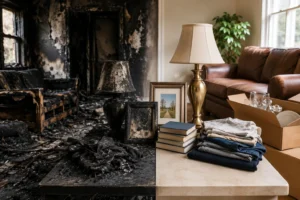
Many homeowners focus on structural repairs first. However, personal property losses can represent a substantial portion of a claim. Items commonly affected include:
- Furniture
- Clothing
- Curtains
- Mattresses
- Artwork
- Books
- Decorative items
Some belongings can be restored. Others may require replacement. Determining which option is appropriate often becomes a major part of the claims process.
Electronics
Electronics deserve special attention. Smoke residues frequently contain acidic compounds capable of damaging internal circuitry. As a result, devices that seem functional immediately after a fire may fail weeks or months later. Commonly affected electronics include:
- Televisions
- Computers
- Gaming systems
- Smart home devices
- Appliances
Unfortunately, electronic damage is one of the most overlooked aspects of many smoke damage claims.
HVAC Systems
Likewise, HVAC systems often suffer significant contamination. Smoke particles can circulate through:
- Air ducts
- Vents
- Air handlers
- Filters
Without proper cleaning, contaminants may continue spreading throughout the property long after the fire has been extinguished. For this reason, HVAC inspections frequently play an important role in smoke damage evaluations.
Why Smoke Damage Claims Are Often Challenging
Smoke damage claims can become surprisingly complicated. While visible soot may seem straightforward, determining the true scope of contamination is often much more difficult.
Hidden Damage Is Easy to Miss
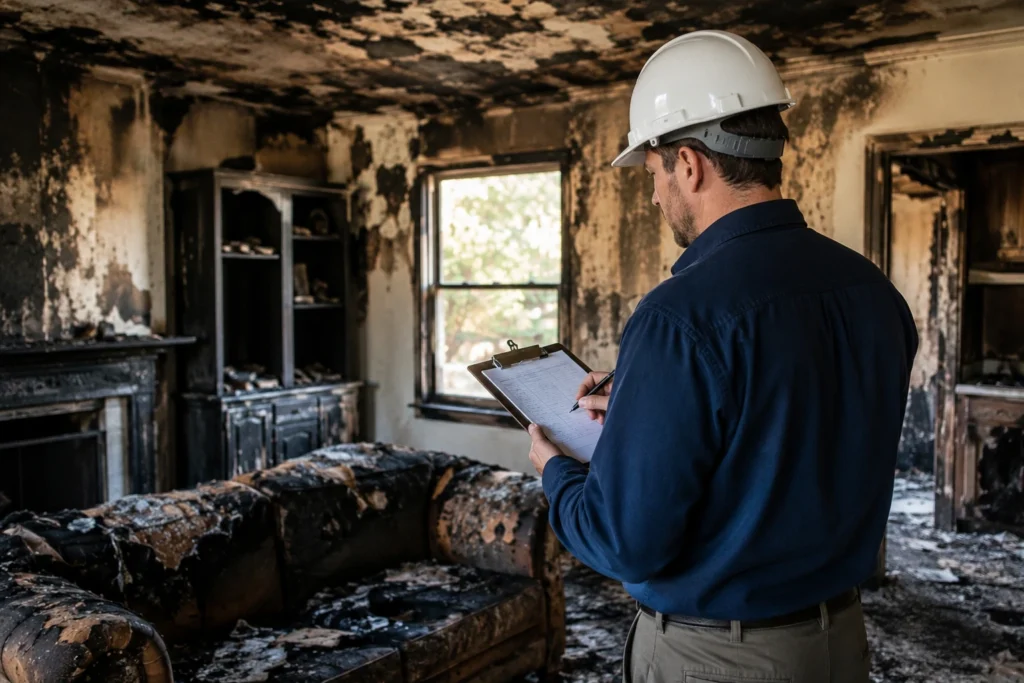
One of the biggest challenges involves identifying hidden damage. Smoke can penetrate:
- Insulation
- Wall cavities
- Flooring systems
- Upholstered furniture
- Ventilation systems
Consequently, portions of the loss may remain undiscovered during initial inspections. In fact, evaluating smoke contamination often requires a systematic approach similar to concepts used in Topology Optimization, where engineers analyze how structures respond under varying conditions. The goal is to understand how contamination has spread throughout the property and identify all affected materials.
Restoration Versus Replacement Disputes
Another common challenge involves determining whether items should be cleaned or replaced. Insurance carriers may believe restoration is sufficient. Property owners and restoration specialists may disagree. Questions frequently arise such as:
- Can odors be completely removed?
- Will the item retain its functionality?
- Is restoration cost-effective?
- Could contamination return later?
These decisions often have a significant impact on settlement values.
Incomplete Damage Assessments
Additionally, some inspections focus primarily on visible damage. While understandable, this approach can create problems. Commonly overlooked items may include:
- Duct cleaning
- Insulation replacement
- Electronics testing
- Contents restoration
- Specialty cleaning services
Even small omissions can lead to substantial differences in claim values.
What Does a Smoke Damage Insurance Adjuster Do?
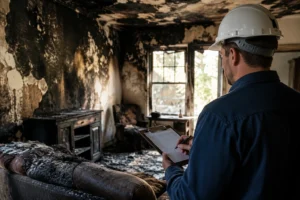
A smoke damage insurance adjuster helps homeowners evaluate, document, and negotiate smoke damage claims. More importantly, they work to ensure that covered damage is properly identified and included in the settlement process.
Conducts a Thorough Property Inspection
Every successful claim starts with a thorough inspection. During this process, a smoke damage insurance adjuster may evaluate:
- Structural damage
- Smoke migration patterns
- HVAC contamination
- Personal property losses
- Odor penetration
- Hidden damage concerns
As a result, issues that might otherwise be overlooked are more likely to be identified early.
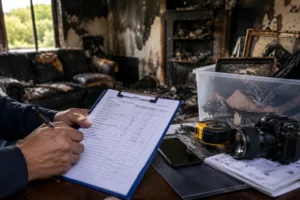
Documents Every Aspect of the Loss
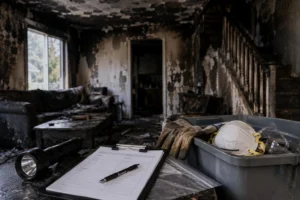
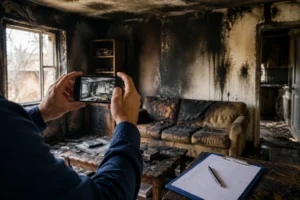
Documentation is the foundation of a strong claim. Therefore, adjusters typically gather extensive evidence, including:
- Photographs
- Videos
- Measurements
- Contractor reports
- Restoration estimates
- Contents inventories
Detailed documentation often strengthens negotiations and reduces disputes.
Reviews Insurance Policy Coverage
Next, policy language must be reviewed carefully. Many homeowners are unfamiliar with the coverage options available under their policy. A smoke damage insurance adjuster may evaluate:
| Coverage Type | Potential Benefit |
|---|---|
| Dwelling Coverage | Structural repairs |
| Personal Property Coverage | Replacement of damaged belongings |
| Additional Living Expenses | Temporary housing costs |
| Debris Removal | Cleanup expenses |
| Ordinance and Law Coverage | Building code upgrades |
Understanding these provisions can significantly affect claim outcomes.
Calculates the Full Value of the Claim
Finally, the adjuster develops a comprehensive estimate of the loss. This may include:
- Structural repairs
- Cleaning costs
- Restoration services
- Contents replacement
- Temporary living expenses
Without accurate valuation, important portions of a claim may be missed.
Public Adjuster vs. Insurance Company Adjuster
Many homeowners assume all adjusters serve the same purpose. However, their roles are very different.
Insurance Company Adjuster
An insurance company adjuster works on behalf of the insurance carrier. Their responsibility is to investigate and evaluate claims according to policy terms.
Public Adjuster
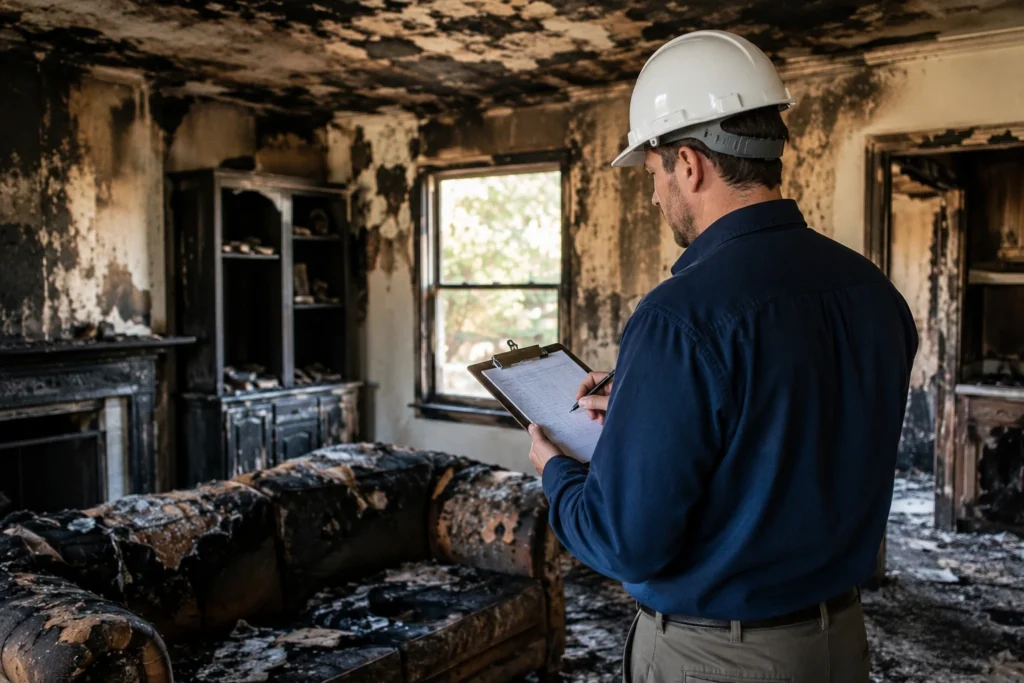
A public adjuster works exclusively for the policyholder. Their focus is identifying covered damage, documenting losses, and advocating for a fair settlement.
Key Differences
| Category | Insurance Company Adjuster | Public Adjuster |
|---|---|---|
| Represents | Insurance Carrier | Property Owner |
| Primary Focus | Claim Evaluation | Claim Advocacy |
| Works For | Insurance Company | Policyholder |
| Negotiates Settlement | Yes | Yes |
| Goal | Determine Claim Value | Maximize Covered Recovery |
For homeowners facing complex losses, understanding this distinction can be extremely important.
Signs Your Smoke Damage Claim May Need Professional Help
Not every claim requires outside assistance. However, certain situations deserve closer attention.
Large or Complex Fire Losses
The larger the loss, the greater the potential financial impact. Smoke contamination affecting multiple rooms, personal belongings, and HVAC systems often creates substantial claim complexity.
Settlement Offers Appear Too Low
If repair estimates seem incomplete, additional review may be warranted. Common warning signs include:
- Missing damaged items
- Limited cleaning allowances
- Incomplete repair scopes
- Excluded contents losses
Ongoing Claim Delays
Furthermore, repeated requests for documentation or prolonged review periods can slow recovery efforts.
Claim Denials
Finally, coverage disputes and claim denials often require stronger documentation and detailed supporting evidence. In these situations, many homeowners choose to consult a smoke damage insurance adjuster to better understand their options and protect their interests.
How Smoke Damage Insurance Adjusters Document Claims
Documentation can make or break a smoke damage claim. While homeowners often focus on taking a few photographs, successful claims usually require a much more detailed approach. Therefore, experienced adjusters spend considerable time gathering evidence that supports the full scope of the loss.
Structural Damage Documentation
First, every affected area of the structure should be evaluated. This includes:
- Walls and ceilings
- Flooring systems
- Insulation
- Attics and crawl spaces
- HVAC systems
- Built-in cabinetry
Photographs alone are rarely enough. Consequently, detailed notes, measurements, and professional assessments often become necessary.
Personal Property Inventories
Smoke damage claims frequently involve hundreds of individual items. Furniture, electronics, clothing, kitchenware, artwork, and collectibles may all require evaluation. A comprehensive inventory typically includes:
- Item descriptions
- Approximate age
- Replacement cost estimates
- Photographic evidence
- Restoration recommendations
The more complete the inventory, the easier it becomes to justify claim values during negotiations.
Odor and Air Quality Assessments
Furthermore, smoke odor can persist long after visible residue has been removed. Professional assessments may help determine:
- The source of lingering odors
- The effectiveness of remediation efforts
- Whether materials require replacement
These evaluations often provide valuable support when coverage disputes arise.
Supporting Documentation
Additional evidence can strengthen a claim considerably. Examples include:
- Fire department reports
- Restoration contractor estimates
- Temporary housing receipts
- Emergency mitigation invoices
- Cleaning company reports
- Engineering evaluations
When combined, these documents create a clearer picture of the overall loss.
Common Issues Insurance Companies Overlook
Most insurance adjusters work hard to evaluate claims accurately. However, smoke damage presents unique challenges. As a result, certain items are occasionally overlooked during inspections.
HVAC Contamination
Smoke frequently enters air ducts and ventilation systems. Unfortunately, contaminated ductwork can continue distributing smoke particles throughout the property even after cleaning efforts begin. How Smoke Damage Insurance Adjusters Document Claims Documentation can make or break a smoke damage claim. While homeowners often focus on taking a few photographs, successful claims usually require a much more detailed approach. Therefore, experienced adjusters spend considerable time gathering evidence that supports the full scope of the loss.
Structural Damage Documentation
First, every affected area of the structure should be evaluated. This includes:
- Walls and ceilings
- Flooring systems
- Insulation
- Attics and crawl spaces
- HVAC systems
- Built-in cabinetry
Photographs alone are rarely enough. Consequently, detailed notes, measurements, and professional assessments often become necessary.
Personal Property Inventories
Smoke damage claims frequently involve hundreds of individual items. Furniture, electronics, clothing, kitchenware, artwork, and collectibles may all require evaluation. A comprehensive inventory typically includes:
- Item descriptions
- Approximate age
- Replacement cost estimates
- Photographic evidence
- Restoration recommendations
The more complete the inventory, the easier it becomes to justify claim values during negotiations.
Odor and Air Quality Assessments
Furthermore, smoke odor can persist long after visible residue has been removed. Professional assessments may help determine:
- The source of lingering odors
- The effectiveness of remediation efforts
- Whether materials require replacement
These evaluations often provide valuable support when coverage disputes arise.
Supporting Documentation
Additional evidence can strengthen a claim considerably. Examples include:
- Fire department reports
- Restoration contractor estimates
- Temporary housing receipts
- Emergency mitigation invoices
- Cleaning company reports
- Engineering evaluations
When combined, these documents create a clearer picture of the overall loss.
Common Issues Insurance Companies Overlook
Most insurance adjusters work hard to evaluate claims accurately. However, smoke damage presents unique challenges. As a result, certain items are occasionally overlooked during inspections.
HVAC Contamination
Smoke frequently enters air ducts and ventilation systems. Unfortunately, contaminated ductwork can continue distributing smoke particles throughout the property even after cleaning efforts begin. Necessary services may include:
- Duct cleaning
- Air handler cleaning
- Filter replacement
- System inspections
These costs can add up quickly.
Electronic Damage
Many homeowners assume electronics are safe if they still function. That assumption can be risky. Smoke residues often contain acidic compounds capable of damaging internal components over time. Therefore, devices that appear operational immediately after a fire may experience failures months later.
Persistent Odors
Likewise, odors often represent more than a nuisance. Persistent smoke smells may indicate contamination remains hidden within:
- Drywall
- Insulation
- Flooring
- Furniture
- HVAC systems
Ignoring these issues can create long-term problems for homeowners.
Secondary Damage
In addition to smoke damage, firefighting efforts frequently introduce other forms of loss. These may include:
- Water damage
- Mold growth
- Structural deterioration
- Material swelling
Every component of the loss deserves consideration during claim preparation.
The Smoke Damage Claims Process
Understanding the claims process helps homeowners avoid surprises. Although every situation differs, most smoke damage claims follow a similar path.
Step 1: Emergency Mitigation
Immediately after the fire, preventing additional damage becomes the priority. This may involve:
- Securing the property
- Removing standing water
- Boarding openings
- Installing temporary protection
Prompt action often helps preserve coverage and reduce further losses.
Step 2: Filing the Claim
Next, the loss should be reported to the insurance carrier. During this phase, homeowners typically provide:
- Policy information
- Incident details
- Initial damage descriptions
The carrier then assigns an adjuster to investigate the claim.
Step 3: Property Inspection
Afterward, inspections begin. Depending on the severity of the damage, multiple experts may become involved, including:
- Insurance adjusters
- Restoration contractors
- Engineers
- Contents specialists
Each inspection contributes to the overall claim evaluation.
Step 4: Documentation and Valuation
Once inspections are complete, the focus shifts toward valuation. This stage includes:
- Preparing repair estimates
- Assessing replacement costs
- Reviewing contents inventories
- Evaluating additional living expenses
Accurate numbers matter. Even relatively small errors can significantly affect settlement outcomes.
Step 5: Negotiation and Settlement
Finally, settlement negotiations begin. Disagreements may arise regarding:
- Scope of damage
- Repair methods
- Replacement costs
- Coverage interpretations
Strong documentation often becomes the deciding factor during these discussions.
Benefits of Hiring a Smoke Damage Insurance Adjuster
Many homeowners wonder whether professional representation is worth the investment. The answer depends on the complexity of the claim. However, larger losses frequently benefit from experienced guidance.
More Accurate Damage Assessments
First and foremost, a smoke damage insurance adjuster can help identify damage that may otherwise go unnoticed. This often includes:
- Hidden contamination
- HVAC issues
- Contents losses
- Specialty cleaning requirements
Stronger Documentation
Secondly, documentation tends to become more comprehensive. Well-organized evidence helps support the claim from beginning to end.
Reduced Stress
Let’s be honest. Recovering from a fire is exhausting. Managing contractors, temporary housing, cleanup efforts, and insurance paperwork simultaneously can feel overwhelming. Professional assistance can help lighten that burden.
Negotiation Support
Additionally, claim negotiations can become complex. Having someone familiar with insurance estimating and documentation often improves communication and efficiency throughout the process.
Potentially Higher Settlements
Every claim is different. However, identifying overlooked damage and supporting it with proper documentation may lead to more complete settlements.
Conclusion
Smoke damage often extends far beyond what homeowners can see. While visible soot may attract immediate attention, hidden contamination, damaged electronics, lingering odors, and HVAC issues can significantly affect the true value of a claim. Therefore, thorough documentation and accurate valuation are essential. A smoke damage insurance adjuster can help identify overlooked losses, organize supporting evidence, and advocate for a fair settlement. Ultimately, taking a proactive approach early in the claims process can make a meaningful difference in both recovery efforts and financial outcomes after a fire.
FAQs
A smoke damage insurance adjuster evaluates property damage, documents losses, reviews policy coverage, and helps negotiate a fair insurance settlement.
Most homeowners’ insurance policies cover smoke damage caused by a covered fire event, although coverage details vary by policy.
Yes. Smoke particles can travel through ventilation systems, hallways, and wall cavities, affecting rooms that were never exposed to flames.
Professional inspections, air quality testing, and restoration assessments can help identify contamination that is not visible during a basic walkthrough.
It is usually best to document the damage first and consult with your insurer or adjuster before beginning extensive cleaning.
Yes. Smoke residue can corrode internal components, potentially causing electronic devices to fail weeks or months after the fire.
Take photos and videos of all affected areas, keep damaged items when possible, and save receipts, contractor reports, and restoration estimates.
Many homeowners seek assistance when dealing with large losses, claim disputes, delayed settlements, or concerns about incomplete damage assessments.
In many cases, persistent smoke odors indicate contamination within materials and may require cleaning, restoration, or replacement as part of the claim.
The timeline varies depending on the severity of the loss, the amount of documentation required, and whether disputes arise during the claims process.