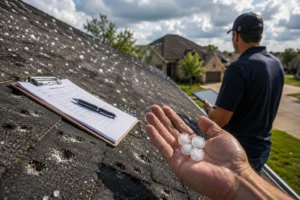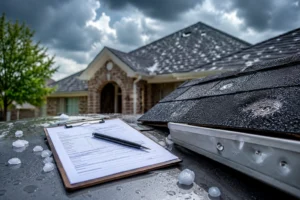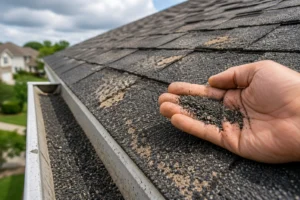

Texas hailstorms can destroy a roof faster than most homeowners realize. The biggest problem? Many of the signs of hail damage on asphalt shingles are subtle at first. No major leaks. No dramatic collapse. Just small impact marks, granule loss, and hidden weakening that slowly turns into expensive repairs later. That is why fast inspection matters. Even minor hail impacts can shorten the lifespan of asphalt shingles significantly. And when damage goes unnoticed, insurance claims often become more difficult months later. Let’s break down exactly what homeowners should look for after a hailstorm.
Understanding How Hail Damages Asphalt Shingles
Asphalt shingles are designed to protect the roof from moisture, sunlight, and temperature swings. But hail changes the equation quickly. When hailstones strike the roof, the force compresses the shingle surface and knocks away protective granules. Larger hailstones may crack the shingles entirely. Smaller hail may create hidden bruising beneath the surface that weakens the roofing system over time. Older roofs usually suffer more severe damage because years of heat exposure already reduce shingle flexibility. Wind direction matters too. Storm-driven hail often damages one roof slope more heavily than another. That uneven impact pattern becomes important during inspections and insurance evaluations.
The Most Common Signs of Hail Damage on Asphalt Shingles
Recognizing the signs of hail damage on asphalt shingles early can prevent major structural problems later. Some warning signs are obvious. Others are easy to miss.
Granule Loss
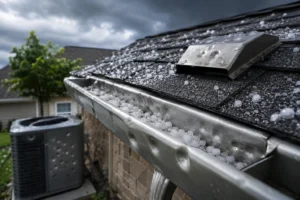
Granules protect shingles from ultraviolet exposure and weather deterioration. After a hailstorm, homeowners may notice excessive granules collecting in gutters or near downspouts. Common signs include:
- Bald spots on shingles
- Black exposed asphalt areas
- Uneven roof coloration
- Granule buildup in drainage systems
Heavy granule loss accelerates roof aging rapidly.
Dark Impact Marks
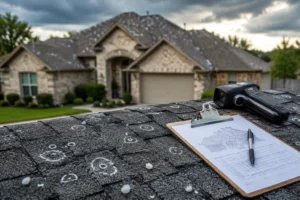
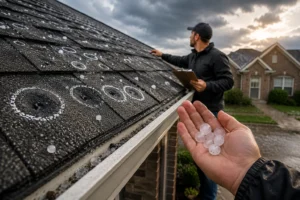
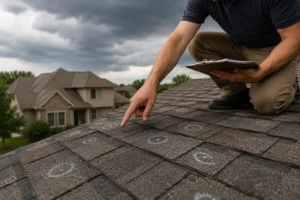
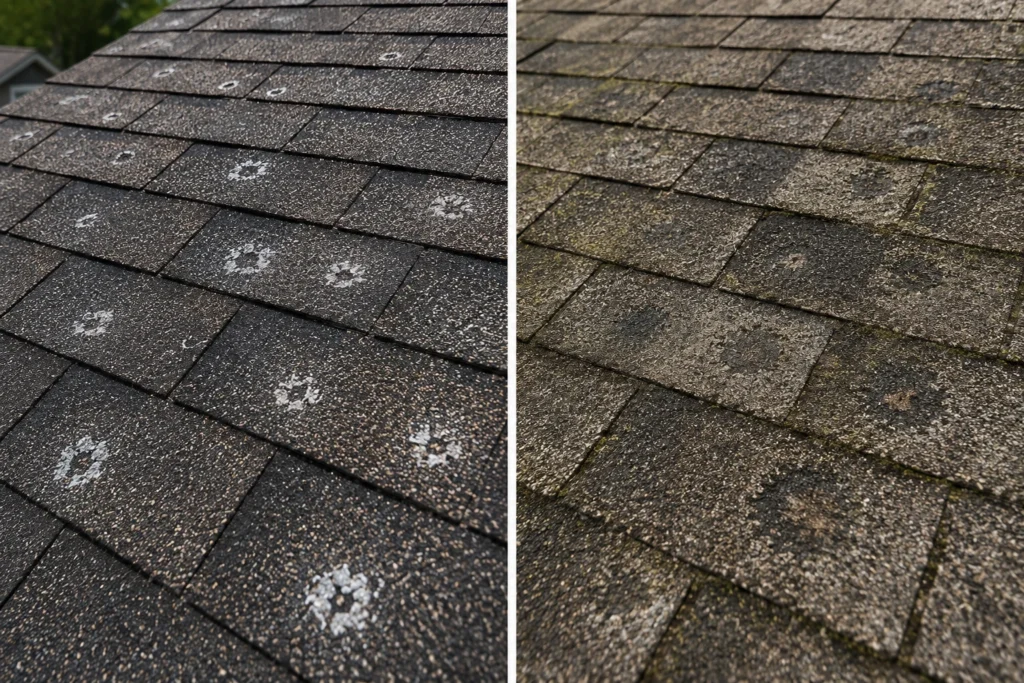
Hail frequently leaves circular dark spots across asphalt shingles. These impact marks may feel soft or bruised during inspection. In many cases, the underlying shingle mat has been damaged even if the surface appears mostly intact. This is one of the most overlooked signs of hail damage on asphalt shingles.
Cracked Shingles
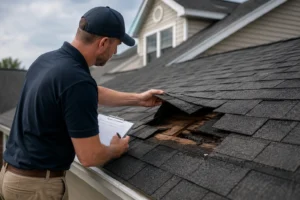
Larger hailstones often create visible fractures. Damage may appear as:
- Horizontal cracks
- Spiderweb cracking
- Random fracture lines
- Split shingle edges
Cracks allow water to penetrate beneath the roofing system much faster. That increases leak risk significantly.
Bruised Shingles
Bruising occurs when hail impacts fracture the underlying shingle structure without fully breaking the surface. Inspectors often identify bruising by gently pressing affected areas. Damaged spots may feel softer than surrounding shingles. This type of damage is difficult to identify from the ground.
Exposed Fiberglass Mat
Severe hail can expose the fiberglass reinforcement layer beneath asphalt shingles. Once exposed, deterioration speeds up dramatically. Leaks become more likely. UV damage worsens. Shingle failure accelerates.
Fresh Hail Damage vs Older Roof Damage
Not all roof wear comes from recent storms. Understanding the difference matters during insurance inspections. Fresh hail damage usually shows:
| Fresh Damage | Older Damage |
|---|---|
| Sharp impact edges | Rounded weathered edges |
| Loose granules nearby | Oxidized surfaces |
| Bright asphalt exposure | Faded discoloration |
| Clean fracture patterns | Dirt accumulation |
Older damage tends to blend into general roof aging. Recent impacts usually appear more distinct and concentrated. The earlier the roof gets inspected after a storm, the easier recent hail damage becomes to identify accurately.
Areas Most Likely to Show Hail Damage
Not every roof section receives equal impact during a hailstorm. Certain areas experience heavier damage depending on wind direction and roof design.
Storm-Facing Roof Slopes
Wind-driven hail often strikes one elevation more aggressively. That side of the roof may show:
- Increased granule loss
- More bruising
- Higher crack concentration
- Larger impact marks
Ridge Caps and Roof Peaks
Elevated roof sections absorb direct impact during storms. Ridge caps commonly show cracking and granule displacement first.
Soft Metal Roof Components
Professional inspectors frequently examine metal surfaces because dents appear clearly there. Important areas include:
- Gutters
- Flashing
- Roof vents
- Downspouts
- HVAC fins
If metal components show hail dents, asphalt shingles may also have sustained damage.
Signs of Hail Damage Beyond the Roof
Roof damage often extends beyond the shingles themselves. Collateral evidence helps confirm storm severity.
Interior Water Stains
Leaks may appear weeks or months after the original storm. Watch for:
- Ceiling discoloration
- Peeling paint
- Attic moisture
- Mold odors
- Water stains near vents
Many homeowners incorrectly assume no immediate leak means no roof damage exists. That mistake becomes expensive later.
Exterior Property Damage
Hail frequently damages surrounding surfaces too. Examples include:
- Torn window screens
- Dented garage doors
- Chipped paint
- Damaged siding
- Fence staining
This collateral evidence often strengthens insurance documentation.
How Different Hail Sizes Affect Asphalt Shingles
The size of the hailstorm matters enormously. Different hail sizes create different damage patterns.
Small Hail
Small hail may not crack shingles immediately. But repeated impacts gradually loosen granules and weaken roof protection over time.
Medium-Sized Hail
This size range commonly creates:
- Bruising
- Surface fractures
- Accelerated aging
- Hidden moisture pathways
Many roof insurance claims involve this category of damage.
Large Hail
Large hailstones can destroy roofing systems quickly. Potential damage includes:
- Torn shingles
- Exposed underlayment
- Structural roof damage
- Immediate leaks
Emergency mitigation may become necessary after severe storms.
Common Mistakes Homeowners Make After Hailstorms
The response after a storm often determines how manageable the repair process becomes later.
Waiting Too Long for Inspection
- Delays complicate insurance claims. Damage worsens over time. Documentation becomes weaker. Moisture intrusion spreads. Quick inspections usually create stronger outcomes.
Assuming No Leak Means No Damage
- This assumption causes major problems. Many hail-damaged roofs leak months after the original storm because deterioration develops slowly beneath the surface.
Attempting Unsafe Roof Inspections
- Climbing onto a damaged roof without experience is dangerous. Wet shingles become slippery fast. Damaged sections may not support weight properly. Professional inspections are safer and far more accurate.
How Professional Roof Inspections Work
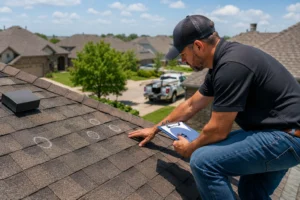
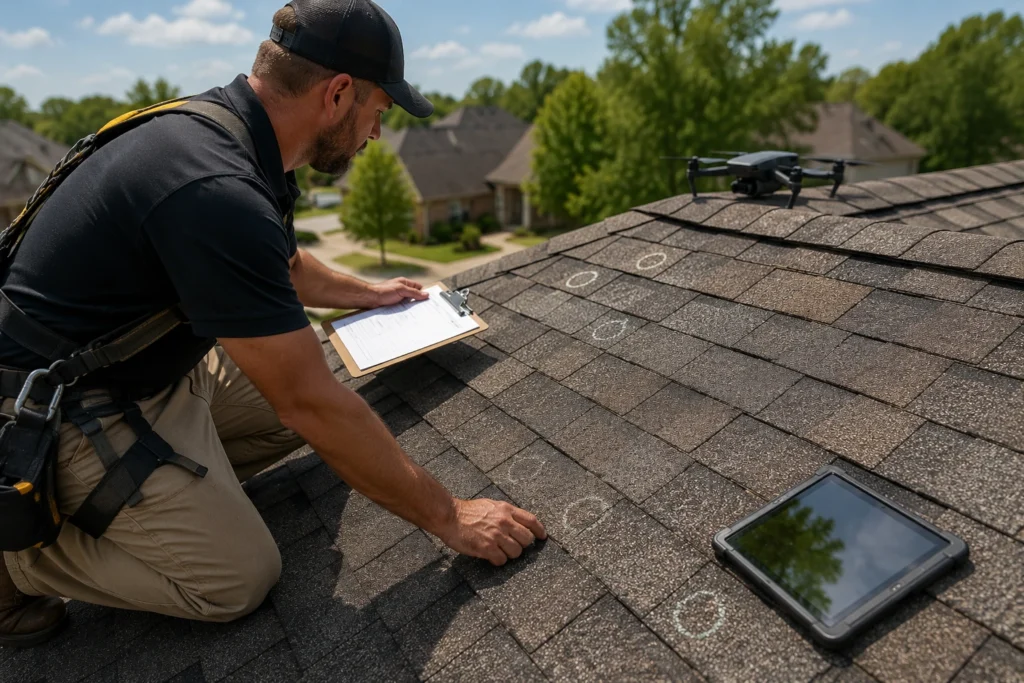
Professional inspectors look for damage patterns rather than isolated spots. A proper inspection may include:
- Test square analysis
- Impact density evaluation
- Moisture inspection
- Attic review
- Collateral damage assessment
- Shingle flexibility testing
Technology also improves inspection accuracy today.
| Inspection Technology | Purpose |
|---|---|
| Drone imaging | Detailed aerial roof photos |
| Moisture meters | Detect hidden water intrusion |
| Satellite measurements | Accurate roof dimensions |
| Thermal imaging | Identify trapped moisture |
These tools help strengthen documentation significantly. Especially during complicated insurance claims.
Insurance Claims and Asphalt Shingle Hail Damage
Insurance claims become stressful quickly after major storms. That is why identifying the signs of hail damage on asphalt shingles early matters so much.
Why Documentation Is Critical
Homeowners should document:
- Roof photographs
- Storm dates
- Inspection reports
- Repair invoices
- Communication records
- Weather event details
Organization creates leverage during claim discussions. Strong documentation often changes outcomes.
What Insurance Adjusters Examine
Adjusters commonly evaluate:
- Functional damage
- Roof age
- Repairability
- Matching concerns
- Impact distribution
- Collateral storm evidence
Functional damage usually matters more than cosmetic appearance alone. That distinction becomes extremely important during settlement discussions.
When Professional Help May Be Necessary
Some roof claims become complicated quickly. Especially when:
- Damage gets disputed
- Settlement offers appear incomplete
- Multiple inspections disagree
- Partial denials occur
- Supplement requests become necessary
At that point, additional professional guidance may help homeowners navigate the process more effectively.
Preventing Further Roof Damage After a Hailstorm
Fast action reduces long-term repair costs significantly. Even temporary protective measures help.
Immediate Protective Steps
After severe hailstorms:
- Schedule inspections quickly
- Tarp active leak areas
- Remove debris safely
- Photograph all visible damage
- Clean clogged gutters carefully
Moisture intrusion spreads fast once roofing systems become compromised.
Long-Term Roof Maintenance Tips
Preventive maintenance improves roof longevity substantially. Helpful practices include:
- Annual roof inspections
- Tree trimming
- Attic ventilation improvements
- Prompt shingle replacement
- Routine gutter cleaning
Long-term neglect usually turns minor damage into major repairs. Especially in Texas weather conditions.
Why Texas Homeowners Face Increasing Hail Risks
Texas experiences some of the most aggressive hail activity in the country. That creates enormous pressure on roofing systems every year. Severe weather frequency continues increasing. Insurance claim volume remains high. Roofing material costs fluctuate constantly. And asphalt shingles absorb the damage directly. The long-term wear pattern on damaged shingles can sometimes behave similarly to principles studied in Tribology especially when repeated friction and surface degradation accelerate roof aging. Storm impact patterns are also not always uniform because wind direction, roof slope, and material conditions create a distribution effect similar to Anisotropy in material behavior. That uneven impact distribution is one reason professional inspections matter after severe storms.
Final Thoughts
Hail damage rarely starts with catastrophic roof failure. Usually, it begins quietly. A few missing granules. Small bruises. Minor fractures hidden beneath the surface. Then time passes. Moisture spreads. Shingles weaken. Leaks develop. Repair costs rise. That is why recognizing the signs of hail damage on asphalt shingles early is so important for homeowners across Texas. The faster the damage gets identified, documented, and addressed, the easier it becomes to protect both the roof and the insurance claim process. After any major hailstorm, take roof inspections seriously. Even when everything looks normal from the driveway. Because some of the most expensive roofing problems begin with damage homeowners never noticed at first.
FAQs
Look for granule loss, dark impact spots, cracked shingles, bruising, and dents on nearby metal surfaces like gutters or vents.
Yes. Many roofs develop hidden damage first, and leaks may not appear until weeks or months later.
Hail bruises often appear as dark circular spots that feel soft or spongy when gently pressed during an inspection.
Small hail can still loose granules and weaken shingles over time, especially after repeated storms.
Yes. Early inspections help identify fresh damage before deterioration worsens or evidence becomes harder to document.
Many homeowner policies cover functional hail damage, but coverage depends on the policy language and inspection findings.
Hail impacts can knock protective granules off shingles, causing them to collect in gutters and downspouts.
Yes. Older shingles are usually more brittle and less flexible, making them more vulnerable during severe storms.
Ground-level inspections are safer for homeowners. Climbing onto a damaged roof without experience can be dangerous.
Some hail damage remains hidden for months before leaks, moisture problems, or visible deterioration finally appear.