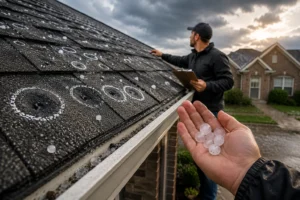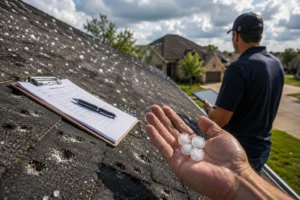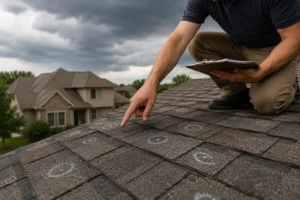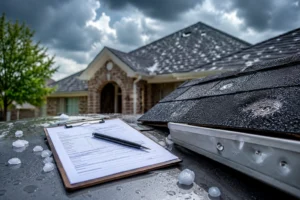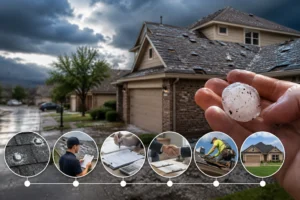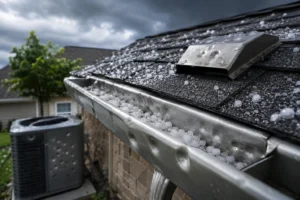

Hailstorms can create serious property damage within minutes. The immediate steps after a hailstorm often determine how much damage spreads, how smooth the insurance process becomes, and how expensive repairs eventually get. Many homeowners wait too long. That delay can become costly fast. Roof damage is not always obvious from the ground, and hidden moisture intrusion can quietly worsen over time. That is why acting quickly, documenting carefully, and protecting the property immediately are so important after severe weather hits.
Why Fast Action Matters After a Hailstorm
The first few hours after a storm are critical. Small roof damage can quickly turn into:
- Interior water intrusion
- Mold growth
- Ceiling stains
- Insulation damage
- Structural deterioration
The faster problems are identified, the easier they usually are to manage. Texas homeowners deal with severe hailstorms regularly, especially during peak storm seasons. Large hail combined with heavy wind often creates damage that continues worsening long after the storm passes. That is why understanding the immediate steps after a hailstorm matters so much.
Prioritize Safety Before Anything Else
Before checking the roof or contacting the insurance company, focus on safety first. Storm-damaged properties can contain hidden hazards everywhere. Immediately after the storm:
- Stay away from downed power lines
- Watch for broken glass
- Avoid unstable tree limbs
- Be careful around slippery surfaces
- Keep children and pets away from damaged areas
Do not climb onto the roof immediately after a hailstorm. Seriously. Wet roofing materials become extremely dangerous after hail impacts. A fall can turn a property emergency into a medical emergency very quickly. Start with a safe ground-level inspection instead.
Perform a Ground-Level Exterior Inspection
Walk around the property slowly and carefully. You are not trying to perform a full roofing inspection yet. The goal is to identify visible signs of storm impact that may indicate larger hidden problems above. Check areas like:
| Area | Common Hail Damage Signs |
|---|---|
| Gutters | Dents and separation |
| Garage doors | Circular impact marks |
| Window screens | Tears and punctures |
| Siding | Chips and cracks |
| HVAC units | Bent fins and dents |
| Downspouts | Metal impact marks |
Soft metals often show hail damage before roofing materials do. That matters. If gutters and vents contain heavy denting, there is a strong chance the roof also sustained impact damage. Take your time during this inspection. Small details matter later during insurance evaluations.
Document Everything Immediately
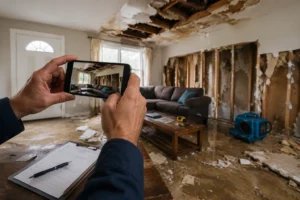
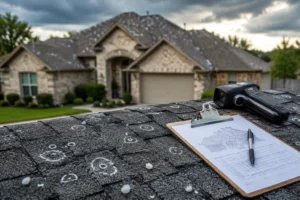
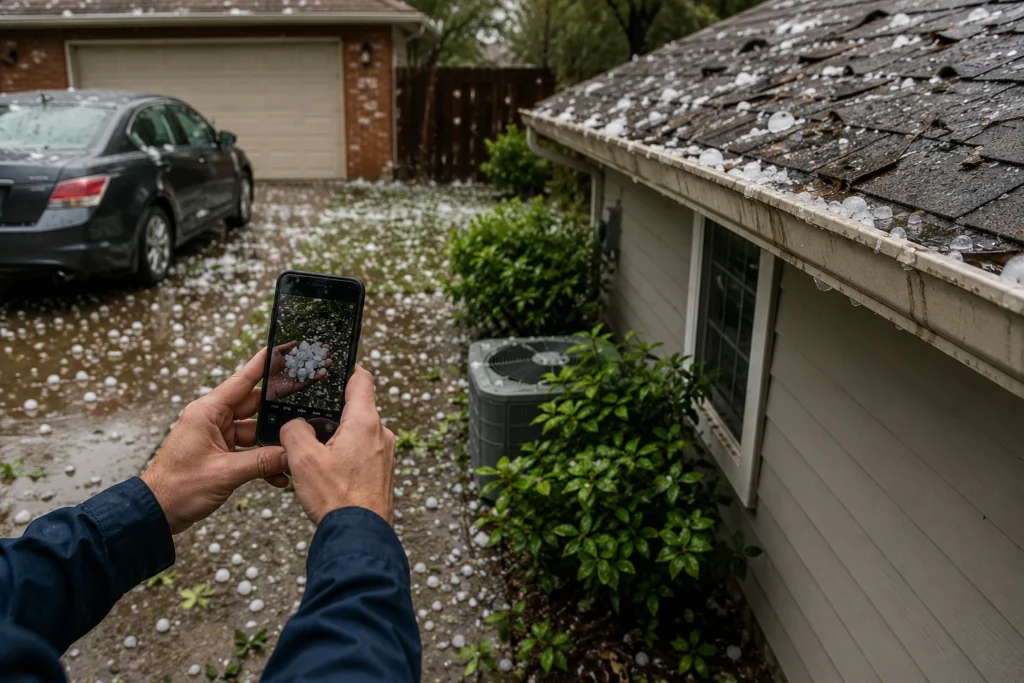
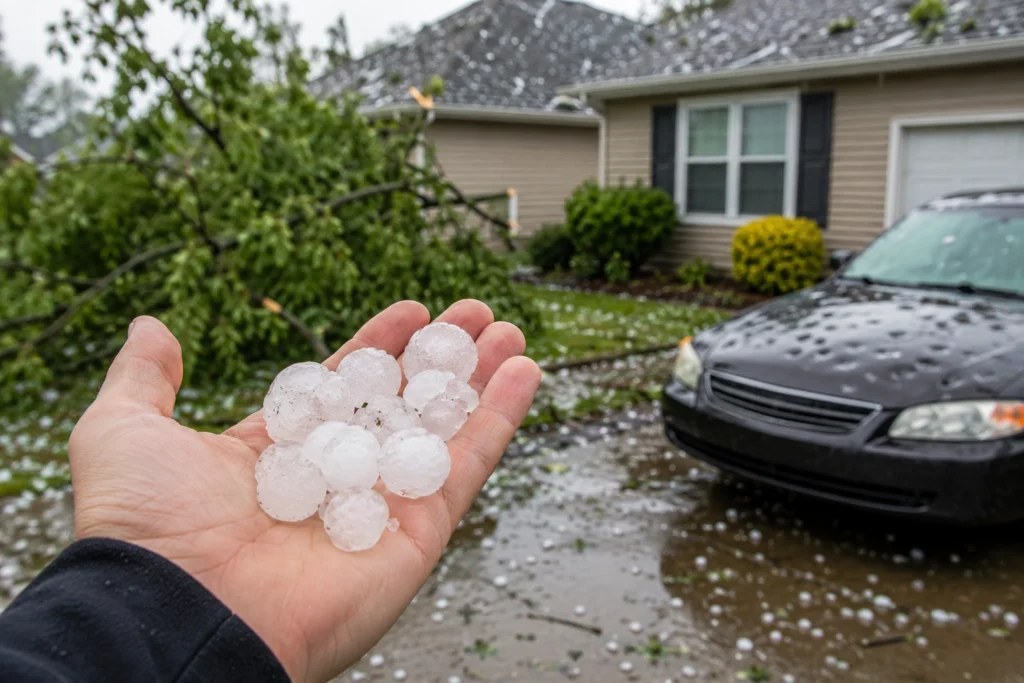
One of the most important immediate steps after a hailstorm is documentation. Do not wait until the next day. Start immediately. The strongest insurance claims are usually the best documented claims. Homeowners who gather clear evidence early often place themselves in far better positions during inspections and negotiations later. Take wide-angle and close-up photos of:
- Roof areas visible from the ground
- Damaged gutters
- Siding impacts
- Broken windows
- Fence damage
- Outdoor equipment
- Vehicles
- Water intrusion inside the home
Use video walkthroughs too. Videos help capture overall storm conditions in ways still photos sometimes miss. Helpful documentation tips include:
- Record the date and time
- Save weather alerts if available
- Organize photos into folders
- Back up files digitally
- Keep all communication records
Strong documentation creates clarity. And clarity reduces claim disputes later.
Protect the Property From Additional Damage
Most insurance policies require homeowners to take reasonable steps to prevent additional damage after a storm. This is extremely important. If water is entering the home, temporary mitigation should begin as soon as conditions are safe. Examples include:
- Placing tarps over exposed areas
- Using buckets for active leaks
- Removing wet materials
- Drying affected spaces quickly
- Boarding broken windows
Save every receipt connected to temporary repairs or emergency mitigation. Those expenses may become important later during reimbursement discussions. Water spreads fast inside buildings. Very fast. What begins as a small roof leak can eventually lead to:
- Mold growth
- Ceiling collapse
- Framing damage
- Electrical issues
- Flooring deterioration
Quick action limits long-term repair costs significantly.
Check the Interior for Hidden Damage
Exterior damage is only part of the story. Some of the most important evidence appears inside the home after a hailstorm. Walk through the property carefully and inspect:
- Ceilings
- Walls
- Attics
- Skylights
- Around windows
- Near vents
Watch for:
- Water stains
- Bubbling paint
- Damp insulation
- Musty odors
- Soft drywall
- Dripping water
Attics deserve special attention. A flashlight inspection inside the attic can sometimes reveal roof leaks long before ceiling stains become visible below. Even minor moisture can become a major problem if ignored.
Understand How Different Roof Types React to Hail
Not all roofing materials respond the same way after hail impacts. Damage patterns vary significantly depending on the roofing system.
Asphalt Shingle Roof Damage
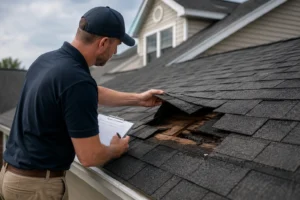
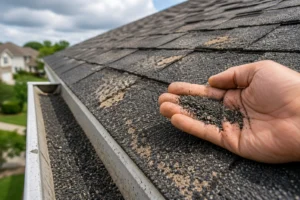
Asphalt shingles often develop:
- Bruising
- Granule loss
- Cracks
- Exposed fiberglass matting
Some impacts are subtle and difficult to spot without training.
Metal Roof Damage
Metal roofs may show:
- Dents
- Seam stress
- Fastener movement
- Cosmetic impact marks
In some situations, roofing performance can vary because of material Anisotropy after repeated storm impacts and temperature changes.
Tile Roof Damage
Tile systems commonly experience:
- Cracks
- Chipped edges
- Underlayment exposure
- Hidden fractures
Some tile damage remains almost invisible from the ground while still allowing moisture intrusion underneath. That is why professional inspections matter so much after severe storms.
Why Professional Roof Inspections Matter
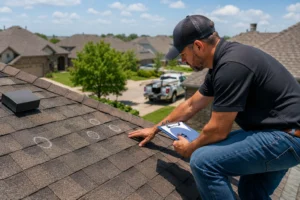
Professional inspections often uncover hidden damage homeowners never notice themselves. Experienced inspectors know where hail impacts commonly appear and understand how different roofing systems fail after severe weather. A proper inspection should include:
- Roof measurements
- Photo documentation
- Flashing evaluation
- Vent inspection
- Soft metal analysis
- Attic review
- Moisture assessment
Modern inspections may also involve:
- Drone imaging
- Moisture detection equipment
- Thermal imaging
- Satellite roof measurements
Detailed inspection reports create stronger support during insurance discussions later. And organization changes outcomes. Especially during complex claims.
Notify Your Insurance Company Quickly
Another critical part of the immediate steps after a hailstorm is timely claim reporting. Do not delay unnecessarily. Most insurance policies require prompt notification after property damage occurs. When contacting the insurance carrier:
- Stay calm
- Provide factual information
- Explain visible concerns clearly
- Ask about next procedural steps
- Request claim documentation instructions
Avoid guessing about the full extent of damage too early. You may not know everything yet. Focus on what is visible and documented. Keep records of every conversation, including:
- Dates
- Times
- Representative names
- Claim numbers
- Emails
- Inspection appointments
Organization becomes incredibly valuable later if delays or disputes develop.
Start a Dedicated Claim File
This step sounds simple. But it is one of the smartest things homeowners can do after a hailstorm. Create a dedicated folder for all storm-related documents. Include:
- Photos
- Videos
- Inspection reports
- Receipts
- Contractor estimates
- Emails
- Temporary repair invoices
- Insurance correspondence
Well-organized claims move more smoothly. Disorganized claims create confusion. Especially during major Texas catastrophe events when insurance systems become overloaded with thousands of claims simultaneously.
Understand Your Insurance Coverage
Many homeowners do not fully review their policies until damage occurs. That creates unnecessary surprises. Pay attention to:
| Coverage Item | Why It Matters |
|---|---|
| Deductible | Determines out-of-pocket costs |
| Replacement Cost | Covers full replacement value |
| Actual Cash Value | Includes depreciation |
| Wind/Hail Deductibles | May differ from standard deductibles |
| Exclusions | Identifies uncovered losses |
Some policies contain percentage-based hail deductibles tied to property value. Others apply separate limitations for cosmetic roof damage. Reviewing these details early improves decision-making later.
Common Mistakes Homeowners Make After Hailstorms
Storm recovery mistakes can create expensive long-term problems. Common issues include:
Waiting Too Long
- Small leaks spread quickly. Delays worsen damage.
Throwing Away Damaged Materials
- Damaged property may become important evidence later. Keep materials when possible.
Accepting the First Estimate Without Review
- Not every estimate captures full damage accurately. Review carefully. Ask questions.
Failing to Document Communication
- Written records matter enormously during disputes.
Hiring Contractors Too Quickly
- After severe Texas storms, aggressive storm-chasing contractors often flood neighborhoods immediately. Slow down. Verify licensing, reviews, and experience before signing agreements.
The Role of Public Adjusters After Major Hailstorms
Some claims become complicated fast. Especially large losses or disputed claims. Public adjusters assist policyholders by helping:
- Document damage
- Review estimates
- Analyze policy language
- Organize evidence
- Handle supplements
- Support negotiations
Additional assistance may become valuable when:
- Claims are delayed
- Damage gets disputed
- Underpayment concerns arise
- Multiple inspections disagree
- Commercial losses become complex
Not every claim requires outside representation. But complicated losses often benefit from experienced guidance.
Long-Term Problems That Develop After Hailstorms
Hail damage rarely improves over time. It worsens. Even small roof impacts can eventually lead to serious structural and moisture-related problems. Long-term risks include:
Moisture Intrusion
- Water enters through compromised roofing systems.
Mold Development
- Moisture trapped inside walls and attics creates ideal mold conditions. Some building materials accelerate moisture absorption through processes related to Hygroscopy which can worsen hidden interior deterioration over time.
Structural Damage
- Water weakens framing, insulation, drywall, and decking.
Reduced Roof Lifespan
- Even moderate hail damage can shorten roof performance significantly.
Future Insurance Problems
- Undocumented prior damage may complicate future claims. Fast action helps reduce all of these risks.
Practical Hailstorm Recovery Checklist
Here is a simple framework homeowners can follow immediately after severe weather strikes.
| Action | Why It Matters |
|---|---|
| Photograph all damage | Preserves evidence |
| Inspect the attic | Detects hidden leaks |
| Schedule a professional inspection | Identifies concealed damage |
| Protect exposed areas | Prevents worsening conditions |
| Save receipts | Supports reimbursement |
| Organize claim documents | Improves claim clarity |
| Track communication | Reduces confusion |
Simple organization creates enormous advantages later.
Texas Hailstorm Challenges Homeowners Should Understand
Texas hailstorms often generate extremely high claim volume. That affects everyone involved in the process. After major storms, homeowners may experience:
- Inspection delays
- Contractor shortages
- Material supply issues
- Slower claim processing
- Temporary repair backlogs
This does not automatically mean claims will fail. But it does mean preparation matters even more. The homeowners who act quickly and stay organized usually navigate the process far more effectively.
Final Thoughts
The immediate steps after a hailstorm can dramatically affect repair costs, property damage severity, and insurance claim outcomes. Fast documentation matters. Professional inspections matter. Organization matters. And early mitigation matters far more than most homeowners realize. Hailstorms are stressful. There is no way around that. But when homeowners understand exactly what to do after severe weather strikes, the recovery process becomes far less overwhelming Stay calm. Inspect safely. Document thoroughly. Protect the property quickly. And build strong records from the very beginning. Those early decisions often shape the entire recovery process moving forward.
FAQs
You should inspect your property as soon as conditions are safe. Early inspections help identify damage before it worsens.
Yes. Many hail-related roofing problems remain hidden for days or even weeks before water intrusion becomes visible.
It is usually safer to avoid climbing onto the roof immediately after a storm. Wet and damaged roofing materials can become extremely slippery and dangerous.
Take photos of all visible exterior and interior damage, including gutters, siding, windows, ceilings, vehicles, and any water intrusion.
Common signs include dents, granule loss, cracked shingles, damaged flashing, and bruising on roofing materials.
Yes. Even smaller hail can weaken roofing systems over time, especially when combined with strong winds and repeated storms.
Strong documentation helps support insurance claims and reduces disputes about the extent or timing of the damage.
Yes. Most insurance policies require homeowners to take reasonable steps to prevent additional damage after a storm.
You should notify your insurance carrier as soon as possible after discovering storm-related damage to avoid unnecessary delays.
A public adjuster helps policyholders document damage, review estimates, organize claim information, and assist during negotiations with the insurance company.