

If your home or commercial property in Pharr, Texas has been damaged by a hailstorm, severe wind, fire, water intrusion, or another covered event, navigating the insurance claim process can quickly become overwhelming. Between documenting the damage, understanding your policy, coordinating inspections, and negotiating with the insurance company, many property owners find themselves accepting settlements that don’t fully account for the cost of repairs.
At TX Public Adjusting, we represent policyholders—not insurance companies. As Rise Public Adjusting LLC (Texas License #3356839), our role is to advocate for homeowners and business owners throughout Pharr by thoroughly documenting losses, preparing detailed claim packages, and negotiating for a fair settlement. Whether your property is near South Cage Boulevard, Jackson Road, the Pharr-Reynosa International Bridge, or surrounding neighborhoods, our team provides experienced claim representation designed to help maximize your recovery.
If you’re unsure whether your insurance company has properly evaluated your claim, request a Free Claim Review from Texas Public Adjusting before accepting a settlement.
Why Property Owners Hire a Public Adjuster in Pharr
Pharr sits in the heart of Hidalgo County and serves as one of the Rio Grande Valley’s major commercial and transportation hubs. Thousands of residential and commercial properties are exposed each year to severe thunderstorms, hail, straight-line winds, flash flooding, and occasional tropical weather moving inland from the Gulf Coast.
Although insurance policies are designed to cover many of these losses, filing a successful claim often requires more than simply reporting damage.
Many property owners contact TX Public Adjusting after experiencing situations such as:
- The insurance estimate seems too low.
- Important damage was overlooked during the inspection.
- Roof replacement was denied despite visible storm damage.
- Interior water damage wasn’t fully included.
- Business interruption losses weren’t properly calculated.
- Multiple inspections produced conflicting findings.
- The claim has stalled with little communication.
Insurance adjusters work on behalf of insurance companies. Public adjusters work exclusively for policyholders. That difference can significantly affect how thoroughly damage is documented and how aggressively a claim is negotiated.
Our experience reviewing thousands of residential and commercial property claims throughout Texas allows us to identify damages that are commonly missed during initial inspections. If you’re unfamiliar with the claims process, our guide explaining What is a Public Adjuster? and Should I Use a Public Adjuster? can help you understand when professional representation may be beneficial.
Property Damage Challenges Unique to Pharr
Pharr’s location in South Texas creates a combination of weather-related risks that differ from many other parts of the state.
Severe Thunderstorms and Hail
Large hailstorms regularly impact Hidalgo County during spring and early summer. Even when hailstones appear relatively small, they can damage:
- Asphalt shingles
- Metal roofing
- Tile roofs
- Skylights
- Gutters
- HVAC systems
- Exterior paint
- Windows
Some hail damage is immediately visible, while other impacts shorten a roof’s lifespan without creating obvious leaks until months later.
A professional claim evaluation often identifies damage that was initially overlooked.
High Wind Events
Strong straight-line winds frequently accompany thunderstorms moving across the Rio Grande Valley.
Wind damage may include:
- Missing shingles
- Lifted roofing materials
- Damaged flashing
- Fence failures
- Broken windows
- Detached siding
- Fallen trees
- Structural impacts from debris
Wind damage can also create openings that later allow rainwater into the property.
Heavy Rain and Flash Flooding
Although Pharr generally receives less rainfall than coastal Texas, intense storms can produce large amounts of rain within a short period.
Heavy rainfall may lead to:
- Roof leaks
- Ceiling damage
- Wet insulation
- Interior drywall damage
- Flooring damage
- Electrical issues
- Mold growth if moisture isn’t addressed quickly
Proper documentation helps distinguish covered storm-related water damage from long-term maintenance issues.
Tropical Weather
While Pharr is inland, tropical systems that move north from the Gulf can still bring:
- Prolonged rainfall
- Strong winds
- Flying debris
- Roof failures
- Water intrusion
- Fallen trees
Commercial buildings are particularly vulnerable because even minor roof failures can result in significant interior damage affecting inventory, equipment, and operations.
Common Insurance Claims in Pharr
TX Public Adjusting assists both residential and commercial property owners with a wide variety of insurance claims throughout Pharr.
Hail Damage Claims
Hail is one of the leading causes of property insurance claims across South Texas.
Our team evaluates:
- Roof impacts
- Soft metal damage
- HVAC equipment
- Gutters
- Skylights
- Windows
- Exterior finishes
Proper documentation often includes photographs, measurements, inspection reports, and supporting evidence demonstrating storm-related damage. Learn more about Hail Damage Insurance Claims, how to Document Hail Damage for an Insurance Claim, and what insurers often overlook during a Hail Damage Roof Insurance Claim.
Water Damage Claims
Water losses can result from:
- Roof leaks
- Plumbing failures
- Appliance failures
- Storm intrusion
- Broken supply lines
- Overflow events
Water damage frequently extends far beyond what is immediately visible.
Moisture trapped behind walls or beneath flooring can create additional repair needs that should be included within the insurance claim. Our Water Damage Public Adjuster guide explains how hidden damage can affect claim value, while Dealing With an Insurance Adjuster After Water Damage outlines common challenges homeowners encounter during the claims process.
Fire and Smoke Damage Claims
Even relatively small fires may produce widespread smoke contamination throughout a property.
Fire-related claims often involve:
- Structural repairs
- Smoke damage
- Soot cleanup
- Odor removal
- Electrical repairs
- HVAC cleaning
- Personal property inventories
Preparing a complete fire loss inventory is one of the most time-consuming portions of many insurance claims. Additional resources include our guides on Fire Insurance Adjuster, Fire Damage Insurance, and House Fire Debris Removal Cost to help property owners better understand the recovery process.
Storm Damage Claims
Storm damage often involves multiple types of losses occurring simultaneously.
For example:
- Wind damages roofing.
- Rain enters the structure.
- Interior ceilings collapse.
- Flooring becomes saturated.
- Electrical systems are affected.
Each category of damage should be properly documented rather than evaluated individually. If your property was affected by a named storm, see our Texas guide covering Property Damage After a Hurricane.
Roof Damage Claims
Roof claims are among the most frequently disputed insurance losses.
Common issues include:
- Partial replacement recommendations
- Cosmetic damage disputes
- Missed flashing damage
- Underestimated repair costs
- Incorrect material pricing
- Incomplete measurements
A detailed roof inspection often reveals damage extending beyond what appears in the insurer’s initial estimate. You can also learn how a Public Adjuster for Roof Claim helps document losses and read our guide on Built-Up Roof Repair for commercial roofing systems.
Commercial Property Claims
Pharr’s thriving commercial sector includes:
- Warehouses
- Distribution facilities
- Retail centers
- Office buildings
- Restaurants
- Medical offices
- Manufacturing facilities
- Industrial properties
Commercial claims may involve:
- Building damage
- Equipment losses
- Inventory damage
- Tenant improvements
- Business interruption
- Extra expense coverage
Because commercial policies are often more complex than residential policies, careful documentation is essential to pursuing the full benefits available under the policy.
Why Insurance Claims Become Underpaid
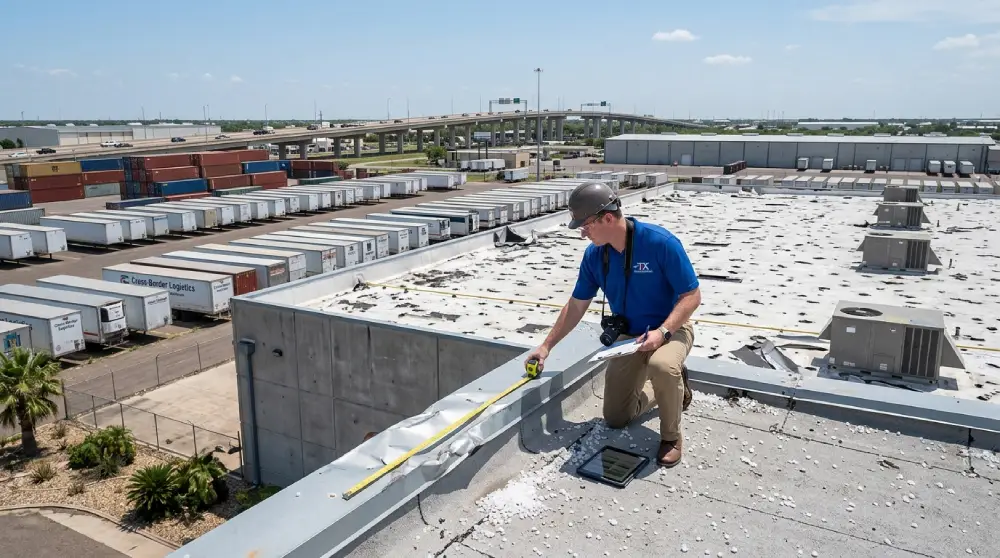
Many underpaid insurance claims are not the result of bad faith—they stem from incomplete inspections, missing documentation, or differing interpretations of the policy.
Some of the most common reasons include:
Incomplete Damage Assessments
Not every damaged component is visible during a brief inspection.
Roof systems, attic spaces, insulation, flashing, ventilation components, and hidden moisture may require a more detailed evaluation.
Scope Omissions
Insurance estimates sometimes exclude necessary work such as:
- Code-required upgrades
- Matching materials
- Painting adjacent areas
- Debris removal
- Detaching and resetting equipment
- Interior repairs related to roof leaks
Even small omissions can significantly affect the final settlement.
Depreciation Issues
Policies frequently apply depreciation to certain building materials.
Understanding when depreciation is recoverable—and ensuring it is properly documented—can make a meaningful difference in the total claim payment.
Low Repair Pricing
Insurance estimating software relies on pricing databases, but local labor availability, contractor demand, and material costs in the Rio Grande Valley may differ from standardized estimates.
Accurate contractor documentation can help support necessary adjustments.
Documentation Gaps
Insurance companies rely heavily on documentation.
Claims supported by detailed photographs, measurements, moisture readings, contractor reports, engineering evaluations when appropriate, and organized evidence are generally much stronger than claims supported only by a few photographs.
At TX Public Adjusting, we build comprehensive claim files designed to clearly demonstrate the full extent of covered damage before entering negotiations with the insurance carrier. Many claim problems can be avoided by understanding the Common Property Insurance Claims Mistakes homeowners make after a loss.
Our Public Adjusting Process
Every insurance claim is different, but successful claims almost always begin with a thorough investigation and organized documentation. At TX Public Adjusting, we follow a structured process designed to protect your interests from the initial inspection through the final settlement.
1. Free Claim Review
We begin by discussing your property damage, reviewing your insurance policy when available, and evaluating where your claim currently stands. Whether you have already filed a claim or are just beginning the process, we explain your options so you can make an informed decision.
During this consultation, we may identify coverage issues, documentation gaps, or areas where additional inspections could strengthen your claim.
2. Comprehensive Property Inspection
Our team performs a detailed inspection of the damaged property.
Depending on the type of loss, this may include:
- Roof inspections
- Exterior damage assessments
- Interior moisture evaluations
- Structural observations
- Commercial building inspections
- Equipment and inventory documentation
Rather than focusing only on obvious damage, we evaluate how different components of the property were affected by the covered event.
3. Claim Documentation
One of the most important parts of any insurance claim is creating accurate documentation.
Our team prepares detailed claim support that may include:
- High-resolution photographs
- Room-by-room damage inventories
- Roof measurements
- Repair estimates
- Building component documentation
- Personal property inventories
- Commercial equipment inventories
- Supporting contractor information when appropriate
Proper documentation helps demonstrate both the extent and value of the covered loss. Our Property Loss Recovery Guide explains how thorough documentation strengthens insurance claims from the beginning.
4. Communication With the Insurance Company
After assembling the claim package, we communicate directly with the insurance carrier on your behalf.
This includes:
- Responding to requests for information
- Coordinating inspections
- Reviewing estimates
- Identifying discrepancies
- Providing supplemental documentation
- Discussing policy provisions affecting coverage
Our goal is to ensure the insurance company has the information necessary to accurately evaluate the claim.
5. Negotiation and Settlement
Insurance claims often require multiple rounds of review before reaching a final settlement.
We compare the carrier’s estimate against documented damages and negotiate when necessary to address:
- Missing repairs
- Pricing differences
- Scope omissions
- Depreciation issues
- Code upgrade considerations
- Supplemental damage discovered during repairs
Once negotiations conclude, we review the proposed settlement with you and answer any remaining questions before the claim moves toward resolution. If negotiations reach an impasse, our guide to Appraisal for Hail Damage Claims explains one option available under many Texas insurance policies.
Why Choose TX Public Adjusting
Choosing a public adjuster means selecting someone who will advocate exclusively for your interests throughout the insurance claim process.
Property owners across Texas choose TX Public Adjusting because we provide:
Licensed Texas Representation
TX Public Adjusting operates as Rise Public Adjusting LLC and is licensed by the State of Texas under License #3356839.
Our work is performed in accordance with Texas regulations governing licensed public insurance adjusters.
We Represent Policyholders
Unlike insurance company adjusters, our responsibility is to the policyholder.
Our objective is to ensure that covered damages are thoroughly documented and fairly evaluated under the terms of your insurance policy. Learn more about the differences between a Public Adjuster vs. Independent Adjuster and why many property owners choose professional representation by reading Why Hire Public Adjusters.
Residential and Commercial Experience
Our team has reviewed thousands of residential and commercial insurance claims involving:
- Homes
- Apartment communities
- Retail centers
- Restaurants
- Office buildings
- Warehouses
- Industrial facilities
- Churches
- Multi-family properties
Each property type presents different challenges, requiring an approach tailored to the policy and the nature of the damage.
Texas-Focused Knowledge
Texas weather creates unique insurance claim challenges.
From hailstorms in North Texas to hurricanes along the Gulf Coast and severe thunderstorms throughout the Rio Grande Valley, we understand the types of losses Texas property owners face and how those losses are evaluated during the claims process.
Detailed Claim Preparation
Insurance claims often succeed because of preparation rather than persistence alone.
Our team invests significant time documenting damages, organizing evidence, and presenting a complete claim package before negotiations begin.
Insurance Companies May Not See Every Loss
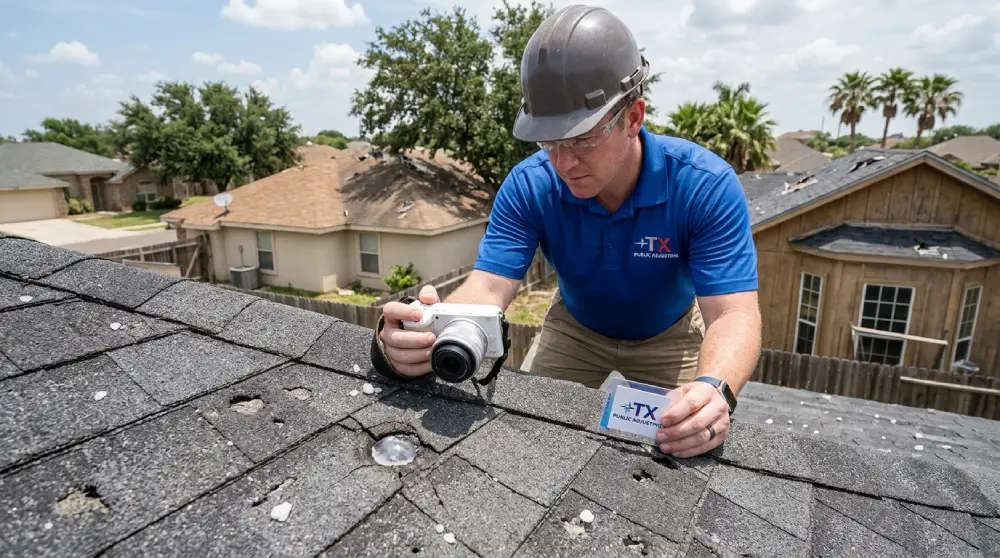
Even experienced adjusters can overlook damage during an initial inspection.
Examples include:
- Hidden moisture behind drywall
- Lifted roofing materials without visible leaks
- Flashing damage
- HVAC impacts from hail
- Detached waterproofing systems
- Code-required repairs
- Matching material issues
- Commercial equipment damage
When these items are not identified early, they may not appear in the initial insurance estimate.
Our role is to ensure those damages receive careful evaluation.
Serving Property Owners Throughout Pharr
TX Public Adjusting assists property owners throughout every area of Pharr, including neighborhoods and commercial corridors such as:
- Plantation South
- Las Milpas
- North Pharr
- West Pharr
- Sugar Road corridor
- Jackson Road corridor
- South Cage Boulevard
- Business districts surrounding the Pharr-Reynosa International Bridge
- Properties near Interstate 2 (Expressway 83)
- Developments surrounding Veterans Boulevard
Whether your property is an established neighborhood home, a recently constructed subdivision, a warehouse serving cross-border logistics, or a retail business along one of Pharr’s major commercial corridors, we provide the same detailed claim representation.
Areas We Serve Near Pharr
In addition to Pharr, TX Public Adjusting serves surrounding communities throughout Hidalgo County and the Rio Grande Valley, including:
- McAllen
- San Juan
- Alamo
- Edinburg
- Mission
- Donna
- Weslaco
- Hidalgo
- Palmhurst
- Alton
- Mercedes
- La Feria
- Harlingen
- Brownsville
- Rio Grande City
Our regional experience allows us to understand how local weather patterns, construction methods, and insurance claim trends vary across South Texas.
Commercial Claims in One of Texas’ Busiest Trade Corridors
Pharr plays a critical role in international commerce through the Pharr-Reynosa International Bridge and the surrounding industrial parks.
Commercial property owners often face losses involving:
- Distribution warehouses
- Cold storage facilities
- Manufacturing operations
- Freight terminals
- Retail shopping centers
- Medical offices
- Restaurants
- Office complexes
Business losses can extend well beyond physical damage.
A commercial claim may involve:
- Inventory losses
- Machinery damage
- Business interruption
- Extra expense coverage
- Tenant improvements
- Specialized equipment
- Time-sensitive operational impacts
Because these claims frequently involve multiple coverage provisions, careful documentation and policy review are essential before negotiations begin. Business owners often ask about costs as well. Our article on The Truth About Public Adjuster Fees explains how contingency-based representation works.
Free Claim Review
If your property in Pharr has sustained storm, hail, wind, fire, water, or other covered damage, you do not have to manage the insurance claim process alone.
TX Public Adjusting offers a Free Claim Review to help you better understand your policy, evaluate the documented damage, and determine whether additional benefits may be available under your coverage.
There are no upfront fees, and because we work on a contingency basis, our success is tied to yours. Our goal is to help residential and commercial property owners pursue fair insurance settlements through thorough documentation, experienced claim preparation, and professional negotiation.
Frequently Asked Questions
1. What does a public adjuster do?
A public adjuster represents policyholders, not insurance companies. At TX Public Adjusting, we inspect your property, document covered damage, review your insurance policy, prepare a detailed claim package, and negotiate directly with the insurance carrier on your behalf.
Our objective is to help ensure that your claim reflects the full scope of covered damage rather than relying solely on the insurance company’s initial estimate.
2. When should I hire a public adjuster?
Many property owners contact us immediately after discovering damage, but you can also hire a public adjuster after filing a claim if you believe the settlement is too low, damage was overlooked, or the claim has become difficult to resolve.
The earlier documentation begins, the easier it is to preserve evidence and present a complete claim. If you’re wondering whether you’ve waited too long to seek professional assistance, our guide, When Is It Too Late to Hire a Public Adjuster?, explains the key deadlines and situations where a public adjuster may still be able to help.
3. Can you help if my insurance company has already inspected my property?
Yes.
Many of our clients contact us after the insurance company’s inspection because they have concerns about the estimate or believe important damage was missed.
We perform an independent inspection and compare our findings with the carrier’s estimate to identify potential differences in scope or pricing.
4. What types of insurance claims do you handle in Pharr?
We assist with many residential and commercial property claims, including:
- Hail damage
- Wind damage
- Fire damage
- Smoke damage
- Water damage
- Roof damage
- Storm damage
- Commercial property losses
- Business interruption claims
- Vandalism
- Lightning damage
Each claim is evaluated individually based on the policy language and documented damages.
5. Do you work with commercial property owners?
Absolutely.
Pharr’s economy includes warehouses, logistics facilities, retail centers, restaurants, office buildings, and industrial properties. Commercial insurance claims often involve more complex documentation than residential claims, particularly when equipment, inventory, tenant improvements, or business interruption coverage are involved.
Our team has experience assisting commercial property owners throughout Texas with detailed claim preparation and negotiations.
6. How are public adjusters paid?
TX Public Adjusting works on a contingency fee basis.
That means there are no upfront fees for our services. Our fee is earned only if we successfully recover additional funds under your insurance claim, as outlined in our agreement and in accordance with Texas regulations. If you’re evaluating whether hiring a public adjuster is the right decision for your situation, our Smart Property Owner’s Guide to Choosing the Right Public Adjuster outlines the qualifications, questions, and credentials to consider before making your choice.
7. Can you help with denied or underpaid claims?
Yes.
If your claim has been denied or the settlement appears insufficient to repair the covered damage, we can review the documentation, inspect the property, and determine whether additional information may support reopening or supplementing the claim.
Every claim is unique, so we provide recommendations based on the specific facts of your loss. If your roof or hail claim has already been denied, our guide, What To Do If Your Hail Claim Was Denied, explains common reasons for denials and the next steps available to many Texas property owners.
8. How long does the insurance claim process take?
The timeline varies depending on the complexity of the claim, the extent of the damage, the responsiveness of the insurance company, and whether supplemental damage is discovered during repairs.
Smaller claims may resolve relatively quickly, while larger residential and commercial losses often require additional inspections and multiple rounds of negotiations.
Throughout the process, we keep clients informed so they understand the current status of their claim. For more information about insurer response deadlines, read How Long Does an Insurance Adjuster Have to Contact You?
9. Why are hail claims so common in the Rio Grande Valley?
South Texas experiences frequent severe thunderstorms capable of producing damaging hail and high winds.
Even when hail appears minor, it can shorten the lifespan of roofing materials, damage metal components, dent HVAC equipment, and create openings that later allow water intrusion.
Because some damage is difficult to recognize from the ground, a professional inspection is often beneficial after a significant storm.
10. Why choose TX Public Adjusting?
Property owners choose TX Public Adjusting because we provide:
- Licensed Texas public adjusting services
- Representation exclusively for policyholders
- Residential and commercial claim experience
- Thorough documentation
- Detailed claim preparation
- Professional negotiations with insurance carriers
- Free Claim Reviews
- No upfront fees
As Rise Public Adjusting LLC (Texas License #3356839), we are committed to helping Texas property owners pursue fair outcomes under their insurance policies. If you’d like to better understand what to expect after hiring a public adjuster, our article How Do Public Adjusters Work? walks through each stage of the claims process, from inspection and documentation to negotiation and settlement.
Get a Free Claim Review in Pharr
Property damage can disrupt your home, your business, and your financial plans. Whether you’re dealing with hail damage after a spring storm, roof leaks following heavy rain, fire damage, or a complex commercial property loss, having an experienced advocate can make a meaningful difference in how your claim is documented and presented.
At TX Public Adjusting, we work exclusively for policyholders—not insurance companies. We carefully inspect damaged property, prepare comprehensive claim documentation, negotiate directly with the carrier, and help ensure that covered losses receive the attention they deserve.
Contact TX Public Adjusting today to schedule your Free Claim Review and speak with a licensed Texas public adjuster about your residential or commercial property damage claim.