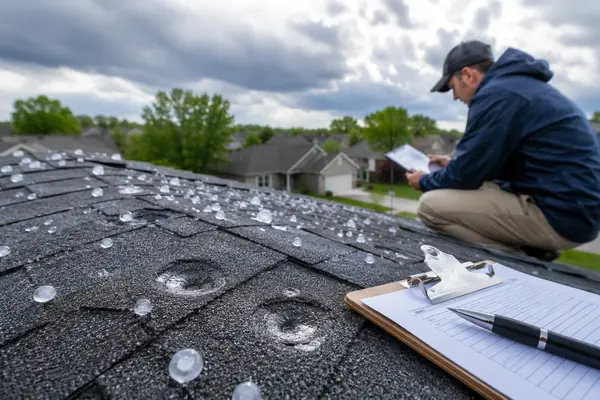
Self-storage facilities are mostly metal: metal roofs, metal wall panels, and metal roll-up doors, repeated across many single-story buildings. That makes hail damage easy to see and hard to get paid for. The insurer's first questions are usually whether the dents are cosmetic, and whether your policy excludes cosmetic damage to metal. The answer to the first is a matter of evidence; the answer to the second is in your endorsements. We start with both.
Many metal buildings, counted one at a time
A storage property may have a dozen or more buildings, plus an office, a covered RV and boat parking canopy, climate-controlled interior units, fencing, gate operators, and keypads. An estimate that lumps everything into "metal roofing, all buildings" makes it impossible to see what's missing. We document each building separately:
- Roof panels, ridge cap, trim, and gutters, by slope
- Wall panels and corner trim on each elevation
- Every roll-up door, by unit number, with its size
- Skylights or translucent panels, if present
- Canopies, gates, keypads, cameras, lighting, and signage
The Xactimate estimate then follows the facility's own building letters and unit numbers, which is also how your manager and contractor already think about the property.
Roll-up doors
Hail dents roll-up door curtains, and wind can push doors out of their guides. A dented curtain may still open, but heavy denting can make it bind, crease at the slats, or fail to seal. Questions that come up:
- Is the door damaged in a way that affects operation, weather-tightness, or security?
- Can individual slats or the curtain be replaced, or does the whole door assembly need replacement?
- Are replacement curtains available in a matching color and profile?
- Does replacing doors require removing tenant goods or entering occupied units?
Count and photograph every door, including doors on occupied units. Access and tenant coordination add real labor cost to the job.
Metal roof hail dents and cosmetic exclusions
Many Texas commercial policies now carry a cosmetic damage exclusion for metal roofing, and some extend it to metal siding or doors. These typically exclude dents that change the appearance but don't let water in or shorten the life of the panel. Whether yours has one depends on the endorsements, and the exact wording matters a great deal.
Evidence of functional damage
- Dents at seams, laps, and fastener locations that open gaps
- Cracked or chipped coatings that expose metal to corrosion
- Damaged ridge caps, trim, and flashings that leak
- Water stains or leaks inside units after the storm
What insurers call cosmetic
- Dents in the flat of the panel with intact coating
- Denting that doesn't affect fasteners or seams
- Appearance changes with no leak path
Even with an exclusion, functional damage remains covered under most wordings, and other components like skylights, gutters, and door operators aren't affected by a metal roof exclusion. If you don't have the exclusion, dents that change the appearance may be covered as direct physical loss. See cosmetic vs. functional hail damage for more on how this argument plays out.
Tenants' contents vs. the owner's policy
After a storm, tenants call the office about wet or damaged belongings. Your property policy generally covers your buildings and your business property, not the goods tenants store with you. Tenants' belongings are usually covered by:
- A tenant protection plan or insurance program offered through the facility, if you have one
- The tenant's own homeowners or renters policy, which may cover property stored off-premises, often subject to a lower limit
- A business tenant's own commercial policy
Some owners also carry customer goods legal liability coverage, which responds when the owner is found legally responsible for the damage. Know what your rental agreement says before responding to tenants, and don't make promises about coverage on behalf of any insurer. Water entering units through a damaged roof or door is still part of your building claim, and those unit numbers help document the leak paths.
Income loss at a storage facility
Storage income usually doesn't stop after a storm, but it can drop when units are unrentable because of leaks or broken doors, or when tenants move out. If your policy includes business income coverage, track the units taken offline, the dates they returned, and move-outs tied to the damage. Your management software reports are the record.
For more on metal roofs and hail, see our roof and hail damage claims service and how insurance companies evaluate hail damage. To confirm hail fell at your facility on the date of loss, try the storm report lookup.
Frequently asked questions
Are dented roll-up doors at a storage facility covered after hail?
They may be, depending on whether the dents affect operation or sealing and whether your policy has a cosmetic exclusion that extends to doors. Count and photograph every door by unit number.
Does the storage facility owner's insurance cover tenants' belongings?
Generally no. Tenants' goods are usually covered by a tenant protection plan, the tenant's own homeowners or renters policy, or their business policy. Some owners carry legal liability coverage for customer goods, which works differently.
What is a cosmetic damage exclusion on a metal storage building?
It is an endorsement that excludes hail dents that change appearance but don't affect water-tightness or service life. Functional damage, such as dents at seams or fasteners, is usually still covered.