

When property damage disrupts your home or business, every decision that follows can affect your financial recovery. If you’re searching for a Public Adjuster in Cleburne, TX, you need an advocate who represents your interests—not the insurance company. TX Public Adjusting, operated by Rise Public Adjusting LLC (Texas License #3356839), helps residential and commercial property owners document losses, prepare insurance claims, and negotiate fair settlements throughout Cleburne and Johnson County.
From hailstorms rolling across North Texas to wind-driven rain, fire damage, plumbing failures, and commercial property losses, Cleburne property owners face a variety of risks each year. Insurance policies often provide valuable coverage, but receiving the full benefits available under your policy depends on accurately identifying, documenting, and presenting every covered loss.
Our role is simple: we work exclusively for policyholders. We perform a detailed inspection, prepare comprehensive claim documentation, and negotiate directly with the insurance carrier so you don’t have to navigate the process alone. If you’re unfamiliar with what a public adjuster does, our complete guide explains how public adjusters represent policyholders throughout the insurance claim process.
Free Claim Review Available
If your property in Cleburne has suffered damage and you’re unsure whether your insurance estimate reflects the true extent of the loss, TX Public Adjusting offers a no-obligation claim review.
Why Property Owners Hire a Public Adjuster in Cleburne
Located in Johnson County, Cleburne combines historic neighborhoods, expanding residential communities, industrial businesses, agricultural properties, and retail developments. Its location south of Fort Worth places it within one of Texas’ most active severe weather corridors.
Many local property owners discover that the greatest challenge isn’t filing an insurance claim—it’s proving every covered item of damage.
Insurance company adjusters may inspect dozens of properties after a major storm. While many work professionally, time constraints and high claim volume can lead to:
- Incomplete inspections
- Missed roof damage
- Hidden moisture issues
- Overlooked structural damage
- Low repair scopes
- Depreciation that significantly reduces settlement values
A public adjuster performs an independent evaluation designed to uncover the full scope of covered damage.
For homeowners near Nolan River Road, established neighborhoods surrounding Hulen Park, or growing developments along U.S. Highway 67, every property presents unique construction characteristics that require careful evaluation.
Commercial property owners near the Cleburne Railroaders’ La Moderna Field, industrial corridors, warehouses, churches, apartment complexes, and retail centers often face even more complex claims involving:
- Business interruption
- Equipment losses
- Tenant improvements
- Inventory damage
- Code upgrades
- Multiple buildings
Having an experienced public adjuster manage documentation and negotiations can make the process significantly more manageable. If you’re still deciding should I use a public adjuster, consider the complexity of your claim, the extent of the damage, and the time required to properly document every covered loss. Although Cleburne is inland, remnants of Gulf Coast storms can still produce damaging wind and heavy rainfall, making it helpful to understand how insurance policies address property damage after a hurricane.
Property Damage Risks in Cleburne
Cleburne experiences a wide range of weather events throughout the year that commonly lead to insurance claims.
Hail Damage
North Texas is nationally recognized for frequent hailstorms.
Even moderate hail can damage:
- Asphalt shingles
- Metal roofing
- Gutters
- Skylights
- Window screens
- HVAC systems
- Exterior paint
- Siding
Not every impact is obvious from the ground. Functional damage often requires a professional roof inspection. If your roof was impacted by a recent storm, our guide to a hail damage roof insurance claim explains how to identify covered damage, document your loss, and strengthen your insurance claim. Taking photographs immediately after a storm can strengthen your claim, and our guide shows you how to document hail damage effectively before repairs begin.
Wind Damage
Strong spring thunderstorms regularly produce damaging straight-line winds across Johnson County.
Wind may cause:
- Missing shingles
- Lifted roofing systems
- Fence failures
- Detached siding
- Broken windows
- Fallen trees
- Structural impacts
Wind damage frequently allows water intrusion that becomes apparent weeks later.
Water Damage
Water losses occur year-round in Cleburne.
Common causes include:
- Burst plumbing
- Water heater failures
- Appliance leaks
- Roof leaks
- Overflowing fixtures
- Frozen pipes during winter cold snaps
Without prompt drying, water damage can spread into insulation, flooring, drywall, framing, and cabinetry. When hidden moisture or plumbing failures create significant property damage, working with a water damage public adjuster can help ensure all covered repairs are properly documented.
Fire and Smoke Damage
Residential fires can leave behind extensive structural damage as well as smoke contamination throughout unaffected portions of a home.
Commercial fires often involve:
- Inventory losses
- Equipment replacement
- Electrical systems
- HVAC contamination
- Business interruption
These claims require extensive documentation to ensure all covered losses are identified. Our experienced fire insurance adjuster team helps homeowners and business owners document structural damage, smoke contamination, and personal property losses after a fire.
Roof Damage
Roof damage is among the most disputed insurance claims.
Many estimates address only visible shingle replacement while overlooking:
- Underlayment
- Flashing
- Vent components
- Ridge caps
- Gutters
- Interior moisture damage
- Code-required upgrades
A comprehensive inspection helps establish the full scope of necessary repairs. If your insurance carrier questions the extent of roof damage, a public adjuster for roof claim can perform an independent inspection and negotiate for a more accurate repair scope.
Commercial Property Claims
Businesses throughout Cleburne depend on their facilities remaining operational.
Commercial claims may involve:
- Office buildings
- Manufacturing facilities
- Retail stores
- Churches
- Medical offices
- Agricultural buildings
- Warehouses
- Multifamily housing
These losses often require detailed inventories, contractor estimates, engineering evaluations, and coordination among multiple parties.
Local Factors That Influence Insurance Claims in Cleburne
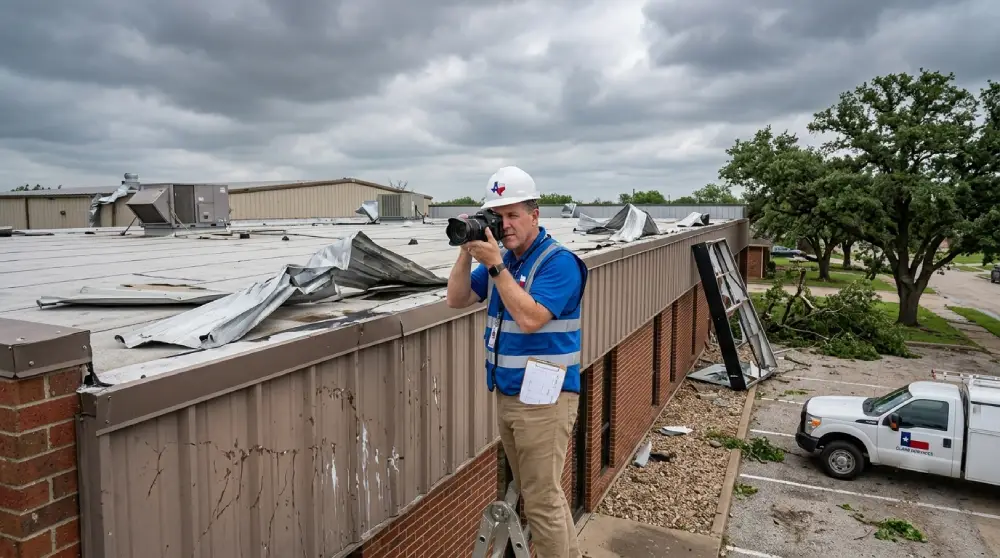
Cleburne has characteristics that distinguish it from larger metropolitan areas.
Historic homes near Downtown Cleburne frequently require specialized materials and craftsmanship during repairs. Older electrical systems, plaster walls, and unique architectural details can increase repair complexity and cost.
Newer subdivisions on the city’s western and northern edges may feature modern roofing systems and current building code requirements that affect claim valuations.
Businesses located along U.S. Highway 67, Henderson Street, and near the Cleburne Conference Center often experience interruptions following severe weather, particularly when roofing systems or storefronts sustain damage.
Local landmarks such as Cleburne State Park, Layland Museum, and Plaza Theatre Company also reflect the city’s blend of historic and modern structures, illustrating why property construction varies significantly throughout the community. Each building type requires an individualized claim evaluation rather than a one-size-fits-all estimate.
Common Insurance Claims We Help With in Cleburne
TX Public Adjusting assists policyholders with a wide range of residential and commercial claims, including:
- Hail damage claims
- Wind damage claims
- Roof damage claims
- Fire damage claims
- Smoke damage claims
- Water damage claims
- Storm damage claims
- Plumbing leak claims
- Commercial property losses
- Business interruption claims
- Vandalism claims
- Structural damage claims
- Interior water intrusion
- Falling tree damage
- Lightning damage
Whether the damage affects a single-family home or a large commercial facility, every claim begins with understanding what the insurance policy covers and documenting those losses thoroughly.
Why Insurance Claims Become Underpaid
Many policyholders are surprised to learn that underpaid claims are not always the result of a denied claim. Often, the issue is that portions of the damage are never identified or included in the original estimate.
Common reasons include:
Missed Damage
Some damage isn’t immediately visible. Moisture behind walls, compromised roofing components, insulation damage, or structural movement may require a more detailed inspection than a standard site visit provides.
Incomplete Scope of Repairs
An estimate may account for replacing damaged shingles but omit flashing, ventilation components, gutters, or interior repairs that are necessary to restore the property properly.
Depreciation
Insurance carriers often apply depreciation based on the age and condition of building materials. While appropriate in some situations, depreciation calculations can significantly affect settlement amounts and should be carefully reviewed.
Documentation Gaps
Insurance companies rely heavily on documentation. If damage is not photographed, measured, described, and supported with estimates or other evidence, it may not be included in the claim valuation.
Code Requirements
Local building codes sometimes require additional work when repairs exceed certain thresholds. If code-related upgrades are covered under the policy, they should be evaluated as part of the claim rather than overlooked.
Complex Commercial Losses
Commercial claims often involve multiple buildings, specialized equipment, tenant improvements, inventory, or lost business income. Missing any of these components can materially affect the overall value of the claim.
At TX Public Adjusting, our process is designed to identify these issues before negotiations begin, helping ensure the insurance carrier has a complete picture of the covered damage.
Learning how public adjusters work can give you a better understanding of the inspection, documentation, negotiation, and settlement process before you begin your claim. Avoiding common property insurance claims mistakes can improve the quality of your documentation and reduce delays during the claims process.
Our Public Adjusting Process
Every insurance claim is different, but our approach is built around one objective: presenting a complete, well-supported claim that accurately reflects the covered damage to your property. Whether you’re dealing with hail damage after a spring storm or extensive fire damage to a commercial building, we follow a structured process that keeps your claim organized from start to finish.
1. Initial Claim Review
We begin with a free consultation to understand what happened, the type of property involved, and where your claim currently stands.
During this conversation, we discuss:
- The cause of the damage
- When the loss occurred
- Whether a claim has already been filed
- Any inspections completed by the insurance company
- Concerns about the settlement offer or claim handling
Even if your insurance company has already issued an estimate, it may still be possible to identify additional covered damage.
2. Comprehensive Property Inspection
Our inspection goes beyond a visual walk-through.
We carefully examine all areas that may have sustained covered damage, including:
- Roofing systems
- Exterior elevations
- Gutters and downspouts
- Windows and doors
- Interior ceilings
- Walls
- Flooring
- Cabinets
- Structural components
- Mechanical systems when applicable
For commercial properties, we also evaluate:
- Tenant improvements
- Equipment
- Warehouses
- Production areas
- Offices
- Inventory storage
- Common areas
Our goal is to understand the full extent of the loss before negotiations begin.
3. Documentation and Claim Preparation
Insurance companies rely on documentation when evaluating claims. Thorough preparation can significantly improve the quality of discussions during the adjustment process.
Our documentation may include:
- Detailed photographs
- Room-by-room inventories
- Measurements
- Damage descriptions
- Repair estimates
- Supporting contractor information
- Building code considerations
- Policy review
Rather than focusing only on obvious damage, we document how different components of the property have been affected.
4. Negotiation With the Insurance Carrier
Once documentation is complete, we communicate directly with the insurance company on your behalf.
This includes:
- Responding to requests for information
- Reviewing estimates
- Discussing overlooked damage
- Addressing scope differences
- Supporting supplemental requests when appropriate
Our objective is to help ensure that covered damage receives appropriate consideration under the terms of the insurance policy.
5. Claim Resolution
After negotiations conclude, we review the outcome with you and explain the settlement in plain language.
If additional covered damage is discovered during repairs, supplemental claims may also be appropriate depending on the circumstances and policy language.
Throughout the process, you’ll have a single point of contact who keeps you informed and answers questions as your claim progresses.
Why Choose TX Public Adjusting
Property owners throughout Texas choose TX Public Adjusting because we focus exclusively on representing policyholders—not insurance companies.
Licensed Texas Public Adjuster
TX Public Adjusting operates under Rise Public Adjusting LLC, Texas License #3356839.
Our work complies with Texas regulations governing licensed public insurance adjusters.
We Represent You
Insurance company adjusters work for the insurance carrier.
Independent adjusters are also hired by insurance companies.
A public adjuster works for the policyholder.
That distinction matters because our responsibility is to advocate for your interests throughout the claim process. Knowing the difference between a public adjuster vs. independent adjuster is important because each serves a different party during the insurance claim process.
Residential and Commercial Experience
Our team assists with claims involving:
- Single-family homes
- Luxury residences
- Condominiums
- Apartment communities
- Churches
- Retail buildings
- Restaurants
- Office buildings
- Industrial facilities
- Warehouses
- Agricultural properties
We have experience reviewing thousands of property damage claims across Texas and understand the documentation required for both residential and commercial losses.
Texas-Focused Knowledge
Texas weather presents unique insurance claim challenges.
Our experience includes claims involving:
- Severe hailstorms
- Tornado-related wind damage
- Straight-line winds
- Hurricane impacts
- Water losses
- Fire damage
- Roof failures
- Commercial property damage
Understanding regional weather patterns and construction practices helps us prepare stronger, more accurate claims for Texas property owners. Understanding why hire a public adjuster can help you see how independent representation differs from relying solely on the insurance company’s evaluation.
Independent Claim Evaluation
Every property is different.
Rather than relying solely on an insurance company’s inspection, we conduct our own evaluation to identify covered damage that may not have been included in the original estimate.
This independent approach allows us to prepare a claim based on the actual condition of the property.
Areas We Serve Near Cleburne
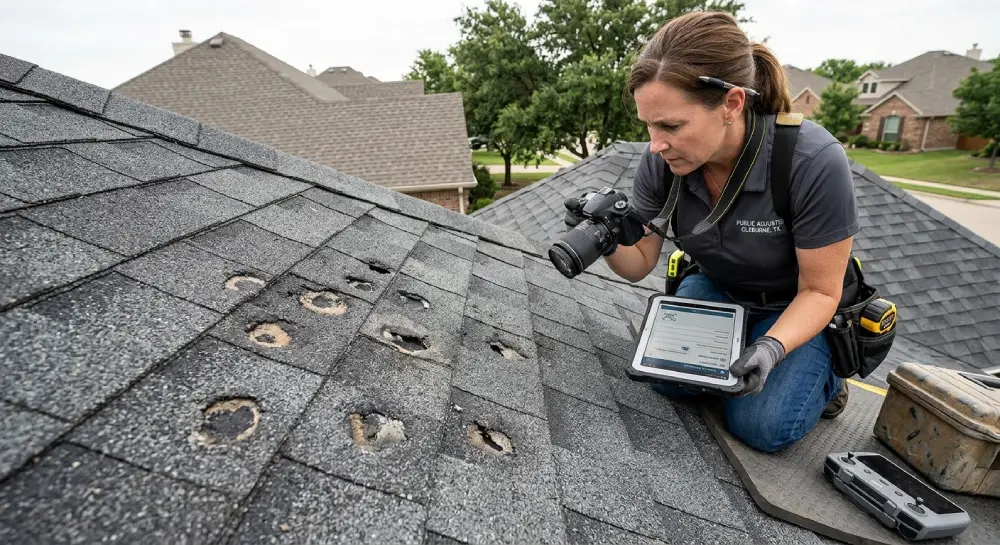
In addition to serving property owners throughout Cleburne, TX Public Adjusting also assists clients across Johnson County and surrounding communities, including:
- Joshua
- Keene
- Godley
- Alvarado
- Grandview
- Rio Vista
- Burleson
- Crowley
- Venus
- Glen Rose
- Granbury
- Mansfield
- Fort Worth
- Midlothian
- Waxahachie
Whether your property is located in downtown Cleburne, a rural area outside the city, or a neighboring community, we can help evaluate your insurance claim and explain your options.
Frequently Asked Questions
1. What does a public adjuster do for property owners in Cleburne?
A public adjuster represents the policyholder throughout the insurance claim process. Unlike insurance company adjusters, who work for the carrier, a public adjuster works exclusively for you. At TX Public Adjusting, we inspect the damage, review your insurance policy, prepare detailed documentation, and negotiate directly with the insurance company.
Whether your property is near Downtown Cleburne, Hulen Park, or in one of the newer residential communities along U.S. Highway 67, our goal is to help ensure your claim reflects the full extent of covered damage.
2. When should I contact a public adjuster?
The best time is as soon as practical after discovering property damage. Early involvement allows us to document conditions before repairs begin and before important evidence is lost.
However, many property owners contact us after receiving an estimate they believe is too low or after discovering additional damage during repairs. Depending on your policy and claim status, we may still be able to assist.
3. Can you help if my insurance company has already inspected my property?
Yes.
An insurance company inspection does not necessarily identify every covered item of damage. If you believe your estimate is incomplete or does not accurately reflect the repairs required, we can perform an independent evaluation and determine whether additional covered damage should be documented.
4. What types of insurance claims do you handle in Cleburne?
We assist with a wide variety of residential and commercial property claims, including:
- Hail damage
- Wind damage
- Roof damage
- Fire and smoke damage
- Water damage
- Plumbing leaks
- Storm damage
- Commercial property losses
- Business interruption
- Structural damage
- Lightning damage
Every claim is different, so we tailor our approach to the specific property and policy involved.
5. Do you work with commercial property owners?
Absolutely.
TX Public Adjusting represents owners of office buildings, retail centers, apartment communities, warehouses, churches, manufacturing facilities, restaurants, agricultural buildings, and other commercial properties throughout Cleburne and Johnson County.
Commercial insurance claims often involve more extensive documentation, multiple stakeholders, and larger repair scopes, making experienced claim management especially valuable.
6. How are public adjusters paid?
Public adjusters are typically compensated through a contingency fee agreed upon before representation begins.
That means there are no upfront fees for our services. We are paid only if we successfully recover additional benefits under the terms of our agreement. During your free claim review, we’ll explain how our fee structure works so you can make an informed decision. If you’d like more information about how public adjusters are paid, our guide explains contingency fees and what property owners should expect before signing an agreement.
7. What if my insurance claim has already been denied?
A denial does not always mean the matter is over.
Depending on the reason for the denial and the specific policy language, additional documentation, expert evaluations, or supplemental information may help clarify the claim. We can review your file and discuss whether additional options may be available. If your carrier has rejected your claim, our resource on what to do if your hail claim was denied outlines practical next steps that may still be available.
8. How long does the insurance claim process usually take?
Every claim follows its own timeline.
Factors that can affect the process include:
- The extent of the damage
- The complexity of the property
- The responsiveness of contractors
- Engineering evaluations
- Insurance company review timelines
- Weather-related claim volume
Our role is to keep the process organized, respond promptly to requests for information, and help move the claim forward efficiently.
9. Why are hail claims so common in Cleburne?
Cleburne is located within one of Texas’ most active severe weather regions. Spring and early summer storms frequently produce hail capable of damaging roofing materials, gutters, siding, windows, HVAC equipment, and exterior finishes.
Some hail damage may not be obvious from the ground, which is why professional inspections are often recommended following significant storms.
10. Why choose TX Public Adjusting for my Cleburne insurance claim?
TX Public Adjusting combines Texas-focused experience with independent representation for policyholders.
As Rise Public Adjusting LLC, Texas License #3356839, we work exclusively for residential and commercial property owners—not insurance companies. Our approach emphasizes detailed inspections, thorough documentation, clear communication, and professional negotiations designed to help policyholders pursue the benefits available under their insurance policies.
Free Claim Review
Property damage creates enough uncertainty without having to wonder whether your insurance claim fully reflects the damage you’ve suffered. Many property owners assume they’ve waited too long, but understanding when it is too late to hire a public adjuster may help you determine whether assistance is still available.
If your home or commercial property in Cleburne has experienced hail, wind, fire, water, or storm damage, TX Public Adjusting can review your claim, inspect your property, and explain what we find before you make important decisions.
We work on a contingency-fee basis, meaning there are no upfront fees, and we are paid only if we recover additional benefits on your behalf according to our agreement.
Contact TX Public Adjusting today to schedule your Free Claim Review and learn how a licensed Texas public adjuster can help you pursue the insurance settlement your policy provides.