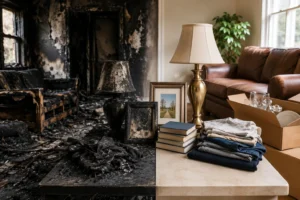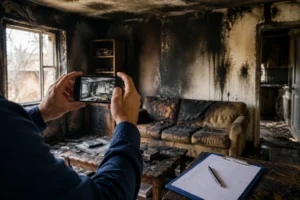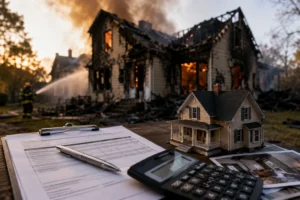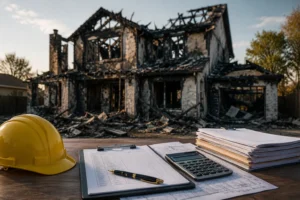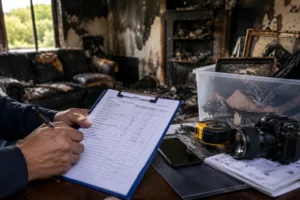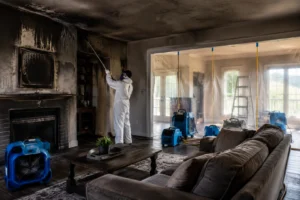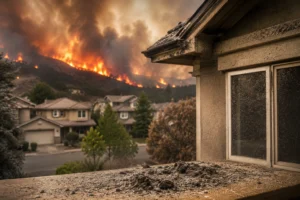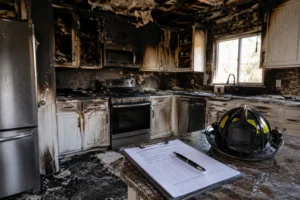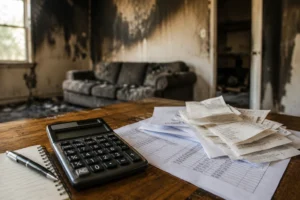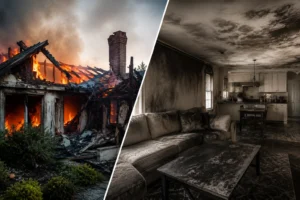

A fire can damage far more than the structure of a home. Smoke, soot, heat, and water often affect furniture, clothing, electronics, and countless personal belongings. As a result, one of the most common disputes during a fire insurance claim involves Contents Cleaning vs Replacement After a Fire. While insurance companies may prefer cleaning damaged items whenever possible, homeowners are often concerned about lingering contamination, odors, and long-term usability. Therefore, understanding how contents are evaluated can make a significant difference in the outcome of your claim. In this guide, we’ll explain when cleaning makes sense, when replacement is justified, and how to protect your interests throughout the claims process.
Understanding Contents Damage After a Fire
Personal property losses are often more extensive than homeowners initially realize. When people think about fire damage, they usually picture burned furniture or blackened walls. However, smoke, soot, and water can spread throughout the property, affecting rooms that never experienced direct flames. Personal property typically includes:
- Furniture
- Clothing
- Electronics
- Appliances
- Artwork
- Jewelry
- Kitchenware
- Collectibles
- Home office equipment
- Recreational equipment
Each item must be evaluated individually. Consequently, Contents Cleaning vs Replacement After a Fire becomes a critical issue during many claims.
Types of Damage That Affect Contents
Several forms of damage influence whether an item can be restored.
Direct Fire Damage
Items exposed to flames may be charred, melted, warped, or structurally compromised.
Smoke Damage
Smoke particles travel throughout a structure and can contaminate belongings far from the fire’s origin.
Soot Contamination
Soot contains acidic particles that can permanently damage surfaces if not addressed quickly.
Water Damage
Fire suppression efforts often leave contents exposed to significant moisture.
Odor Damage
Persistent smoke odors can linger inside porous materials for months or even years. As a result, determining whether an item should be cleaned or replaced often requires careful inspection.
How Insurance Companies Decide Between Cleaning and Replacement
Insurance carriers generally prefer restoration when possible because cleaning is often less expensive than replacing an item entirely. Most policies are designed to restore property to its pre-loss condition when reasonable. However, the key question is whether restoration can truly achieve that goal.
Factors Insurers Consider
| Factor | Impact on Decision |
|---|---|
| Extent of Damage | Severe damage favors replacement |
| Material Type | Porous materials are harder to restore |
| Age of Item | Older items may be less cost-effective to clean |
| Cleaning Cost | High cleaning costs may justify replacement |
| Restoration Success Probability | Low success rates favor replacement |
Therefore, a recommendation to clean an item should not automatically end the discussion.
Why Disputes Happen
Insurance companies often focus on whether an item appears salvageable. Meanwhile, homeowners may focus on functionality, safety, odor removal, and long-term reliability. Consequently, disagreements frequently arise during Contents Cleaning vs Replacement After a Fire evaluations.
When Contents Cleaning Makes Sense
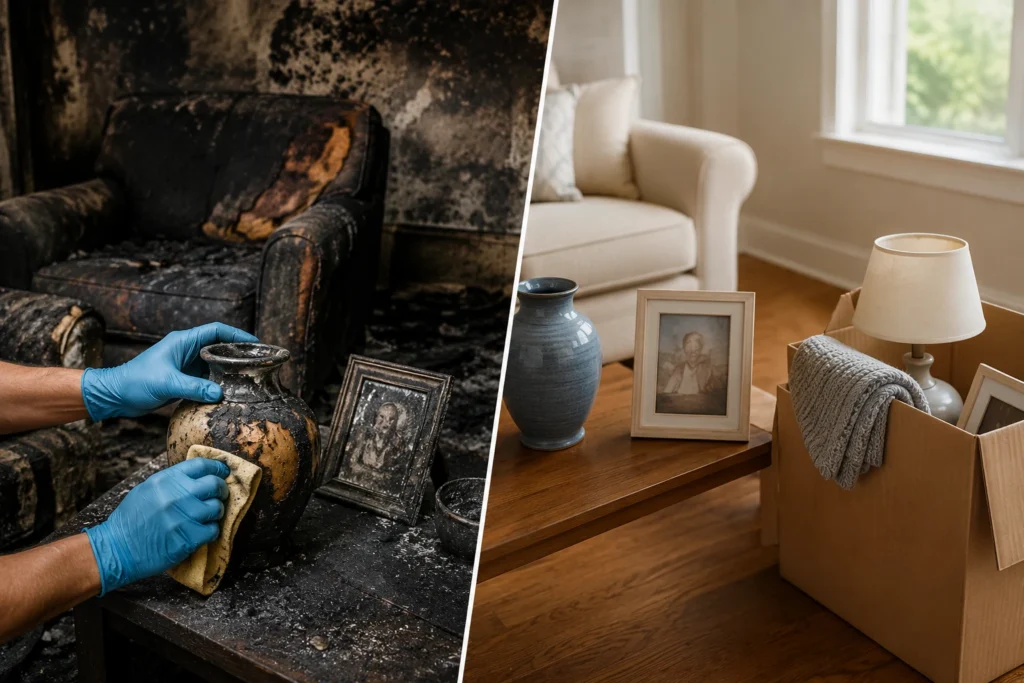
Not every damaged item needs replacement. In many situations, professional restoration can successfully return belongings to usable condition.
Commonly Cleaned Items
The following items often respond well to professional restoration:
- Solid wood furniture
- Metal furniture
- Ceramic items
- Glassware
- Certain electronics
- Stainless steel appliances
- Decorative items
Professional Cleaning Methods
Professional restoration companies use specialized equipment that goes far beyond ordinary household cleaning. In some ways, the precision involved resembles concepts found in advanced scientific fields such as Tribology, which studies friction, wear, and interactions between surfaces. Common cleaning methods include:
HEPA Vacuuming
High-efficiency filtration removes fine soot particles.
Dry Cleaning Sponges
Specialized soot sponges lift contamination without introducing moisture.
Ultrasonic Cleaning
Ultrasonic waves help remove contaminants from hard-to-clean objects.
Ozone Treatment
Ozone can help neutralize embedded odors.
Thermal Fogging
This process introduces deodorizing particles designed to penetrate materials similarly to smoke.
Benefits of Cleaning
Cleaning may provide several advantages:
- Lower overall claim costs
- Faster recovery
- Preservation of sentimental items
- Reduced environmental waste
Nevertheless, cleaning is not always the best solution.
When Replacement Is the Better Option
Certain items simply cannot be restored safely or effectively.
Severe Fire Damage
Items exposed directly to flames often require replacement, including:
- Burned furniture
- Melted electronics
- Charred wood products
- Heat-warped appliances
Smoke and Soot Damage Beyond Restoration
Porous materials often absorb contamination deeply. Examples include:
- Mattresses
- Pillows
- Upholstered furniture
- Stuffed toys
- Certain clothing
Therefore, replacement is frequently the more practical solution.
Water and Mold Concerns
When contents remain wet for extended periods, mold growth and deterioration become significant concerns.
Electronics and Appliances
Even if electronics appear operational, smoke contamination can cause hidden corrosion and future failure. As a result, electronics often become a major point of contention in Contents Cleaning vs Replacement After a Fire claims.
Common Household Items: Clean or Replace?
| Item Type | Usually Cleaned | Usually Replaced |
|---|---|---|
| Solid Wood Furniture | Yes | Rarely |
| Upholstered Furniture | Sometimes | Often |
| Mattresses | No | Yes |
| Glassware | Yes | Rarely |
| Electronics | Sometimes | Often |
| Clothing | Often | Sometimes |
| Area Rugs | Sometimes | Sometimes |
| Food Products | No | Yes |
Furniture
Solid wood furniture often responds well to restoration. However, upholstered furniture presents greater challenges because fabrics readily absorb smoke and odors.
Clothing and Textiles
Specialized textile cleaning can often restore clothing. Nevertheless, heavily contaminated garments may still require replacement.
Kitchen Contents
While dishes and cookware can often be cleaned, food products are generally discarded due to contamination concerns.
The Hidden Problem of Smoke Residue
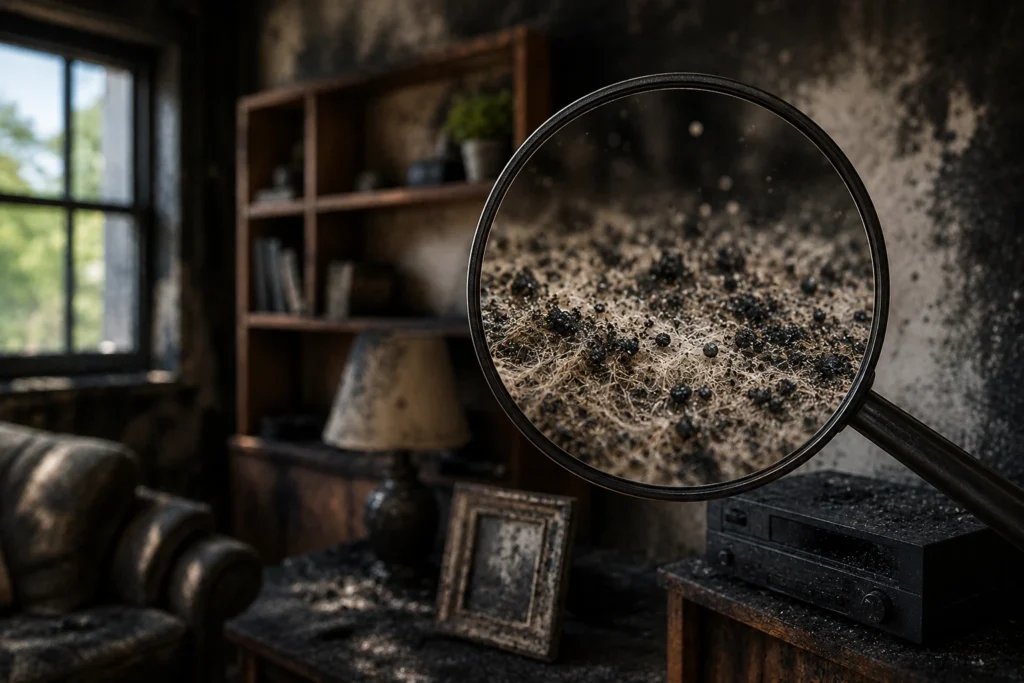
One of the most misunderstood aspects of fire claims involves microscopic contamination. Smoke particles can penetrate deep into porous materials and spread throughout a structure in ways that are not always visible. This movement can be surprisingly complex, somewhat similar to principles studied in Percolation Theory, a mathematical field that examines how substances move through interconnected systems.
Why Smoke Damage Is Serious
Smoke can travel through:
- HVAC systems
- Closets
- Cabinets
- Electronics
- Wall cavities
Therefore, items that appear clean may still contain contamination.
Health Concerns
Improperly restored contents may contribute to:
- Respiratory irritation
- Allergy symptoms
- Lingering odors
- Indoor air quality concerns
Consequently, appearance alone should never determine whether an item is truly restored.
Documenting Contents for Your Fire Insurance Claim
Strong documentation supports stronger claims.
Build a Detailed Inventory
Include:
- Item descriptions
- Brand names
- Model numbers
- Approximate age
- Estimated values
Photograph Everything
Capture:
- Wide-angle room photos
- Close-up damage photos
- Serial numbers
- Manufacturer labels
Keep Restoration Reports
Retain all reports from restoration companies, inspectors, and specialists. As disputes arise, documentation often becomes your most valuable asset.
Common Insurance Claim Disputes Over Contents
Many contents claims involve disagreements regarding whether property should be cleaned or replaced.
The Carrier Says Clean It
Insurance companies often rely on restoration vendors who believe an item can be salvaged.
The Homeowner Says Replace It
Homeowners may have valid concerns regarding contamination, odor removal, functionality, and safety.
Independent Opinions Matter
Third-party evaluations frequently provide additional evidence that supports replacement requests. Therefore, expert opinions can play an important role during negotiations.
How a Public Adjuster Can Help With Contents Claims
Contents claims are often undervalued compared to structural damage claims. A public adjuster may help by:
- Reviewing restoration recommendations
- Identifying underpaid items
- Challenging improper cleaning decisions
- Coordinating expert inspections
- Negotiating fair settlements
Consequently, professional representation may significantly improve outcomes when substantial personal property losses are involved.
Tips for Maximizing Your Contents Claim
Don’t Throw Away Damaged Items Too Soon
Retain property until inspections are complete.
Request Detailed Cleaning Reports
Understand the restoration process and its limitations.
Review Your Policy Carefully
Know your personal property coverage limits and replacement cost provisions.
Stay Organized
Maintain records of:
- Photos
- Receipts
- Inventories
- Estimates
- Correspondence
Seek Professional Guidance
Large losses often involve complex valuation issues that benefit from expert review.
Final Thoughts
Ultimately, Contents Cleaning vs Replacement After a Fire is not a one-size-fits-all decision. While some belongings can be restored successfully, others may remain contaminated, damaged, or unsafe despite professional cleaning efforts. Therefore, every item should be evaluated based on its condition, material type, restoration potential, and long-term usability. With thorough documentation, expert assessments, and a clear understanding of your insurance policy, you can make informed decisions and pursue a fair settlement for your fire damage claim.
FAQs
You should begin documenting smoke damage as soon as the property is safe to enter. Early documentation helps preserve evidence before cleanup or repairs begin.
Take wide-angle and close-up photos of every affected room, damaged item, soot residue, smoke staining, HVAC vents, and any visible contamination.
Yes. Smoke particles can penetrate walls, insulation, ductwork, and personal belongings without leaving obvious visible residue.
Yes. Keep damaged items until your insurance company has completed its inspection or approves their disposal.
Many property insurance policies cover smoke odor remediation when it results from a covered loss. Coverage depends on the specific policy language and circumstances of the claim.
Absolutely. Video walkthroughs can provide additional context, show the extent of contamination, and support your photographic evidence.
Fire department reports, restoration company evaluations, contractor estimates, receipts, inventories, and air quality testing reports can strengthen a claim.
In many cases, yes. Coverage often applies when wildfire smoke causes physical damage or contamination to the insured property.
Smoke particles frequently travel through ductwork and ventilation systems. If left undocumented, significant cleaning or replacement costs may be overlooked.
You may want to consult a public adjuster if the claim involves extensive smoke damage, hidden contamination, large losses, or disputes regarding coverage or settlement amounts.