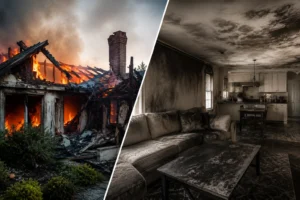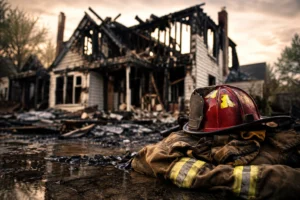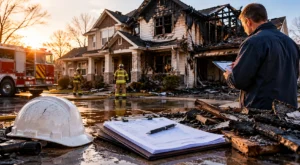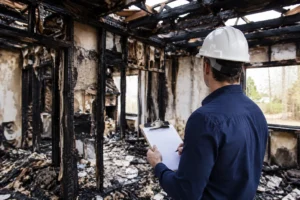

A fire can damage a property in minutes. What many homeowners don’t realize is that the flames are often only part of the problem. When it comes to Fire Damage vs Smoke Damage Insurance, insurance companies frequently evaluate these losses differently, even when they originate from the same event. Fire damage is usually visible. Smoke damage often isn’t. That difference can have a major impact on your insurance claim.VUnderstanding how insurers handle both types of damage can help you document losses properly, avoid common mistakes, and pursue a fair settlement. Whether you’re dealing with a house fire, a kitchen fire, or smoke contamination from a neighboring property, knowing the distinction matters.
Understanding Fire Damage and Smoke Damage
Although they occur together in many losses, fire damage and smoke damage are not the same.
What Is Fire Damage?
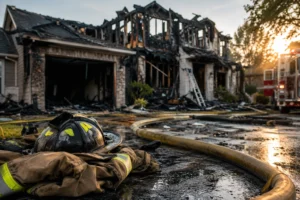
Fire damage refers to destruction directly caused by flames and heat. Common examples include:
- Burned roofing materials
- Charred framing
- Damaged drywall
- Melted electrical wiring
- Destroyed flooring
- Fire-damaged personal belongings
Because the damage is visible, it is generally easier to identify and estimate. However, visible damage doesn’t always tell the whole story. Heat can weaken structural components behind walls and ceilings without obvious signs. In addition, electrical systems, plumbing components, and support structures may have suffered damage that is not immediately apparent during a basic inspection.
What Is Smoke Damage?
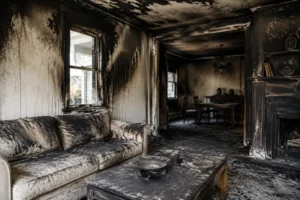
Smoke damage results from soot, ash, residue, and airborne contaminants produced during combustion. Smoke often spreads far beyond the fire’s origin. A small kitchen fire may leave smoke contamination throughout the entire house. Affected areas may include:
- Bedrooms
- Closets
- Attics
- HVAC systems
- Furniture
- Electronics
Smoke particles behave similarly to an aerosol and can travel throughout a structure before settling on surfaces. Unlike fire damage, smoke contamination can affect materials that appear undamaged at first glance. Over time, acidic soot residues can stain surfaces, create lingering odors, and even corrode electronics if they are not properly cleaned.
Why Both Matter
Many property owners focus only on burned materials. That’s a mistake. Smoke contamination can create expensive restoration needs even in rooms untouched by flames. This is why understanding Fire Damage vs Smoke Damage Insurance is so important. Both forms of damage should be properly documented and included in the claim. For example, a bedroom on the opposite side of the home may have no visible burn damage, yet smoke residue may have contaminated clothing, bedding, and air vents. If these losses are overlooked, the settlement may fall short of what is needed for a complete recovery.
How Homeowners Insurance Typically Covers Fire Damage
Most standard homeowners insurance policies provide coverage for accidental fire losses. Coverage generally falls into three categories.
Dwelling Coverage
Dwelling coverage protects the physical structure. This may include:
- Roofing systems
- Exterior walls
- Interior walls
- Flooring
- Cabinets
- Built-in appliances
- Attached garages
The extent of repairs depends on the severity of the fire. A localized fire may require limited reconstruction. A major fire may require extensive rebuilding. In severe cases, portions of the structure may need to be demolished and rebuilt to comply with current building codes. This can increase repair costs significantly and may involve additional coverage provisions.
Personal Property Coverage
Personal property coverage may apply to:
- Furniture
- Electronics
- Clothing
- Appliances
- Artwork
- Household goods
Creating a detailed inventory before a loss occurs can significantly strengthen a future claim. After a fire, homeowners should photograph damaged items and create room-by-room inventories. Receipts, photographs, warranty records, and credit card statements can all help establish ownership and value.
Additional Living Expenses
If the home becomes uninhabitable, Additional Living Expense coverage may help pay for:
- Temporary housing
- Hotel stays
- Restaurant meals
- Transportation expenses
- Storage costs
These benefits often become critical after significant fire losses. A large restoration project can take months to complete. During that period, additional living expense coverage may help reduce the financial burden associated with displacement.
How Insurance Typically Covers Smoke Damage
Smoke damage is usually covered under the same policy that covers the fire itself. However, evaluating smoke-related losses is often more complicated.
Smoke Contamination
Smoke residue can affect nearly every surface in a structure. Common areas impacted include:
- Walls
- Ceilings
- Flooring
- Furniture
- HVAC ductwork
- Insulation
Professional cleaning is frequently required. Even when soot is not visible, microscopic particles may remain present. These particles can continue circulating through HVAC systems and affect indoor air quality if not addressed properly.
Smoke Odor Removal
Odors can linger long after visible damage is repaired. Restoration contractors may use:
- Thermal fogging
- Ozone treatments
- Air scrubbers
- Hydroxyl generators
These services are often necessary to restore indoor air quality. Moreover, some materials absorb odors more readily than others. Carpeting, upholstery, insulation, and certain wood products may require specialized treatment or replacement if odors cannot be eliminated.
Cleaning Versus Replacement
One of the biggest disputes involving Fire Damage vs Smoke Damage Insurance is determining whether items should be cleaned or replaced. Insurance carriers often prefer restoration. Property owners may argue replacement is necessary. Common disputed items include:
- Mattresses
- Upholstered furniture
- Electronics
- Children’s toys
- Clothing
The answer often depends on the extent of contamination. A sofa that appears clean may continue releasing smoke odors months later. Likewise, electronics exposed to soot may experience corrosion that shortens their lifespan even if they initially appear functional.
Why Smoke Damage Claims Are More Difficult
Many insurance professionals consider smoke damage one of the most challenging property losses to evaluate.
Smoke Damage Is Frequently Hidden
Unlike burned framing or damaged roofing materials, smoke contamination may not be obvious. Smoke particles can enter:
- Air ducts
- Wall cavities
- Insulation
- Electrical outlets
- Mechanical systems
Without proper inspection, these issues can be missed. As a result, initial estimates sometimes fail to capture the full extent of restoration work required.
Odors Can Persist
Smoke odors sometimes remain months after cleaning. This may require multiple rounds of remediation before the property is fully restored. Persistent odors can affect quality of life, indoor comfort, and even property value if not properly addressed.
Specialized Expertise May Be Needed
Some restoration professionals use testing and airflow analysis based on principles found in computational fluid dynamics to better understand contamination movement throughout a structure. Because of these complexities, smoke damage claims often require more documentation than fire damage claims.
Common Fire Damage Covered by Insurance
Fire claims commonly include:
Structural Damage
This may involve:
- Framing
- Roof decking
- Trusses
- Load-bearing walls
- Structural supports
Electrical Damage
Heat exposure can compromise wiring throughout the building. Even wiring that appears intact may require replacement.
Plumbing Damage
High temperatures may weaken or melt plumbing components.
Interior Finishes
Commonly covered items include:
- Drywall
- Paint
- Flooring
- Trim
- Cabinets
Personal Property Losses
Furniture, appliances, electronics, and household belongings are frequently included within fire damage claims. Proper documentation remains essential. The stronger the documentation, the easier it becomes to demonstrate the full extent of the loss and support a fair insurance settlement.
Common Smoke Damage Covered by Insurance
Smoke damage often extends much further than homeowners expect. While flames may be limited to a single area, smoke can travel throughout an entire property within minutes. Consequently, restoration costs can become substantial even when fire damage appears relatively minor.
Soot Contamination
Soot is one of the most common forms of smoke damage. It can settle on:
- Walls
- Ceilings
- Flooring
- Furniture
- Appliances
- Personal belongings
Left untreated, soot may permanently stain surfaces and contribute to long-term deterioration.
HVAC System Contamination
Smoke particles frequently enter heating and cooling systems. Once contamination reaches the ductwork, smoke residue can spread throughout the property every time the system operates. Professional cleaning may be necessary for:
- Air ducts
- Vents
- Registers
- Air handlers
- HVAC components
Furniture and Contents Cleaning
Many household items can be restored after smoke exposure. Examples include:
- Wood furniture
- Metal furniture
- Kitchenware
- Decorative items
- Certain fabrics
However, successful restoration depends on the severity of contamination and the type of material involved.
Electronics Damage
Electronics deserve special attention. Smoke particles contain acidic compounds that can corrode delicate internal components. Affected items may include:
- Computers
- Televisions
- Gaming systems
- Security systems
- Home automation devices
Even if electronics appear functional immediately after the fire, hidden damage may emerge later.
Clothing and Fabric Restoration
Smoke odors often penetrate:
- Clothing
- Curtains
- Bedding
- Rugs
- Upholstered furniture
Specialized cleaning techniques may be required to remove contamination completely.
Indoor Air Quality Restoration
Air quality concerns frequently become a major component of smoke damage claims. Professional restoration may involve:
- Air filtration
- Surface cleaning
- Odor removal
- HVAC remediation
- Air quality testing
These services help ensure the property is safe and comfortable for occupants.
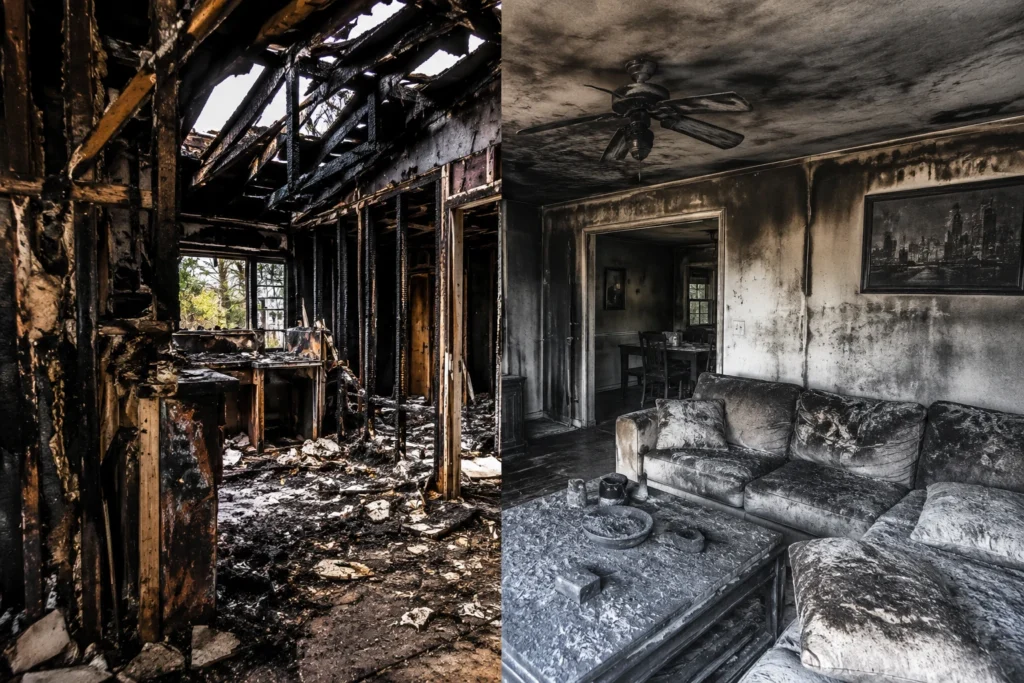
Fire Damage vs Smoke Damage Insurance: Major Coverage Differences
Although both losses often arise from the same event, insurance companies typically evaluate them differently.
| Fire Damage | Smoke Damage |
|---|---|
| Usually visible | Frequently hidden |
| Easier to document | Often requires testing |
| Structural repairs common | Cleaning and remediation common |
| Immediate safety concerns | Long-term contamination concerns |
| Easier to estimate | More subjective evaluation |
| Often obvious during inspection | May require specialists to identify |
This table highlights why Fire Damage vs Smoke Damage Insurance claims often produce different challenges despite originating from the same fire.
How Insurance Companies Evaluate Fire Damage Claims
The fire claim process generally follows a structured approach.
Initial Inspection
The insurance company typically sends an adjuster to inspect the property. The inspection may focus on:
- Burned areas
- Structural damage
- Safety concerns
- Emergency mitigation work
Photographs, measurements, and notes are usually collected during this phase.
Cause of Loss Investigation
Insurers often investigate how the fire started. The purpose is to determine:
- Whether the loss is covered
- Whether exclusions apply
- Whether another party may be responsible
Most accidental residential fires are covered, but the cause still matters.
Repair Estimating
Once the damage is documented, repair estimates are prepared. These estimates may include:
- Demolition
- Reconstruction
- Materials
- Labor
- Code upgrades
Accurate estimating is essential because even small omissions can affect the final settlement.
Contents Evaluation
The insurer will also review damaged personal property. This process often involves:
- Itemized inventories
- Photographs
- Receipts
- Replacement cost calculations
The more documentation available, the smoother this process tends to be.
Settlement Negotiation
After estimates are prepared, settlement discussions begin. This is where disagreements frequently emerge. Property owners may believe damage was underestimated, while insurers may rely on their initial scope of loss.
How Insurance Companies Evaluate Smoke Damage Claims
Smoke damage claims often require a deeper level of analysis.
Contamination Assessment
The insurer may attempt to determine:
- How far smoke traveled
- Which materials were affected
- Whether cleaning is possible
- Whether replacement is necessary
This assessment can significantly influence claim value.
Odor Evaluation
Smoke odors are difficult to quantify. Two people may perceive the same odor differently. As a result, odor-related disputes are common in Fire Damage vs Smoke Damage Insurance claims.
Restoration Reports
Professional restoration contractors often provide reports describing:
- Contamination levels
- Cleaning recommendations
- Replacement recommendations
- Air quality concerns
These reports can become valuable evidence during claim negotiations.
Air Quality Testing
In larger losses, testing may help establish the extent of contamination. Testing may identify:
- Soot particles
- Airborne contaminants
- HVAC contamination
- Indoor air quality issues
The results can help support additional restoration work when needed.
Common Reasons Fire Damage Claims Become Underpaid
Most underpaid claims are not the result of a single mistake. Instead, they often involve multiple omissions.
Incomplete Damage Scope
Some damage may be hidden behind walls, ceilings, or flooring. If these areas are not thoroughly inspected, repair costs may be underestimated.
Missed Structural Components
Structural elements can suffer heat damage even when visible burning is limited. Missing these components can lead to significant repair shortfalls.
Code Upgrade Issues
Building codes change over time. A repair project may require upgrades that were not included in the initial estimate. Without proper consideration, these costs may be overlooked.
Contents Valuation Disputes
Insurance carriers and homeowners often disagree about the value of damaged property. Older items may be depreciated heavily, reducing settlement amounts.
Inadequate Documentation
Claims supported by limited documentation often face greater challenges. Photographs, receipts, inventories, and contractor reports can strengthen the claim considerably.
Common Reasons Smoke Damage Claims Become Underpaid
Smoke claims face unique obstacles.
Hidden Contamination
Contamination may exist inside walls, ductwork, and insulation. If inspections remain limited to visible surfaces, damage can be missed.
Underestimated Cleaning Costs
Proper smoke remediation is labor intensive. Initial estimates sometimes fail to capture the full scope of cleaning required.
HVAC System Oversights
HVAC contamination is one of the most commonly overlooked aspects of smoke damage claims. Failure to address these systems can lead to ongoing odor and air quality issues.
Inadequate Odor Removal Allowances
Smoke odors often require specialized treatment. If odor remediation costs are underestimated, additional expenses may emerge later.
Failure to Replace Unrestorable Items
Not every item can be successfully cleaned. Some materials continue to retain odors or contamination despite repeated restoration efforts. Determining when replacement is appropriate is one of the most disputed aspects of Fire Damage vs Smoke Damage Insurance claims. When these issues are properly documented and supported by professional evaluations, property owners are often in a stronger position to pursue a more accurate settlement.
Steps to Take Immediately After a Fire
The actions you take in the hours and days following a fire can have a significant impact on your insurance claim. While emotions often run high, staying organized can help protect both your property and your financial interests.
Ensure Everyone Is Safe
Safety comes first.
Do not re-enter the property until local authorities confirm it is safe to do so. Structural instability, electrical hazards, and hidden hot spots may remain long after the flames are extinguished.
Contact Your Insurance Company
Notify your insurance carrier as soon as possible. Provide:
- Policy information
- Date of loss
- Basic description of the damage
- Contact information
Prompt reporting helps start the claim process and may prevent unnecessary delays.
Protect the Property From Further Damage
Most insurance policies require policyholders to take reasonable steps to prevent additional damage. This may include:
- Boarding broken windows
- Installing temporary roof tarps
- Securing entry points
- Removing standing water
Keep all receipts related to emergency mitigation work.
Photograph Everything
Documentation is critical. Take photographs of:
- Structural damage
- Burned materials
- Smoke residue
- Damaged contents
- Exterior damage
- Temporary repairs
Capture wide-angle photos and close-up images whenever possible.
Create a Detailed Inventory
Prepare a room-by-room inventory of damaged belongings. Include:
- Item descriptions
- Approximate age
- Estimated replacement cost
- Photographs when available
The more detailed the inventory, the stronger your claim may become.
Documenting Smoke Damage Properly
Many homeowners underestimate the importance of documenting smoke damage. That can be costly. Because smoke contamination is often less visible than fire damage, insurers may require additional evidence to support the claim.
Photograph Soot Residue
Even minor soot accumulation should be documented. Photograph:
- Walls
- Ceilings
- Furniture
- Appliances
- Air vents
Visual evidence can help establish the extent of contamination.
Document Smoke Odors
Odors may not appear in photographs. Keep written records describing:
- Areas affected
- Severity of odor
- Changes over time
- Impact on habitability
Professional restoration reports can also help support odor-related claims.
Record HVAC Contamination
Smoke frequently enters HVAC systems. Document:
- Visible residue
- Inspection reports
- Cleaning recommendations
- Ductwork contamination
These systems are often overlooked during initial evaluations.
Save Professional Reports
Restoration contractors, engineers, industrial hygienists, and other specialists may generate reports that support your claim. These reports can provide valuable evidence if disputes arise.
Keep a Claim File
Create a dedicated file containing:
- Photographs
- Emails
- Receipts
- Estimates
- Inspection reports
- Communication logs
Organization can make a major difference during settlement negotiations.
Fire Damage vs Smoke Damage Insurance in Texas
Texas property owners face unique challenges when pursuing fire-related insurance claims. Severe weather, aging housing stock, fluctuating construction costs, and high demand for restoration services can all affect claim outcomes.
Large-Scale Losses Can Create Delays
When major fire events impact multiple properties, insurance companies may receive a surge of claims. This often results in:
- Longer response times
- Delayed inspections
- Increased workloads for adjusters
- Slower claim processing
Patience is important, but so is staying proactive.
Construction Costs Matter
Material and labor costs continue to fluctuate. An estimate prepared early in the claim process may not fully reflect actual rebuilding expenses months later. Property owners should review estimates carefully and update them when necessary.
Understanding Policy Rights
Texas policyholders have rights during the claims process. These generally include:
- Timely communication
- Fair claim investigation
- Prompt claim decisions
- Clear explanations regarding coverage
Understanding these rights can help property owners navigate disputes more effectively.
Why Fire and Smoke Damage Require Equal Attention
One of the most important lessons in Fire Damage vs Smoke Damage Insurance claims is that smoke damage should never be treated as a secondary concern. The fire may be extinguished. The smoke damage often remains. Ignoring contamination can lead to future restoration expenses, lingering odors, and ongoing air quality concerns.
When a Public Adjuster Can Help
Not every claim requires professional representation. However, certain situations may benefit from additional expertise.
Large Fire Losses
The larger the loss, the greater the complexity. Major structural fires often involve:
- Extensive documentation
- Multiple inspections
- Significant repair costs
- Complex negotiations
These claims can quickly become overwhelming for property owners.
Extensive Smoke Damage
Smoke contamination disputes are common. When cleaning and replacement decisions become contentious, additional claim support may be helpful.
Coverage Disputes
Disagreements sometimes arise regarding:
- Scope of damage
- Repair methods
- Replacement requirements
- Policy interpretation
Professional assistance may help clarify these issues.
Underpaid Claims
Many policyholders accept initial settlements without fully reviewing them. A second review may identify:
- Missing line items
- Underestimated repairs
- Omitted damage
- Additional covered costs
Commercial Property Claims
Businesses often face additional challenges, including:
- Business interruption losses
- Equipment damage
- Inventory losses
- Operational disruptions
These claims frequently involve substantial documentation requirements.
Mistakes Homeowners Should Avoid
Even strong claims can encounter problems when avoidable mistakes occur.
Throwing Away Damaged Property Too Soon
Damaged items may serve as evidence. Whenever possible, photograph and document items before disposal.
Starting Permanent Repairs Immediately
Emergency mitigation is important. Permanent repairs should generally wait until documentation is complete and the insurer has had an opportunity to inspect the damage.
Accepting the First Settlement Without Review
Initial estimates are not always final. Review the scope carefully before agreeing to a settlement.
Ignoring Smoke Damage
This is one of the most common mistakes in Fire Damage vs Smoke Damage Insurance claims. Smoke contamination can affect areas far beyond the fire’s origin. Overlooking these losses can reduce the value of the claim significantly.
Failing to Track Expenses
Keep records of:
- Hotel stays
- Temporary housing
- Meals
- Storage costs
- Emergency repairs
These expenses may qualify for reimbursement under the policy.
Conclusion
Understanding Fire Damage vs Smoke Damage Insurance is essential after a fire loss. While fire damage is often visible, smoke damage can spread throughout a property and create costly hidden issues. By documenting both types of damage carefully and understanding how insurance companies evaluate claims, Texas property owners can put themselves in a stronger position to pursue a fair and accurate settlement.
FAQs
In most cases, standard homeowners’ insurance policies cover both fire damage and smoke damage when the loss results from a covered event.
Yes. A small fire can still produce significant smoke contamination that affects multiple rooms, personal belongings, and HVAC systems.
Smoke damage is frequently hidden and may require specialized inspections, testing, and restoration reports to fully document the loss.
Many policies cover reasonable smoke odor removal costs when the odors result from a covered fire loss and professional remediation is necessary.
Yes. Smoke residue can cause corrosion inside electronic components, which may lead to performance issues or premature failure over time.
If smoke contamination affects the HVAC system, cleaning and remediation may be covered as part of the fire damage claim.
No. Photograph and document damaged items first, as they may serve as important evidence during the claim process.
Fire damage is usually visible and easier to estimate, while smoke damage often requires additional documentation to identify hidden contamination.
Absolutely. Smoke can travel through vents, hallways, and open spaces, affecting areas far from the fire’s point of origin.
You may want professional assistance if the claim is large, complex, disputed, or if you believe important damage has been overlooked or undervalued.