

If your home or commercial property in Victoria, TX has suffered damage from a hurricane, hailstorm, fire, burst pipe, or another covered event, navigating the insurance claim process can quickly become overwhelming. Insurance policies are often lengthy and technical, while damage that appears minor at first may reveal costly structural or hidden issues during repairs. Working with a Public Adjuster in Victoria, TX gives property owners an experienced advocate focused solely on protecting their interests—not the insurance company’s.
At TX Public Adjusting, a division of Rise Public Adjusting LLC, we represent homeowners, business owners, landlords, churches, HOAs, agricultural operations, and commercial property owners throughout Victoria and the surrounding Crossroads region. As a licensed Texas Public Adjuster (License #3356839), we thoroughly document damages, prepare detailed claim estimates, negotiate directly with insurance carriers, and work to maximize the settlement available under your policy.
Victoria’s location between Houston, Corpus Christi, and the Gulf Coast exposes local properties to a unique combination of hurricane-force winds, severe thunderstorms, hail, flooding, extreme heat, and occasional winter freezes. These events often create complex insurance claims involving multiple types of damage that require careful documentation.
Schedule your Free Claim Review today. There are no upfront fees, and we don’t get paid unless we successfully recover for your covered claim.
Why Property Owners Hire a Public Adjuster in Victoria
Still deciding whether professional representation is right for your situation? Our guide, Should I Use a Public Adjuster?, discusses common scenarios where property owners choose to seek assistance. Many property owners assume the insurance company will automatically identify every damaged component and calculate a complete repair estimate. Unfortunately, many claims become more complicated once hidden damage, code upgrades, moisture intrusion, or business interruption losses are discovered.
A Public Adjuster works exclusively for the policyholder—not the insurance carrier.
Our role is to:
- Review your insurance policy
- Perform a comprehensive property inspection
- Document all covered damages
- Prepare detailed repair estimates
- Assemble supporting documentation
- Communicate directly with the insurance company
- Negotiate for a fair settlement
Instead of facing the claims process alone, Victoria property owners gain an experienced advocate who understands insurance policy language, construction estimating, claim documentation, and negotiation. If you’ve never worked with one before, our complete guide explains What a Public Adjuster Is and how public adjusters differ from insurance company representatives.
Local Knowledge Matters in Victoria, TX
Victoria sits in Victoria County and serves as the commercial hub of the Texas Crossroads. Its location roughly 30 miles inland from the Gulf Coast means residents frequently experience severe weather generated by tropical systems moving inland.
Neighborhoods throughout Victoria each present unique property considerations, including:
- Downtown Victoria
- Northcrest
- Quail Creek
- Cimarron
- Castle Hills
- Country Club area
- Terra Vista
- Victoria Regional Airport corridor
Whether your property overlooks Riverside Park, sits near DeLeon Plaza, operates close to University of Houston–Victoria, or serves customers around Victoria Mall, local weather conditions can produce significant property losses that require careful documentation.
Because we work throughout Texas, we understand how regional weather patterns affect residential and commercial insurance claims across South Texas.
Weather Risks That Commonly Affect Victoria Properties
Victoria experiences a combination of Gulf Coast humidity, intense thunderstorms, tropical weather systems, and prolonged heat that can create substantial property damage.
Hurricanes and Tropical Storms
Although Victoria is inland, hurricanes regularly bring:
- High winds
- Roof damage
- Broken windows
- Water intrusion
- Fallen trees
- Structural damage
- Extended power outages
Storms approaching from the Gulf often weaken before reaching Victoria, but they still produce damaging winds capable of tearing roofing systems apart and allowing water to penetrate the building envelope.
Even relatively minor roof damage can lead to:
- Wet insulation
- Ceiling staining
- Mold growth
- Electrical hazards
- Interior drywall damage
These secondary damages are frequently overlooked if inspections occur too quickly after the storm. If your property was affected by a tropical system, our guide on Property Damage After a Hurricane outlines common insurance issues and the steps property owners should take following a major storm.
Wind Damage
Straight-line winds frequently accompany severe thunderstorms throughout Victoria.
Wind claims often involve:
- Missing shingles
- Lifted roofing materials
- Torn flashing
- Fence damage
- Garage door damage
- Siding damage
- Broken skylights
- HVAC impacts
Wind damage may also compromise waterproof barriers that cannot be seen without a detailed inspection.
Hail Damage
South Texas continues to experience damaging hail events that affect both residential and commercial roofing systems.
Hail claims may include damage to:
- Asphalt shingles
- Metal roofing
- Tile roofs
- Modified bitumen
- Built-up roofing
- TPO roofing
- Gutters
- Downspouts
- HVAC equipment
- Windows
- Exterior finishes
Many hail impacts leave subtle bruising that is easy to overlook without specialized inspection techniques.
Heavy Rain and Water Damage
Victoria regularly receives intense rainfall capable of overwhelming drainage systems.
Water claims often involve:
- Roof leaks
- Ceiling collapse
- Interior staining
- Flooring damage
- Cabinet damage
- Drywall deterioration
- Mold development
- Personal property losses
Water frequently migrates well beyond the visible stain, making moisture mapping and complete documentation essential.
Freeze Damage
Although less frequent than northern Texas, winter freezes have caused widespread plumbing failures throughout Victoria.
Common freeze-related claims include:
- Burst water lines
- Broken sprinkler systems
- Water-soaked insulation
- Damaged flooring
- Cabinet replacement
- Mold remediation
- Temporary housing expenses
Many freeze claims involve hidden moisture inside walls that is not immediately visible after repairs begin.
Common Insurance Claims in Victoria
Hail Damage Claims
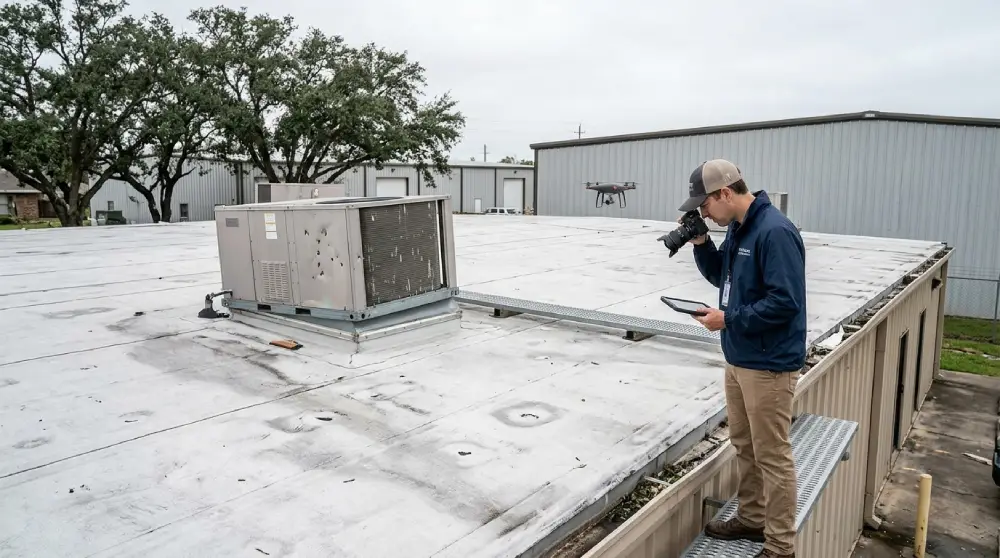
Roofing systems often sustain impact damage long before leaks become visible inside the property.
Our inspections evaluate:
- Roof coverings
- Flashings
- Vents
- Skylights
- Gutters
- Exterior equipment
- Window screens
- Soft metals
Proper documentation helps establish the full scope of storm-related damage. Not all hail damage is immediately visible. Our complete guide to a Hail Damage Roof Insurance Claim explains how roofing systems are evaluated after severe Texas storms. Proper documentation is one of the most important parts of any storm claim. Learn how to Document Hail Damage for an Insurance Claim before repairs begin.
Water Damage Claims
Water losses frequently expand over several days as moisture travels through building materials.
We help document:
- Source of loss
- Moisture migration
- Structural drying needs
- Material replacement
- Mold concerns
- Personal property damage
Comprehensive documentation helps prevent important repair items from being omitted during claim evaluation. Water losses often become more extensive than they initially appear. Our guide on Water Damage Public Adjuster services explains how hidden moisture, structural damage, and insurance documentation are commonly handled.
Fire and Smoke Damage Claims
Fire losses often extend far beyond the area directly burned.
Claims may include:
- Structural repairs
- Smoke contamination
- Soot cleanup
- Electrical replacement
- HVAC cleaning
- Odor remediation
- Debris removal
- Contents inventory
- Temporary living expenses
Smoke can affect nearly every room in a structure, even where flames never reached. If your property has experienced a fire, our guide to working with a Fire Insurance Adjuster explains the documentation process for smoke damage, structural repairs, and contents claims.
Storm Damage Claims
Storm claims often involve multiple causes of loss occurring simultaneously.
Examples include:
- Wind
- Rain intrusion
- Hail
- Fallen trees
- Exterior impacts
- Interior water damage
- Fence damage
- Detached structures
- Landscape damage
A complete evaluation ensures these interconnected damages are properly documented rather than treated as isolated issues.
Roof Damage Claims
Roofs protect every other component of the property.
Even relatively small roofing failures can eventually result in:
- Interior leaks
- Mold
- Insulation damage
- Ceiling collapse
- Framing deterioration
Our inspections examine roofing systems as a whole rather than focusing only on obvious missing shingles or visible punctures. If your roof has been damaged by wind or hail, learning how a Public Adjuster for Roof Claims can assist during the insurance process may help you better understand what documentation and negotiations are typically involved.
Commercial Property Claims
Victoria’s economy includes healthcare, manufacturing, energy, agriculture, logistics, education, retail, and hospitality businesses.
Commercial claims often involve:
- Office buildings
- Retail centers
- Restaurants
- Warehouses
- Industrial facilities
- Churches
- Apartment complexes
- Medical offices
- Agricultural buildings
- Multi-tenant properties
Beyond physical damage, commercial losses may include:
- Business interruption
- Extra expenses
- Equipment damage
- Inventory losses
- Tenant improvements
- Code compliance upgrades
Because commercial policies are often significantly more complex than residential coverage, thorough documentation becomes even more important.
Why Early Documentation Makes a Difference
Insurance claims begin long before settlement negotiations.
Photographs, measurements, moisture readings, repair estimates, contractor reports, engineering opinions, and policy analysis all contribute to the final evaluation of a claim.
When documentation is incomplete, legitimate damages can be overlooked or undervalued.
At TX Public Adjusting, we focus on assembling a complete claim package that accurately reflects the full extent of covered damage before negotiations begin.
Why Insurance Claims Become Underpaid
Insurance claims can become underpaid for many reasons, even when the damage is legitimate and covered by the policy. In our experience working with residential and commercial property owners throughout Texas, many disputes stem from incomplete inspections rather than intentional wrongdoing. Once an insurance company establishes its initial estimate, it often becomes the baseline for the remainder of the claim unless additional documentation supports a higher valuation.
Hidden Damage Isn’t Always Included
After hurricanes, hailstorms, or severe wind events in Victoria, some of the most expensive damage isn’t immediately visible.
Examples include:
- Moisture trapped beneath roofing materials
- Damaged roof decking
- Wet insulation
- Water intrusion behind siding
- Structural movement
- Damaged flashing
- HVAC impacts
- Mold developing inside wall cavities
Without a thorough inspection, these items may not appear in the initial estimate.
Scope Omissions
One of the most common reasons claims are underpaid is that portions of the repair are simply omitted.
Examples include:
- Painting adjacent rooms for a proper finish
- Matching flooring
- Trim replacement
- Code-required upgrades
- Electrical repairs
- Roofing accessories
- Debris removal
- Temporary protection
- Detaching and resetting equipment
Small omissions throughout an estimate can add up to thousands of dollars.
Depreciation Issues
Many policies apply depreciation to certain building materials. However, depreciation should be calculated according to the policy terms and applicable coverage—not applied broadly to every repair item.
We carefully review estimates to determine whether depreciation has been applied appropriately and whether recoverable depreciation is available once repairs are completed.
Incomplete Documentation
Insurance companies rely heavily on documentation.
If damage isn’t properly supported with:
- Photographs
- Measurements
- Moisture readings
- Contractor estimates
- Engineering reports (when appropriate)
- Contents inventories
- Repair invoices
it may be difficult to demonstrate the full extent of the loss.
Our goal is to provide organized, comprehensive documentation that clearly supports your claim. Insurance claims can become increasingly complex as additional damage is discovered. Learn more about Why Homeowners Hire Public Adjusters when claims become difficult to resolve.
Our Public Adjusting Process
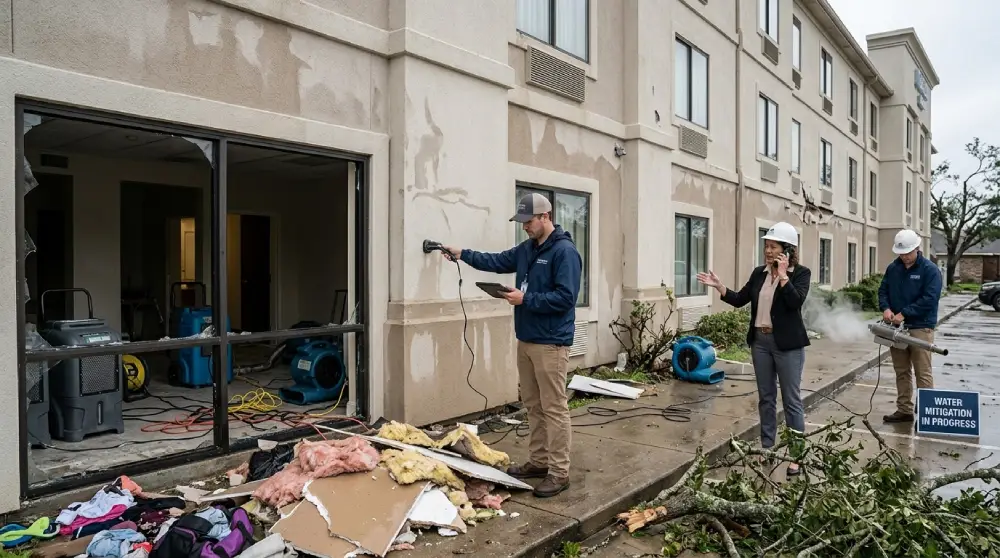
Every property loss is different, but our approach is designed to provide a clear, organized path from initial damage assessment through claim resolution.
Step 1 – Free Claim Review
We begin by discussing your loss, reviewing available documentation, and determining how we may be able to assist.
We’ll evaluate:
- Type of loss
- Claim status
- Insurance carrier
- Policy concerns
- Existing estimates
- Inspection history
This consultation is provided at no upfront cost. Many policyholders also ask about claim timelines. Our article on How Long an Insurance Adjuster Has to Contact You explains what Texas property owners can generally expect after reporting a loss.
Step 2 – Comprehensive Property Inspection
Our inspection goes beyond visible damage.
Depending on the claim, we may inspect:
- Roofing systems
- Exterior elevations
- Interior finishes
- Structural components
- Mechanical systems
- Contents
- Commercial equipment
- Water intrusion pathways
The objective is to understand the complete scope of covered damage.
Step 3 – Claim Documentation
Proper documentation forms the foundation of every successful insurance claim.
We prepare detailed claim packages that may include:
- Photographic evidence
- Room-by-room documentation
- Repair estimates
- Material quantities
- Supporting reports
- Policy review
- Damage narratives
- Contents inventories
Organized documentation helps present a more complete picture of the loss. Avoiding common documentation errors can make a significant difference during the claims process. Our guide to Common Property Insurance Claim Mistakes highlights issues that frequently delay or reduce settlements.
Step 4 – Negotiation With the Insurance Company
Once documentation is complete, we communicate directly with the insurance carrier on your behalf.
This includes:
- Responding to requests for information
- Reviewing revised estimates
- Discussing scope differences
- Addressing overlooked damages
- Negotiating settlement values
Throughout the process, we keep you informed so you understand where the claim stands.
Step 5 – Settlement Support
Our involvement doesn’t end with the first payment.
If supplemental damage is discovered during repairs, additional documentation may be necessary. We continue working with the claim until covered damages have been appropriately addressed under the policy.
Why Choose TX Public Adjusting
Choosing a Public Adjuster is about selecting someone who understands both property damage and the insurance claims process.
Property owners throughout Victoria choose TX Public Adjusting because we provide:
Licensed Texas Representation
TX Public Adjusting operates under Rise Public Adjusting LLC and is licensed by the State of Texas (License #3356839).
Independent Representation
Unlike insurance company adjusters, we represent the policyholder’s interests throughout the claim process.
Residential and Commercial Experience
We assist with claims involving:
- Single-family homes
- Luxury residences
- Rental properties
- Apartment communities
- Churches
- Retail buildings
- Warehouses
- Manufacturing facilities
- Agricultural structures
- Office buildings
Experience Reviewing Thousands of Claims
Our team has reviewed thousands of residential and commercial property claims across Texas. That experience helps us recognize common valuation issues, documentation gaps, and overlooked damage that can affect the outcome of a claim.
Texas-Focused Knowledge
Texas weather presents unique challenges. From Gulf Coast hurricanes and tropical storms to inland hail events and freeze-related plumbing failures, we understand how regional weather patterns affect both property damage and insurance claims.
No Upfront Fees
We work on a contingency fee basis. That means there are no upfront fees for our services, and our fee is based on the outcome of your covered claim. If you’d like to understand contingency fees in more detail, our article on Public Adjuster Fees explains how public adjusters are compensated and what property owners should know before signing an agreement.
Areas We Serve Near Victoria
While Victoria serves as the economic center of the Crossroads region, our service area extends throughout surrounding communities in South Texas.
We regularly assist property owners in and around:
| Community | County |
| Victoria | Victoria County |
| Bloomington | Victoria County |
| Inez | Victoria County |
| Nursery | Victoria County |
| Mission Valley | Victoria County |
| Telferner | Victoria County |
| Port Lavaca | Calhoun County |
| Cuero | DeWitt County |
| Edna | Jackson County |
| Goliad | Goliad County |
| Yoakum | DeWitt & Lavaca Counties |
| Hallettsville | Lavaca County |
| Refugio | Refugio County |
| Ganado | Jackson County |
Whether your property is located in downtown Victoria, near Riverside Park, in the Northcrest area, or in one of the surrounding rural communities, we can help evaluate covered property damage and guide you through the insurance claims process.
Why Local Experience Matters
Victoria’s combination of Gulf Coast weather, older residential neighborhoods, expanding commercial development, and agricultural properties creates a wide variety of insurance claim scenarios.
A historic home near DeLeon Plaza may require a significantly different scope of repairs than a newer subdivision in Quail Creek or a commercial warehouse along Loop 463. Likewise, storm damage affecting a manufacturing facility or agricultural operation often involves specialized equipment, business interruption, and inventory considerations.
Understanding these local property types and the weather patterns that impact the Crossroads region allows us to prepare claim documentation tailored to the specific loss rather than relying on a one-size-fits-all approach.
Free Claim Review
If your property in Victoria has been damaged by hail, wind, water, fire, or another covered event, you don’t have to manage the insurance claim alone.
TX Public Adjusting is committed to helping Texas property owners understand their policies, document their losses, and pursue fair settlements through professional claim representation.
Contact TX Public Adjusting today to schedule your free claim review. With no upfront fees and experienced representation from a licensed Texas Public Adjuster (License #3356839), we’re ready to help you move your claim forward.
Frequently Asked Questions
1. What does a public adjuster do?
A public adjuster represents the policyholder during the insurance claim process. Unlike an insurance company adjuster, who works for the carrier, a public adjuster works exclusively for you. At TX Public Adjusting, we inspect the property, review your insurance policy, document damages, prepare detailed estimates, and negotiate with the insurance company on your behalf.
Whether your property is in Downtown Victoria, Northcrest, Quail Creek, or a surrounding Crossroads community, our goal is to help ensure covered damages are fully documented and fairly evaluated.
2. When should I contact a public adjuster after property damage?
The sooner, the better. Many property owners are surprised to learn they may still have options even after filing a claim. Learn more about When It’s Too Late to Hire a Public Adjuster and the situations where professional representation may still be available.
Early involvement allows us to document damage before temporary repairs or weather conditions change the property’s condition. Prompt documentation can also help preserve important evidence following hurricanes, hailstorms, fire, or significant water losses.
Even if you’ve already filed your claim or received an initial estimate, it may still be possible to seek additional payment if covered damages were overlooked.
3. Can you help if my insurance company has already inspected my property?
Yes.
Many Victoria property owners contact us after receiving an estimate they believe is incomplete or after discovering additional damage during repairs.
We can review:
- Existing estimates
- Inspection reports
- Policy language
- Repair scopes
- Supporting documentation
If additional covered damages exist, we can help prepare supplemental documentation for the carrier’s review.
4. Do you handle commercial insurance claims?
Absolutely.
TX Public Adjusting represents many types of commercial property owners throughout Victoria and South Texas, including:
- Office buildings
- Retail centers
- Restaurants
- Warehouses
- Manufacturing facilities
- Churches
- Agricultural operations
- Apartment complexes
- Industrial properties
Commercial claims often involve business interruption, equipment damage, inventory losses, and complex policy provisions that require detailed documentation.
5. What types of damage are most common in Victoria?
Because Victoria is located in the Texas Crossroads between Houston and Corpus Christi, properties frequently experience:
- Hurricane-related wind damage
- Tropical storm losses
- Hail damage
- Roof damage
- Water intrusion
- Fire and smoke damage
- Burst pipes during winter freezes
- Fallen tree damage
- Commercial storm losses
Many claims involve multiple causes of damage occurring simultaneously, making a comprehensive inspection especially important.
6. How are public adjusters paid?
TX Public Adjusting works on a contingency fee basis.
That means there are no upfront fees for our services. Our fee is earned only if we successfully recover additional covered funds under your insurance policy.
During your free claim review, we’ll explain our agreement, answer your questions, and make sure you understand how the process works before any representation begins.
7. Can you help with hurricane damage claims?
Yes.
Although Victoria sits inland from the Gulf Coast, hurricanes and tropical storms regularly bring damaging winds, heavy rainfall, and widespread roof damage to the area.
These claims often involve:
- Roofing systems
- Water intrusion
- Structural damage
- Interior finishes
- Personal property
- Detached structures
- Debris removal
- Business interruption
Our team documents the full scope of storm-related damage to support your claim.
8. What if my insurance claim has been denied?
A denial does not always mean the matter is over. If your carrier has denied your storm-related claim, our guide on What to Do If Your Hail Claim Was Denied outlines common reasons for denials and the documentation that may support further review.
Sometimes claims are denied because:
- Damage wasn’t fully documented
- Additional evidence was unavailable
- Coverage questions remained unresolved
- Important repair items were omitted
We’ll review your policy, available documentation, and the carrier’s explanation to determine whether additional information may support your position.
9. How long does the insurance claim process take?
Every claim is different.
The timeline depends on factors such as:
- Type of damage
- Severity of loss
- Insurance company response times
- Availability of documentation
- Engineering or expert inspections
- Repair complexity
While some claims resolve relatively quickly, larger residential and commercial losses often require additional inspections and negotiations before reaching a final settlement.
10. Why choose TX Public Adjusting for a Victoria insurance claim?
Property owners throughout Victoria choose TX Public Adjusting because we provide:
- Licensed Texas Public Adjuster representation
- Residential and commercial claim experience
- Independent advocacy for policyholders
- Detailed claim documentation
- Professional negotiations with insurance carriers
- Free claim reviews
- No upfront fees
As Rise Public Adjusting LLC (Texas License #3356839), we are committed to helping Texas property owners pursue fair outcomes under their insurance policies.
Get a Free Claim Review in Victoria, TX
Property damage can disrupt your home, business, and daily life. Whether you’ve experienced hurricane winds, hail damage, water intrusion, fire, roof damage, or another covered loss, having experienced representation can make the claims process more organized and less stressful.
At TX Public Adjusting, we represent homeowners and commercial property owners—not insurance companies. We carefully review your policy, inspect the property, document the full extent of covered damage, and negotiate directly with the carrier on your behalf.
If your property in Victoria or the surrounding Crossroads region has sustained damage, contact us today for a Free Claim Review. There are no upfront fees, and we’ll explain your options before you decide how to proceed.