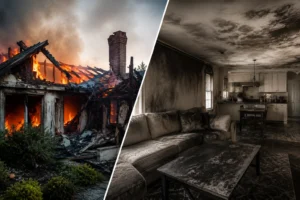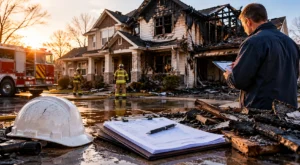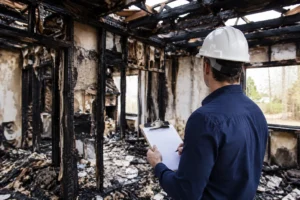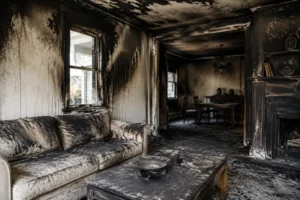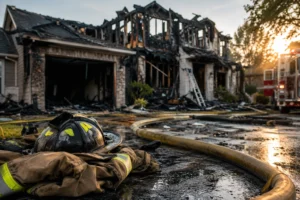

Electrical Fire Insurance Claims often involve more than visible fire damage. In addition to burned materials, property owners may face smoke contamination, water damage, hidden electrical issues, and costly code upgrades. Whether the fire was caused by faulty wiring, an overloaded circuit, or an electrical panel failure, understanding the claims process can help you avoid costly mistakes and pursue a fair insurance settlement.
Understanding Electrical Fires and Insurance Coverage
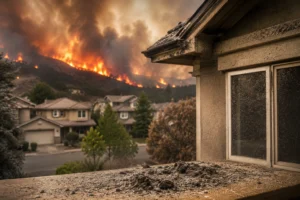
Electrical fires are among the leading causes of residential and commercial property damage. Unlike many other types of fires, they often begin behind walls, inside electrical panels, within attic spaces, or inside appliances. Common causes of electrical fires include:
- Aging electrical systems
- Faulty wiring
- Damaged outlets
- Overloaded circuits
- Electrical panel failures
- Defective appliances
- HVAC electrical malfunctions
- Lightning-related power surges
When a fire originates from one of these causes, insurance coverage may apply. However, coverage depends on the specific policy language, the circumstances surrounding the loss, and the extent of the resulting damage.
What Is Usually Covered?
Many Electrical Fire Insurance Claims include compensation for several categories of damage.
| Covered Damage | Examples |
|---|---|
| Structural Damage | Roofs, walls, ceilings, framing |
| Smoke Damage | Soot cleanup and odor removal |
| Water Damage | Damage caused by firefighting efforts |
| Personal Property | Furniture, electronics, appliances |
| Additional Living Expenses | Temporary housing costs |
| Debris Removal | Cleanup and disposal expenses |
Although these coverages may appear straightforward, disputes frequently arise when determining the true extent of the damage. Therefore, proper documentation becomes critical from the very beginning.
Immediate Steps After an Electrical Fire
The actions taken immediately after a fire can have a significant impact on the outcome of your claim. Therefore, it is important to act carefully and strategically.
Prioritize Safety First
Above all else, focus on safety. Never re-enter a fire-damaged building until emergency personnel have confirmed that it is safe to do so. Potential dangers include:
- Energized wiring
- Structural instability
- Toxic smoke residue
- Water-damaged electrical systems
For this reason, safety should always take priority over documenting property damage.
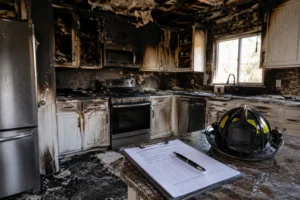
Document Everything
Once access is permitted, begin documenting the loss as thoroughly as possible. Photograph:
- Exterior damage
- Burned structural components
- Smoke staining
- Damaged electrical equipment
- Water damage
- Personal belongings
First, capture wide-angle photographs that show the overall condition of the property. Next, take close-up photographs of specific damaged items. By doing so, you create a detailed visual record that can support your Electrical Fire Insurance Claim and reduce the likelihood of future disputes.
Notify Your Insurance Company
In most cases, insurance policies require prompt reporting of losses. When contacting the insurance company, provide:
- Date of loss
- General description of the incident
- Emergency mitigation efforts
- Contact information
At the same time, avoid making assumptions about the cause of the fire if an investigation is still ongoing. Instead, focus on providing verified facts and accurate information.
Types of Damage Included in Electrical Fire Insurance Claims
Many property owners assume the damage begins and ends where the fire occurred. However, that is rarely the case. In fact, Electrical Fire Insurance Claims often involve multiple layers of damage that extend throughout the property.
Structural Damage
Structural repairs may involve:
- Roofing systems
- Framing
- Drywall
- Insulation
- Flooring
- Windows
- Doors
- Ceiling assemblies
Additionally, extreme heat can weaken building materials even when they appear visually intact. As a result, professional inspections are often necessary to identify hidden structural concerns.
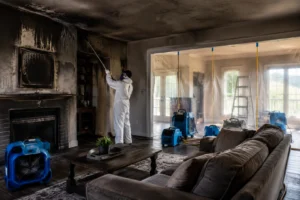
Smoke and Soot Damage
Smoke damage can be surprisingly extensive. In many cases, smoke and soot cause more widespread damage than the fire itself. Furthermore, smoke particles can travel throughout the property and contaminate areas far from the point of origin. Commonly affected items include:
- Furniture
- Cabinets
- Clothing
- Electronics
- Air ducts
- Insulation
- HVAC systems
Consequently, proper smoke remediation is essential to fully restore the property.
Water Damage
Although firefighters work to protect lives and property, the water used during suppression efforts can create substantial secondary damage. Water-related issues may include:
- Saturated drywall
- Damaged flooring
- Wet insulation
- Mold concerns
- Ceiling collapse risks
Therefore, water damage should always be included when evaluating the total scope of an Electrical Fire Insurance Claim.
Personal Property Losses
Personal property losses often represent a significant portion of Electrical Fire Insurance Claims. Commonly affected items include:
- Televisions
- Computers
- Furniture
- Clothing
- Appliances
- Artwork
- Tools
- Business equipment
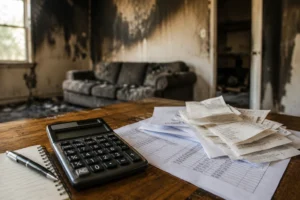
To strengthen the claim, create a detailed inventory and gather any available receipts, photographs, or purchase records whenever possible.
Additional Living Expenses
If a home becomes temporarily uninhabitable, Additional Living Expense (ALE) coverage may help offset certain costs. Covered expenses may include:
- Hotel stays
- Temporary housing
- Restaurant meals
- Laundry services
- Additional transportation costs
As a best practice, save all receipts and maintain organized records throughout the displacement period.
Why Electrical Fire Claims Are Frequently Underpaid
Many underpaid claims are not the result of intentional wrongdoing. Instead, they often occur because important damages are overlooked during the inspection process. If damage is not identified, it usually will not appear in the insurance estimate.
Hidden Damage Is Easy to Miss
Electrical fires frequently spread through concealed spaces within a structure. Damage may exist behind:
- Walls
- Ceilings
- Insulation
- Utility chases
- Electrical pathways
Moreover, wiring may suffer heat damage that is not immediately visible but still requires replacement for safety reasons.
Smoke Contamination Is Often Underestimated
Visible soot is relatively easy to identify. However, invisible contamination can be far more difficult to detect. As a result, some insurance estimates fail to fully account for:
- HVAC cleaning
- Duct replacement
- Thermal fogging
- Specialized deodorization
- Insulation replacement
Without proper remediation, lingering smoke odors may remain long after repairs are completed.
Incomplete Repair Scopes
One of the most common issues in Electrical Fire Insurance Claims involves incomplete repair estimates. Frequently overlooked items include:
| Commonly Missed Item | Why It Matters |
|---|---|
| Electrical Rewiring | Safety concerns after heat exposure |
| Insulation Replacement | Smoke contamination |
| HVAC Cleaning | Air quality restoration |
| Code Upgrades | Required by local regulations |
| Permit Costs | Necessary for reconstruction |
| Specialized Testing | Verifies system safety |
Therefore, reviewing the repair scope carefully is essential before accepting any settlement offer.
Electrical Repairs and Code Upgrade Challenges
After an electrical fire, repairs often extend beyond simply replacing damaged materials. Instead, the focus shifts to whether the remaining electrical system can be safely restored and brought into compliance with current codes.

Why Code Requirements Matter
Building codes continue to evolve over time. Consequently, an electrical system that was compliant years ago may no longer meet today’s standards. Following a fire, local authorities may require upgrades such as:
- Electrical panel replacements
- Arc-fault protection
- Ground-fault protection
- Updated wiring methods
- Improved grounding systems
As a result, reconstruction costs can increase substantially.
Ordinance and Law Coverage
Fortunately, many policies include Ordinance and Law coverage. This coverage may help pay for code-required upgrades that become necessary because of the covered loss. Without it, property owners could face significant out-of-pocket expenses. In complex claims, investigators may also analyze how heat affected building materials and electrical equipment. Similar to the engineering discipline of Tribology, which examines friction, wear, and material interactions, experts evaluate degradation patterns to determine the full extent of damage. Ultimately, successful Electrical Fire Insurance Claims depend on thorough inspections, comprehensive documentation, and a complete understanding of all damages both visible and hidden.
Challenges Property Owners Face During Electrical Fire Claims
Although electrical fires can cause devastating damage, the insurance claim process often creates additional challenges. As a result, many property owners find themselves dealing with disputes, delays, and unexpected obstacles long after the fire has been extinguished. Understanding these common issues can help you prepare for the claim process and protect your financial recovery.
Determining the Cause of the Fire
Before an insurer can fully evaluate many Electrical Fire Insurance Claims, the cause of the fire must be investigated. Typically, this process may involve:
- Fire investigators
- Electrical engineers
- Cause-and-origin specialists
- Independent consultants
Their objective is to determine how the fire started and whether the loss qualifies for coverage under the policy. In some situations, investigators examine burn patterns, damaged wiring, and the behavior of building materials during combustion. Understanding concepts such as Pyrolysis, which refers to the thermal decomposition of materials caused by heat, can help experts determine how a fire spread throughout a structure. Because these investigations take time, claim payments may be delayed until the findings are complete.
Disputes Over the Scope of Damage
One of the most common issues in Electrical Fire Insurance Claims involves disagreements about the scope of repairs. For example, a contractor may recommend replacing an entire electrical system, while the insurance estimate only includes limited repairs. As a result, disputes often arise regarding:
- Electrical rewiring
- Smoke remediation
- HVAC cleaning
- Insulation replacement
- Structural repairs
- Code-required upgrades
Therefore, obtaining detailed repair estimates and professional evaluations can be extremely valuable.
Delays in Claim Processing
Electrical fire claims frequently involve extensive documentation and multiple inspections. Consequently, delays may occur due to:
- Engineering reviews
- Additional documentation requests
- Cause-and-origin investigations
- Contractor estimate comparisons
- Supplemental inspections
While some delays are unavoidable, organized documentation can help move the process forward more efficiently.
Denials Based on Maintenance Arguments
In some cases, insurance companies may argue that poor maintenance contributed to the fire. Examples include:
- Outdated electrical systems
- Improper wiring modifications
- Neglected electrical hazards
- Deferred maintenance issues
If this occurs, independent inspections and expert opinions can help support your position and strengthen your claim.
How a Public Adjuster Helps With Electrical Fire Insurance Claims
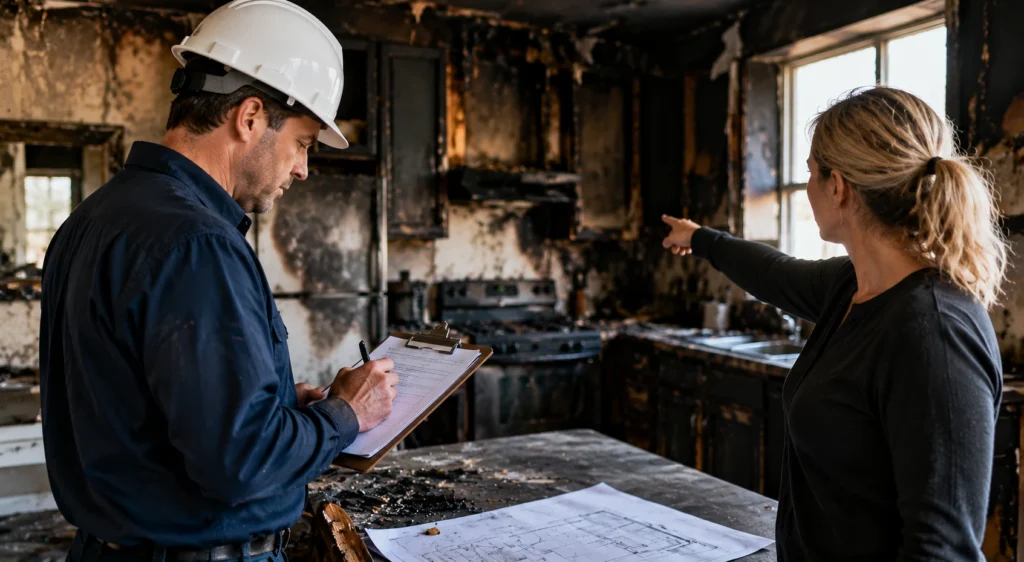
Many property owners have little experience handling major insurance claims. Insurance companies, on the other hand, manage claims every day. Because of this, many policyholders choose to work with a public adjuster.
Independent Damage Assessment
A public adjuster conducts a comprehensive evaluation of the loss. This may include:
- Structural damage assessments
- Electrical system evaluations
- Smoke contamination inspections
- Personal property inventories
- Code upgrade reviews
As a result, damages that might otherwise be overlooked can often be identified and documented.
Documentation and Claim Preparation
Successful Electrical Fire Insurance Claims depend heavily on documentation. A public adjuster may assist with:
- Damage photographs
- Inventory preparation
- Contractor estimates
- Expert reports
- Receipts and expense tracking
Furthermore, organized documentation can reduce disputes and support a stronger claim presentation.
Negotiating With the Insurance Company
Many claim disputes focus on valuation rather than coverage. In other words, the insurer may agree that damage exists but disagree about repair costs. A public adjuster can help negotiate:
- Repair estimates
- Replacement costs
- Smoke remediation expenses
- Code upgrade costs
- Contents valuations
Consequently, policyholders may achieve a more accurate settlement.
Managing Complex Fire Losses
Large fire losses often involve multiple professionals and moving parts. These may include:
- Restoration contractors
- Engineers
- Fire investigators
- Environmental consultants
- Electrical specialists
Therefore, professional claim management can help keep the recovery process organized and efficient.
Electrical Fire Insurance Claims for Commercial Properties
Commercial claims present unique challenges that extend beyond physical property damage. In addition to repairing the building, businesses must often address operational disruptions and lost revenue.
Unique Challenges for Businesses
Commercial Electrical Fire Insurance Claims may involve:
- Building damage
- Equipment losses
- Inventory losses
- Revenue interruption
- Temporary relocation expenses
- Operational downtime
Because businesses rely on continuity, even a short disruption can create substantial financial consequences.
Business Income Coverage
Many commercial policies include business interruption coverage. This coverage may help compensate for:
- Lost income
- Continuing operating expenses
- Payroll obligations
- Temporary operating costs
However, proper documentation is essential. Business owners should preserve:
- Tax returns
- Profit-and-loss statements
- Sales records
- Payroll reports
- Financial statements
The more organized the records, the easier it becomes to support the claim.
Restoring Operations After a Fire
Recovery involves much more than repairing the building. Businesses must also restore daily operations. This may require:
- Equipment replacement
- Vendor coordination
- Temporary workspaces
- Technology restoration
- Employee scheduling adjustments
Therefore, developing a recovery plan early can help reduce downtime and accelerate business continuity.
Common Mistakes That Can Hurt Your Electrical Fire Claim
Even valid claims can encounter problems when avoidable mistakes occur. Fortunately, many of these issues can be prevented with proper planning.
Starting Permanent Repairs Too Soon
After a fire, property owners naturally want to begin rebuilding immediately. However, permanent repairs should generally wait until the damage has been properly documented and evaluated. Emergency mitigation measures such as:
- Water extraction
- Board-up services
- Temporary roof protection
Permanent reconstruction, however, should be coordinated with the claims process whenever possible.
Throwing Away Damaged Items
Damaged property often serves as important evidence. Therefore, avoid discarding items before they have been documented. Whenever practical:
- Photograph damaged items
- Create inventory records
- Retain physical evidence
- Obtain insurer approval before disposal
Taking these steps can help avoid future disagreements.
Accepting the First Settlement Offer
Many policyholders assume the initial settlement offer is final. However, that is not always the case. Before accepting an offer, review whether it includes:
- All structural repairs
- Smoke remediation
- Electrical repairs
- Code upgrades
- Hidden damage discoveries
If necessary, seek professional guidance before agreeing to a settlement.
Failing to Track Expenses
Expenses often accumulate quickly after a fire. For this reason, maintain records of:
- Hotel stays
- Temporary housing
- Meal expenses
- Transportation costs
- Storage fees
- Emergency purchases
Without documentation, reimbursement can become much more difficult.
When to Seek Professional Claim Assistance
Not every claim requires outside assistance. However, some situations are significantly more complex than others.
Signs Your Claim May Be Underpaid
Common warning signs include:
- Large differences between contractor and insurer estimates
- Missing repair items
- Delayed payments
- Repeated requests for information
- Ongoing scope disputes
If these issues arise, further review may be necessary.
Complex Fire Loss Situations
Professional assistance may be beneficial when dealing with:
- Extensive structural damage
- Major smoke contamination
- Electrical system replacement disputes
- Commercial property losses
- Business interruption claims
As claim complexity increases, expert guidance often becomes more valuable.
Benefits of Early Representation
Seeking assistance early can help:
- Preserve evidence
- Identify hidden damages
- Improve documentation
- Coordinate experts
- Streamline negotiations
Ultimately, early action can improve both efficiency and claim outcomes.
Conclusion
Electrical Fire Insurance Claims often involve hidden damage that extends beyond what is immediately visible. Smoke contamination, water damage, electrical system failures, and code-required upgrades can significantly increase repair costs and complicate the recovery process. Therefore, thorough documentation, detailed inspections, and careful review of repair estimates are essential. By understanding the claims process and addressing potential disputes early, property owners can improve their chances of securing a fair settlement and restoring their property safely and completely.
FAQs
In most cases, homeowners’ insurance covers electrical fire damage if the fire resulted from a covered peril and is not excluded by the policy.
Prioritize safety, contact emergency services, document the damage when safe, and notify your insurance company as soon as possible.
Yes. Smoke and soot damage are often covered because they can spread throughout the property and affect areas far from the fire source.
Insurance may cover wiring replacement if the wiring was damaged by the fire and replacement is necessary to restore the property safely.
Additional Living Expense coverage helps pay for temporary housing, meals, and other increased costs when your home is uninhabitable after a covered loss.
Claims may be underpaid when hidden damage, smoke contamination, code upgrades, or necessary repairs are not fully included in the insurance estimate.
They may be covered if your policy includes Ordinance and Law coverage, which helps pay for upgrades required by current building codes.
Many commercial insurance policies include business interruption coverage that may compensate for lost income and ongoing operating expenses.
Not necessarily. It is important to review the estimate carefully to ensure all damages, repairs, and code requirements have been properly included.
You may want to consider professional assistance if your claim is complex, significantly underpaid, delayed, or involves disputes over the scope of damage.