

If your home or commercial property in Greenville, TX has been damaged by hail, severe wind, fire, water, or another covered event, navigating the insurance claims process can quickly become overwhelming. Insurance companies assign adjusters to evaluate losses, but policyholders often discover that important damage is overlooked, repair scopes are incomplete, or settlement offers fail to reflect the true cost of restoring their property.
At TX Public Adjusting, we represent property owners—not insurance companies. As a licensed Texas public adjusting firm operating under Rise Public Adjusting LLC (Texas License #3356839), we help homeowners, business owners, landlords, churches, multifamily property owners, and commercial clients throughout Greenville pursue fair insurance settlements.
Located in Hunt County, Greenville experiences a wide range of severe weather. Spring hailstorms, damaging straight-line winds, tornado activity across Northeast Texas, heavy rainfall, flash flooding, and occasional winter ice events all contribute to thousands of insurance claims over time. Even when damage appears minor, hidden roof damage, moisture intrusion, structural movement, or compromised building systems can significantly increase repair costs.
Whether your property is near Historic Downtown Greenville, L-3Harris, Splash Kingdom Air Patrol, or along Interstate 30, our team understands the types of losses commonly experienced throughout the area and how to properly document them.
Free Claim Review
If you believe your insurance claim has been underpaid, delayed, or denied, TX Public Adjusting offers a free claim review. We evaluate your policy, inspect the damage, document the full scope of loss, and negotiate directly with the insurance carrier on your behalf—without upfront fees.
Why Property Owners Hire a Public Adjuster in Greenville
Most people file only a handful of insurance claims during their lifetime. Insurance companies, on the other hand, handle claims every day using trained adjusters, engineers, consultants, and estimating software. If you’re unfamiliar with the role of a public adjuster, our What Is a Public Adjuster? guide explains how public adjusters represent policyholders throughout the insurance claim process and how they differ from insurance company adjusters.
A licensed public adjuster works exclusively for the policyholder.
Many Greenville property owners contact us after experiencing situations such as:
- A settlement that doesn’t cover actual repair costs
- Roof damage that was partially approved
- Interior water damage excluded from the estimate
- Structural damage overlooked after severe storms
- Disagreements regarding depreciation
- Commercial interruption losses that were undervalued
- Supplemental damage discovered during reconstruction
Our role is to ensure every covered component of your loss is properly documented and supported with detailed evidence.
Why Local Experience Matters
Greenville’s weather creates unique claim challenges.
Properties throughout neighborhoods such as:
- Jacksons Run
- Oak Village
- Turtle Creek
- Cedar Creek
- Heritage Estates
- The Wellington area
- Downtown Greenville
can experience very different damage patterns depending on storm direction, tree coverage, roof age, and surrounding construction.
A localized inspection often uncovers damage that generic inspections miss.
Common Insurance Claims in Greenville, TX
Hail Damage Claims
Northeast Texas regularly experiences severe hailstorms capable of damaging:
- Asphalt shingles
- Metal roofing
- Tile roofing
- Gutters
- Windows
- Skylights
- HVAC equipment
- Exterior siding
Many hail claims become disputed because cosmetic damage is mistaken for functional damage or because only visible roof slopes are inspected. Taking photographs immediately after a storm can strengthen your claim. Our Document Hail Damage for an Insurance Claim guide outlines the types of evidence homeowners should gather before repairs begin.
Our inspections include:
- Roof documentation
- Soft metal impacts
- Vent damage
- Flashings
- Gutters
- Window screens
- Exterior elevations
- Supporting photographs
Proper documentation frequently makes the difference between a partial payment and a complete roof replacement. Many Greenville property owners benefit from learning how the claims process works before speaking with their insurance company. Our Hail Damage Insurance Claim guide explains how hail damage is documented, common reasons claims are underpaid, and the steps that can improve your chances of receiving a fair settlement.
Water Damage Claims
Water damage doesn’t always originate from flooding.
Greenville claims commonly involve:
- Pipe failures
- Frozen plumbing during winter weather
- Roof leaks after hail
- Wind-driven rain
- Appliance failures
- HVAC leaks
- Overflowing fixtures
Hidden moisture behind walls or beneath flooring often continues causing damage long after the initial event. If water has affected your home or business, our Water Damage Public Adjuster resource explains how hidden moisture, mold concerns, and incomplete insurance estimates can impact your claim and what documentation insurers typically require.
Our inspections evaluate both visible and concealed damage whenever possible.
Fire and Smoke Damage Claims
Fire losses often involve much more than burned materials.
Insurance claims may include:
- Structural repairs
- Smoke contamination
- Soot cleanup
- Electrical systems
- HVAC cleaning
- Contents inventory
- Odor removal
- Debris removal
- Additional living expenses
Accurately documenting every category of loss is essential for maximizing available policy benefits. Fire losses often involve much more than structural repairs. Learn how a Fire Insurance Adjuster helps document smoke damage, personal property losses, additional living expenses, and other covered damages that are sometimes overlooked.
Storm Damage Claims
Greenville frequently experiences:
- Severe thunderstorms
- Straight-line winds
- Tornadic activity
- Heavy rainfall
- Lightning strikes
Storms may damage:
- Roofing systems
- Windows
- Fencing
- Garages
- Outbuildings
- Solar panels
- Exterior finishes
- Landscaping
Many storm claims require multiple inspections as hidden damage becomes visible during repairs.
Roof Damage Claims
Roof systems are among the most frequently disputed portions of any insurance claim.
Insurance carriers may conclude:
- Repairs are sufficient
- Damage resulted from wear and tear
- Damage predated the storm
- Only isolated slopes qualify
Our documentation focuses on establishing storm-created damage using photographs, measurements, industry standards, and detailed repair scopes. If your insurance company has recommended repairs instead of replacement, our guide to hiring a Public Adjuster for Roof Claim explains how roof damage is evaluated and why proper documentation is critical after severe storms. Roof claims are among the most heavily disputed property insurance claims in Texas. Learn more about inspections, documentation, and negotiations in our Hail Damage Roof Insurance Claim guide.
Commercial Property Claims
Greenville’s economy includes:
- Manufacturing
- Retail
- Warehousing
- Medical facilities
- Restaurants
- Agricultural businesses
- Churches
- Office buildings
Commercial insurance claims can involve:
- Business interruption
- Inventory damage
- Equipment losses
- Tenant improvements
- Roof systems
- Mechanical equipment
- Water intrusion
- Large-scale structural repairs
Commercial claims typically require extensive documentation to accurately reflect operational losses alongside physical damage.
Why Insurance Claims Become Underpaid
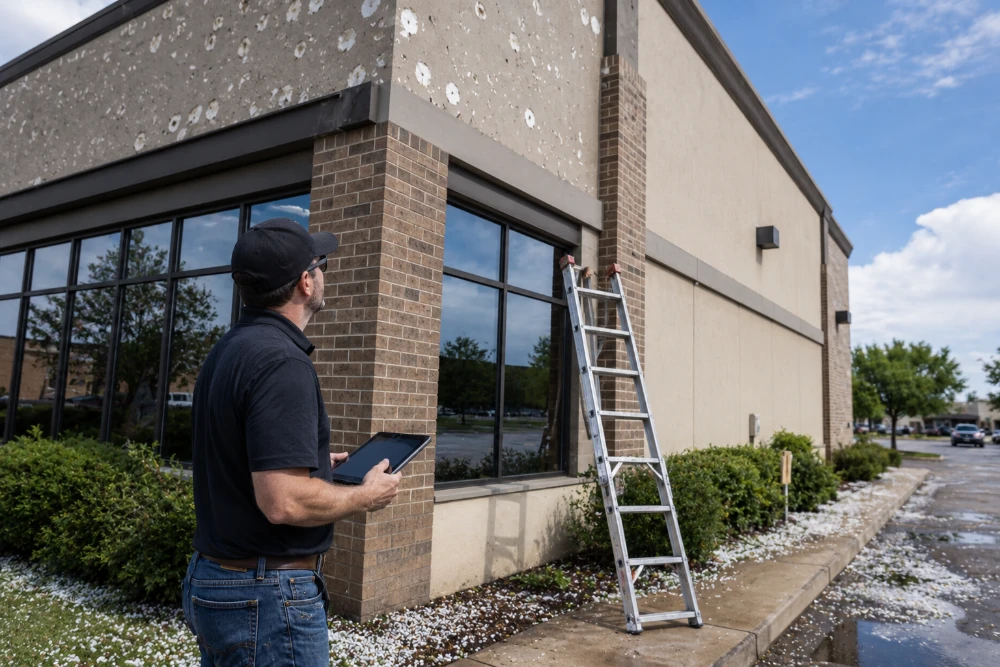
Insurance companies process an enormous number of claims following major weather events. While many adjusters work diligently, the speed and volume of inspections can sometimes result in incomplete estimates.
Some of the most common reasons claims become underpaid include:
Missed Damage
Hidden issues are often overlooked during brief inspections, including:
- Roof underlayment damage
- Moisture intrusion
- Flashing failures
- Interior ceiling damage
- Insulation damage
- Structural movement
Incomplete Repair Scopes
A repair estimate may include only obvious damage while omitting related components necessary to complete proper restoration.
Examples include:
- Matching roofing materials
- Code upgrades
- Flashing replacement
- Interior painting
- Trim replacement
- Flooring transitions
Depreciation Issues
Insurance policies frequently apply depreciation to certain materials.
However, depreciation calculations should accurately reflect:
- Age
- Condition
- Useful life
- Applicable policy language
Incorrect depreciation can significantly reduce settlement values.
Low Initial Estimates
Initial estimates frequently represent only the first stage of a claim.
As contractors begin repairs, additional covered damage may become apparent.
Proper supplemental documentation helps ensure newly discovered damage is evaluated rather than absorbed by the property owner.
Documentation Problems
Insurance companies make decisions based on evidence.
Incomplete documentation often results in:
- Delays
- Partial approvals
- Requests for additional information
- Lower settlement offers
A thorough claim file typically includes:
- Detailed photographs
- Measurements
- Repair estimates
- Policy analysis
- Contents documentation
- Supporting reports
- Repair scope comparisons
Avoiding simple errors can significantly improve the outcome of your claim. Our Common Property Insurance Claims Mistakes guide highlights issues that frequently lead to delays, denials, or underpaid settlements.
Our Public Adjusting Process
At TX Public Adjusting, we follow a structured process designed to build a well-supported insurance claim from start to finish.
Step 1: Claim Review
We begin by reviewing your insurance policy, existing claim documents, carrier correspondence, and any estimates or reports already prepared. This helps identify potential coverage issues, missing documentation, and areas where the scope of loss may need further evaluation. Many property owners wonder whether they’ve waited too long to seek professional assistance. Our When Is It Too Late to Hire a Public Adjuster? guide explains when it’s still possible to become involved in an existing insurance claim.
Step 2: Comprehensive Property Inspection
Our team conducts a detailed inspection of the damaged property. We document visible and, where possible, hidden damage using photographs, measurements, notes, and industry-standard estimating practices. For Greenville properties, this often includes evaluating hail impacts, wind damage, roof systems, water intrusion, and structural components affected by severe weather.
Step 3: Documentation and Estimate Preparation
After the inspection, we prepare a comprehensive claim package that may include:
- Detailed repair estimates
- Damage photographs
- Supporting documentation
- Policy analysis
- Contents inventories (when applicable)
- Supplemental claim information
The goal is to present a complete picture of the covered loss rather than relying solely on an initial insurance inspection.
Step 4: Negotiation With the Insurance Company
We communicate directly with the insurance carrier throughout the claims process. This includes responding to requests for information, discussing the scope of repairs, reviewing estimates, and negotiating toward a fair settlement based on the policy and documented damage.
Step 5: Settlement Support
Once the claim is resolved, we remain available to help explain settlement documents, review supplemental issues if additional covered damage is discovered during repairs, and assist you throughout the restoration process. To better understand what happens throughout the claims process, explore How Do Public Adjusters Work?, which walks through each stage of representing a property owner from inspection through final settlement.
Why Choose TX Public Adjusting
Property owners throughout Texas trust TX Public Adjusting because we focus exclusively on representing policyholders.
Why clients choose us:
- Licensed Texas Public Adjuster
- Rise Public Adjusting LLC
- Texas License #3356839
- Residential and commercial claim experience
- Thousands of claims reviewed across Texas
- Independent representation for policyholders
- Detailed property inspections
- Thorough documentation practices
- Skilled claim negotiation
- No upfront fees—we’re paid only if we recover additional funds according to our agreement
Unlike insurance company adjusters, our responsibility is to advocate for your interests throughout the claims process. Understanding who each adjuster represents can make a significant difference during a claim. Read our Public Adjuster vs. Independent Adjuster comparison to learn how these roles differ and who advocates for your interests.
Free Claim Review for Greenville Property Owners
If your Greenville home or commercial property has experienced hail, wind, fire, water, or storm damage, don’t assume the first settlement offer reflects the full value of your covered loss.
Contact TX Public Adjusting today for a free claim review. We’ll evaluate your policy, inspect the damage, explain your options, and work to help you pursue the settlement your claim deserves.
Our team proudly serves Greenville, Hunt County, and surrounding Northeast Texas communities with experienced, independent public adjusting services.
Areas We Serve Near Greenville
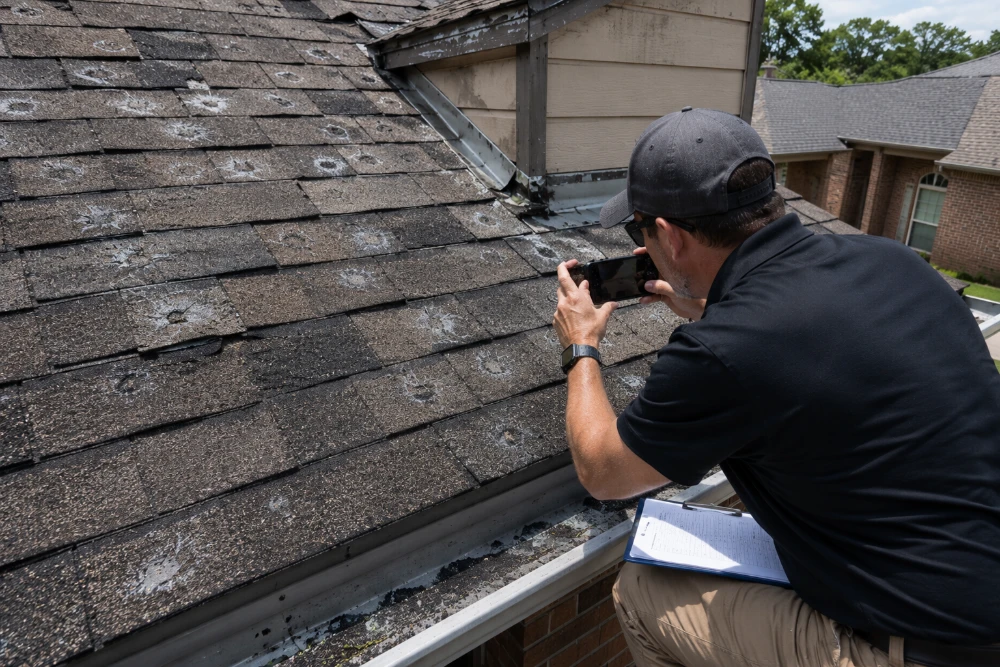
Although this page focuses on Greenville, TX, TX Public Adjusting assists property owners throughout Hunt County and neighboring communities across Northeast Texas. Whether your property is in the heart of Greenville or a nearby rural community, we’re available to inspect losses and represent your interests during the insurance claim process.
We regularly assist clients in areas including:
- Commerce
- Royse City
- Caddo Mills
- Quinlan
- Lone Oak
- Campbell
- Wolfe City
- Celeste
- Union Valley
- West Tawakoni
- Cash
- Merit
- Fate
- Rockwall
- Sulphur Springs
If you’re unsure whether your property falls within our service area, contact us for a free claim review.
Frequently Asked Questions
1. What does a public adjuster do?
A public adjuster represents the policyholder—not the insurance company. We inspect the property, review your insurance policy, document all covered damage, prepare repair estimates, negotiate with the insurance carrier, and help maximize the value of a covered claim.
Unlike insurance company adjusters, our responsibility is to advocate exclusively for your interests throughout the claims process.
2. When should I hire a public adjuster?
The sooner, the better.
Many Greenville property owners contact us immediately after discovering damage, while others call after receiving a low settlement offer or claim denial. A public adjuster can often become involved before repairs begin or even after the insurance company has already inspected the property.
Early involvement usually allows for more complete documentation of the loss. Still deciding whether professional representation makes sense? Our Should I Use a Public Adjuster? guide discusses common situations where hiring a public adjuster may benefit property owners.
3. Do you only handle residential claims?
No.
TX Public Adjusting represents both residential and commercial property owners throughout Texas.
We assist with claims involving:
- Homes
- Apartment communities
- Retail buildings
- Restaurants
- Industrial facilities
- Churches
- Warehouses
- Office buildings
- Multi-family properties
- Agricultural structures
Each commercial claim receives documentation tailored to the property’s operations and insurance coverage.
4. What types of damage are most common in Greenville?
Greenville experiences a variety of weather-related property losses, including:
- Hail damage
- Wind damage
- Tornado damage
- Roof damage
- Water damage
- Fire and smoke damage
- Lightning strikes
- Heavy rain intrusion
- Fallen trees
- Ice-related pipe failures
Because Northeast Texas storms often produce multiple types of damage during a single event, a thorough inspection is essential.
5. Will hiring a public adjuster delay my claim?
Not necessarily.
A well-documented claim often helps reduce disputes by presenting organized evidence and a complete scope of damages. While complex claims naturally require time to investigate, our goal is to help move the process forward through accurate documentation and professional communication with the insurance carrier.
6. How are public adjusters paid?
Public adjusters generally work on a contingency-fee basis.
That means there are typically no upfront fees for our services. Our compensation comes from the claim recovery according to the terms of the public adjusting agreement.
During your free consultation, we’ll explain how our fee structure works so you understand exactly what to expect. If you’d like a more detailed explanation of contingency fees and how compensation works, read The Truth About Public Adjuster Fees for answers to common questions about costs and payment structures.
7. Can you help if my claim has already been denied?
Yes.
A denied claim doesn’t always mean the matter is over.
Depending on the circumstances, additional documentation, engineering reports, revised repair estimates, or policy interpretation may justify reopening or challenging portions of the claim. We’ll review your situation and explain the available options. If you’ve received a denial letter, our What to Do If Your Hail Claim Was Denied guide explains common reasons claims are rejected and the options that may still be available.
8. Can you help with supplemental claims?
Absolutely.
It’s common for contractors to uncover additional covered damage once repairs begin. Supplemental claims allow newly discovered damage to be documented and submitted to the insurance company for consideration.
Our team prepares supporting documentation to help ensure these additional damages receive proper review.
9. Why are roof claims frequently disputed?
Roof systems often sustain damage that isn’t immediately obvious from ground level.
Insurance carriers may determine repairs are sufficient, while contractors identify widespread storm-related damage requiring replacement. Differences in inspection methods, documentation, and repair scope frequently lead to disputes.
Our inspections are designed to identify storm-related damage that may otherwise be overlooked.
10. Why should I choose TX Public Adjusting?
Property owners choose TX Public Adjusting because we provide independent representation backed by extensive Texas insurance claim experience.
As Rise Public Adjusting LLC, Texas License #3356839, we represent policyholders—not insurance companies. We focus on detailed inspections, thorough documentation, professional negotiations, and responsive communication throughout the claim process.
Whether you’re dealing with hail damage in Greenville, water damage after heavy rainfall, or a complex commercial property loss, our objective is to help you pursue the full benefits available under your policy.
Get a Free Claim Review
Property damage can leave you with difficult decisions, unexpected expenses, and an insurance process that feels overwhelming. You don’t have to manage it alone.
If your home or commercial property in Greenville, TX has been damaged by hail, wind, water, fire, or another covered event, contact TX Public Adjusting for a free claim review.
We’ll:
- Review your insurance policy
- Inspect the property
- Document all covered damage
- Prepare a comprehensive claim package
- Negotiate directly with the insurance company on your behalf
Because we work exclusively for policyholders, our focus is helping you pursue a fair settlement—not protecting the insurance company’s bottom line.