

When severe weather strikes Southeast Texas, property owners in Port Arthur often face far more than the visible damage left behind. Hurricanes, tropical storms, storm surge, heavy rainfall, high winds, hail, and commercial losses can quickly turn into complicated insurance claims. If you’re searching for a Public Adjuster in Port Arthur, TX, you deserve an advocate who represents your interests—not your insurance company.
TX Public Adjusting, a division of Rise Public Adjusting LLC, proudly assists homeowners, business owners, churches, apartment owners, industrial facilities, and commercial property owners throughout Port Arthur and Jefferson County. As a licensed Texas Public Adjuster (Texas License #3356839), we work exclusively for policyholders by documenting damage, preparing comprehensive claim packages, negotiating with insurance carriers, and pursuing the settlement your policy supports. If you’re unfamiliar with the claims process, learn more about what a Texas public adjuster does before beginning your claim.
Whether your property overlooks Sabine Lake, sits near the Port of Port Arthur, serves customers along Gulfway Drive, or is located in neighborhoods like Griffing Park, Lakeview, Port Acres, or Downtown Port Arthur, our goal remains the same—to help you recover as completely as possible after a covered loss.
Free Claim Review
If you’ve recently experienced property damage, we offer a free claim review with no upfront fees. We only succeed when we help recover additional benefits for covered claims.
Why Property Owners Hire a Public Adjuster in Port Arthur
Insurance companies employ adjusters whose responsibility is to evaluate claims on behalf of the carrier. A licensed public adjuster works for the policyholder instead.
For many Port Arthur property owners, the challenge isn’t proving that damage occurred—it’s ensuring every covered component of the loss is properly documented.
Large weather events along the Gulf Coast often create thousands of simultaneous claims. During these periods, inspections may happen quickly, estimates may rely on incomplete information, and hidden damage can easily be overlooked.
A public adjuster helps level the playing field by providing:
- Detailed property inspections
- Complete damage documentation
- Policy review
- Scope verification
- Independent estimating
- Negotiation with the insurance company
- Ongoing claim management
Rather than accepting the first estimate presented, many property owners choose independent representation to ensure nothing is missed.
Local Knowledge Matters
Port Arthur presents unique insurance claim challenges that differ from many inland Texas communities.
Located along Sabine Lake and the Gulf Coast, the city regularly experiences:
- Hurricane-force winds
- Tropical storm damage
- Storm surge
- Wind-driven rain
- Flood-related complications
- Saltwater intrusion
- High humidity
- Mold growth following water damage
Commercial properties also face unique risks because of the city’s extensive petrochemical industry, shipping terminals, warehouses, manufacturing facilities, and marine businesses centered around the Port of Port Arthur.
Understanding these local conditions allows claims to be documented more accurately than relying solely on generalized estimating practices.
Common Insurance Claims in Port Arthur
Because of its Gulf Coast location, Port Arthur experiences some of the highest weather-related insurance claim activity in Texas.
Our team assists with a wide variety of residential and commercial property claims.
Hurricane Damage Claims
Hurricanes remain one of the biggest threats facing Port Arthur property owners.
Strong hurricanes impacting Jefferson County frequently produce:
- Roof failures
- Torn siding
- Window damage
- Structural movement
- Water intrusion
- Fence damage
- Detached outbuildings
- Interior ceiling damage
Even when roofs remain intact, wind-driven rain may enter through vents, flashing, soffits, and other building components.
Many homeowners underestimate the extent of interior moisture until weeks later when mold or drywall damage becomes apparent.
Proper documentation immediately after the storm often makes a significant difference during settlement negotiations. Our guide to hurricane property damage explains what homeowners should document immediately after a major storm.
Storm Surge and Water Intrusion
Unlike many Texas cities, Port Arthur properties may experience storm surge associated with tropical systems.
Storm surge creates complex claims involving:
- Flooring replacement
- Electrical systems
- HVAC equipment
- Cabinets
- Appliances
- Insulation
- Structural framing
- Foundation concerns
Because multiple causes of loss may occur simultaneously—wind, rain, flood, and storm surge—it becomes especially important to determine what portions of the damage fall within the property’s insurance coverage.
Wind Damage Claims
High winds don’t always accompany hurricanes.
Severe thunderstorms throughout Southeast Texas routinely generate damaging straight-line winds capable of causing:
- Missing shingles
- Lifted roofing systems
- Broken windows
- Damaged garage doors
- Fallen trees
- Detached gutters
- Fascia damage
- Exterior siding failures
Some damage is immediately visible.
Other issues remain hidden beneath roofing materials until leaks develop months later.
Hail Damage Claims
Although Port Arthur is better known for hurricanes than North Texas-style hailstorms, hail events still occur throughout Jefferson County.
Hail can damage:
- Asphalt shingles
- Metal roofing
- Skylights
- Gutters
- Downspouts
- HVAC condenser units
- Exterior paint
- Windows
Proper inspection often includes identifying impact damage that may not be visible from ground level. Learn how to identify hail damage roof insurance claim issues before repairs begin.
We also explain how to document hail damage for an insurance claim using photographs, measurements, and inspection reports.
Water Damage Claims
Water damage remains one of the most common property insurance claims.
Sources may include:
- Plumbing failures
- Appliance leaks
- Water heater failures
- Burst pipes
- Roof leaks
- HVAC condensation
- Storm-related intrusion
If water remains inside a building for an extended period, secondary damage such as mold, warped flooring, insulation deterioration, and damaged framing may significantly increase repair costs.
Thorough documentation is essential before repairs begin. A licensed water damage public adjuster can help evaluate hidden moisture damage that isn’t always included in the initial estimate.
Fire and Smoke Damage Claims
Residential and commercial fires create losses extending far beyond burned materials.
Claims frequently involve:
- Structural damage
- Smoke contamination
- Soot residue
- Odor removal
- Electrical replacement
- HVAC cleaning
- Personal property inventory
- Temporary living expenses
Many fire claims become more complicated because smoke damage spreads throughout areas untouched by flames.
Comprehensive documentation helps ensure these affected areas receive proper consideration during the adjustment process. Learn how a fire insurance adjuster helps document smoke, soot, and structural damage following a covered loss.
Roof Damage Claims
Roofs often sustain damage that isn’t immediately obvious after severe weather.
Common issues include:
- Lifted shingles
- Creased shingles
- Missing flashing
- Damaged ridge caps
- Wind uplift
- Water infiltration
- Decking damage
- Vent damage
A detailed roof inspection frequently identifies damage overlooked during an initial insurance inspection. See how a public adjuster for roof claim can help support a more complete insurance estimate.
Commercial Property Claims
Port Arthur’s economy includes:
- Shipping
- Petrochemical operations
- Warehousing
- Manufacturing
- Retail centers
- Restaurants
- Office buildings
- Apartment communities
Commercial insurance claims often involve:
- Building damage
- Equipment losses
- Business personal property
- Inventory
- Business interruption
- Extra expenses
- Tenant improvements
Commercial claims usually require extensive documentation and careful review of policy provisions to accurately measure the full extent of covered losses.
Businesses operating near the Port of Port Arthur or industrial corridors may also experience unique exposures related to wind, flooding, and prolonged operational interruptions. Learn more about our Commercial Property Claims services for warehouses, apartment complexes, industrial facilities, and retail buildings.
Why Insurance Claims Become Underpaid
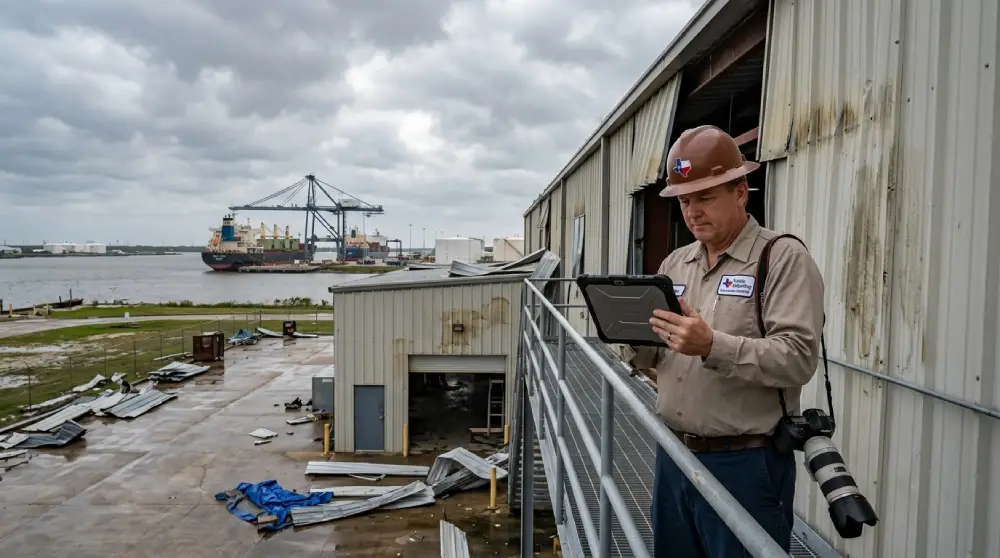
Insurance claims are rarely underpaid because of a single issue.
Instead, settlements often fall short due to multiple documentation or estimating problems.
Hidden Damage
Storm damage isn’t always visible during an initial inspection.
Examples include:
- Moisture behind walls
- Roof decking damage
- Insulation saturation
- Structural movement
- Electrical concerns
Without additional investigation, these damages may never appear in the original estimate.
Incomplete Scope of Loss
One of the most common issues involves omitted repairs.
Examples include:
- Paint matching
- Trim replacement
- Code upgrades
- Debris removal
- Moisture mitigation
- Interior finishes
- Detached structures
Even small omissions can significantly affect the total claim value.
Depreciation Issues
Insurance estimates often include depreciation based upon age and condition.
While depreciation is appropriate in many situations, incorrect calculations can reduce settlement amounts unnecessarily.
Reviewing these calculations helps determine whether adjustments are warranted.
Documentation Gaps
Insurance companies rely heavily upon documentation.
Claims supported by:
- Detailed photographs
- Moisture readings
- Measurements
- Repair estimates
- Expert evaluations
- Inventories
typically provide a stronger foundation for negotiation than claims relying solely upon verbal descriptions.
Initial Estimates May Not Reflect the Full Loss
The first insurance estimate is often just that—an initial evaluation.
As contractors begin repairs, additional covered damage frequently becomes apparent.
Proper supplemental documentation helps account for these newly discovered issues while maintaining compliance with policy requirements. Many of these issues can be avoided by understanding the common property insurance claims mistakes homeowners make during the claims process.
Get a Free Claim Review
If your home or commercial property in Port Arthur has suffered hurricane, wind, hail, fire, water, or storm damage, you don’t have to navigate the insurance claim process alone.
TX Public Adjusting represents policyholders—not insurance companies. Our experienced team reviews your policy, documents the full extent of covered damage, prepares a detailed claim package, and negotiates directly with the carrier on your behalf.
There are no upfront fees, and if we don’t recover additional covered benefits under the terms of your policy, you don’t owe us for our adjusting services.
Schedule your Free Claim Review today and let TX Public Adjusting help you pursue the fair settlement your property deserves.
Our Public Adjusting Process
At TX Public Adjusting, we believe every successful insurance claim starts with a thorough understanding of both the damage and the insurance policy. Our process is designed to remove uncertainty while helping property owners present a complete, well-supported claim.
Step 1: Free Claim Review
Every claim begins with a no-obligation consultation. We discuss the cause of loss, review available documentation, answer your questions, and determine whether a public adjuster is likely to provide value for your situation.
Step 2: Comprehensive Property Inspection
Our team conducts a detailed inspection of the property to identify both obvious and hidden damage. Depending on the claim, this may include:
- Roofing systems
- Exterior elevations
- Interior finishes
- Moisture-related damage
- Structural components
- Mechanical systems
- Commercial equipment
- Business personal property
For commercial properties, we also evaluate operational impacts that may contribute to business interruption claims.
Step 3: Documentation and Estimating
Proper documentation is often the difference between an incomplete claim and a well-supported one.
We prepare:
- Detailed photographs
- Damage inventories
- Repair scopes
- Independent estimates
- Supporting documentation
- Policy-related claim analysis
This information helps present the insurance carrier with a complete picture of the covered loss.
Step 4: Negotiation with the Insurance Company
Once the claim package has been submitted, we communicate directly with the insurance company throughout the adjustment process.
This includes:
- Answering requests for information
- Reviewing carrier estimates
- Discussing differences in scope
- Supporting supplemental claims when additional damage is discovered
- Working toward a fair settlement supported by the policy
Our goal is to help ensure the claim reflects the documented damage rather than relying solely on an initial inspection.
Step 5: Settlement Support
Even after negotiations conclude, questions often remain regarding repairs, supplements, or additional covered damage uncovered during reconstruction.
We continue assisting clients throughout the claim process until the claim reaches an appropriate resolution. If you’re wondering what happens behind the scenes during negotiations, here’s how public adjusters work throughout an insurance claim.
Why Choose TX Public Adjusting
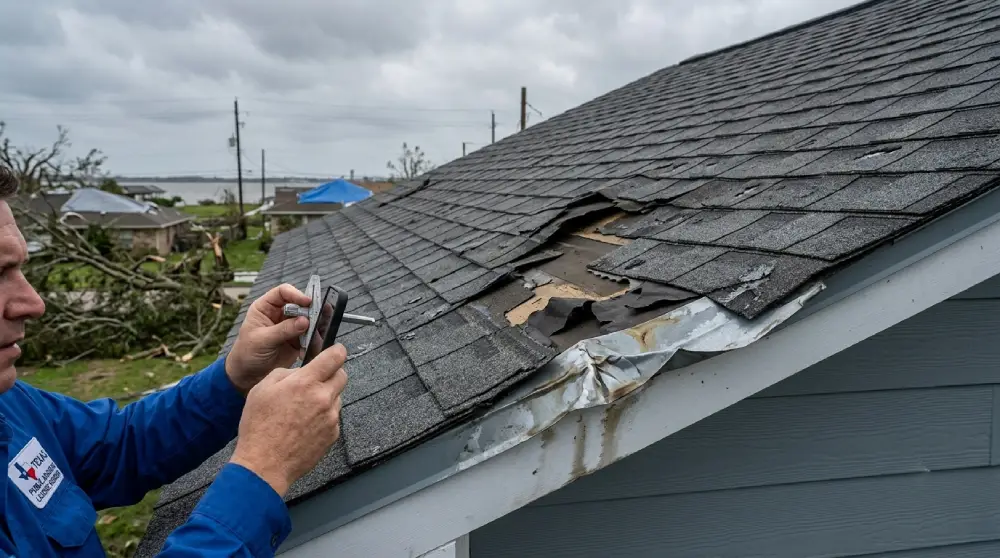
Choosing a public adjuster means choosing someone who represents your interests throughout the insurance claim—not the insurance company’s.
Property owners across Texas choose TX Public Adjusting because we provide:
Licensed Texas Representation
TX Public Adjusting operates under Rise Public Adjusting LLC and is licensed by the Texas Department of Insurance.
Texas Public Adjuster License #3356839
Residential and Commercial Experience
Our team assists with:
- Homes
- Apartment communities
- Churches
- Retail centers
- Warehouses
- Office buildings
- Restaurants
- Industrial facilities
- Manufacturing properties
- Mixed-use developments
Texas-Focused Knowledge
Texas weather creates unique insurance challenges.
Our experience includes claims involving:
- Hurricanes
- Tropical storms
- Wind damage
- Hail
- Fire
- Water damage
- Roof damage
- Commercial property losses
Because we focus exclusively on Texas, we understand the regional weather patterns, construction methods, and claim issues that commonly affect policyholders across the state.
Independent Representation
Insurance company adjusters work for insurance carriers.
Public adjusters work for policyholders.
That distinction matters throughout the claims process, particularly when evaluating repair scope, reviewing estimates, and negotiating settlement values.
Thousands of Claims Reviewed
Over the years, our team has reviewed thousands of residential and commercial property claims throughout Texas.
Every property is different, and every insurance policy contains unique provisions. Our role is to evaluate each claim individually while helping clients understand their available options under the policy. If you’re still deciding whether professional representation makes sense, read Should I Use a Public Adjuster?
Areas We Serve Near Port Arthur
In addition to serving Port Arthur, TX Public Adjusting assists property owners throughout Jefferson County and surrounding Southeast Texas communities, including:
- Groves
- Nederland
- Port Neches
- Beaumont
- Bridge City
- Orange
- Orangefield
- Vidor
- Lumberton
- Hamshire
- China
- Winnie
- Sabine Pass
- Central Gardens
- Taylor Landing
Whether your property is located near Sabine Lake, the Port of Port Arthur, downtown, or the surrounding Gulf Coast region, our team is available to help with residential and commercial insurance claims.
Frequently Asked Questions
1. What does a public adjuster do?
A public adjuster represents the policyholder during an insurance claim. This includes inspecting damage, documenting losses, reviewing the policy, preparing estimates, negotiating with the insurance company, and helping pursue a fair settlement.
2. Should I hire a public adjuster before filing my claim?
Not necessarily. Some property owners contact us immediately after the loss, while others seek assistance after receiving an estimate they believe is too low. We can evaluate your specific circumstances during a free claim review. You can also read When Is It Too Late to Hire a Public Adjuster? if you’ve already started your insurance claim.
3. Can you help after the insurance company has already inspected my property?
Yes. Many clients contact us after the carrier has completed its initial inspection. If additional covered damage exists or the scope appears incomplete, we may be able to assist with documenting and presenting supplemental information.
4. Do you work with commercial properties?
Absolutely.
We assist commercial property owners throughout Port Arthur, including office buildings, warehouses, industrial facilities, retail centers, restaurants, apartment communities, and other commercial properties.
5. What types of claims do you handle?
We assist with claims involving:
- Hurricane damage
- Wind damage
- Hail damage
- Fire damage
- Smoke damage
- Water damage
- Roof damage
- Commercial property losses
- Storm-related damage
6. How are public adjusters paid?
Public adjusters typically work on a contingency fee basis. That means our fee is based on the outcome of the claim rather than charging hourly rates or requiring large upfront payments. We’ll explain our fee structure before any agreement is signed. Learn more about public adjuster fees and how contingency-based representation works.
7. How long does an insurance claim take?
Every claim is different.
Smaller residential claims may resolve relatively quickly, while large commercial or hurricane-related losses can require additional time because of inspections, documentation, supplemental estimates, and negotiations. Our guide explains how long does an insurance adjuster have to contact you under Texas insurance claim timelines.
8. Can you help if my claim has been underpaid?
Yes.
One of the most common reasons property owners contact us is because they believe their settlement does not fully account for the documented damage. We review the policy, evaluate the estimate, and determine whether additional covered damage should be presented.
9. Do you help homeowners and businesses?
Yes.
TX Public Adjusting represents both residential and commercial policyholders throughout Southeast Texas.
10. Why choose a local Texas public adjuster?
Working with a Texas-focused public adjuster means working with professionals who understand the weather risks, construction methods, and insurance claim challenges commonly affecting Gulf Coast properties, including hurricanes, tropical storms, and wind-driven rain.
Schedule Your Free Claim Review
Property damage can disrupt every aspect of your life or business, but you don’t have to face the insurance claim process alone.
If your home, business, apartment complex, church, warehouse, or commercial property in Port Arthur has suffered hurricane, wind, hail, fire, roof, or water damage, TX Public Adjusting is ready to help.
As a licensed Texas public adjuster, we represent you—not the insurance company. From the initial inspection through final negotiations, our team works to ensure your claim is thoroughly documented and professionally presented.
Contact TX Public Adjusting today to schedule your Free Claim Review.
No upfront fees. Independent representation. Residential and commercial property claims throughout Port Arthur and Southeast Texas.