

Property damage in Dickinson can become complicated fast. A tropical system may push wind-driven rain beneath roofing materials, a stalled thunderstorm may overwhelm drainage near Dickinson Bayou, or a plumbing failure may spread water through walls and flooring before the source is found. When the resulting insurance estimate leaves out damaged materials, necessary repairs, or parts of the property, a licensed public adjuster in Dickinson can help the policyholder build a more complete claim.
TX Public Adjusting represents residential and commercial policyholders throughout Dickinson and the surrounding Galveston County area. We inspect damage, review policy terms, prepare detailed documentation, identify scope omissions, and communicate with the insurance carrier regarding the covered loss.
TX Public Adjusting is operated by Rise Public Adjusting LLC, Texas License #3356839.
Need help with a delayed, denied, or underpaid property claim? Request a free claim review. There are no upfront fees.
Why Property Owners Hire a Public Adjuster in Dickinson
An insurance company sends an adjuster to investigate the loss on behalf of the carrier. A public adjuster serves a different role. We work for the policyholder.
That distinction matters when a claim involves several damaged systems, disputed repair methods, hidden moisture, extensive contents damage, or a large commercial property. The carrier may have its own adjuster, engineer, estimator, or consultant involved. A Dickinson property owner deserves experienced representation focused on documenting the full extent of the covered damage.
Property owners often contact a public insurance adjuster in Dickinson when:
- The carrier’s estimate appears too low.
- The inspection was brief or limited.
- Roof damage was classified as wear and tear.
- Interior water damage was excluded from the scope.
- The claim has stalled without a clear explanation.
- Repair estimates substantially exceed the insurer’s estimate.
- A commercial claim is disrupting business operations.
- Important materials, code items, or labor costs were omitted.
- The owner does not have time to manage inspections and paperwork.
- A supplemental claim needs stronger documentation.
A public adjuster cannot create coverage where the policy does not provide it. Our role is to evaluate the loss, review the available policy information, document covered damage, and advocate for a fair claim evaluation based on the evidence. Property owners who are new to the process can learn more about what a public adjuster does. Understanding the difference between a public adjuster vs. independent adjuster also helps clarify who each professional represents.
Dickinson Property Claims Require Local Storm Knowledge
Dickinson sits in Galveston County between the Houston metropolitan area and the upper Texas Gulf Coast. That location creates a different property-risk profile than inland Texas communities.
The city’s official flood information directs residents to FEMA flood maps and notes that Dickinson’s effective Flood Insurance Rate Maps are dated August 15, 2019. Local property owners are encouraged to check the risk associated with their specific address rather than assuming that every part of Dickinson faces the same exposure.
Dickinson Bayou and Heavy-Rain Flooding
Dickinson Bayou is one of the city’s defining natural features, but it also makes drainage and rising-water conditions especially important after prolonged rainfall. During Hurricane Harvey, the National Weather Service used a rapid-deployment gauge to monitor water levels on Dickinson Bayou.
Flooding can affect foundations, drywall, insulation, cabinetry, flooring, electrical components, HVAC equipment, appliances, personal property, and commercial inventory. It can also leave behind microbial growth, contamination, odors, and hidden moisture that are not visible during a quick surface inspection.
Property owners should understand that standard property policies commonly treat floodwater differently from rain entering through storm-created openings. Coverage depends on the policy, the cause of loss, and the path the water took into the structure. That makes careful documentation especially important.
Hurricanes and Tropical Storms
Dickinson is close enough to the Gulf Coast to face hurricane-force winds, tropical rainfall, wind-driven rain, falling trees, flying debris, power outages, and drainage failures.
A tropical weather claim may include several distinct categories of damage:
- Lifted, creased, or missing shingles
- Damaged metal roof panels or flashing
- Broken windows and doors
- Water intrusion through roof or wall openings
- Wet insulation and drywall
- Ceiling collapse
- Detached gutters and exterior fixtures
- Fence and outbuilding damage
- Damaged signs, awnings, or rooftop equipment
- Business interruption losses
- Spoiled inventory after power loss, where covered
Our guide to property damage after a hurricane explains how wind, water intrusion, debris, and interior damage may overlap in a single loss. One of the most serious mistakes after a tropical event is treating the loss as “only a roof claim.” Water entering through a compromised roof can travel along decking, rafters, wall cavities, and electrical penetrations before appearing inside a room far from the original opening.
Thunderstorms, Wind, and Hail
Dickinson also experiences strong thunderstorms outside named tropical systems. Wind can damage shingles, ridge caps, vents, fencing, siding, soffits, and exterior mechanical equipment. Hail can bruise shingles, fracture roof materials, dent metal components, damage gutters, and affect commercial roofing systems.
Some hail damage is difficult to see from the ground. It may not cause an immediate leak, yet it can reduce the service life of roofing materials or create openings that worsen over time.
Freeze and Plumbing Losses
Gulf Coast properties are built for heat and humidity, not prolonged freezes. When temperatures drop sharply, exposed plumbing, exterior supply lines, attic pipes, and fire-suppression systems may freeze and rupture.
Water can spread across several rooms before the shutoff valve is reached. In commercial buildings, a broken line may affect multiple suites, equipment areas, inventory, and tenant improvements.
Common Insurance Claims in Dickinson
Hail Damage Claims
Hail claims may involve far more than visible dents. A complete inspection should consider the roof surface, flashing, soft metals, gutters, vents, siding, screens, fences, exterior finishes, rooftop equipment, and interior areas where water may have entered.
Disputes often arise over storm damage versus aging, the number of damaged roof slopes, matching issues, repairability, and whether localized repairs are reasonable. Property owners who are unsure what evidence to preserve can review our hail damage roof insurance claim guide for additional documentation and claim-preparation steps. After a storm, it also helps to document hail damage for an insurance claim before temporary repairs or cleanup change the condition of the property. Property owners facing a denial can also review what to do if a hail claim was denied before deciding on their next step.
Water Damage Claims
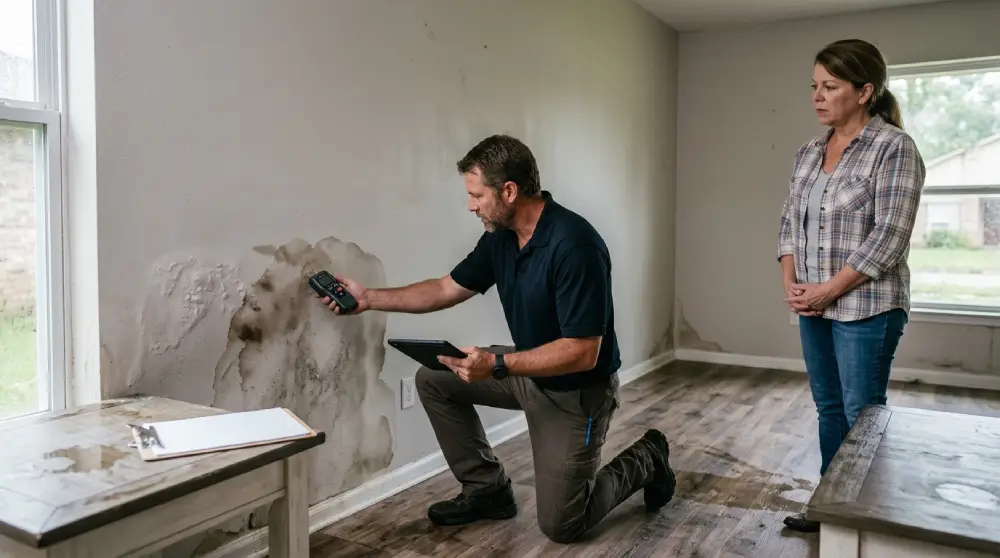
Water damage in Dickinson may result from roof leaks, broken pipes, appliance failures, HVAC drain backups, plumbing overflows, failed water heaters, sprinkler systems, or wind-driven rain.
A proper scope may need to address:
- Water extraction
- Drying and dehumidification
- Moisture mapping
- Removal of damaged materials
- Insulation replacement
- Cabinet and millwork damage
- Flooring removal and replacement
- Painting and finishing
- Electrical evaluation
- Mold-related investigation
- Contents handling and storage
A water damage public adjuster can help evaluate whether hidden moisture, demolition, drying, and reconstruction costs were fully documented. Water can migrate beneath flooring and behind walls. A claim limited to the visible stain or wet surface may not reflect the actual repair required.
Fire and Smoke Damage Claims
Fire claims often include structural damage, smoke residue, soot contamination, water from firefighting efforts, debris removal, damaged contents, temporary housing expenses, and code-related repairs.
Smoke can move through HVAC systems and penetrate porous materials. Cabinets, insulation, textiles, electronics, and personal property may require specialized evaluation. A simple cosmetic cleaning allowance may be insufficient when contamination extends beyond the room where the fire began. For larger losses, a fire insurance adjuster working for the policyholder can help organize structural, smoke, contents, and additional-living-expense documentation. Large losses may also involve significant house fire debris removal costs, including hauling, disposal, cleaning, and site preparation.
Storm Damage Claims
Storm claims may combine wind, hail, falling debris, broken glass, water intrusion, power-related damage, and exterior structural damage. Each component should be documented separately and connected to the reported event.
Roof Damage Claims
Roof claims are frequently under-scoped because the estimate focuses on the surface material while overlooking related components.
A roof damage claim may include:
- Shingles, tile, metal, or membrane roofing
- Decking
- Underlayment
- Flashing
- Ridge and hip materials
- Pipe jacks and vents
- Drip edge
- Gutters and downspouts
- Skylights
- Soffit and fascia
- Interior water damage
- Temporary protection
- Code-required work, subject to coverage
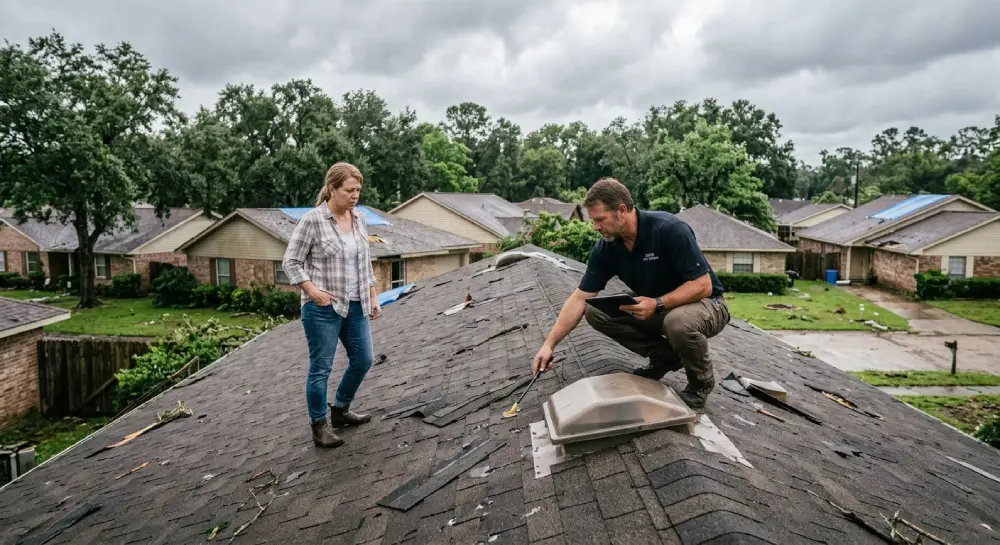
Hiring a public adjuster for a roof claim may be appropriate when the carrier disputes storm damage, repairability, matching, or the number of affected roof slopes. TX Public Adjusting reviews the full roof system and the resulting interior damage rather than treating each item as an unrelated repair.
Commercial Property Claims
Dickinson includes retail properties, offices, restaurants, medical facilities, warehouses, multifamily properties, industrial buildings, and service businesses positioned along major routes such as Interstate 45, FM 517, and Highway 3.
A commercial property loss may affect:
- Building components
- Tenant improvements
- Machinery and equipment
- Inventory
- Furniture and fixtures
- Electronic systems
- Signage
- Refrigerated goods
- Rental income
- Business operations
- Extra expenses incurred to continue operations
Commercial claims require organized documentation and careful separation of building, contents, equipment, and time-element losses.
Dealing with a large residential or commercial loss in Dickinson? Contact TX Public Adjusting for a free claim review before accepting an estimate that may not include the full scope.
Why Dickinson Insurance Claims Become Underpaid
An underpaid claim does not always result from one obvious error. It often reflects several smaller omissions that add up to a substantial gap. Avoiding common property insurance claim mistakes can reduce documentation problems, missed deadlines, and unnecessary disputes later in the process.
Missed or Hidden Damage
Moisture behind walls, compromised roof decking, wet insulation, damaged underlayment, and concealed plumbing damage may not be visible during a short inspection.
Scope Omissions
Carrier estimates may omit demolition, debris removal, material manipulation, access requirements, temporary protection, equipment detachment and resetting, or repairs to adjacent finishes.
Depreciation Issues
Depreciation can significantly reduce an initial payment. Policyholders may also need to meet repair deadlines or submit additional documents to recover withheld depreciation, depending on the policy.
Low Repair Estimates
Labor rates, material prices, project complexity, and local availability can affect the actual cost of repairs. A simplified estimate may not reflect the work required at a Dickinson property.
Incomplete Documentation
Photographs alone may not establish the cause, extent, and repair method. Strong claim documentation can include measurements, moisture readings, inventories, diagrams, contractor information, expert reports, receipts, and a detailed estimate.
Damage Classified as Maintenance
Roof, plumbing, and exterior claims are sometimes attributed to deterioration, installation problems, or deferred maintenance. The timing of the damage, storm evidence, condition of surrounding materials, and pattern of failure may all require closer review.
Our Public Adjusting Process
Step 1: Claim Review
We begin by discussing what happened, when the damage occurred, what the carrier has done, and where the claim currently stands.
We may review:
- The insurance estimate
- Coverage correspondence
- Payment documents
- Denial or reservation-of-rights letters
- Contractor estimates
- Photographs and videos
- Inspection reports
- Relevant policy provisions
Step 2: Property Inspection
We inspect accessible areas of the property and look for damage that may have been overlooked. The inspection is tailored to the type of loss and may include roofing, exterior elevations, interiors, equipment, contents, and commercial spaces.
Step 3: Claim Documentation
We organize the evidence needed to support the claim. Depending on the loss, this may include photographs, measurements, scope notes, contents records, repair estimates, and supporting reports.
Step 4: Estimate and Scope Preparation
A claim estimate should reflect the work reasonably required to restore the covered property. We prepare or review the scope line by line and compare it with the carrier’s position.
Step 5: Carrier Communication and Negotiation
TX Public Adjusting communicates with the insurance company regarding documented damage, omitted items, pricing differences, supplemental requests, and other claim issues.
Step 6: Settlement and Claim Resolution
We continue working through the claim process until the documented issues have been addressed or the available claim-resolution options have been evaluated.
The time required depends on the size of the loss, the insurer’s response, the number of disputed items, the need for experts, and the policy’s procedures.
Why Choose TX Public Adjusting
Licensed Texas Representation
TX Public Adjusting is operated by Rise Public Adjusting LLC, Texas License #3356839.
We Represent Policyholders
We do not work for the insurance company. Our responsibility is to the residential or commercial policyholder who hires us.
Texas-Focused Claim Experience
Texas claims involve hail, wind, hurricanes, freeze losses, water damage, fires, and large commercial losses. Our work is focused on the conditions, construction methods, and insurance disputes Texas property owners regularly encounter.
Residential and Commercial Experience
We assist homeowners, landlords, business owners, property managers, investors, and commercial property owners.
Detailed Claim Preparation
A persuasive claim requires more than a request for additional money. It requires damage documentation, a defensible scope, clear communication, and support for the amounts being requested.
Thousands of Claims Reviewed
Our experience includes reviewing thousands of residential and commercial property claims. That experience helps us recognize estimate gaps, documentation weaknesses, and common sources of disagreement.
No Upfront Fees
Property owners can request a free claim review without paying an upfront fee. Fee terms are explained before representation begins.
Neighborhoods and Areas We Serve in Dickinson
Dickinson contains established neighborhoods, newer subdivisions, rural-style residential tracts, commercial corridors, and properties near Dickinson Bayou.
We assist property owners throughout areas including:
- Bay Colony
- Bentwood at Bay Colony
- Centerfield Lakes
- Cheyenne
- Country Club Estates
- Dickinson Townsite
- Dove Meadow
- Lakes in Bay Colony
- Nicholstone
- Oak Hollow
- Pine Oak Estates
- Retama Village
- Rosewood Villas
- St. Edmunds Green
- The Meadows in Bay Colony
- Tropical Gardens
Claims near the bayou may involve drainage and water-intrusion concerns, while properties nearer Interstate 45 may include denser residential developments, retail centers, multifamily properties, and commercial buildings with flat or low-slope roofing systems.
Local reference points include Dickinson Bayou, Paul Hopkins Park, the Dickinson Historic Railroad Center, Dickinson High School, and the Interstate 45 corridor. These landmarks reflect the mix of waterfront, residential, civic, and commercial property found throughout the city.
Areas We Serve Near Dickinson
TX Public Adjusting assists policyholders across Dickinson and neighboring Galveston County communities, including:
- League City
- Texas City
- Santa Fe
- Friendswood
- La Marque
- Kemah
- Bacliff
- San Leon
- Clear Lake Shores
- Bayou Vista
- Hitchcock
- Galveston
- Webster
- Nassau Bay
- Seabrook
Property owners throughout the Houston–Galveston region face many of the same wind, hail, water, and tropical-weather exposures, but every claim must be evaluated based on the property, policy, cause of loss, and specific damage.
Frequently Asked Questions
What does a public adjuster in Dickinson do?
A public adjuster represents the policyholder during a property insurance claim. The work may include inspecting damage, reviewing the policy and carrier estimate, preparing documentation, developing a repair scope, and communicating with the insurance company.
TX Public Adjusting focuses on identifying the full extent of covered damage and presenting the claim in a clear, organized manner.
Is a public adjuster the same as the insurance company’s adjuster?
No. The insurance company’s adjuster works for or is hired by the carrier. A public adjuster is hired by the policyholder.
Both may inspect the same property, but they represent different interests during the claim.
When should I hire a Dickinson public adjuster?
Consider seeking a claim review when the loss is large, the estimate appears incomplete, the claim has been denied, communication has stalled, or repair costs are much higher than the carrier’s estimate.
A public adjuster can also become involved early in a complex claim to help with documentation and scope preparation. The best time to seek help varies, but our guide explains when it is too late to hire a public adjuster and which claim deadlines may matter.
Can you help after my insurance company has already paid me?
Potentially. An initial payment does not always mean the claim is closed permanently. Many policies and claims allow additional documentation or supplemental requests.
The available options depend on the policy, deadlines, cause of loss, previous payments, and the carrier’s correspondence.
Can you help with a denied roof claim?
We can review denied or disputed roof claims involving wind, hail, storm openings, interior leakage, repairability, and scope issues.
A review does not guarantee that a denial can be reversed, but it can help determine whether relevant damage or supporting evidence may have been overlooked.
Does homeowners insurance cover flooding from Dickinson Bayou?
Standard homeowners insurance commonly excludes rising surface water or flooding, which may require a separate flood policy. However, rain entering through a storm-created opening may be evaluated differently under a property policy.
The source and path of the water are critical. Policyholders should preserve evidence and avoid assuming that all water damage falls into one coverage category.
How do you document hidden water damage?
Documentation may include moisture readings, thermal imaging where appropriate, photographs, diagrams, removal records, drying logs, contractor findings, and inspection of adjacent materials.
Hidden damage should be investigated carefully because moisture can travel beyond the first visible stain.
Can you help with commercial claims in Dickinson?
Yes. TX Public Adjusting assists commercial property owners with building damage, contents, inventory, equipment, tenant improvements, and certain business-income or extra-expense issues where covered.
Commercial claims often require coordination among owners, tenants, contractors, accountants, and other professionals.
How much does a public adjuster cost in Texas?
Public adjusters typically work under a written fee agreement based on the claim or recovery, subject to Texas law and the terms of the contract.
TX Public Adjusting explains the fee structure before representation begins. There are no upfront fees for the initial claim review.
How long does a property claim take?
The timeline varies. A smaller, well-documented claim may move faster than a large hurricane, fire, or commercial loss involving multiple experts and disputed coverage issues.
Carrier response times, inspection scheduling, document requests, supplemental estimates, and appraisal or other policy procedures can all affect the process. Policyholders concerned about delays can review how long an insurance adjuster has to contact you and what steps may help move the claim forward.
Get a Free Dickinson Insurance Claim Review
A low estimate can leave a property owner trying to fund necessary repairs out of pocket. A missed roof component, incomplete water-mitigation scope, or poorly documented commercial loss can significantly change the outcome of a claim.
TX Public Adjusting helps Dickinson homeowners and business owners evaluate property damage claims, identify missing items, and present documented requests to the insurance carrier.
Rise Public Adjusting LLC
Texas License #3356839
Residential and Commercial Property Claims
No Upfront Fees
Contact TX Public Adjusting today to request a free claim review.