

Property damage in Kilgore can turn into a complicated insurance claim faster than many property owners expect. A severe East Texas thunderstorm can damage shingles, lift metal roofing, knock trees onto structures, break windows, and send rainwater into attics or commercial spaces. Plumbing failures, electrical fires, and appliance leaks can create equally serious losses without a major storm ever being named.
A public adjuster in Kilgore, TX, helps residential and commercial policyholders document covered damage, evaluate the insurance company’s estimate, and present a detailed claim based on the terms of the policy. TX Public Adjusting represents property owners—not insurance carriers.
TX Public Adjusting is operated by Rise Public Adjusting LLC, Texas License #3356839. Our team assists Kilgore homeowners, landlords, business owners, churches, facility managers, and other policyholders with new, delayed, denied, and underpaid property insurance claims.
Request a free claim review. There are no upfront fees to have TX Public Adjusting evaluate your situation and explain the next steps.
Property Insurance Claim Help for Kilgore Property Owners
Kilgore sits in the Piney Woods of East Texas, approximately 120 miles east of Dallas. The city extends across Gregg and Rusk counties and is positioned near Interstate 20, U.S. Highway 259, and State Highways 31, 42, and 135.
That location gives Kilgore a distinctive mix of residential neighborhoods, historic buildings, industrial properties, warehouses, churches, rental properties, and highway-oriented businesses. A claim involving an older home near central Kilgore may require a different inspection approach from a commercial roof near the I-20 corridor or an industrial facility close to U.S. 259.
The city’s oil-boom history also remains visible throughout the community. The World’s Richest Acre, the East Texas Oil Museum, Kilgore College, and the star-topped oil derricks are closely associated with Kilgore’s identity as the “City of Stars.” These local characteristics matter because building age, roofing materials, drainage conditions, tree cover, property use, and prior repairs can all affect how damage should be investigated and documented.
When a carrier’s estimate does not reflect the visible and hidden damage, TX Public Adjusting can independently review the loss and help the policyholder pursue a properly supported claim.
Why Property Owners Hire a Public Adjuster in Kilgore
An insurance company assigns an adjuster to investigate a claim on behalf of the carrier. A public adjuster serves a different role. Public adjusters work for the policyholder. Property owners who want a fuller explanation can read our guide to what a public adjuster does.
Property owners commonly contact a Kilgore public adjuster when:
- The insurance estimate appears too low.
- Important rooms, elevations, roof sections, or building components were omitted.
- The carrier paid for spot repairs when broader replacement may be necessary.
- Interior water damage was documented, but the source damage was not.
- The claim includes several trades and is difficult to organize.
- Depreciation was applied incorrectly or is not clearly explained.
- The carrier denied damage as wear, deterioration, or maintenance.
- A commercial claim includes damaged inventory, equipment, signage, or business contents.
- The policyholder does not have time to manage repeated inspections and requests.
- A previously closed claim may need to be reviewed.
A public adjuster cannot guarantee a particular settlement. The value comes from building a clear, evidence-based presentation of the loss and addressing disagreements with supporting documentation rather than guesswork. Understanding the difference between a public adjuster and an independent adjuster can help Kilgore property owners determine who represents their interests during the claim.
Kilgore Storm Risks and Property Damage Patterns
Kilgore’s East Texas location exposes properties to several types of damaging weather. Severe thunderstorms can produce large hail, straight-line winds, lightning, tornadoes, intense rainfall, and flash flooding. NOAA identifies tornadoes, hail, high winds, and floods among the major severe-weather hazards affecting property.
Hail and Wind Damage
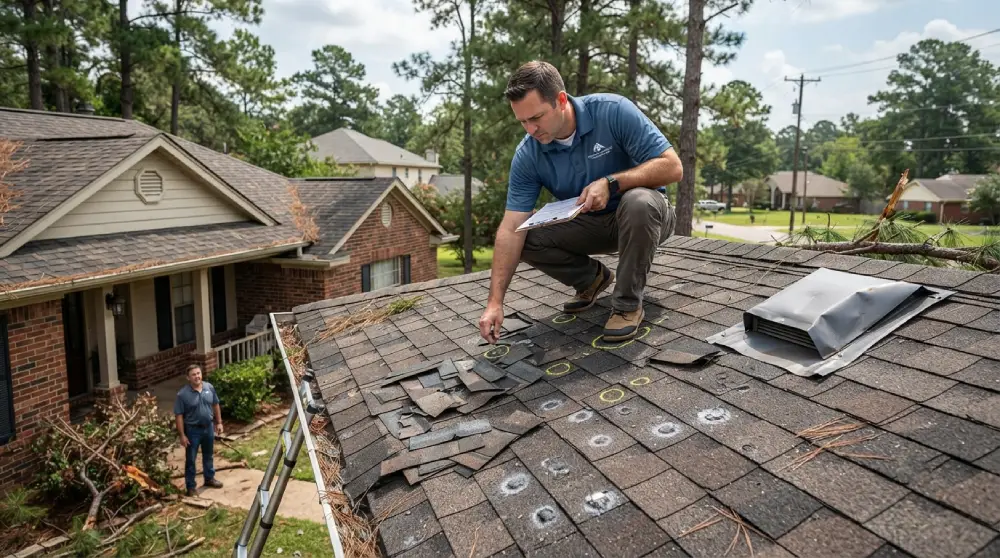
Spring and early-summer storm systems can bring hail and powerful wind gusts through Gregg and Rusk counties. Hail may bruise asphalt shingles, fracture tile, dent metal roofing, damage vents, crack skylights, and mark gutters or air-conditioning equipment. Property owners dealing with a hail damage insurance claim should document not only the roof surface, but also vents, flashing, gutters, siding, windows, and exterior equipment.
Wind damage is not always limited to missing shingles. Wind can loosen flashing, break seals, lift roof edges, damage soffits, shift metal panels, and open small pathways for rainwater. Those openings may not become obvious until stains appear on ceilings or insulation becomes saturated.
Properties with mature trees can face an additional hazard. Broken limbs may damage roofs, fences, detached garages, exterior equipment, or parked vehicles. When trees strike a structure, the claim may involve emergency removal, temporary protection, structural repairs, interior water mitigation, and contents damage.
Tornado and Straight-Line Wind Claims
Tornado-producing storms and strong straight-line winds can cause similar-looking damage. Both may affect roofing, siding, windows, doors, fencing, outbuildings, utilities, and exterior equipment.
After a major wind event, the inspection should not stop at the most obvious point of impact. Damage can extend around the property, especially where wind pressure affected multiple elevations or where rain entered through openings created during the storm.
Heavy Rain and Water Intrusion
East Texas thunderstorms can produce intense rainfall over a short period. Water may enter through storm-damaged roofing, flashing, windows, doors, roof penetrations, or drainage systems.
The cause of the water intrusion matters. Standard property policies often distinguish between water entering through storm-created openings, plumbing leaks, surface flooding, seepage, and long-term moisture. Coverage depends on the policy language and the facts of the loss. Our guide to dealing with a water damage insurance claim explains how documentation, moisture findings, and the reported source of the loss can affect the claim review.
A public adjuster can document the affected building materials and help identify the chain of damage. That may include roofing, decking, insulation, ceilings, drywall, flooring, cabinetry, electrical components, equipment, and personal or business property.
Lightning and Electrical Damage
Lightning can damage electrical panels, wiring, appliances, HVAC systems, security equipment, computer systems, point-of-sale equipment, and other electronics. Some electrical losses are immediately obvious, while others appear as intermittent failures after the storm.
Commercial property owners should preserve service records, diagnostic reports, invoices, photographs, and equipment information. These records can help connect damaged systems to the reported event.
Winter Freeze Damage
Kilgore is better known for heat and thunderstorms, but East Texas properties can still experience hard freezes. Frozen pipes, failed supply lines, damaged fire-suppression systems, and prolonged power loss can result in extensive water damage.
Freeze claims often spread beyond the failed pipe. Water may travel through walls, ceilings, insulation, floors, cabinets, electrical systems, and contents before the source is discovered.
Common Insurance Claims in Kilgore
Hail Damage Claims
Hail damage can affect far more than the center of a roof. A complete evaluation may include:
- Shingles, metal panels, tile, or roof coatings
- Ridge caps and roof edges
- Flashing and pipe boots
- Gutters and downspouts
- Skylights and vents
- Siding, screens, and window trim
- HVAC fins and exterior equipment
- Fences and detached structures
The size of a hailstone is only one factor. Wind speed, impact angle, roofing material, roof age, and the condition of individual slopes can influence the resulting damage.
Water Damage Claims
Water losses may arise from burst pipes, supply-line failures, water heaters, roof openings, HVAC drainage, appliance leaks, or sprinkler systems.
A surface may look dry while moisture remains behind walls, beneath flooring, or inside cabinets. Proper documentation may require moisture readings, photographs, mitigation records, repair estimates, plumbing reports, and an inventory of affected contents.
Fire and Smoke Damage Claims
A fire damage insurance claim can include structural damage, smoke residue, soot, water from firefighting efforts, damaged electrical systems, debris removal, temporary repairs, and personal-property losses.
Smoke can move through wall cavities, ductwork, attics, and areas far from the ignition point. Cleaning a visible surface may not fully address odors or contamination in porous materials. Fire claims should be scoped carefully so that related damage is not overlooked.
Storm Damage Claims
Storm claims can involve several causes of loss at once. Wind may damage the roof, rain may enter the building, falling trees may damage exterior components, and power fluctuations may affect equipment.
Separating each component of the loss while showing how the damage is connected can make the claim easier to understand and evaluate. Kilgore is inland, but property owners can also review our guide to property damage after a hurricane for information about documenting major Texas wind and rain losses.
Roof Damage Claims
Kilgore roof claims frequently involve wind-lifted shingles, hail impacts, punctures from tree limbs, damaged flashing, metal-panel displacement, and water intrusion.
Roof claims can become disputed when an insurer attributes visible conditions to age, installation, maintenance, or normal deterioration. A detailed inspection helps distinguish storm-related damage from unrelated conditions. A public adjuster for a roof claim can compare the carrier’s scope with the observed damage, contractor findings, repair requirements, and applicable policy provisions.
Commercial Property Claims
Kilgore supports a variety of commercial and institutional properties, including industrial facilities, retail buildings, offices, restaurants, churches, apartment properties, warehouses, and businesses serving the I-20 and U.S. 259 corridors.
Commercial claims may include:
- Roofing and building-envelope damage
- Interior finishes
- Machinery and equipment
- Furniture and fixtures
- Inventory and stock
- Signs and exterior lighting
- Tenant improvements
- Emergency mitigation
- Debris removal
- Business-income considerations when applicable
Commercial losses often require coordination among contractors, engineers, mitigation firms, accountants, tenants, owners, and carrier representatives. Organizing those records is a major part of presenting the claim.
Why Kilgore Insurance Claims Become Underpaid
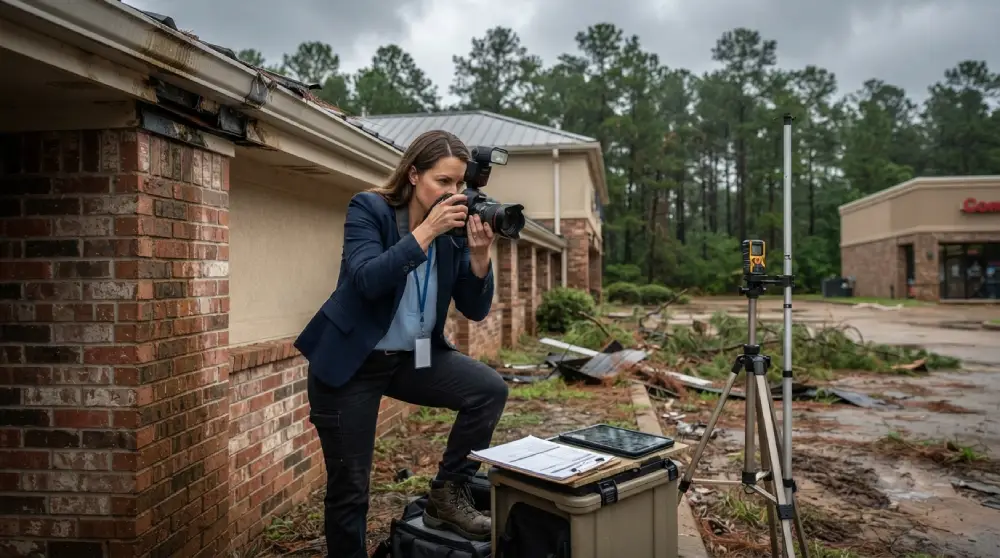
An underpaid claim does not always result from one dramatic disagreement. Many claims fall short because smaller omissions accumulate. Many common property insurance claim mistakes involve incomplete documentation, missed damage, premature repairs, or accepting an estimate before the full scope has been evaluated.
Damage Was Missed
A brief inspection may focus on the most visible room or roof slope while overlooking adjacent damage, exterior components, detached structures, or moisture migration.
The Scope Is Incomplete
An estimate may include the primary damaged item but omit work required to complete the repair. Examples include removal, access, disposal, code-related work, matching considerations, protection, resetting fixtures, or repairing adjoining materials.
Pricing Does Not Reflect the Work
The carrier’s estimate may use labor assumptions, material prices, or quantities that do not align with the actual repair requirements. Contractor proposals and supporting documentation can help clarify the difference.
Depreciation Is Confusing
Property owners may receive an actual-cash-value payment with depreciation withheld. The estimate should explain what was depreciated, how much was withheld, and what may be recoverable after repairs, subject to the policy.
Documentation Is Weak or Disorganized
Photographs without dates, incomplete inventories, missing invoices, and inconsistent descriptions can make a valid claim harder to evaluate. Clear documentation creates a record of what happened, what was damaged, and what work is required.
The Cause of Loss Is Disputed
The carrier may attribute damage to deterioration, maintenance, faulty installation, or a prior event. Establishing the timeline and documenting the physical evidence can be critical when causation is disputed.
Concerned that your Kilgore property claim was underpaid? TX Public Adjusting offers a free claim review for residential and commercial losses.
Our Public Adjusting Process
1. Claim Review
We begin by learning what happened and reviewing the available claim documents. These may include the policy, carrier estimate, payment letters, denial correspondence, photographs, repair proposals, and mitigation records.
2. Property Inspection
We inspect the reported damage and look for related conditions that may not appear in the insurance company’s scope. The inspection may include the roof, exterior elevations, interior rooms, detached structures, commercial areas, and affected contents.
3. Damage Documentation
We organize photographs, measurements, estimates, inventories, reports, and other records into a clear claim presentation. The required documentation depends on the loss.
4. Scope and Estimate Review
We compare the observed damage with the carrier’s estimate. This helps identify omitted areas, missing trades, quantity differences, pricing concerns, and unsupported conclusions.
5. Claim Negotiation
TX Public Adjusting communicates with the insurance carrier and presents supporting documentation on behalf of the policyholder. We respond to questions, address scope disagreements, and participate in additional inspections when needed.
6. Settlement and Claim Resolution
The carrier makes the coverage and payment decisions. Our role is to advocate for the policyholder and pursue a properly documented resolution based on the policy and evidence.
Why Choose TX Public Adjusting?
Licensed Texas Representation
TX Public Adjusting operates through Rise Public Adjusting LLC, Texas License #3356839.
We Represent Policyholders
We do not work for the insurance company. Our responsibility is to the residential or commercial policyholder who hires us.
Texas Property-Claim Focus
Texas claims involve hail, wind, tornadoes, fire, freeze losses, water damage, and tropical-weather impacts. Our work focuses on the conditions and claim issues Texas property owners regularly encounter.
Residential and Commercial Experience
Our team has experience reviewing thousands of property claims and working with both residential and commercial losses. That experience helps us recognize common omissions and understand the documentation required for complex claims.
Independent Scope Review
We independently evaluate the available evidence rather than assuming the carrier’s first estimate includes everything needed.
Clear Communication
Property owners should understand what is happening with their claim. We explain the process, discuss the documentation, and keep the client informed as the claim progresses.
| TX Public Adjusting trust signals | Details |
| Legal entity | Rise Public Adjusting LLC |
| Texas license | License #3356839 |
| Representation | Policyholders, not insurance carriers |
| Claim types | Residential and commercial |
| Initial consultation | Free claim review |
| Upfront review fee | None |
Areas We Serve Near Kilgore
TX Public Adjusting assists policyholders throughout Kilgore and nearby East Texas communities. Service areas include properties around central Kilgore, the Kilgore College area, the U.S. 259 corridor, the I-20 corridor, and areas extending into Gregg and Rusk counties.
Nearby communities we may serve include:
- Longview
- Henderson
- White Oak
- Gladewater
- Hallsville
- Lakeport
- New London
- Overton
- Liberty City
- Sabine
- Judson
- East Mountain
- Tatum
- Tyler and surrounding East Texas communities
Kilgore is approximately 11 miles south of Longview and about 25 miles east of Tyler, placing it within a heavily traveled East Texas service corridor.
Frequently Asked Questions
What does a public adjuster in Kilgore do?
A public adjuster evaluates and documents a property insurance claim on behalf of the policyholder. This can include inspecting the damage, reviewing the policy and carrier estimate, preparing a detailed scope, organizing supporting evidence, and communicating with the insurance company.
Unlike the insurance company’s adjuster, a public adjuster is retained by the property owner.
When should I hire a Kilgore public adjuster?
Property owners often seek help when the claim is large, technically complicated, denied, delayed, or underpaid. You may also benefit from assistance when several parts of the property were damaged or when the carrier’s estimate does not match contractor findings.
A public adjuster can become involved at the beginning of a claim or after an initial carrier decision, depending on the circumstances. The answer also depends on the claim stage, deadlines, and prior carrier decisions, which is why property owners often ask when it is too late to hire a public adjuster.
Can you review a claim that has already been paid?
Yes. A payment does not necessarily mean every claim issue has been resolved. The policy, claim status, deadlines, settlement documents, and evidence must be reviewed before determining what options remain.
Bring the carrier estimate, payment letter, photographs, contractor proposals, and relevant correspondence to the free claim review.
Can a public adjuster help with a denied Kilgore claim?
A public adjuster can review the denial explanation, policy language, inspection findings, and available documentation. Some denials are based on causation disputes, exclusions, late reporting, or insufficient evidence.
No result can be guaranteed, but a detailed review can help determine whether additional documentation or a request for reconsideration may be appropriate.
How much does a public adjuster cost in Texas?
Public adjusters commonly work under a contingency-fee agreement based on the amount recovered through their services. The fee and terms should be clearly stated in a written contract and must comply with Texas requirements.
TX Public Adjusting provides a free initial claim review and does not charge an upfront fee for that review.
Can you help with hail damage to a metal roof?
Yes. Metal roofing may show dents, displaced seams, punctures, damaged coatings, loosened fasteners, or functional problems around penetrations and flashing.
Cosmetic and functional damage can be treated differently under some policies, so the policy language and physical evidence must be evaluated together.
What should I do immediately after storm damage?
Protect people first and avoid entering unsafe areas. Take photographs and video before making temporary repairs when it is safe to do so. Prevent additional damage with reasonable emergency measures, but do not discard damaged materials until they have been documented.
Keep receipts for tarping, water extraction, tree removal, temporary lodging, and other emergency expenses that may relate to the claim.
Does homeowners insurance cover flood damage in Kilgore?
Standard homeowners policies commonly distinguish external surface flooding from water entering through a covered storm-created opening or from an internal plumbing failure. A separate flood policy may be required for rising water or surface flooding.
Because the source of the water can control coverage, document where the water entered and review the applicable policy before assuming the loss is covered or excluded.
Do you handle commercial claims in Kilgore?
Yes. TX Public Adjusting assists with commercial property claims involving roofing, water intrusion, fire, storms, equipment, inventory, tenant improvements, and other covered property damage.
Commercial claims may require more extensive documentation because ownership interests, tenant responsibilities, business records, and multiple repair trades can be involved.
How long does a property insurance claim take?
The timeline depends on the severity of the damage, the quality of the documentation, the number of inspections, coverage questions, contractor availability, and how quickly the parties respond. Policyholders concerned about early delays may also review how long an insurance adjuster has to contact you after a claim is reported.
A smaller water loss may move faster than a large commercial storm or fire claim. Detailed documentation and timely communication can reduce avoidable delays, but no public adjuster can guarantee an exact completion date.
Get a Free Kilgore Insurance Claim Review
You do not have to accept an incomplete estimate without asking questions. When a storm, fire, plumbing failure, roof leak, or other covered event damages your Kilgore property, the scope of the claim should reflect the full loss supported by the evidence and policy.
TX Public Adjusting helps homeowners and commercial property owners understand their claims, identify potential omissions, and communicate with the carrier from a documented position.
Contact TX Public Adjusting for a free claim review.
- Licensed Texas public adjuster
- Rise Public Adjusting LLC
- Texas License #3356839
- Residential and commercial claims
- No upfront claim-review fees
- Independent representation for policyholders