

Property damage in Tomball can leave a home or business owner facing far more than a repair bill. A severe thunderstorm may damage roofing, gutters, siding, fencing, windows, interior finishes, equipment, and personal property in a matter of minutes. A plumbing failure or roof leak can spread moisture behind walls before the full extent of the loss is visible. When the insurance company’s estimate does not account for every damaged component, a public adjuster in Tomball can help document the loss and present the claim from the policyholder’s side.
TX Public Adjusting provides residential and commercial insurance claim assistance throughout Tomball and surrounding communities in northwest Harris County. We inspect damaged property, review policy documents and carrier estimates, prepare detailed claim documentation, and communicate with the insurance company regarding the scope and value of the covered loss. As a licensed Texas public adjuster, TX Public Adjusting helps policyholders document residential and commercial property losses throughout Harris County.
TX Public Adjusting is operated by Rise Public Adjusting LLC, Texas License #3356839. We work for policyholders—not insurance companies.
Dealing with a delayed, denied, or underpaid property claim? Request a free claim review from TX Public Adjusting. There are no upfront fees.
Why Property Owners Hire a Public Adjuster in Tomball
Tomball combines an established historic core with newer subdivisions, master-planned communities, retail corridors, medical properties, warehouses, offices, restaurants, and light-industrial buildings. Properties near Old Town Tomball may have different construction features and repair requirements from newer homes near the Grand Parkway, Northpointe, Creekside Park, or Woodtrace.
Those differences matter during an insurance claim.
An insurance company may assign an adjuster to inspect the property, but that adjuster represents the carrier. A licensed public adjuster represents the policyholder. Our role is to identify covered damage, develop an appropriate repair scope, organize supporting records, and advocate for a settlement based on the terms and conditions of the policy.
Property owners often contact a Tomball public insurance adjuster when:
- The carrier’s estimate appears too low
- Roof damage was classified as cosmetic or repairable
- Interior water damage was excluded from the estimate
- The claim was partially denied
- Important rooms, materials, or building components were omitted
- The insurance company applied depreciation incorrectly
- A commercial loss interrupted normal business operations
- Contractors found additional damage after repairs began
- The policyholder is overwhelmed by inspections, estimates, inventories, and carrier requests
- A previously closed claim may need to be reviewed or supplemented
A public adjuster does not guarantee a particular outcome. We help ensure that the damage is thoroughly investigated, properly documented, and clearly presented.
Property Damage Risks in Tomball
Tomball is located in Harris County within the greater Houston region. The city sits near major routes including State Highway 249 and the Grand Parkway, with development extending into nearby unincorporated areas. Tomball’s official history remains closely tied to the railroad, and the restored 1907 Tomball Depot is one of the community’s best-known landmarks.
The northwest Harris County location creates a distinct mix of weather-related property risks.
Severe Thunderstorms and Straight-Line Wind
Strong thunderstorms can move across Tomball with damaging wind, intense rain, lightning, and occasional hail. Straight-line wind may lift shingles, loosen flashing, damage ridge caps, bend metal panels, break tree limbs, and drive rain through openings in the building envelope.
Wind damage is not always obvious from ground level. Shingles may remain on the roof while seals, fasteners, underlayment, vents, or flashing have been compromised. Water may then enter during a later storm, making it difficult to connect the interior damage to the original event.
A detailed inspection should consider the complete roofing system rather than only counting missing shingles.
Hail Damage
Hail is one of the most common reasons property owners seek insurance claim help in Tomball. Hailstones can bruise asphalt shingles, fracture matting, displace granules, dent metal vents, damage gutters, crack skylights, mark siding, and affect rooftop equipment.
Commercial properties may sustain damage to:
- Modified bitumen or built-up roofing
- TPO and other membrane systems
- Metal roof panels
- HVAC fins and condenser units
- Roof-mounted equipment
- Exterior signage
- Gutters, drains, and coping
- Solar panels
- Windows and exterior cladding
Damage patterns can vary across the same property. One roof slope may show substantial impact while another appears less affected. This is one reason a complete inspection and accurate storm-date analysis are important.
Heavy Rain and Water Intrusion
Tomball properties can experience intense rainfall, localized drainage problems, roof leaks, window intrusion, plumbing failures, appliance leaks, and water damage from failed supply lines.
Water often travels beyond the first visible stain. Moisture may affect:
- Insulation
- Drywall
- Wall cavities
- Flooring
- Cabinets
- Baseboards
- Electrical components
- Ceiling systems
- Stored inventory
- Office furniture
- Commercial equipment
Our guide to water damage insurance claim help explains how inspections, moisture documentation, mitigation records, and repair estimates may affect a claim. A surface-level inspection can miss hidden moisture and secondary damage. The claim should distinguish between the source of the water, the resulting damage, any emergency mitigation work, and repairs required to return the property to its pre-loss condition.
Tropical Weather and Hurricane-Related Damage
Tomball is inland from the Texas coast, but tropical storms and hurricanes can still bring strong winds, prolonged rain, falling trees, power interruptions, and wind-driven water into northwest Harris County.
A tropical system does not need to pass directly over Tomball to cause a covered loss. Outer rainbands can produce severe thunderstorms, localized wind damage, and heavy rainfall across the Houston area. Property owners may face disputes involving wind versus flood, pre-existing wear, repeated leakage, or the timing of interior water intrusion. For additional information about documenting storm losses, read our Texas hurricane property damage guide.
Coverage depends on the policy and cause of loss. Standard property insurance generally treats flooding differently from wind-driven rain or water entering through storm-created openings. A careful review of the policy language and physical evidence is essential.
Fire, Smoke, and Electrical Losses
Tomball fire claims may involve kitchen fires, electrical failures, lightning strikes, HVAC problems, garage fires, commercial cooking equipment, or fires spreading from nearby structures.
The visible burn area is only part of a fire loss. Smoke, soot, heat, water from suppression efforts, and airborne residue can affect areas far from the point of origin. Contents, ductwork, insulation, framing, finishes, electronics, and mechanical systems may all require evaluation. Property owners dealing with a major fire loss may also find our guide to fire damage insurance claims helpful when reviewing structural damage, smoke contamination, contents, and repair costs.
Common Insurance Claims in Tomball
Hail Damage Claims
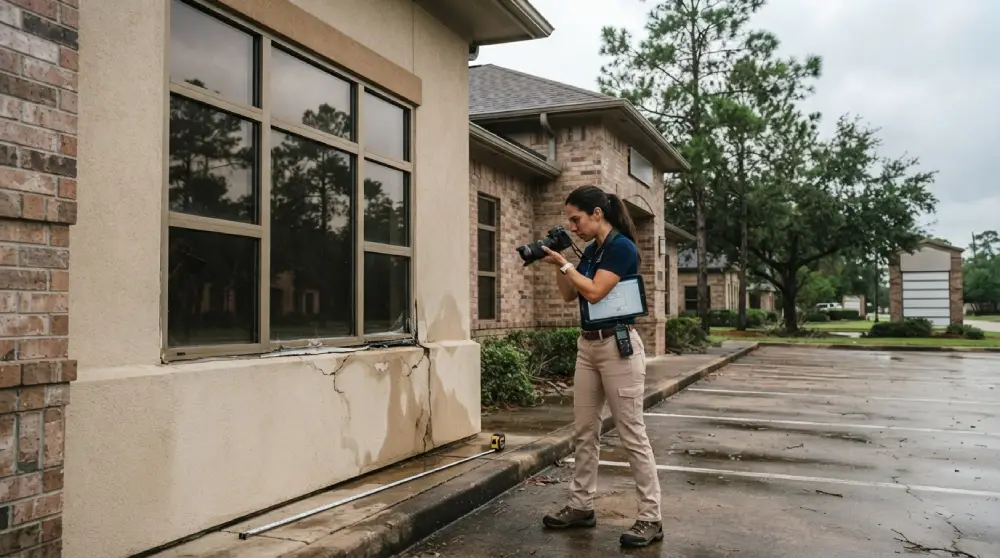
A hail claim should address more than visible dents. The inspection may need to evaluate roofing materials, flashings, vents, gutters, screens, windows, siding, fences, HVAC systems, and interior areas where water entered. Property owners can also review our guide to hail damage insurance claims for more information about roof inspections, documentation, and common estimating issues.
Insurance estimates may become underpaid when the scope includes only spot repairs or overlooks matching, access, code-related work, detach-and-reset items, disposal, steep charges, or damaged accessories.
Water Damage Claims
Water claims often become complicated because multiple materials are affected and some damage is hidden. The carrier may agree to replace drywall but omit insulation, texture, paint blending, cabinets, flooring transitions, or the work needed to access the damaged area.
TX Public Adjusting reviews the source, migration path, mitigation records, moisture documentation, damaged materials, and repair requirements.
Fire and Smoke Damage Claims
Fire losses can involve structural repairs, demolition, debris removal, smoke cleaning, odor treatment, contents evaluation, temporary relocation, and code-related upgrades.
For commercial properties, the loss may also affect inventory, machinery, tenant improvements, records, and normal operations. A coordinated scope is critical because separate vendors may evaluate different portions of the damage. A fire insurance adjuster working for the policyholder can help organize the building, contents, smoke, and additional expense portions of the claim. Our overview of house fire debris removal costs also explains why demolition, hauling, disposal, and site-cleaning expenses should be carefully documented.
Storm and Wind Damage Claims
Storm claims may include roof damage, fallen trees, damaged fences, broken glass, exterior cladding damage, water intrusion, and interior repairs.
A carrier may acknowledge that a storm occurred but dispute whether the observed condition resulted from that storm. Photographs, weather information, contractor findings, material condition, and damage patterns can help support the claim.
Roof Damage Claims
Roof claims are frequently underpaid because the initial inspection focuses on a limited area or treats the roof as an isolated component.
A proper roof claim may need to address:
- Shingles, tiles, metal panels, or roof membrane
- Underlayment
- Decking
- Flashing
- Pipe jacks and vents
- Ridge and hip materials
- Valleys
- Gutters and downspouts
- Skylights
- Interior water damage
- Code-required components
- Access and labor requirements
A public adjuster for a roof claim can compare the carrier’s estimate with the visible damage, roofing system requirements, contractor findings, and policy provisions. Older properties near central Tomball may also involve discontinued materials, previous repairs, or layers of roofing that complicate the restoration scope.
Commercial Property Claims
Tomball has a strong mix of retail, healthcare, office, restaurant, warehouse, automotive, service, and industrial properties, particularly around SH 249, FM 2920, Business 249, and the Grand Parkway corridor.
Commercial claims may involve:
- Flat or low-slope roofing
- Inventory damage
- Equipment breakdown or impact damage
- Tenant improvements
- Exterior signage
- Interior build-outs
- Water intrusion
- Fire and smoke damage
- Business interruption
- Extra expenses
- Multiple buildings or structures
Commercial policies may contain separate limits, deductibles, endorsements, and valuation provisions. A public adjuster can help organize the building, contents, and time-element portions of the claim.
How Insurance Claims Become Underpaid
Most underpaid claims are not caused by one dramatic error. They result from a series of smaller omissions that reduce the total estimate.
Missed or Hidden Damage
The carrier’s adjuster may not inspect every roof slope, attic area, room, elevation, mechanical component, or affected material. Damage behind walls or beneath flooring may not be included until demolition begins.
Incomplete Repair Scope
An estimate may include the primary damaged item but leave out the work required to complete the repair correctly. Examples include access, removal, disposal, underlayment, flashing, paint blending, flooring transitions, cabinet manipulation, permits, overhead, or code-related items.
Depreciation Problems
Policies may provide replacement cost coverage, actual cash value coverage, or a combination of both. Depreciation may be recoverable or nonrecoverable depending on the policy and item.
Problems arise when depreciation is excessive, applied to inappropriate line items, or not released after covered repairs are completed.
Low Pricing or Labor Allowances
The estimate may use pricing that does not reflect the actual materials, labor conditions, property type, or complexity of the repair. Commercial projects, specialty finishes, custom materials, and occupied buildings often require more coordination than a basic estimating model assumes.
Documentation Gaps
Claims become harder to prove when photographs, repair estimates, inventories, invoices, moisture readings, emergency service records, or proof of ownership are missing.
TX Public Adjusting helps organize the documentation into a clear claim presentation rather than relying on scattered emails and contractor notes. Avoiding common property insurance claim mistakes can help preserve evidence and reduce preventable disputes during the adjustment process.
Cause-of-Loss Disputes
The insurer may attribute damage to age, deterioration, installation issues, long-term leakage, maintenance, or an excluded cause. Those conclusions should be compared with the physical evidence, weather history, policy wording, and available professional findings.
Think your Tomball insurance claim is missing damage? TX Public Adjusting offers a free claim review for residential and commercial property owners.
Our Public Adjusting Process
1. Claim and Policy Review
We begin by reviewing the known facts, the policyholder’s concerns, the insurance policy, correspondence, estimates, payment documents, and any denial or reservation-of-rights letters.
This helps us identify deadlines, applicable coverages, deductibles, valuation provisions, and areas requiring further investigation.
2. Property Inspection
We inspect the damaged property and document visible conditions. Depending on the loss, the inspection may include roofing, exteriors, interiors, contents, mechanical equipment, and commercial building components.
We also review contractor findings, mitigation documents, photographs, engineering reports, and other records relevant to the claim.
3. Damage Documentation and Scope Development
We prepare an organized scope of the covered damage. This may include measurements, photographs, room-by-room details, repair line items, damaged contents, invoices, or supporting estimates.
The goal is to show what was damaged, why the damage is related to the loss, and what work is reasonably required.
4. Claim Presentation and Negotiation
TX Public Adjusting communicates with the insurance company regarding the documented scope. We address omissions, request clarification where necessary, participate in inspections, and present supporting information for disputed items.
5. Settlement and Claim Resolution
When the carrier reaches a coverage or payment decision, we review the updated estimate and supporting documentation with the policyholder. Our work remains subject to the policy terms, evidence, and insurance company’s evaluation, but the claim is presented with a much more complete record.
Why Choose TX Public Adjusting
Licensed Texas Representation
TX Public Adjusting is operated by Rise Public Adjusting LLC, Texas License #3356839.
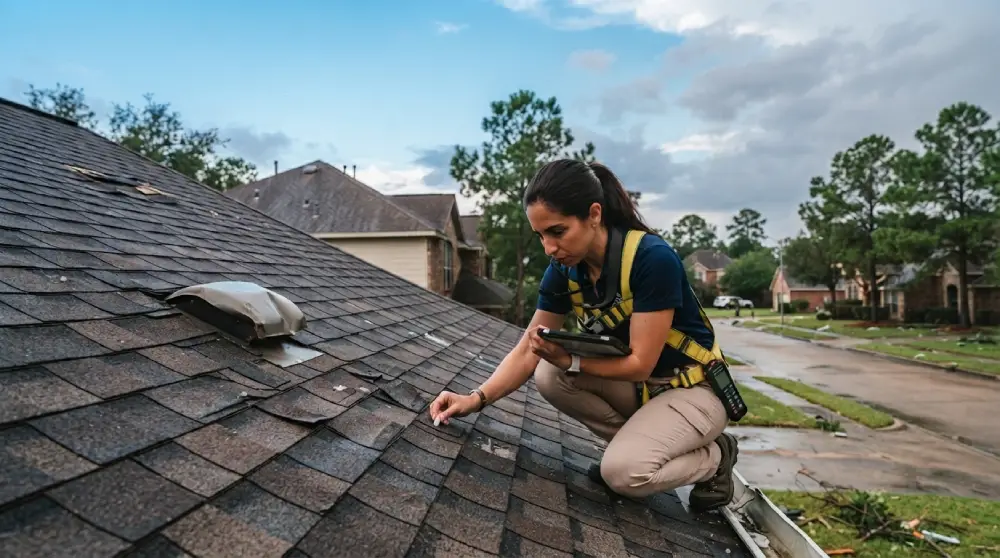
Licensing matters. Property owners should know who is representing them, confirm that the adjuster is authorized to operate in Texas, and understand the terms of the representation agreement.
We Represent Policyholders
The insurance company’s adjuster works for the carrier. A public adjuster works for the insured property owner.
Our responsibility is to help the policyholder document and present the claim—not to minimize the insurer’s payment.
Residential and Commercial Experience
We assist with homes, rental properties, retail buildings, offices, restaurants, warehouses, multifamily properties, and other insured structures.
Our team has reviewed thousands of claims and understands how roofing, water, fire, contents, and commercial losses must be organized.
Texas-Focused Claim Knowledge
Texas claims frequently involve hail, wind, tropical weather, plumbing failures, fire, roof damage, and disputed repair scopes. We understand the construction conditions, storm patterns, and insurance claim issues property owners encounter across the state.
Detailed Claim Preparation
A strong claim requires more than photographs. It may require policy analysis, measurements, repair sequencing, estimating, contents documentation, invoice review, and persistent communication.
We build a documented claim file that clearly explains the requested scope.
Free Claim Review and No Upfront Fees
Tomball property owners can request an initial claim review without an upfront fee. We will review the available information and discuss whether public adjusting services may be appropriate.
Tomball Neighborhoods and Communities We Serve
TX Public Adjusting assists property owners throughout Tomball, ZIP codes 77375 and 77377, and nearby northwest Harris County communities. The broader Tomball area includes established neighborhoods, rural acreage, newer subdivisions, and master-planned developments.
Areas we serve include:
- Old Town Tomball
- Downtown Tomball
- Northpointe
- Wildwood at Northpointe
- Lakewood Grove
- Village Creek
- Willowcreek Ranch
- Woodtrace
- Amira
- Lakes at Creekside
- Rosehill Reserve
- Inverness Estates
- Albury Trails Estates
- Tomball Hills
- Seven Oaks
- Pine Trace Village
- Areas near Tomball Parkway and FM 2920
- Properties near the Grand Parkway corridor
Community references vary between incorporated Tomball, Tomball mailing addresses, and nearby unincorporated areas. Neighborhoods frequently associated with the Tomball market include Wildwood at Northpointe, Lakewood Grove, Village Creek, Willowcreek Ranch, Amira, Woodtrace, and Lakes at Creekside.
We also serve property owners near recognizable local destinations such as the Tomball Railroad Depot, Old Town Tomball, Lone Star College–Tomball, and the retail and commercial districts along SH 249. The historic Depot dates to 1907 and now operates as a museum with railroad memorabilia and model railroads.
Areas We Serve Near Tomball
Our service area extends beyond the Tomball city limits. We assist policyholders in nearby communities such as:
- Magnolia
- Pinehurst
- Stagecoach
- Hockley
- Cypress
- Rose Hill
- The Woodlands
- Spring
- Klein
- Decker Prairie
- Kohrville
- Waller
- Northwest Houston
- Unincorporated Harris County
- Southern Montgomery County
Property owners outside these areas may also contact us because TX Public Adjusting serves clients throughout Texas.
Frequently Asked Questions
What does a public adjuster in Tomball do?
A public adjuster represents the policyholder during a property insurance claim. The adjuster reviews the policy and carrier estimate, inspects the damage, develops supporting documentation, and communicates with the insurer regarding the scope and value of the covered loss. Our detailed guide explains what a public adjuster does throughout that process.
TX Public Adjusting does not work for the insurance company. We represent Tomball homeowners, business owners, landlords, and other insured property owners.
When should I hire a Tomball public adjuster?
Consider contacting a public adjuster when a claim is large, complicated, delayed, denied, or underpaid. You may also need help when the insurer’s estimate does not match contractor findings or when the claim involves multiple areas of damage.
It is often useful to obtain advice early, before important evidence is removed or repairs make the original damage more difficult to document. Property owners with older or previously closed claims can also review our article explaining when it is too late to hire a public adjuster.
Can a public adjuster help after the insurance company has already paid?
Possibly. An initial payment does not always mean the claim is complete. Additional covered damage may be identified, repair costs may exceed the carrier’s estimate, or omitted items may need to be presented through a supplement.
The available options depend on the policy, claim status, deadlines, repairs completed, and documentation. TX Public Adjusting can review the existing claim at no charge.
Can you help with a denied Tomball insurance claim?
We can review denied claims to understand the carrier’s stated reason, the policy provisions cited, and the available evidence. Some denials involve excluded causes or clear policy restrictions. Others may result from incomplete documentation, disputed causation, or an inspection that did not identify the full damage.
A review does not guarantee that a denial can be reversed, but it can help the policyholder understand whether further documentation or professional assistance is appropriate.
How much does a public adjuster cost in Texas?
Public adjusters commonly work under a contingency-based agreement, meaning the fee is tied to the insurance recovery obtained through the adjuster’s work. The exact fee and terms should be clearly stated in the written contract and must comply with Texas requirements.
TX Public Adjusting offers a free initial claim review and does not charge upfront fees.
Do I need a public adjuster for a small roof claim?
Not every roof claim requires professional representation. A straightforward claim with a complete estimate and adequate payment may be manageable without a public adjuster.
Assistance may be valuable when the roof has extensive hail or wind damage, the carrier recommends limited repairs, interior water damage was omitted, or the contractor’s scope is significantly higher than the insurance estimate.
Does homeowners insurance cover hail damage in Tomball?
Many Texas homeowners policies cover sudden hail damage, subject to the policy’s terms, exclusions, deductible, valuation provisions, and reporting requirements. Some policies have separate wind or hail deductibles.
Coverage should be confirmed from the actual policy. The presence of hail in the area does not automatically prove that every observed roof condition resulted from that storm.
Can you help with commercial property claims in Tomball?
Yes. TX Public Adjusting assists with retail, office, restaurant, warehouse, multifamily, medical, service, and light-industrial property claims.
Commercial claims may involve building damage, contents, equipment, tenant improvements, inventory, extra expenses, and business interruption. These portions of the claim should be carefully coordinated.
What should I do immediately after storm damage?
Protect people first. Take reasonable steps to prevent additional damage when it is safe to do so, photograph the property, preserve damaged materials when practical, keep receipts, and report the loss according to the policy.
Avoid permanent repairs until the damage has been documented and the insurer has had a reasonable opportunity to inspect, unless immediate work is necessary for safety or to prevent further loss.
How long does a Tomball property claim take?
Claim timelines vary based on the type of loss, policy requirements, damage severity, inspection availability, documentation, repairs, and disputes. A small water claim may move faster than a commercial fire or multi-building hail claim. Texas policyholders can also read about how long an insurance adjuster has to contact you after a claim is reported.
A well-organized claim file can reduce avoidable delays, but no public adjuster can promise an exact settlement date.
Get a Free Tomball Insurance Claim Review
You purchased insurance to protect your property. When a storm, fire, roof leak, plumbing failure, or other covered event causes damage, the claim should reflect the complete loss—not only the items found during a brief inspection.
TX Public Adjusting helps Tomball homeowners and business owners understand their policies, document property damage, identify scope omissions, and communicate with the insurance company.
Rise Public Adjusting LLC
Texas License #3356839
Request a free claim review today. There are no upfront fees. Contact TX Public Adjusting for residential or commercial insurance claim assistance in Tomball, Texas.