

Property damage in Coldspring can create a complicated insurance claim fast. Severe thunderstorms can push through San Jacinto County with damaging wind, hail, lightning, and heavy rain. Tropical systems moving inland from the Gulf can bring prolonged rainfall and strong winds. Around Lake Livingston, wooded properties and lake-area homes may also face fallen trees, roof damage, water intrusion, and damage to detached structures after major storms.
If you need a Public Adjuster in Coldspring, TX, TX Public Adjusting represents homeowners and commercial property owners during the insurance claims process. If you are unfamiliar with what a public adjuster does, our role is to represent the policyholder—not the insurance company—through the inspection, documentation, estimating, and claim negotiation process. We work for the policyholder—not the insurance company—to inspect damage, review insurance estimates, document covered losses, and negotiate disputed or underpaid claims.
TX Public Adjusting is operated by Rise Public Adjusting LLC, Texas License #3356839. Our team has reviewed thousands of residential and commercial property claims across Texas, including roof, hail, wind, water, fire, and major storm losses.
Coldspring is the county seat of San Jacinto County, located roughly 65 miles north of Houston at the junction of State Highway 150 and several farm-to-market roads. Its setting is distinctly East Texas: wooded acreage, rural properties, small commercial buildings, established homes, and lake-oriented communities near Lake Livingston.
Free Claim Review — No Upfront Fees
If your Coldspring property has been damaged or your insurance company has already issued a payment that appears too low, contact TX Public Adjusting for a free claim review. We can examine the loss, the carrier’s scope, and the documentation before explaining your options.
Why Property Owners Hire a Public Adjuster in Coldspring
An insurance claim involves much more than showing an adjuster where something is damaged.
The amount ultimately considered by the carrier can depend on the scope of repairs, measurements, material quantities, labor, demolition, code-related work when applicable, personal property documentation, mitigation expenses, and whether all related damage is tied back to the covered event.
A public adjuster represents the insured property owner throughout that process. That is an important distinction from the other adjusters who may become involved in a property claim. Property owners who want to understand the differences can review our guide to public adjuster vs. independent adjuster.
Coldspring claims can present challenges that look different from those in a dense Houston suburb. A single property may include a primary residence, detached garage, workshop, fencing, outbuildings, long driveways, mature trees, or structures closer to Lake Livingston. Lake-area communities such as Cape Royale and Holiday Shores also include residential properties where storm losses may involve several exterior components rather than the roof alone. Cape Royale sits along Lake Livingston, while Coldspring-area subdivision listings include communities such as Holiday Shores, Camilla Coves, Cedar Valley, Coldspring Acres, Lake Oaks Landing, and Paradise Cove.
Property owners commonly contact us when:
- The carrier’s estimate is substantially below contractor pricing.
- Roof damage was classified as minor or repairable.
- Part of the storm damage appears to have been omitted.
- Water entered the property after roof or exterior damage.
- A claim has been denied.
- The insurer attributes storm damage to age or wear.
- Additional damage is discovered after work begins.
- Contents or detached structures were not fully documented.
- The claim involves a large residential or commercial loss.
- The owner does not have time to manage repeated inspections and negotiations.
Our job is to identify and document the covered loss, organize the claim, and advocate for the policyholder based on the policy and evidence.
Free Second Look at Your Insurance Claim
Already have an insurance estimate?
TX Public Adjusting can review the carrier’s scope and compare it with the damage at your Coldspring property. A second review may reveal missing quantities, omitted components, repairability issues, or additional documentation that should be considered.
Coldspring Storm Risks and Property Damage
Coldspring sits in the Piney Woods region north of Houston, close to Lake Livingston and Sam Houston National Forest. Texas Parks and Wildlife identifies Sam Houston National Forest as an attraction near the lake, while Lake Livingston itself is one of the largest lakes in Texas.
That geography matters after severe weather.
Severe Thunderstorms and Straight-Line Wind
Strong thunderstorms can move quickly across San Jacinto County. Wind does not have to reach hurricane strength to damage a roof.
Storm losses may include:
- Lifted or missing shingles
- Creased shingles
- Damaged ridge caps
- Detached flashing
- Metal roofing damage
- Broken limbs and fallen trees
- Fence damage
- Siding damage
- Window and screen damage
- Damaged vents and roof penetrations
- Water entering through storm-created openings
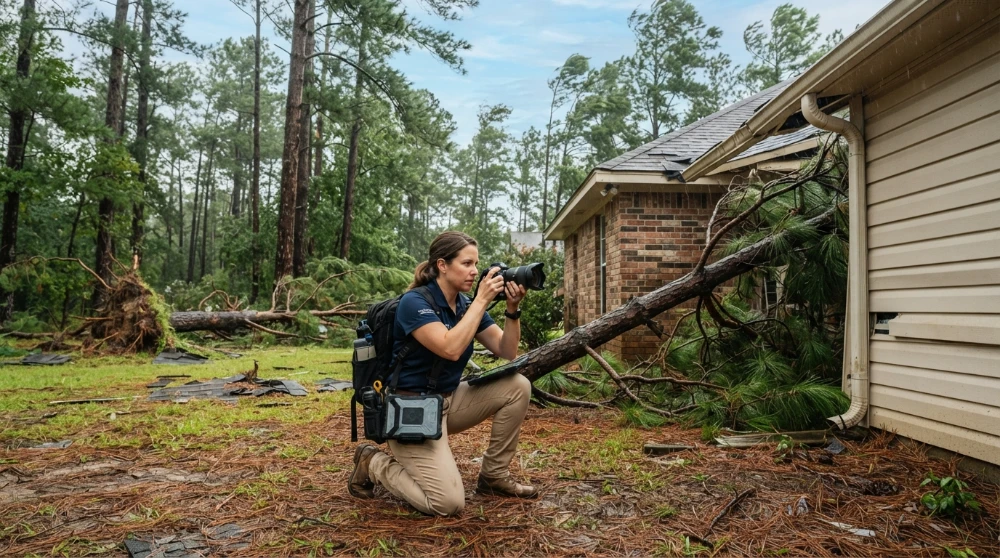
In heavily wooded parts of the Coldspring area, tree and limb impacts deserve particular attention. A limb that strikes a roof may damage decking, flashing, shingles, gutters, or framing even when the visible exterior damage looks limited.
Tropical Storm and Hurricane Effects
Coldspring is inland, but inland does not mean isolated from Gulf Coast weather.
Tropical systems can bring strong winds and sustained rainfall deep into East Texas. Property owners dealing with damage from a major tropical system can also review our guide to hurricane property damage, including the different types of building and interior damage that can follow a hurricane. For an insurance claim, it may be necessary to distinguish between wind-created openings, resulting interior water damage, surface flooding, and other causes because different policy provisions and exclusions may apply.
That distinction matters. Standard property insurance frequently treats flood damage differently from wind or covered water intrusion, so every loss should be reviewed based on the actual policy and cause of damage rather than assuming all storm-related water is treated the same way.
Heavy Rain and Water Intrusion
The Lake Livingston region receives substantial rainfall; Texas Parks and Wildlife lists average annual rainfall near Lake Livingston State Park at about 48 inches.
After intense rain, water can find openings around:
- Roof penetrations
- Damaged flashing
- Valleys
- Windows
- Doors
- Exterior wall assemblies
- Damaged shingles
- Low-slope commercial roofing
- Previously storm-damaged areas
Once inside, moisture may move beyond the first visible stain. Insulation, drywall, flooring, cabinetry, trim, electrical components, and concealed wall cavities can all require evaluation.
Hail
East Texas hail events can damage far more than shingles.
A complete Coldspring hail inspection may include roofing, gutters, downspouts, vents, flashing, exterior HVAC equipment, screens, siding, metal components, and other exposed surfaces.
Hail claims can become disputed when the insurer considers damage cosmetic, attributes it to aging, or identifies impacts on only part of the roof.
Tornadoes and Rotating Storms
Severe weather in East Texas can also produce tornadoes and intense localized wind. These losses may affect multiple sides of a structure at once, including roofing, exterior cladding, windows, trees, detached buildings, fencing, and interior areas exposed after the building envelope is compromised.
Winter Freeze Damage
Coldspring property owners can also experience freeze-related claims during major Texas cold events.
Common freeze losses include:
- Burst plumbing lines
- Attic pipe failures
- Damaged water heaters
- Interior flooding
- Ceiling collapse
- Flooring damage
- Cabinet damage
- Drywall and insulation damage
Water can migrate well beyond the room where the pipe originally failed, making moisture documentation particularly important.
Common Insurance Claims in Coldspring, TX
| Claim Type | Common Coldspring Property Damage |
| Hail damage | Shingles, metal roofing, gutters, vents, HVAC equipment and exterior finishes |
| Wind damage | Lifted roofing, tree impacts, flashing failures, siding and detached structures |
| Water damage | Plumbing failures, roof leaks, storm intrusion and interior moisture |
| Fire damage | Structure, smoke, soot, contents, HVAC contamination and debris |
| Roof claims | Hail impacts, wind uplift, punctures, tree damage and repairability disputes |
| Commercial claims | Buildings, inventory, equipment, roofing and business interruption where covered |
Hail Damage Claims
Hail damage is often difficult to evaluate from ground level.
An insurer may identify a few roof impacts without including collateral damage elsewhere on the property. We inspect the complete loss and document conditions that may be relevant to the claim.
That can include:
- Asphalt shingles
- Metal roofing
- Ridge and hip materials
- Flashing
- Gutters
- Downspouts
- Vents
- Screens
- HVAC condensers
- Exterior finishes
The objective is not to assume every mark is covered storm damage. It is to create accurate documentation so legitimate covered damage can be evaluated properly. For a deeper explanation of documentation, roof impacts, carrier inspections, and claim issues, see our hail damage roof insurance claim guide for Texas property owners.
Water Damage Claims
A small plumbing break can create a much larger insurance loss.
Water may travel under flooring, behind baseboards, into insulation, through cabinets, or between rooms. Drying the property addresses the immediate emergency, but the insurance scope must also account for damaged materials and necessary restoration.
We review moisture documentation, mitigation invoices, repair scopes, photographs, and carrier estimates to determine whether the claim accurately reflects the covered loss. Property owners dealing with a larger leak, plumbing loss, or storm-related interior damage can learn more about working with a water damage public adjuster and the documentation that may be needed to establish the full scope of the loss.
Fire and Smoke Damage Claims
Fire claims require careful documentation because visible burning may represent only one part of the loss.
A Coldspring fire claim can involve:
- Structural repairs
- Smoke contamination
- Soot
- Odor
- HVAC cleaning or evaluation
- Electrical damage
- Contents
- Debris removal
- Temporary living expenses when covered
- Cleaning and restoration
- Code-related work when applicable
Smoke can travel into areas that flames never reached. Contents inventories can also become a major part of larger residential losses. Larger fire losses can become especially documentation-heavy because structure, contents, smoke, soot, debris removal, and additional living expenses may need to be evaluated separately. Our fire insurance adjuster guide explains how public adjusting assistance can fit into a significant fire claim.
Storm Damage Claims
Storm claims frequently combine several forms of damage.
A high-wind event might damage shingles, allow rain into an attic, knock a tree onto a detached garage, and damage fencing during the same storm.
If each component is considered separately, parts of the overall loss can be overlooked. We document how the damage relates to the event and prepare a complete claim presentation.
Roof Damage Claims
Roof disputes are one of the most common reasons property owners seek insurance claim assistance in Coldspring.
A carrier may acknowledge damage but approve only a limited repair.
A complete roof review may consider:
- Shingle condition
- Wind uplift
- Hail impacts
- Ridge and hip damage
- Valleys
- Flashing
- Drip edge
- Roof penetrations
- Underlayment
- Decking where damaged
- Steep or high-access conditions
- Detach-and-reset requirements
- Repairability
- Matching and material availability where relevant
- Required code work when covered
The appropriate claim scope depends on the actual damage and policy—not simply the smallest visible area that was affected. If the dispute involves the carrier approving a small repair, overlooking related roofing components, or issuing a settlement that appears too low, learn when it may make sense to hire a public adjuster for a roof claim.
Commercial Property Claims
Coldspring and the surrounding San Jacinto County area include offices, retail properties, churches, restaurants, agricultural-related businesses, service buildings, lodging, storage facilities, and other commercial properties. Businesses facing a significant covered loss can work with a commercial public adjuster to document building damage, business property, equipment, and other covered portions of the claim.
Commercial insurance claims can involve more than building repairs.
Depending on the policy, a loss may include:
- Commercial roofing systems
- Interior finishes
- Business personal property
- Equipment
- Inventory
- Tenant improvements
- Debris removal
- Extra expense
- Business interruption
- Code-related upgrades
TX Public Adjusting handles both residential and commercial claims, allowing property owners and business operators to have a single claim advocate coordinating documentation and carrier communication.
Why Insurance Claims Become Underpaid
An underpaid claim does not always result from one major disagreement. Often, the difference comes from multiple smaller omissions. Avoiding common property insurance claim mistakes can also make it easier to preserve evidence and present the claim clearly from the beginning.
Missed Damage
An inspection may document the main roof surface but miss gutters, flashing, interior moisture, screens, detached structures, fencing, or tree-impact damage.
Those omissions add up.
Incomplete Repair Scopes
A carrier estimate may include replacement material without all the labor and supporting operations required to perform the repair.
Depending on the loss, missing items can include demolition, access, debris handling, protection, detach-and-reset work, finishing, or associated components.
Depreciation Issues
Insurance estimates may apply depreciation based on material age and policy terms. Property owners should understand what was depreciated, whether depreciation may be recoverable, and what documentation is required.
Low Pricing or Quantity Differences
Disagreements can occur over measurements, labor assumptions, roofing squares, material quantities, room dimensions, or local repair costs.
A detailed scope provides a basis for addressing those differences.
Documentation Problems
Photographs taken after repairs have begun may not show the original condition clearly. Missing receipts, incomplete contents inventories, poor moisture records, or insufficient measurements can make a legitimate claim harder to establish.
That is one reason early documentation can be valuable.
Our Public Adjusting Process
Step 1: Claim Review
We begin by understanding the loss and where the insurance claim currently stands.
Our review may include:
- Insurance policy
- Carrier estimate
- Claim correspondence
- Payment documentation
- Denial letters
- Contractor estimates
- Photographs
- Mitigation records
We identify the major issues before determining the next step.
Step 2: Property Inspection
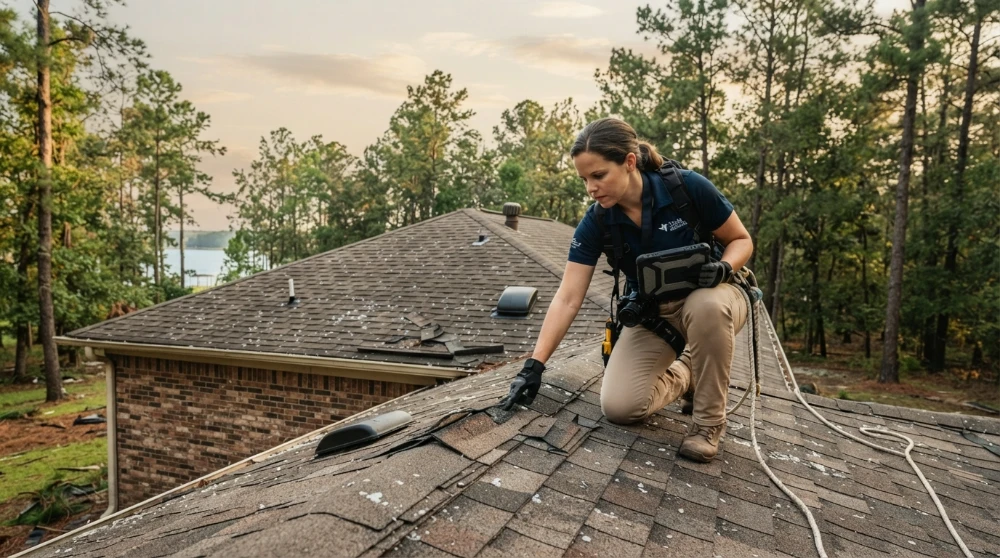
We inspect the damaged Coldspring property and evaluate the areas related to the claimed loss.
For storm claims, that may mean looking beyond the roof to exterior elevations, gutters, windows, HVAC equipment, interior areas, detached structures, or other components.
Step 3: Documentation and Scope Preparation
We organize the evidence needed to present the claim.
Depending on the loss, documentation may include:
- Photographs
- Measurements
- Damage inventories
- Repair estimates
- Contents information
- Contractor documentation
- Mitigation records
- Supporting technical information
Step 4: Insurance Company Negotiation
TX Public Adjusting communicates with the carrier regarding the documented claim. If communication with the carrier appears stalled, Texas property owners can also review our guide explaining how long an insurance adjuster has to contact you after a claim is reported.
We address issues such as:
- Missing scope items
- Quantity differences
- Pricing disputes
- Supplemental damages
- Repairability
- Additional documentation
- Claim valuation
The insurance company still makes its coverage decisions under the policy. Our role is to represent the policyholder and present the covered loss as thoroughly as possible.
Step 5: Claim Resolution
We continue working through the claim process until the documented issues have been addressed and the claim reaches resolution.
Our goal is a fair evaluation of the covered damage based on the evidence and policy.
Why Choose TX Public Adjusting for a Coldspring Claim?
Licensed Texas Public Adjuster
Rise Public Adjusting LLC
Texas License #3356839
Licensing matters. Property owners should know exactly who is representing them and verify the credentials of anyone offering public adjusting services.
We Represent Policyholders
An insurance company’s adjuster works on behalf of the carrier.
A public adjuster represents the insured.
TX Public Adjusting works for residential and commercial policyholders—not insurance companies.
Thousands of Claims Reviewed
Our experience comes from reviewing thousands of Texas property claims involving storms, hail, roofs, water losses, fire damage, and commercial properties. The firm currently reports reviewing more than 1,400 claim files annually.
That volume provides practical experience with the estimating, documentation, and negotiation issues that repeatedly appear in property claims.
Texas-Focused Experience
Texas claims involve weather conditions that can change dramatically by region.
For Coldspring, that means understanding the combination of East Texas thunderstorms, heavy rain, tropical systems, wooded properties, lake-area construction, hail, freeze losses, and rural residential or commercial properties.
Residential and Commercial Expertise
We work with homeowners as well as businesses, property owners, churches, multifamily properties, and other commercial insureds.
Free Claim Review and No Upfront Fees
You can discuss your Coldspring insurance claim with TX Public Adjusting before deciding whether representation makes sense.
Areas and Communities We Serve Around Coldspring
TX Public Adjusting serves Coldspring and surrounding San Jacinto County communities, including Cape Royale, Holiday Shores, Camilla, Point Blank, Oakhurst, Shepherd, and Evergreen. We also assist property owners throughout the broader Lake Livingston and Southeast Texas region, including those looking for a Public Adjuster Livingston, Public Adjuster Cleveland, or Public Adjuster Conroe.
Cape Royale and Camilla are recognized Coldspring-area residential areas, while nearby communities such as Point Blank and Shepherd form part of the broader Lake Livingston/San Jacinto County region.
Property owners near the San Jacinto County Courthouse, the historic Coldspring townsite, Lake Livingston, or the wooded areas toward Sam Houston National Forest can contact our team for residential or commercial insurance claim assistance. The courthouse area is central to Coldspring’s identity; the town became the San Jacinto County seat in 1870, and its historic townsite is documented by the Texas Historical Commission.
Frequently Asked Questions
1. What does a public adjuster do in Coldspring, TX?
A public adjuster represents the property owner during an insurance claim. TX Public Adjusting can inspect the damage, review your policy and carrier estimate, prepare supporting documentation, develop a repair scope, and communicate with the insurance company about disputed claim issues.
Unlike the insurance company’s adjuster, our responsibility is to the policyholder.
2. Can you help with storm damage around Lake Livingston?
Yes. Lake-area homes can experience roof damage, wind damage, fallen trees, exterior damage, and water intrusion after severe storms.
Properties in communities such as Cape Royale or Holiday Shores may also have detached structures or other improvements that should be reviewed when they are affected by a covered loss. Coverage for docks, boathouses, detached structures, and other property varies by policy, so we review the actual policy rather than assuming those items are included.
3. What should I do if a tree falls on my Coldspring home?
Protect people first and take reasonable emergency steps to prevent additional damage when it is safe to do so. Photograph the tree, impact point, roof, interior damage, and any temporary repairs before damaged materials are discarded whenever practical.
Tree impacts can affect more than shingles. Decking, rafters, framing, flashing, gutters, ceilings, insulation, and electrical systems may also require evaluation.
4. Can a public adjuster help if the insurer says my roof is just old?
Yes, we can review the claim and damage.
Roof age and maintenance can affect an insurance claim, but age alone does not automatically answer whether a specific storm caused covered damage. We inspect the roof, review the carrier’s findings, and document conditions that may support the claim.
Coverage ultimately depends on the policy and facts of the loss.
5. Does homeowners insurance cover flooding near Lake Livingston?
Flood coverage is a separate issue from many homeowners property claims.
Standard homeowners policies commonly exclude rising surface water or flooding, although other forms of water damage may be treated differently depending on their cause. For example, water entering after covered wind damage to a roof can raise different coverage questions than rising lake or surface water.
The policy and cause of loss need to be reviewed carefully.
6. Can you help after the insurance company has already paid my claim?
Often, yes.
Receiving an initial payment does not necessarily mean every issue has been resolved. If you discover omitted damage or believe the carrier’s scope does not reflect the covered repairs, we can review the estimate and claim status to determine what options may remain.
Timing matters, so it is better to request a review before assuming the claim can no longer be addressed. Our guide on when it is too late to hire a public adjuster explains some of the timing issues property owners should consider.
7. Do you handle claims for rural properties and detached buildings?
Yes.
Properties around Coldspring and San Jacinto County often differ from homes in dense metropolitan neighborhoods. A property may include garages, workshops, storage structures, fencing, or other improvements.
We inspect damaged insured structures and review the policy to determine how each item is treated. Coverage can differ between the main dwelling and other structures.
8. Can TX Public Adjusting handle commercial claims in Coldspring?
Yes. We assist businesses, commercial building owners, churches, landlords, and other commercial policyholders.
Commercial claims can involve building damage, roofing, equipment, business personal property, inventory, extra expenses, or business interruption depending on the coverages purchased.
9. When should I hire a public adjuster after a Coldspring storm?
You can contact a public adjuster shortly after significant damage occurs, particularly when the loss is large or complicated.
You can also request assistance later if your claim has been denied, delayed, underpaid, or if you believe important damage was overlooked. Earlier involvement can make it easier to preserve evidence before repairs change the condition of the property.
10. Why choose TX Public Adjusting for my Coldspring insurance claim?
TX Public Adjusting is Texas-focused, licensed, and represents policyholders rather than insurance companies.
Rise Public Adjusting LLC operates under Texas License #3356839, and our team has experience reviewing thousands of residential and commercial claims. Coldspring property owners receive assistance with inspection, documentation, scope review, carrier communication, and negotiation based on the specific property and loss—not a generic claim template.
Get a Free Claim Review in Coldspring
If your home, lake property, rural residence, business, church, or commercial building in Coldspring has suffered hail, wind, roof, water, fire, or storm damage, the quality of your documentation can have a major effect on how the insurance claim is evaluated.
You do not have to rely solely on the insurance company’s estimate.
Contact TX Public Adjusting for a Free Claim Review.
Rise Public Adjusting LLC
Texas Public Adjuster License #3356839
- Licensed Texas Public Adjuster
- Residential & Commercial Claims
- Free Claim Review
- No Upfront Fees
- Independent Policyholder Representation
Let our team review the damage, insurance estimate, and claim documentation and explain what options may be available.