

Property damage in Livingston can turn into a complicated insurance claim quickly. A severe thunderstorm can damage shingles and metal roofing, fallen trees can strike structures, heavy rain can find its way through a damaged roof, and tropical systems moving inland can bring wind and significant rainfall into Polk County. Livingston sits in the East Texas Piney Woods near Lake Livingston, where residential properties range from homes close to downtown to wooded acreage and lake-area communities.
TX Public Adjusting provides public adjuster services in Livingston, TX for homeowners, business owners, landlords, and other policyholders dealing with property damage claims. We inspect and document damage, review insurance estimates and claim documents, identify potential scope omissions, and negotiate with the insurance company on behalf of the policyholder.
TX Public Adjusting is operated by Rise Public Adjusting LLC, Texas License #3356839. Texas Department of Insurance licensing data lists Rise Public Adjusting LLC under license #3356839, with the current license term extending through July 2, 2027.
Need help with a Livingston property insurance claim? Get a Free Claim Review from TX Public Adjusting. No upfront fees. Residential and commercial claims welcome.
Why Property Owners Hire a Public Adjuster in Livingston
An insurance company’s adjuster evaluates a claim for the insurer. A public insurance adjuster has a different role: the policyholder hires the public adjuster to assist with and negotiate the property claim. The Texas Department of Insurance specifically describes public adjusters as licensed professionals who can negotiate with an insurer to settle a policyholder’s claim.
That distinction can matter after a substantial Livingston loss.
Property damage is rarely limited to the first thing visible from the driveway. A storm that damages the roof may also affect flashing, vents, gutters, fascia, siding, fencing, detached structures, interior ceilings, insulation, and personal property. A major water loss can involve demolition, drying, damaged flooring, cabinetry, drywall, contents, and repairs across several rooms.
A public adjuster in Livingston can help organize those pieces into a documented claim rather than leaving the property owner to reconcile photographs, contractor estimates, carrier estimates, policy provisions, depreciation, and claim correspondence alone.
Property owners commonly contact TX Public Adjusting when:
- A settlement appears too low for the documented damage
- The carrier estimate leaves out portions of the loss
- A roof or storm claim has been partially denied
- Additional damage is found after the first inspection
- The claim involves multiple buildings or damaged systems
- A commercial loss is interrupting normal operations
- The policyholder needs help documenting a supplemental or reopened claim
- The claim has become difficult to manage without professional representation
Livingston’s Property Damage and Storm Risks
Livingston has a different risk profile from a dry West Texas city or a dense urban center. Polk County lies between the Texas Forest Country and Gulf Coast region, and the Livingston area is surrounded by forest while sitting only minutes from Lake Livingston.
That geography matters when evaluating property losses.
| Livingston Risk | Property Damage That May Follow |
| Severe thunderstorms | Roof, siding, gutter, window and exterior damage |
| Straight-line wind | Lifted roofing, tree impact, fencing and detached-structure damage |
| Hail | Shingle bruising, metal dents, vent and flashing damage |
| Tornadoes | Major roof, structural, tree and debris-impact losses |
| Heavy rainfall | Roof intrusion, interior water damage and drainage-related losses |
| Tropical systems | Wind-driven damage, prolonged rain and widespread property impacts |
The National Weather Service has documented damaging severe weather in the immediate area. A historic tornado struck downtown Livingston, damaging vehicles, downing numerous trees, and tearing roofs from buildings. In 2020, another tornado crossed Lake Livingston, struck Onalaska, and continued across much of Polk County; the NWS documented a 32-mile path and winds around 140 mph.
Flooding and extreme rainfall are also part of Livingston’s weather history. During an April 1999 event, the National Weather Service reported three feet of water on U.S. 59 near Livingston and water reaching as high as five feet in some homes and mobile homes. Other documented Trinity River Basin flooding has affected businesses along Highway 190 west of Livingston.
Those events do not mean every Livingston property faces the same exposure, and coverage always depends on the individual policy and cause of loss. They do show why careful documentation after a major Polk County storm is essential.
Common Insurance Claims in Livingston, TX
Hail Damage Claims
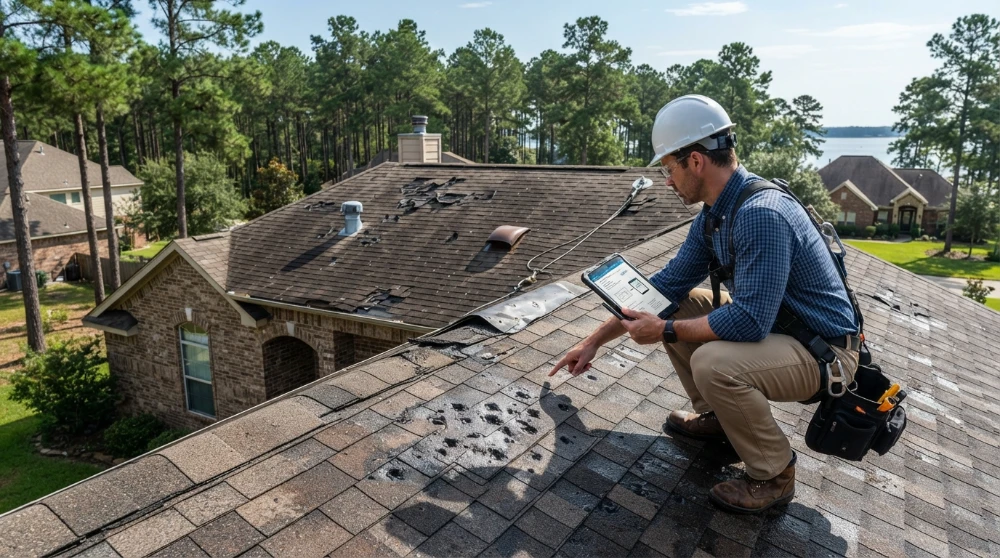
Hail can damage asphalt shingles, metal roofing, vents, gutters, flashing, siding, skylights, HVAC components, and other exterior materials. Some hail impacts are immediately obvious. Others become easier to identify during a detailed roof and exterior inspection.
For a Livingston hail damage insurance claim, TX Public Adjusting can review the carrier’s scope against the documented conditions at the property. When appropriate, that includes evaluating whether related roof components or other exterior damage were omitted from the initial estimate.
Property owners can also review our Texas hail damage insurance claim guide for additional information about documenting a storm loss. The existing TX Public Adjusting sitemap includes this hail-focused resource.
Water Damage Claims
Water losses in Livingston can originate from plumbing failures, appliance leaks, damaged supply lines, roof openings, storm-created intrusion, or other sudden events. The source of the water and the policy language matter, so every claim needs to be evaluated on its own facts.
The visible stain on a ceiling is often only one portion of the loss. Moisture can affect drywall, insulation, flooring, trim, cabinets, contents, and adjacent rooms.
Our work on a water claim focuses on documenting the damaged areas and reviewing whether the insurance company’s estimate reflects the reasonable scope of the covered loss. A water damage public adjuster can also evaluate whether drywall, flooring, cabinetry, insulation, contents, and other affected materials were included in the carrier’s scope.
Fire and Smoke Damage Claims
A fire claim can involve far more than burned building materials. Smoke, soot, odor, water used during firefighting, damaged contents, electrical systems, demolition, debris removal, and temporary living or business-related expenses may all become parts of the claim depending on the policy and circumstances.
TX Public Adjusting handles fire damage claims in Livingston for residential and commercial policyholders. For a substantial loss, a fire insurance adjuster representing the policyholder can help organize structural damage, contents, smoke, soot, debris removal, and other parts of the claim. We organize the claim documentation, review the carrier’s estimate, and help present the amount of loss supported by the available evidence.
Storm and Wind Damage Claims
Livingston’s heavy tree cover adds another factor after strong winds. When thunderstorms or tropical systems move through Polk County, damage may result from direct wind forces, falling limbs, trees, or wind-created roof openings.
The National Weather Service has recorded winds as high as 85 mph during severe thunderstorms affecting the Lake Livingston area and Polk County.
Storm claims may involve roofing, siding, windows, fencing, garages, outbuildings, interior water damage, and debris impact. We look beyond one isolated repair item and evaluate the documented loss as a whole. Tropical systems can also remain destructive after moving inland. Livingston property owners dealing with property damage after a hurricane may face a combination of wind damage, roof openings, fallen trees, debris impact, and interior water intrusion.
Roof Damage Claims
Roof claims are among the most detail-sensitive property claims. The disagreement may involve the cause of damage, repairability, the number of damaged slopes, accessories, flashing, underlayment, decking, code-related items, or differences between contractor and carrier estimates.
If a Livingston roof insurance claim appears underpaid, TX Public Adjusting can compare the existing estimate with the documented damage and determine whether additional claim presentation is appropriate. A public adjuster for a roof claim can also evaluate whether roofing components, measurements, related exterior damage, or necessary repair operations were omitted from the carrier’s scope.
Commercial Property Claims
TX Public Adjusting assists business owners and property owners with commercial property claims involving roofing, interiors, equipment, inventory, tenant improvements, multiple structures, and other covered property.
Commercial claims can involve roofing, building interiors, equipment, inventory, tenant improvements, contents, multiple structures, and business-related impacts. We assist owners of retail properties, offices, restaurants, warehouses, multifamily properties, churches, and other commercial buildings.
Already received an estimate or settlement offer? TX Public Adjusting can review the claim before you assume the carrier’s first scope is complete. Request a Free Claim Review.
Why Livingston Insurance Claims Become Underpaid
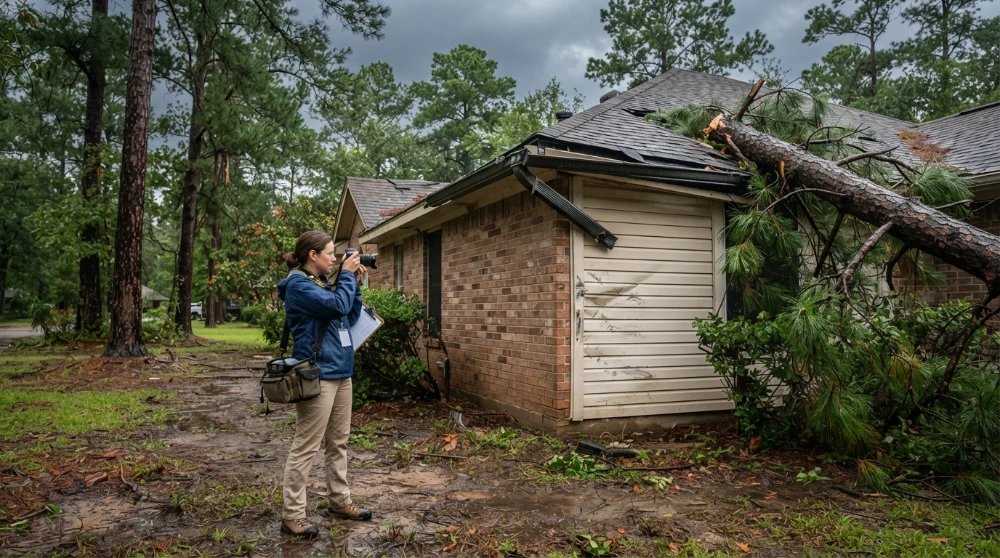
A low payment does not always result from one major disagreement. Often, the difference develops through a series of smaller omissions.
Missed or Incompletely Documented Damage
A fast inspection may focus heavily on the most visible damaged area. Related components can receive less attention, particularly after widespread storms when many claims are being inspected.
Scope Omissions
An estimate may include roof shingles while leaving out damaged vents, flashing, gutters, siding, interior finishes, or other items associated with the same covered event.
Depreciation Questions
Property claims may include recoverable or nonrecoverable depreciation depending on the policy and damaged property. Homeowners can easily misunderstand how depreciation affects the initial payment and what documentation may later be required.
Low or Incomplete Estimates
Pricing is only part of an estimate. Quantities, measurements, labor operations, materials, access requirements, repair methods, and related work can substantially affect the final scope.
Documentation Problems
Photographs, measurements, inventories, mitigation records, invoices, contractor documentation, and timelines all help support a property claim. Missing or poorly organized records can make an already complicated claim harder to resolve. Property owners can also create problems unintentionally, which is why understanding common property insurance claim mistakes can be useful before accepting a settlement or closing the claim.
Our Public Adjusting Process
1. Claim Review
We begin by understanding what happened, when the loss occurred, what has already been submitted, and how the insurance carrier has responded.
If you already have an estimate, payment letter, denial, photographs, contractor proposal, or other claim documents, we review them as part of the initial evaluation.
2. Property Inspection
When appropriate, we inspect the Livingston property and document relevant visible damage. The inspection is designed around the type of loss rather than a one-size-fits-all checklist.
A roof claim requires different documentation from a fire loss. A commercial water claim requires a different approach from a residential wind claim.
3. Documentation and Scope Review
We organize photographs, measurements, estimates, inventories, and supporting information and compare the documented loss against the carrier’s scope.
This is often where missed damage, omitted work, quantity differences, or other claim issues become clearer.
4. Claim Presentation and Negotiation
TX Public Adjusting communicates with the insurance company regarding the amount of the covered property loss and presents supporting documentation on behalf of the policyholder.
Texas law recognizes the role of licensed public insurance adjusters in acting for an insured during the adjustment and settlement of property claims.
5. Settlement Review
We continue reviewing carrier responses, estimates, and claim documentation as the adjustment progresses. The objective is a properly documented claim based on the policy, the covered damage, and the evidence available—not an invented or guaranteed settlement amount.
Why Choose TX Public Adjusting for a Livingston Claim?
Licensed Texas Public Adjuster
TX Public Adjusting operates through Rise Public Adjusting LLC, Texas License #3356839. The license is listed in Texas Department of Insurance records.
We Represent Policyholders
A public adjuster works for the insured, not the insurance carrier. TDI’s public adjuster contract guidance specifically states that public adjusters represent the insured only.
Texas-Focused Property Claim Experience
Texas losses require familiarity with hail, severe wind, tornadoes, tropical weather, freeze events, water losses, roof claims, and large commercial property damage.
Our team has reviewed thousands of residential and commercial property claims, giving us experience evaluating losses ranging from individual homes to complex commercial properties.
Residential and Commercial Claims
We assist homeowners, business owners, landlords, commercial property owners, and other insureds with covered property losses.
Free Claim Review
You do not have to guess whether the carrier’s estimate deserves another look. Start with a Free Claim Review and find out what issues may deserve closer attention.
Areas We Serve Around Livingston
Our Livingston service area extends throughout the surrounding Polk County and Lake Livingston communities.
Within the broader Livingston area, residential properties include communities and subdivisions such as Wiggins Village, Davis Woods, Southland Plantation, Cedar Point, Indian Hill, Memorial Point, Lake Livingston Village, and Shelter Cove. Current real-estate listings identify these communities within Livingston and the Lake Livingston market area.
We also serve property owners in and around:
- Onalaska
- Goodrich
- Point Blank
- Coldspring
- Corrigan
- Leggett
- Lake Livingston
- Other nearby East Texas communities
The Polk County Chamber identifies Livingston, Corrigan, Goodrich, Onalaska, Lake Livingston, and the Alabama-Coushatta community as key parts of the area it serves.
From properties near the Polk County Courthouse and downtown Livingston to homes closer to Lake Livingston State Park, Joe Pedigo Park, and the lake communities west and southwest of town, TX Public Adjusting provides claim assistance throughout the area. The county courthouse is located on West Church Street in Livingston, while the city’s own visitor information highlights Joe Pedigo Park and Livingston’s proximity to Lake Livingston.
Frequently Asked Questions About Public Adjusters in Livingston
What does a public adjuster in Livingston do?
A public adjuster assists the policyholder with a property insurance claim. If you want a deeper explanation of what a public adjuster does, the role can include inspecting damage, reviewing estimates and claim correspondence, documenting the loss, preparing a claim scope, and negotiating with the insurance company.
Unlike the insurance company’s adjuster, a public adjuster is retained by the insured. The Texas Department of Insurance licenses public insurance adjusters and recognizes their role in negotiating property claims for policyholders.
When should I hire a public adjuster after property damage in Livingston?
Property owners often call after receiving a low estimate, partial denial, disputed roof decision, or claim payment that does not appear to cover the documented damage. You can also contact a public adjuster earlier in a significant loss when the amount of documentation is becoming difficult to manage.
The best timing depends on the stage and facts of the claim. Waiting until important evidence has disappeared or deadlines are approaching can make the process more difficult. If your claim has already been open for some time, you may also want to understand when it is too late to hire a public adjuster before assuming that your opportunity for professional claim assistance has passed.
Can TX Public Adjusting help with an underpaid Livingston roof claim?
Yes. We can review the roof damage, carrier estimate, photographs, measurements, related exterior items, and other available documentation to identify potential differences in scope.
A low roof settlement may involve more than shingle pricing. Missing accessories, omitted elevations, measurements, repair assumptions, or interior damage can all affect the amount being claimed.
Does Livingston get enough hail to justify checking my roof after a storm?
Hail is one of several severe-thunderstorm hazards that can affect East Texas, but not every storm damages every roof. The safest approach is to base a claim on actual documented damage rather than assuming damage occurred simply because hail was reported nearby.
If there is evidence of a covered loss, detailed photographs and a timely inspection can help establish what was damaged and how the claim should be evaluated.
Can you help after tornado or wind damage in Polk County?
Yes. Wind and tornado damage can produce complex claims involving roofs, trees, debris impact, exterior components, interior water intrusion, detached buildings, and structural damage.
Polk County has experienced documented tornado and damaging-wind events, including the 2020 tornado that crossed Lake Livingston and continued through the county.
What if my Livingston insurance claim has already been paid?
A prior payment does not automatically mean there is nothing left to review. Depending on the policy, the damage, applicable deadlines, and the status of the claim, additional documentation may support a supplemental request.
We can review the existing carrier estimate and claim documents to determine whether the scope appears to address the documented covered loss.
Can a public adjuster help if my claim was denied?
A public adjuster may be able to review the denial, policy documents, cause-of-loss information, damage documentation, and previous communications to determine whether further adjustment or documentation may be appropriate.
Public adjusters do not practice law or provide legal advice. If a dispute requires legal interpretation or litigation, an attorney may be the appropriate professional. Texas Department of Insurance guidance specifically prohibits public adjusters from practicing law.
Do you handle commercial claims in Livingston?
Yes. TX Public Adjusting works with residential and commercial property claims. Commercial losses may involve building damage, roof systems, business contents, equipment, multiple units, tenant improvements, or other property covered by the policy.
Livingston businesses along Highway 190, the U.S. 59/I-69 corridor, downtown, and throughout Polk County can contact us for a review of storm, water, fire, roof, or other covered property claims.
How much does a public adjuster charge in Texas?
Fee terms should be clearly stated in the written public-adjuster contract. Texas Department of Insurance guidance says a public adjuster may charge no more than 10% of the total amount the insurance company pays on the claim, although the actual fee arrangement can vary within legal limits.
TX Public Adjusting offers a Free Claim Review, so you can first discuss the claim and understand the potential issues before deciding how to proceed.
Why choose a licensed public adjuster instead of a contractor to negotiate my insurance claim?
Contractors are valuable for determining repair needs and completing construction work, but Texas law draws a line between contracting and public adjusting. TDI states that a contractor may provide estimates and technical information but may not act on behalf of an insured to negotiate or settle an insurance claim unless properly licensed to perform that role.
TX Public Adjusting is operated by licensed public adjusting firm Rise Public Adjusting LLC. Our role is claim representation—not performing the repairs on the property.
Get a Free Livingston Insurance Claim Review
If your Livingston home or commercial property has been damaged by hail, wind, a tornado, water, fire, a roof loss, or another covered event, you do not have to evaluate the carrier’s estimate by yourself.
TX Public Adjusting can review the claim, inspect and document the damage when appropriate, identify possible scope issues, and represent you through the adjustment process.
Free Claim Review. No upfront fees. Residential & Commercial Claims.
Contact TX Public Adjusting today to speak with a public adjuster serving Livingston, Polk County, and the surrounding Lake Livingston area.
Rise Public Adjusting LLC — Texas License #3356839