

Property damage in Wallis can turn into an insurance dispute quickly. A severe thunderstorm can damage a roof in minutes, wind-driven rain can reach an interior that looked dry at first inspection, and a plumbing or fire loss can involve far more than the visible damage. When the insurance company’s estimate does not reflect the full scope of the loss, working with a public adjuster in Wallis, TX gives the policyholder experienced representation during the claim.
TX Public Adjusting helps residential and commercial property owners document, prepare, and negotiate property insurance claims throughout Texas. We work for the policyholder—not the insurance company—and our team has experience reviewing thousands of property claims involving roofs, hail, wind, water, fire, and commercial losses.
TX Public Adjusting operates through Rise Public Adjusting LLC, Texas License #3356839.
Need help with a Wallis insurance claim? Request a Free Claim Review. There are no upfront fees.
Wallis sits in southeastern Austin County along State Highway 36 between Sealy and Rosenberg. The community’s location near the western edge of the greater Houston region means property owners can face a mix of inland Texas severe weather and Gulf-influenced rain and wind events. That combination makes careful property-damage documentation especially important after a major storm.
Why Property Owners Hire a Public Adjuster in Wallis
An insurance company sends an adjuster to investigate a claim on behalf of the carrier. A public adjuster has a different role: representing the policyholder’s interests in the property claim. Property owners who are unfamiliar with the process can learn more about what a public adjuster does before deciding whether professional claim representation makes sense.
That distinction can matter when the damage is extensive, the estimate appears low, parts of the scope are missing, or the carrier and property owner disagree about what needs to be repaired.
A Wallis public adjuster can assist with:
- Reviewing the insurance policy and claim documents
- Inspecting damaged residential or commercial property
- Photographing and documenting visible and related damage
- Reviewing the carrier’s estimate for missing items
- Developing a detailed repair scope
- Organizing estimates, invoices, photographs, measurements, and supporting records
- Communicating with the insurance carrier about the property claim
- Addressing depreciation and scope questions
- Preparing supplements when additional covered damage is identified
- Negotiating the claim based on documented damage and applicable policy terms
For many Wallis property owners, the problem is not simply getting an insurance company to inspect the property. The harder question is whether the inspection and resulting estimate captured everything that was damaged.
A roof loss, for example, can involve shingles or metal panels as well as flashing, vents, gutters, fencing, exterior finishes, insulation, drywall, paint, and interior moisture damage. A short inspection may not produce the same scope as a detailed property assessment.
Property Damage Risks in Wallis, Texas
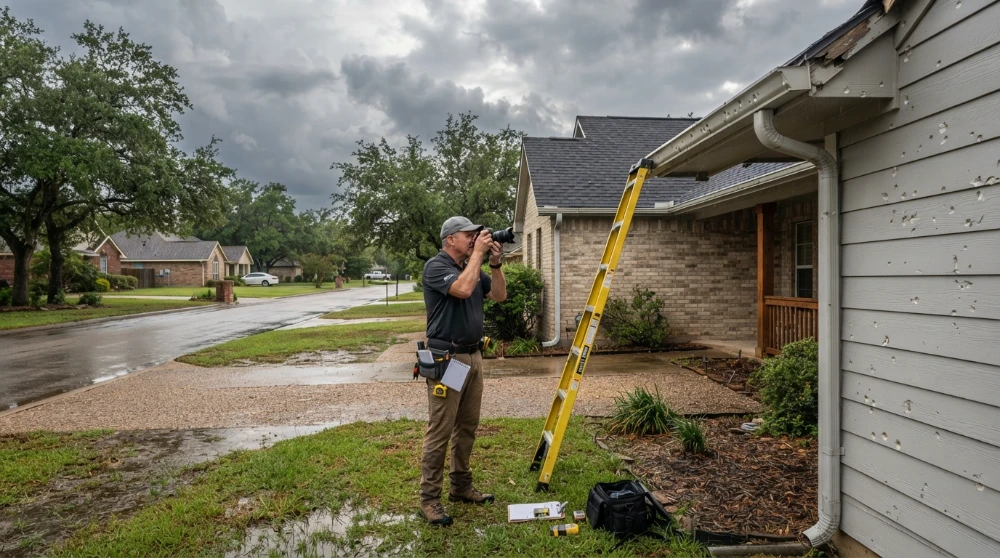
Wallis is a small Austin County community, but its weather exposure is not small.
Texas experiences substantial losses from severe storms, hail, flooding, tropical systems, and other weather disasters. For Wallis specifically, its southeastern Austin County location and proximity to Fort Bend County can expose properties to thunderstorms, heavy rainfall, damaging wind, hail, localized flooding, and the inland effects of tropical weather. Flood-risk data also identifies flooding as a significant hazard in the Wallis area.
Hail and Severe Thunderstorms
Strong thunderstorms can develop rapidly across this part of Texas. Hail can cause obvious damage, but some of the most important claim issues are less noticeable from the ground.
A hail inspection may need to consider:
- Asphalt shingle bruising and fractures
- Metal roof impacts
- Ridge and hip damage
- Roof vents and flashing
- Gutters and downspouts
- Window screens and glazing
- Exterior siding
- HVAC fins and exterior equipment
- Fences and painted surfaces
- Interior water staining after roof damage
Hail damage is especially easy to underestimate when an inspection focuses on only one portion of the building.
Wind Damage
Straight-line winds and severe thunderstorms can lift or crease shingles, damage flashing, pull materials from commercial roofs, break tree limbs, and allow wind-driven rain to enter a building.
Wind claims can become disputed when the exterior looks relatively intact but water entered through an opening created or worsened by the storm.
For homes and businesses along the Highway 36 corridor or on more open rural properties outside central Wallis, exposure to wind and wind-driven debris can be an important part of a storm-loss investigation.
Heavy Rain and Water Intrusion
Heavy Texas rainfall can produce water problems that extend beyond an obvious roof leak.
Water may affect:
- Ceilings
- Drywall
- Insulation
- Flooring
- Cabinets
- Electrical components
- Interior finishes
- Contents
- Commercial inventory or equipment
The source of the water matters because insurance coverage depends on the policy and cause of loss. A public adjuster does not determine coverage in the abstract; the job is to document the facts of the loss carefully and present the claim in accordance with the policy.
Tropical Storm and Hurricane-Related Weather
Wallis is inland, but Gulf Coast tropical systems do not have to make landfall directly over a community to create property damage farther inland. Texas property owners can also review our guide to property damage after a hurricane for a closer look at roof, interior, structural, water, equipment, and debris-related losses that can follow a major tropical system. Moisture, heavy rainfall, strong gusts, falling trees, roof damage, and wind-driven rain can continue well away from the immediate coastline.
For a Wallis property owner, that means storm preparation and post-storm documentation should not be limited to named coastal communities.
Common Insurance Claims in Wallis
TX Public Adjusting assists Wallis homeowners, landlords, commercial owners, and other policyholders with a range of property insurance losses.
Hail Damage Claims
After hail, an insurance carrier may agree that damage occurred while disagreeing about how much of the property needs repair. For property owners dealing with roof impacts after a severe storm, our Texas hail damage roof insurance claim guide explains how roof damage is documented, what may be missed during an inspection, and how the insurance claim process can develop after hail.
Common hail-claim disputes can involve:
- Repair versus replacement
- Number of damaged roof slopes
- Soft-metal damage
- Flashing and ventilation
- Matching concerns
- Siding and exterior finishes
- Interior leaks connected to roof impacts
- Scope and pricing differences
Our role is to document the physical evidence and build a claim scope that reflects the damage found at the property.
Water Damage Claims
A failed plumbing line, appliance leak, roof opening, or other covered water event can affect several building components at once.
The visible stain on the ceiling may be only one part of the loss. Moisture can travel behind drywall, under flooring, through insulation, and into cabinets or adjacent rooms. Our guide to working with a water damage public adjuster explains how hidden moisture, damaged building materials, repair estimates, and insurance-company documentation can affect a water-loss claim.
A strong water claim may require photographs, moisture documentation, mitigation records, repair estimates, damaged-content inventories, and a clear chronology of what happened.
Fire and Smoke Damage Claims
Fire losses are among the most documentation-heavy property claims.
A residential or commercial fire may involve:
- Structural damage
- Smoke residue
- Soot
- Odor
- Heat damage
- Water from firefighting efforts
- Personal property
- Business equipment
- Debris removal
- Temporary repairs
- Additional living expenses or other policy benefits when applicable
Fire losses can become especially detailed when structural damage, contents, smoke, soot, water, and temporary expenses must be documented together. Our fire insurance adjuster guide explains how professional claim representation can help organize these different parts of a fire loss. Even rooms that were not directly burned can require evaluation for smoke or related damage.
Storm Damage Claims
Storm claims in Wallis may combine multiple causes of damage. A single event could involve hail, wind, a fallen limb, roof openings, exterior damage, and interior water intrusion.
Treating each item as an unrelated problem can lead to an incomplete scope. We look at how the loss affected the property as a whole.
Roof Damage Claims
Roof claims are frequently under-scoped because the roof is only one component of the building envelope. When the carrier’s inspection misses damage or the proposed repair does not appear to address the full loss, a public adjuster for a roof claim can review the estimate alongside the actual roof and related property damage.
Our inspection may consider:
- Roofing material
- Underlayment when relevant to the repair scope
- Flashing
- Valleys
- Ridge and hip components
- Pipe jacks
- Vents
- Chimney-related components
- Gutters
- Drip edge
- Exterior elevations
- Interior signs of water entry
For Wallis homes, rural properties, and commercial structures, roof systems can vary considerably, so the inspection and estimate should match the actual construction rather than rely on a generic repair assumption.
Commercial Property Claims
Commercial claims can become complicated because a damaged building may affect more than the structure itself.
Depending on the policy and loss, documentation may involve roofing, building systems, inventory, equipment, tenant areas, mitigation costs, temporary protection, and other business-related impacts.
TX Public Adjusting handles both residential and commercial claims. Business owners dealing with a significant property loss can learn more about working with a Texas commercial public adjuster for building damage, roofing losses, inventory issues, equipment damage, and other complex commercial claims.
Local Claim Considerations Around Wallis
Wallis is not a large city divided into dozens of named neighborhoods. Local property references are more naturally organized around its principal roads, historic center, and nearby rural communities.
The city developed around the railroad and today remains centered around State Highway 36 and the BNSF rail corridor. FM 1093, Highway 60, and FM 1952 connect Wallis with surrounding parts of Austin, Fort Bend, and Wharton-area communities.
We can assist property owners around:
- Downtown Wallis
- The State Highway 36 corridor
- The FM 1093 corridor
- Demel Street and the area around Guardian Angel Catholic Church
- FM 1952 properties
- Residential streets surrounding central Wallis
- Rural homes and agricultural-area properties outside the city center
- Properties toward Orchard
- Properties toward Simonton
- Properties toward East Bernard
- Properties between Wallis and Sealy
- Properties toward Rosenberg and the Fort Bend County line
Guardian Angel Catholic Church on Demel Street is one of Wallis’s recognizable community landmarks, while Brazos High School and the historic railroad corridor are additional local reference points.
This local layout matters during widespread storms. Damage can vary significantly across only a few miles, particularly with hail cores and thunderstorm wind.
Why Insurance Claims Become Underpaid
A low claim payment does not always mean the insurance company denied the loss. More often, the disagreement is in the details.
Missed Damage
A carrier inspection may identify the primary damaged item but miss connected components.
For example, an estimate might include roofing while overlooking gutters, vents, flashing, interior staining, or exterior finishes.
Scope Omissions
Construction requires a sequence of materials and labor. If required tasks are omitted, the estimate may not reflect what is actually needed to restore the property.
Depreciation Issues
Property claims can involve actual cash value, replacement cost, recoverable depreciation, nonrecoverable depreciation, and policy-specific conditions.
Understanding how these numbers interact can be difficult for a property owner who does not work with insurance estimates regularly.
Low Repair Estimates
Two parties can agree about what was damaged and still disagree significantly about what the repair should cost.
Differences may involve labor, material pricing, quantities, access, roof configuration, specialty components, or other job conditions.
Documentation Problems
Insurance claims depend heavily on documentation.
Missing photographs, incomplete inventories, insufficient estimates, unclear repair scopes, or poor records can make it harder to demonstrate the full extent of the loss. Property owners can avoid additional problems by understanding some of the common property insurance claim mistakes that occur when damage, communications, repair costs, or supporting records are not properly documented.
Already received an estimate that looks too low? TX Public Adjusting can review the claim and identify possible scope or documentation issues. Request a Free Claim Review before accepting that the carrier’s estimate is the final word.
Our Public Adjusting Process
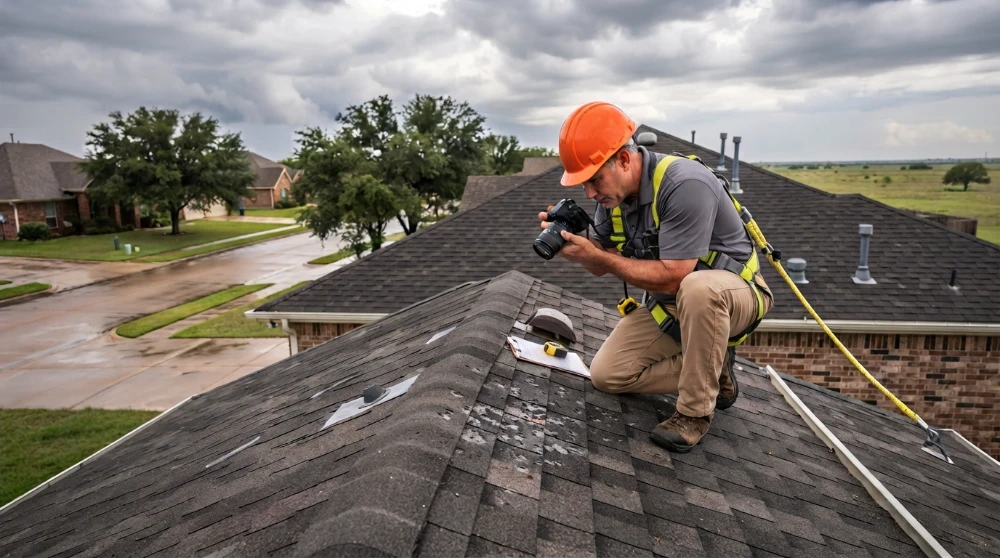
Every loss is different, but our process is built around one goal: creating a clear, well-supported property claim.
Step 1: Claim Review
We begin by learning what happened, reviewing available policy and claim information, and understanding what the insurance company has already done.
If an estimate or payment has already been issued, we can compare it with the reported and observed damage.
Step 2: Property Inspection
We inspect the property and identify damage relevant to the claim.
Depending on the loss, this may include the roof, exterior elevations, interior rooms, building components, commercial areas, and damaged contents.
Step 3: Documentation
We organize the evidence needed to support the claim.
That may include:
- Photographs
- Measurements
- Repair estimates
- Damage notes
- Contents documentation
- Contractor information
- Mitigation records
- Invoices and receipts
- Carrier estimates and correspondence
Step 4: Claim Presentation and Negotiation
We communicate the documented scope to the insurance company and work through differences in the claim.
When an insurer’s estimate omits documented damage or necessary repair items, we can prepare and support a supplemental claim.
Step 5: Settlement Process
We continue working through claim-related questions and negotiations so the carrier has the documentation needed to evaluate the policyholder’s position.
No public adjuster can promise a specific settlement result. What we can provide is professional claim preparation, detailed documentation, and policyholder representation throughout the process.
Why Choose TX Public Adjusting for a Wallis Insurance Claim?
Property owners have options when choosing someone to help with a claim. The person representing you should understand both Texas property losses and the insurance claim process.
Licensed Texas Public Adjuster
TX Public Adjusting operates through Rise Public Adjusting LLC, Texas License #3356839.
Licensing matters. You should know who is representing you and confirm that the person or firm handling a public-adjusting claim is properly licensed for the work being performed.
We Represent Policyholders
A public adjuster represents the insured property owner in the claim—not the insurance carrier.
That allows our attention to remain on documenting the policyholder’s damage and presenting the claim.
Texas-Focused Experience
Texas claims are heavily influenced by the state’s weather.
Hail, severe thunderstorms, wind, plumbing failures, freeze-related damage, fire, and Gulf Coast storm systems create very different types of losses. Our work focuses on Texas property claims and the documentation those claims require.
Residential and Commercial Experience
We help homeowners and commercial property owners.
Commercial properties can involve different roof systems, larger scopes, specialized equipment, tenant areas, inventories, and operational concerns. Those claims require a different level of organization than a small residential repair.
Thousands of Claims Reviewed
Our experience reviewing thousands of insurance claims helps us recognize common estimating gaps, documentation problems, and scope disputes.
Every property is still inspected on its own facts. Experience helps us know what questions to ask and where incomplete estimates commonly occur.
Free Claim Review
You do not have to decide whether to hire a public adjuster before understanding what may be wrong with the claim.
TX Public Adjusting offers a Free Claim Review so Wallis property owners can discuss the loss, the carrier’s response, and possible next steps.
No upfront fees.
Areas We Serve Near Wallis
Wallis is positioned at the southeastern end of Austin County close to the Fort Bend County line. This gives local property owners connections to communities in several directions.
TX Public Adjusting serves property owners in Wallis and surrounding areas including:
- Orchard
- Sealy
- San Felipe
- Simonton
- Brookshire
- Fulshear-area communities
- East Bernard
- Rosenberg
- Richmond
- Bellville
- Other Austin County communities
- Nearby Fort Bend County communities
If your property is outside Wallis but located elsewhere in Texas, contact our team to discuss service availability.
Frequently Asked Questions About Public Adjusters in Wallis
What does a public adjuster in Wallis do?
A public adjuster represents the policyholder during a property insurance claim. The work can include reviewing claim documents, inspecting damage, preparing a repair scope, organizing photographs and estimates, communicating with the carrier, and negotiating disputed or incomplete claim items.
The insurance company’s adjuster represents the carrier’s interests. TX Public Adjusting represents the insured property owner.
When should I hire a public adjuster after property damage in Wallis?
You can contact a public adjuster early in the claim, but property owners also frequently seek help after an insurance company has already inspected the property or issued an estimate.
It can make sense to request a claim review when the loss is substantial, the scope is complicated, damage appears to have been missed, or the settlement offer does not seem sufficient to complete the necessary repairs.
Can a public adjuster help if my Wallis claim was already paid?
Potentially. A payment does not automatically mean every issue in the claim has been resolved.
If additional covered damage is identified, repair requirements were omitted, or the estimate appears incomplete, there may be options depending on the policy, the claim’s status, applicable deadlines, and the facts of the loss. Have the claim reviewed before assuming there is nothing more that can be done.
Can TX Public Adjusting help with a hail-damaged roof in Wallis?
Yes. Hail and roof claims are a major part of Texas property adjusting.
We can inspect the roof and related building components, compare the observed damage with the carrier’s estimate, document relevant damage, and help present a more complete claim when warranted.
What if the insurance company says my roof only needs repairs?
Repair-versus-replacement questions depend on the damage, roofing system, repairability, policy language, and other factors that apply to the specific property.
A public adjuster can document the roof condition and review whether the insurer’s proposed scope accounts for the actual work required.
Can you help with water damage in Wallis?
Yes. Water losses can involve drywall, insulation, flooring, cabinets, paint, electrical components, contents, and other affected materials.
The cause of the water is also important because insurance policies may treat different sources of water differently. We focus on documenting what happened and the resulting property damage so the carrier has a clear factual record to evaluate.
Do you handle commercial property claims in Wallis?
Yes. TX Public Adjusting handles commercial as well as residential property claims.
Commercial losses can involve large roof systems, interior build-outs, inventory, equipment, tenant spaces, and more complicated repair scopes. Detailed estimating and documentation are especially valuable when the loss affects multiple parts of a business property.
How much does a public adjuster cost in Texas?
Public-adjuster compensation depends on the agreement and applicable Texas requirements. Before hiring an adjuster, you should understand the fee arrangement and the services included in the contract.
TX Public Adjusting offers a Free Claim Review and no upfront fees, allowing you to discuss your situation before deciding whether representation makes sense.
How long does a Wallis insurance claim take?
There is no single timeline that applies to every property claim.
The time required can depend on the severity of the loss, inspections, documentation, the carrier’s response, whether supplemental damages are involved, contractor information, and whether the parties disagree about scope or pricing.
A well-organized claim file can help reduce avoidable delays caused by missing information.
Is it too late to hire a public adjuster if my claim has been open for months?
Not necessarily.
Property owners often contact public adjusters after receiving a low estimate, encountering repeated delays, or discovering additional damage during repairs. The available options depend on your policy, claim status, deadlines, and what has already occurred.
If your claim has already been open for some time, our guide explains when it is too late to hire a public adjuster and the situations in which getting professional help may still be possible.
The safest approach is to have the claim documents reviewed promptly rather than assume the opportunity has passed.
Get Insurance Claim Help in Wallis, TX
When a storm, fire, roof leak, plumbing failure, or other covered event damages your property, the insurance claim can become nearly as demanding as the repairs themselves.
You do not have to guess whether the carrier’s estimate is complete.
TX Public Adjusting helps Wallis homeowners and business owners inspect damage, document property losses, review insurance estimates, and present well-supported claims.
TX Public Adjusting
Rise Public Adjusting LLC
Texas License #3356839
Request Your Free Claim Review
If your Wallis insurance claim is new, delayed, denied, disputed, or underpaid, contact TX Public Adjusting.
- Free Claim Review
- No upfront fees
- Licensed Texas Public Adjuster
- Residential & Commercial Property Claims
- Independent representation for policyholders
Contact TX Public Adjusting today and let our team review the details of your Wallis property damage claim.