

Property damage in Ingleside can become complicated quickly. A tropical system moving through the Coastal Bend may damage roofing, siding, windows, fencing, mechanical equipment, and interior finishes in a single event. Even a storm that does not make a direct landfall can produce high winds, wind-driven rain, localized flooding, and power disruptions around Corpus Christi Bay. When the resulting insurance estimate leaves out part of the loss, a licensed public adjuster in Ingleside can help document the damage and present the policyholder’s claim.
As a licensed Texas public adjuster, TX Public Adjusting represents residential and commercial property owners—not insurance companies. Our team reviews policies, inspects damaged property, prepares supporting documentation, identifies scope omissions, and communicates with the carrier regarding covered losses. TX Public Adjusting operates through Rise Public Adjusting LLC under Texas License #3356839.
Request a free claim review before accepting an insurance estimate that may not account for the full scope of your damage. There are no upfront fees for the initial review.
Insurance Claim Help for Ingleside Property Owners
Ingleside occupies a distinctive position along the Texas Coastal Bend. The city sits near Corpus Christi Bay and Ingleside Point, primarily within San Patricio County. That coastal setting supports marine activity, industrial development, recreation, and a close-knit residential community, but it also exposes local property to severe weather coming in from the Gulf of Mexico.
Homes near established sections of Ingleside, properties around Ingleside Cove, residences near Old Ingleside, and commercial or industrial buildings closer to the waterfront can experience very different damage patterns. A low-slope commercial roof may suffer membrane uplift and water intrusion, while a nearby home may sustain shingle damage, broken seals, damaged soffits, or leaks around vents and flashing.
The insurance company’s initial inspection may not capture all of those conditions. Some damage is hidden beneath roofing materials or behind interior finishes. Other damage may be visible but excluded from the carrier’s estimate because the adjuster did not connect it to the reported event.
A public insurance adjuster in Ingleside investigates the claim from the policyholder’s side. That distinction matters. The carrier’s adjuster works for the insurance company, while a public adjuster prepares and negotiates the claim for the insured property owner. Property owners who are unsure about the distinction can review our guide to a public adjuster vs. insurance company adjuster before deciding how to proceed with a claim.
Why Property Owners Hire a Public Adjuster in Ingleside
Many Ingleside claims involve more than one category of damage. A hurricane or strong coastal thunderstorm might create roof damage first, followed by water entering through compromised flashing, vents, wall openings, or windows. The water may then damage insulation, drywall, flooring, cabinetry, inventory, electrical components, or mechanical systems.
Property owners often hire TX Public Adjusting when:
- The carrier’s estimate appears too low.
- The claim payment does not cover reasonable repair costs.
- Important rooms, elevations, roof sections, or building components were omitted.
- The insurance company attributes storm damage to age or maintenance.
- Wind-driven rain caused interior damage.
- The claim involves both structural damage and business personal property.
- Depreciation was applied incorrectly or not clearly explained.
- The insurer requested additional documents that are difficult to organize.
- A commercial claim includes business interruption or lost income concerns.
- A denied or closed claim needs to be reviewed.
Our role is to build a clear, supportable presentation of the loss. That may include measurements, photographs, damage descriptions, estimates, inventories, repair documentation, policy analysis, and communication with the carrier.
Ingleside Storm Risks and Coastal Property Damage
Hurricanes and Tropical Storms
The City of Ingleside maintains hurricane-preparedness information because evacuations may need to begin well before winds and flooding make roads unsafe. That local guidance reflects the practical exposure faced by property owners along the Coastal Bend. Property owners dealing with wind, rain, and structural damage can also review our guide to hurricane damage insurance claims for additional information about documenting a Gulf Coast loss.
Hurricanes and tropical storms can produce several overlapping sources of loss:
- Roof-covering damage
- Structural movement
- Wind-driven rain
- Window and door damage
- Detached structure damage
- Fallen trees and debris impact
- Water intrusion
- Electrical damage
- Equipment failure
- Damage caused by prolonged power outages
A carrier may recognize one part of the loss while missing another. For example, an estimate may include a small roofing repair but omit wet insulation, damaged decking, interior staining, ceiling repairs, or testing needed to determine the full extent of moisture migration.
High Winds and Wind-Driven Rain
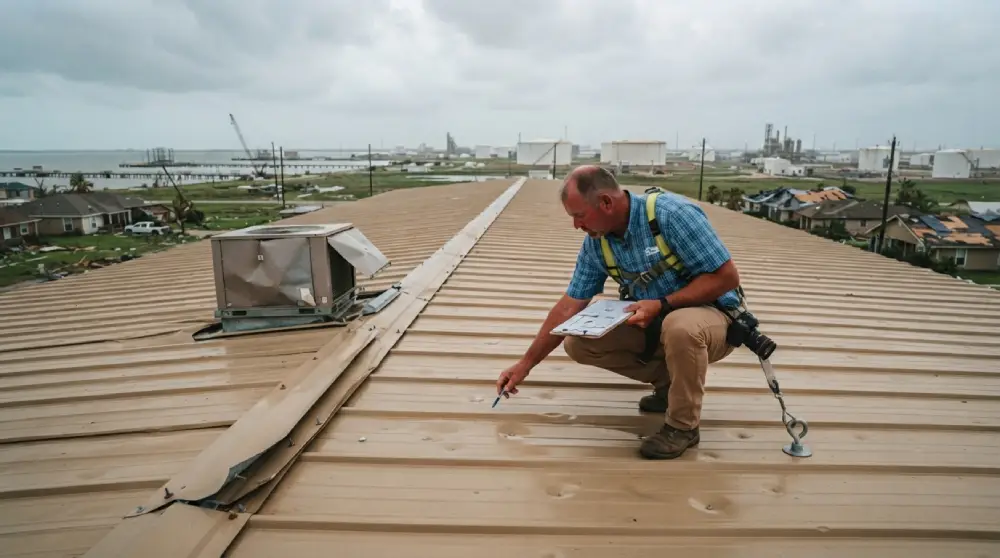
Ingleside’s location near open water can leave buildings exposed to strong gusts and sustained coastal winds. Wind does not have to remove an entire roof to create a covered loss. It may lift shingles, loosen fasteners, deform metal panels, damage edge components, break seals, or create openings that allow rain into the building envelope.
Wind-driven rain claims are frequently disputed because insurers may question how the water entered. Proper documentation should connect exterior storm damage with the interior water pathway wherever the available evidence supports that connection.
Coastal and Localized Flooding
Flood and drainage issues are an ongoing concern in and around Ingleside. The city has pursued flood and drainage improvements, and external risk modeling identifies a meaningful number of local properties with projected flood exposure.
Flood damage also raises an important coverage issue: standard property policies and separate flood policies may respond differently. A public adjuster can review the applicable documents and help distinguish between storm-created openings, wind-driven rain, plumbing losses, roof leaks, surface water, and other potential causes. Coverage ultimately depends on the policy language and facts of the loss.
Hail and Severe Thunderstorms
Coastal South Texas is not immune to destructive hail. A November 2025 storm in the greater Corpus Christi region produced hail reported at approximately 2.75 inches and winds of up to 70 mph, damaging roofs, homes, vehicles, and vegetation.
Hail damage may affect:
- Asphalt shingles
- Metal roofing
- Roof vents and flashing
- Gutters and downspouts
- Air-conditioning fins
- Siding and exterior coatings
- Skylights
- Windows and screens
- Fences and detached buildings
Our Texas hail damage insurance claim guide explains how roof impacts, exterior damage, photographs, contractor findings, and carrier estimates may affect the claim process. Damage to metal roofs and commercial systems requires careful evaluation. Cosmetic-damage exclusions, functional damage, seam deformation, coating fractures, fastener displacement, and water-shedding performance may all become relevant.
Salt Air and Pre-Existing Conditions
Coastal properties naturally experience corrosion and material wear. After a storm, insurers may point to deterioration, rust, age, installation defects, or maintenance as reasons to limit payment.
The presence of an older condition does not automatically resolve what the storm damaged. The claim should distinguish between pre-existing wear and new event-related damage. Detailed photographs, historical maintenance records, prior inspection reports, and evidence of sudden changes can become especially valuable for an Ingleside property claim.
Common Insurance Claims in Ingleside
Hail Damage Claims
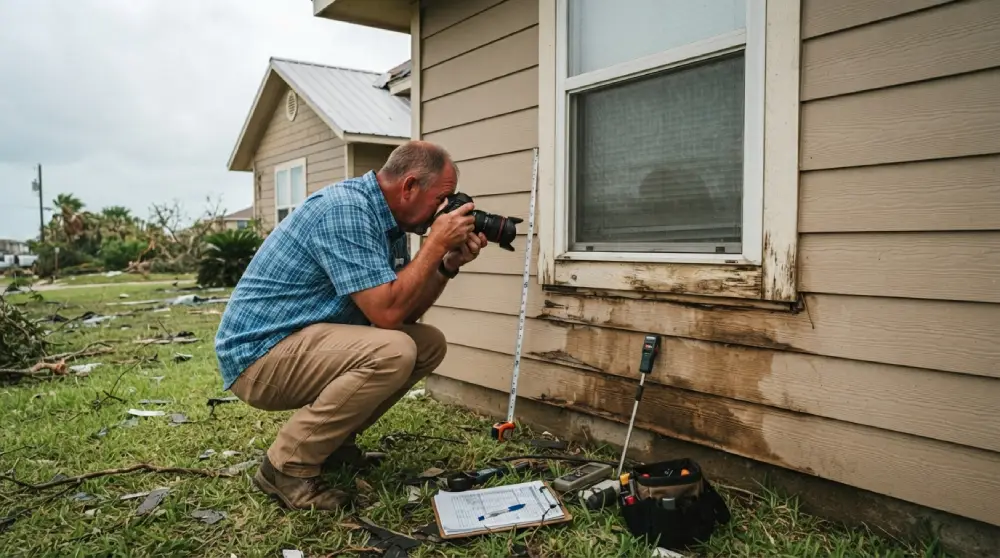
Hail can bruise shingles, fracture matting, dislodge granules, dent metal, damage coatings, and harm rooftop equipment. Some hail damage is difficult to see from ground level. A proper inspection should evaluate the entire roofing system and related exterior components rather than counting a few obvious impacts.
TX Public Adjusting can review hail claims involving homes, warehouses, offices, retail properties, multifamily buildings, marine-related facilities, and industrial structures.
Water Damage Claims
Water damage may come from wind-driven rain, plumbing failures, appliance leaks, roof openings, drain backups, or failed building components. The visible stain is often only the beginning. Moisture may travel through insulation, wall cavities, flooring layers, cabinetry, or electrical assemblies.
A complete water damage insurance claim should address both the source and the resulting damage. It may also need to account for reasonable access, removal, drying, testing, cleaning, replacement, and reconstruction when those items are covered.
Fire and Smoke Damage Claims
Fire losses may involve direct burning, smoke residue, soot, heat damage, water used during suppression, damaged contents, debris removal, and temporary living or business expenses.
Smoke can travel well beyond the room where a fire started. HVAC systems, porous finishes, furniture, electronics, inventory, and concealed spaces may require evaluation. A fire insurance adjuster working for the policyholder can help organize the structural, contents, smoke, and additional-expense portions of the loss.
Storm Damage Claims
Storm claims in Ingleside commonly combine wind, rain, debris impact, tree damage, electrical problems, and exterior damage. Documentation should be organized by building component and cause of loss.
For commercial properties, the scope may also include signage, fencing, rooftop equipment, loading areas, canopies, exterior lighting, inventory, and tenant improvements.
Roof Damage Claims
Roof claims are frequently under-scoped because the estimate addresses only the most obvious surface damage. A complete review may need to consider:
- Roofing materials
- Underlayment
- Decking
- Flashing
- Pipe boots
- Ridge and edge components
- Vents
- Gutters
- Skylights
- Code-related requirements
- Interior water damage
- Access and safety requirements
A public adjuster for a roof claim can compare the carrier’s scope with the damaged roofing system, related exterior components, interior water damage, and the work reasonably required to complete repairs. Repairability also matters. A small patch may not restore the roof to a reasonably uniform or functional condition, particularly when matching materials are unavailable or the system has interdependent components.
Commercial Property Claims
Our team handles commercial property claims involving marine, energy, fabrication, logistics, service, retail, multifamily, and industrial properties in Ingleside and surrounding Coastal Bend communities. Commercial claims may involve large roof areas, specialized equipment, business personal property, stock, machinery, tenant improvements, interrupted operations, and complex repair sequencing.
The former Naval Station Ingleside area, waterfront infrastructure, and industrial activity near Ingleside Point contribute to a property mix that differs from many inland Texas communities. Commercial claims in this environment may require coordination among contractors, engineers, accountants, equipment specialists, and other professionals.
Why Insurance Claims Become Underpaid
Many underpayments begin with overlooked damage, incomplete estimates, weak documentation, or avoidable communication problems. Property owners can review these common property insurance claim mistakes while preparing or evaluating a claim.
Damage Is Missed During the Initial Inspection
Carrier inspections may be brief, particularly after a large regional storm creates a high volume of claims. The adjuster may inspect the roof but overlook interior moisture, detached structures, fencing, mechanical systems, or less accessible elevations.
The Scope Omits Necessary Work
An estimate may include replacement material but omit labor steps needed to complete the repair. Common omissions include removal, disposal, access, protection, drying, preparation, painting, resetting fixtures, permit costs, or work required on adjoining materials.
Depreciation Is Misapplied
Depreciation may depend on the policy, age, condition, material, and whether the amount is recoverable after repairs. Property owners should understand what was withheld, why it was withheld, and what they must submit to recover any available amount.
Pricing Does Not Reflect the Actual Project
A carrier estimate may use pricing that does not match current labor availability, coastal construction conditions, material requirements, job complexity, or contractor estimates. A lower estimate does not necessarily mean the building can be restored for that amount.
Documentation Is Incomplete
Photos without labels, contractor bids without measurements, and receipts without explanations may not provide a clear claim narrative. Effective documentation connects the reported event, observed damage, required work, and claimed cost.
Cause of Loss Is Disputed
An insurer may argue that damage resulted from age, wear, improper installation, corrosion, repeated leakage, or flooding rather than a covered storm. The claim presentation should address causation with the strongest available facts and supporting documentation.
Our Public Adjusting Process
1. Claim and Policy Review
We begin by reviewing the reported loss, policy documents, carrier correspondence, estimates, payment letters, photographs, contractor proposals, and prior claim activity made available by the property owner.
This allows us to identify immediate concerns, important deadlines, coverage questions, and areas that require further inspection.
2. Property Inspection
We inspect the damaged property and document observable conditions. Depending on the claim, this may include roofing, exterior elevations, interior rooms, detached structures, equipment, commercial spaces, and damaged contents.
When specialized testing or professional opinions are appropriate, we discuss the available options with the client.
3. Damage Documentation
We organize photographs, measurements, notes, inventories, estimates, invoices, and supporting records into a claim package. The goal is to explain what was damaged, what work is needed, and how the requested amount was developed.
4. Claim Presentation and Negotiation
TX Public Adjusting communicates with the insurance carrier regarding the documented claim. We address estimate differences, scope omissions, requested information, and questions related to the loss.
Negotiation does not guarantee a particular outcome, but a detailed and well-supported claim gives the policyholder a stronger basis for requesting a fair evaluation.
5. Settlement Review
When the carrier issues an updated estimate or payment decision, we review it against the claim presentation. We explain remaining differences and discuss the next appropriate step based on the policy, documentation, and status of the claim.
Get a Free Review of Your Ingleside Insurance Claim
A low estimate can affect the entire repair process. Contractors may be unable to complete the documented work within the carrier’s scope, hidden moisture may remain untreated, or a commercial property may reopen before all damage has been addressed.
TX Public Adjusting reviews new, underpaid, delayed, denied, and previously closed claims. There are no upfront fees for the initial claim review.
Contact TX Public Adjusting to speak with a licensed Texas public adjuster serving Ingleside and the surrounding Coastal Bend.
Why Choose TX Public Adjusting?
Licensed Texas Representation
TX Public Adjusting is operated by Rise Public Adjusting LLC under Texas License #3356839. Our work focuses on Texas property claims and the weather conditions, building systems, and insurance disputes commonly encountered across the state.
We Represent Policyholders
Insurance company adjusters represent the carrier. TX Public Adjusting represents residential and commercial policyholders.
Our responsibility is to prepare and advocate for the insured’s property claim within the terms of the applicable policy.
Residential and Commercial Experience
Our team has experience reviewing thousands of property claims involving homes, multifamily properties, businesses, industrial buildings, roofing systems, water losses, fire damage, hail, wind, and other covered events.
Each claim is different. We do not promise a specific settlement amount, but we do provide detailed documentation and focused claim support.
Detailed Scope Reviews
We compare the visible damage and reasonable repair requirements with the insurer’s estimate. This process can reveal missing rooms, omitted materials, incomplete labor operations, overlooked code items, or differences in quantities and pricing.
No Upfront Fees
Property owners can request a free initial claim review. Our fee arrangement is explained before representation begins, so the client can make an informed decision.
Areas We Serve Near Ingleside
TX Public Adjusting assists property owners throughout Ingleside and nearby Coastal Bend communities, including:
- Ingleside on the Bay
- Aransas Pass
- Portland
- Gregory
- Rockport
- Fulton
- Port Aransas
- Taft
- Sinton
- Corpus Christi
- Bayside
- Odem
We serve residential and commercial properties throughout San Patricio County, Nueces County, Aransas County, and surrounding areas.
Local references may include Ingleside Cove, Old Ingleside, Ingleside Point, Live Oak Park, the historic waterfront, and properties along the routes connecting Ingleside with Aransas Pass and Portland. The community’s bayside setting and proximity to major marine and industrial operations make careful claim documentation especially important after coastal storms.
Frequently Asked Questions
What does a public adjuster in Ingleside do?
A public adjuster represents the policyholder during a property insurance claim. Our detailed guide to what a public adjuster does explains how policy review, property inspection, damage documentation, estimating, and carrier communication fit into the claim process.
TX Public Adjusting works for the insured property owner, not the insurance company.
When should I hire a public adjuster after an Ingleside storm?
You may hire a public adjuster soon after the loss, while the claim is being adjusted, or after receiving an estimate that appears incomplete. Early involvement can help preserve evidence and organize the claim before damaged materials are removed.
A claim may also be reviewed after it has been underpaid, denied, delayed, or closed, subject to policy terms and applicable deadlines. Our guide explains when it is too late to hire a public adjuster and why waiting can make evidence preservation more difficult.
Can you help if my hurricane claim has already been paid?
Possibly. A payment does not always mean every covered item was included. We can compare the carrier’s estimate with the documented damage and determine whether there are apparent omissions or unresolved differences.
The available options depend on the policy, dates, prior communications, repairs, and claim status.
Does homeowners insurance cover flooding in Ingleside?
Standard homeowners insurance typically treats surface flooding differently from wind or rain entering through storm-created damage. Separate flood coverage may apply to rising water, depending on the policy and facts.
Because coastal losses can involve multiple causes, the documents and physical evidence should be reviewed before assuming that all water damage falls into one category.
Can a public adjuster help with wind-driven rain?
Yes, when the circumstances and policy support the claim. Wind-driven rain may enter through damaged shingles, flashing, windows, doors, vents, wall systems, or other storm-created openings.
The claim should document the exterior damage, likely entry point, moisture pathway, and resulting interior loss.
What if the insurance company says my roof damage is only cosmetic?
The answer depends on the roofing material, policy language, and nature of the damage. Dents or impact marks may affect coatings, seams, drainage, corrosion resistance, warranties, or service life even when the roof has not begun leaking.
We review the carrier’s position and the available evidence to determine whether further documentation is warranted.
Do you handle commercial claims near the Ingleside waterfront?
Yes. TX Public Adjusting handles commercial and industrial property claims, including roof, wind, hail, water, fire, equipment, inventory, and business-related losses.
Claims involving specialized facilities may require additional documentation from contractors, engineers, accountants, or equipment professionals.
Can I hire a public adjuster after my claim was denied?
A denied claim may still be reviewed. The denial letter, policy provisions, reported cause of loss, inspection findings, and supporting evidence should be examined carefully.
A public adjuster cannot guarantee that a denial will be reversed, but we can identify documentation issues, estimate differences, and claim questions that may need to be addressed.
How much does a public adjuster cost in Ingleside?
Public adjusters generally work under a written fee agreement tied to the insurance recovery, subject to Texas requirements. The fee structure should be disclosed and understood before the client signs a contract.
TX Public Adjusting offers a free initial claim review and does not charge an upfront fee for that review.
How long does an Ingleside property claim take?
The timeline depends on the severity of the loss, the insurer’s response, inspections, document requests, coverage questions, contractor input, and whether the parties disagree about scope or price. Property owners waiting for an initial carrier response can also review how Texas requirements may affect how long an insurance adjuster has to contact you.
A straightforward roof claim may move more quickly than a hurricane, fire, industrial, or business-interruption claim involving multiple experts and extensive documentation.
Speak With a Public Adjuster Serving Ingleside
Your insurance claim should reflect the documented damage—not just the items noticed during a brief inspection.
TX Public Adjusting helps Ingleside homeowners, landlords, business owners, property managers, and commercial operators prepare and negotiate property insurance claims. We handle hurricane, wind, hail, roof, water, fire, storm, and commercial property losses throughout the Coastal Bend.
Request a free claim review today. There are no upfront fees for the initial review. Contact TX Public Adjusting to speak with a licensed Texas public adjuster from Rise Public Adjusting LLC, Texas License #3356839.