

Property damage in Pleasanton can turn into a complicated insurance claim faster than many owners expect. A severe thunderstorm may damage roofing across Oak Ridge, wind-driven rain may enter a commercial building near US Highway 281, or a plumbing failure may affect several rooms before anyone discovers it. When the insurer’s estimate leaves out necessary repairs, TX Public Adjusting provides professional insurance claim help for Pleasanton homeowners, landlords, business owners, and commercial property managers. As a licensed Texas public adjuster, we represent the policyholder rather than the insurance company.
TX Public Adjusting is operated by Rise Public Adjusting LLC, Texas License #3356839. As a licensed public adjuster serving Pleasanton, we represent policyholders—not insurance companies. We review the loss, inspect the property, document covered damage, prepare a detailed claim scope, and negotiate with the carrier based on the policy and the evidence.
Request a Free Claim Review. There are no upfront fees. If your Pleasanton property claim was delayed, denied, underpaid, or never properly documented, contact TX Public Adjusting before accepting the insurance company’s position as final.
Insurance Claim Help for Pleasanton Property Owners
Pleasanton is the largest community in Atascosa County and sits south of San Antonio in South Central Texas. The city includes established neighborhoods, rural-edge properties, newer subdivisions, retail corridors, churches, offices, agricultural buildings, and oilfield-related commercial facilities. These properties do not all experience loss in the same way.
A hailstorm may bruise an asphalt roof in Oak Forest without producing an immediate leak. Strong wind may lift metal panels from a workshop outside the city center. Heavy rain may expose flashing defects or force water through a storm-created opening. A kitchen fire may damage far more than the room where the flames started because smoke, soot, heat, and suppression water can travel throughout the structure.
Pleasanton and Atascosa County are exposed to hazards that include flooding, tornadoes, fires, winter storms, severe wind, and hail. Local hazard-planning documents specifically identify several of these risks, while current climate-risk data also classifies the area’s severe-wind exposure as significant.
The insurance claim must therefore account for the complete loss—not simply the damage visible from the driveway.
When Hiring a Public Adjuster May Make Sense
Pleasanton property owners commonly call us when:
- The insurance estimate appears too low for the required repairs.
- The carrier’s scope leaves out rooms, elevations, roofing components, or building systems.
- The adjuster attributes storm damage to age, wear, maintenance, or prior conditions.
- The claim includes several types of damage, contractors, or coverage categories.
- The property owner does not have time to manage repeated inspections and document requests.
- A commercial loss interrupts operations or creates tenant-related issues.
- The carrier has delayed payment or requested the same information more than once.
- A claim was denied even though physical evidence supports a covered event.
- Repairs have revealed additional damage that was not included in the original estimate.
- The owner needs help determining whether a supplemental claim should be prepared.
A public adjuster does not replace a contractor, engineer, attorney, or mitigation company. Our role is to represent the policyholder during the property insurance claim and present the damage in a complete, organized, well-supported manner.
Why Property Owners Hire a Public Adjuster in Pleasanton
The insurance company assigns an adjuster to investigate the claim on its behalf. That adjuster may be professional and courteous, but the carrier’s representative does not work for the policyholder. A public adjuster works on the other side of the claim equation.
For a Pleasanton homeowner or business owner, that distinction matters. Insurance policies contain conditions, deductibles, exclusions, endorsements, depreciation provisions, valuation terms, and deadlines. A damage estimate may look detailed while still omitting important work.
For example, a roof estimate might include shingles but omit damaged vents, flashing, gutters, underlayment, decking evaluation, steep-slope charges, access considerations, interior staining, or code-related items. A water estimate may include drywall replacement but overlook insulation, cabinetry, flooring transitions, moisture testing, contents manipulation, antimicrobial treatment, or the labor necessary to reach damaged materials.
TX Public Adjusting examines both the physical loss and the carrier’s handling of the claim. Our objective is to identify documented damage that should be addressed under the policy and present it clearly to the insurer.
Local Property Conditions Affect Claim Scope
Pleasanton includes a mix of older homes, newer planned communities, ranch-style properties, metal buildings, retail structures, churches, apartments, and light-industrial facilities. Neighborhoods and subdivisions in and around the city include Oak Ridge, Oak Forest, Jamestown, Deer Run, Arrowhead, Chaparral, City View Estates, Country Trails, Encino Village, Bonita Vista, and Pleasanton Meadows.
That variety can create very different claim requirements:
- Older homes may contain discontinued materials or layered repairs.
- Newer subdivisions may experience widespread roof and exterior damage from the same storm.
- Rural properties may include detached garages, fences, barns, shops, gates, and other scheduled structures.
- Commercial properties may have metal roofing, flat roofing, rooftop equipment, signage, inventory, and business-income concerns.
- Rental properties may involve tenant access, habitability questions, temporary repairs, and lost-rent documentation.
A useful claim scope must match the actual property. It should not be a generic estimate based solely on visible surface damage.
Common Insurance Claims in Pleasanton
Hail Damage Claims
Hail can damage asphalt shingles, metal roofing, tile, gutters, downspouts, window screens, siding, vents, skylights, fencing, exterior equipment, and commercial rooftop systems. Some hail damage is obvious. Other damage appears as bruising, fractured shingle mats, displaced granules, coating fractures, dents, chipped surfaces, or weakened components that may fail later.
South Central Texas thunderstorms can produce large hail and damaging wind. Recent regional forecasts have specifically included Pleasanton among communities exposed to severe-storm threats involving hail and strong gusts.
Texas insurance guidance recommends filing promptly after hail or wind damage and checking whether the policy includes applicable wind and hail coverage.
A Pleasanton hail claim may become underpaid when the carrier:
- Inspects only a small test area.
- Attributes impact marks to normal wear.
- Pays for spot repair where matching materials are unavailable.
- Includes roofing but overlooks collateral exterior damage.
- Applies depreciation without clearly explaining its calculation.
- Excludes interior water intrusion connected to storm-created openings.
- Fails to evaluate detached structures or commercial equipment.
We inspect the accessible damage, compare it with the reported date of loss, review the carrier’s estimate, and document related components that may have been missed. Our hail damage insurance claim guide explains how Texas property owners can identify potential scope problems and prepare for the claim process.
Wind and Storm Damage Claims
Straight-line wind can lift shingles, crease tabs, detach flashing, damage fascia and soffits, loosen metal panels, break fencing, topple trees, and force rain through openings. A brief storm can affect multiple elevations even when the roof looks mostly intact from ground level.
Pleasanton’s inland location means hurricane landfall is not the city’s only wind concern. Remnants of tropical systems, squall lines, severe thunderstorms, downbursts, and tornado-producing storms can all create damaging conditions. Atascosa County is not exposed to coastal flooding, but the county remains subject to inland storm, wind, and rainfall hazards.
A storm claim should connect the exterior damage, interior effects, emergency repairs, debris removal, and related costs into one coherent loss presentation. Property owners dealing with damage from a tropical system or major inland wind event can also review our Texas hurricane property damage guide for information about roofing, water intrusion, debris, windows, utilities, and interior damage.
Roof Damage Claims
Roof claims are among the most disputed property claims in Pleasanton. A public adjuster for a roof claim can review whether the carrier’s inspection and estimate account for all covered roofing, exterior, and interior damage. The disagreement is often not about whether a mark exists. It is about what caused it, whether repair is feasible, which components are affected, and how much work is required to return the property to its pre-loss condition.
We assist with claims involving:
- Asphalt shingle roofs
- Standing-seam and exposed-fastener metal roofs
- Tile roofing
- Modified bitumen and other low-slope systems
- Commercial membrane roofing
- Flashing and penetration damage
- Gutters, vents, fascia, soffits, and related exterior components
- Interior water damage connected to a covered roof loss
The age of a roof may influence valuation or depreciation, but age alone does not establish the cause of every observed condition. The physical evidence and policy language still matter.
Water Damage Claims
Water damage can result from burst pipes, supply-line failures, appliance leaks, plumbing backups, roof openings, air-conditioning drainage issues, or water released during firefighting. Water may travel behind walls, beneath cabinets, under flooring, through insulation, and between levels. A water damage public adjuster can help review whether the claim includes drying, demolition, access, damaged finishes, contents manipulation, and complete reconstruction costs.
A small visible stain can represent a larger moisture problem. The claim may require drying records, moisture maps, demolition details, plumbing documentation, photographs, invoices, and a repair scope that accounts for access and reconstruction.
Standard homeowners policies often treat floodwater differently from sudden interior water losses. Flooding is commonly excluded from standard policies unless separate coverage applies, while certain sudden and accidental water events may be covered subject to the specific policy.
We do not assume coverage. We review the policy, facts, cause of loss, and available evidence before presenting the claim.
Fire and Smoke Damage Claims
A fire loss can affect structural framing, roofing, electrical systems, HVAC components, insulation, walls, flooring, appliances, furnishings, and personal property. Smoke and soot may enter rooms that were never touched by flames. A fire insurance adjuster working for the policyholder can evaluate structural damage, smoke migration, soot contamination, contents, cleaning requirements, and water used during suppression. Firefighting water and emergency access can create additional damage.
Pleasanton fire claims may involve:
- Kitchen and appliance fires
- Electrical fires
- Garage or workshop fires
- Wildland or grass-fire exposure
- Commercial equipment fires
- Smoke contamination
- Soot deposition
- Water used during suppression
- Debris removal
- Temporary housing or operational disruption
A complete fire claim requires more than a repair estimate for burned materials. It may require contents documentation, cleaning protocols, testing, demolition decisions, temporary protection, and evaluation of hidden heat or smoke effects.
Commercial Property Claims
Pleasanton serves as an important commercial center for Atascosa County. Our commercial property claims services help business owners and property managers document building, inventory, equipment, tenant-improvement, and operational losses. Businesses along major traffic corridors and around the city may include retailers, restaurants, medical offices, storage facilities, churches, multifamily properties, agricultural operations, service businesses, and companies supporting the energy sector.
Commercial claims can become complicated because the loss may affect both the building and the operation inside it. Depending on the policy and circumstances, the claim may involve:
- Building damage
- Business personal property
- Inventory
- Machinery or equipment
- Tenant improvements
- Signage
- Debris removal
- Extra expense
- Business interruption
- Lost rental income
- Code-related repair requirements
- Multiple insured locations
We help Pleasanton commercial policyholders organize the building-damage portion of the claim and coordinate documentation relevant to covered business losses.
Concerned that your estimate is incomplete? Request a Free Claim Review from TX Public Adjusting before signing a release, closing the claim, or beginning major permanent repairs.
Why Pleasanton Insurance Claims Become Underpaid
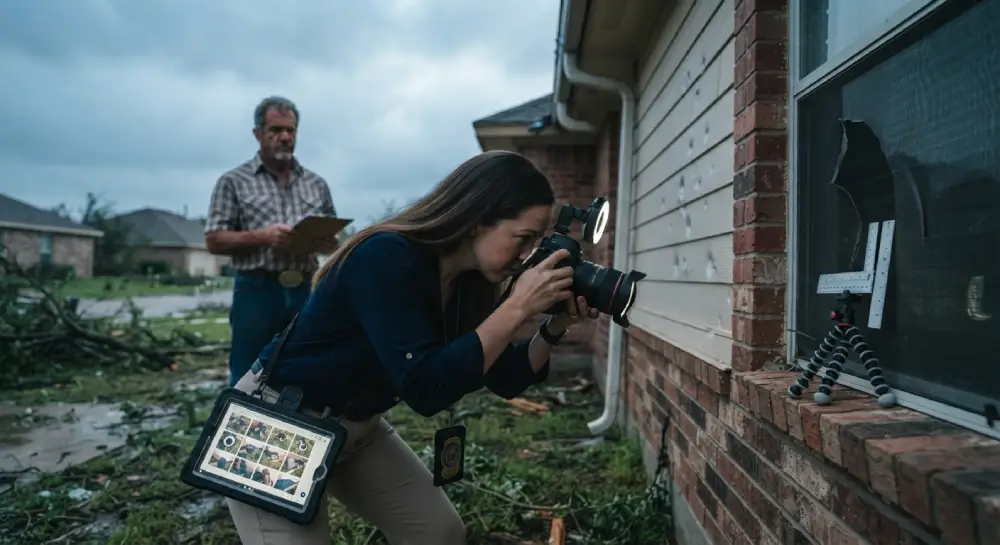
An underpaid claim does not always begin with an obvious denial. It often begins with a narrow inspection or an incomplete scope. Reviewing the most common property insurance claim mistakes can help owners avoid weak documentation, premature repairs, missed deadlines, and acceptance of an incomplete estimate.
Missed or Hidden Damage
The first inspection may occur before moisture becomes visible, before roofing materials are safely accessible, or before contractors uncover concealed damage. Carriers may base payment on what was visible during a brief visit.
Scope Omissions
An estimate can contain dozens of line items and still miss essential work. Common omissions include access labor, debris handling, contents manipulation, matching concerns, adjacent finishes, flashing, insulation, cabinetry, detached structures, equipment, and necessary preparatory work.
Depreciation Problems
Depreciation affects many replacement-cost claims. Problems arise when the amount is unclear, applied inconsistently, or withheld without adequate explanation. Some depreciation may be recoverable after repairs, depending on the policy and compliance with its conditions.
Low Repair Pricing
Carrier estimates may use quantities, labor assumptions, material prices, or repair methods that do not reflect the actual work required. Contractor bids can differ from insurer estimates for legitimate reasons, particularly when the carrier’s scope is incomplete.
Documentation Gaps
Insurance companies decide claims from the records in the file. Missing photographs, incomplete inventories, unclear invoices, absent moisture documentation, or poor communication can weaken an otherwise valid claim.
Cause-of-Loss Disputes
The carrier may classify damage as wear and tear, deterioration, faulty installation, maintenance, or pre-existing damage. A careful inspection and timeline can help separate long-term conditions from damage associated with the reported event.
Our Public Adjusting Process
1. Claim Review
We begin by learning what happened and reviewing the available documents. These may include the insurance policy, declarations, endorsements, carrier estimate, payment letters, denial correspondence, photographs, contractor bids, invoices, and prior communications.
We look for coverage questions, missing information, valuation issues, deadlines, and differences between the observed loss and the insurance company’s scope.
2. Property Inspection
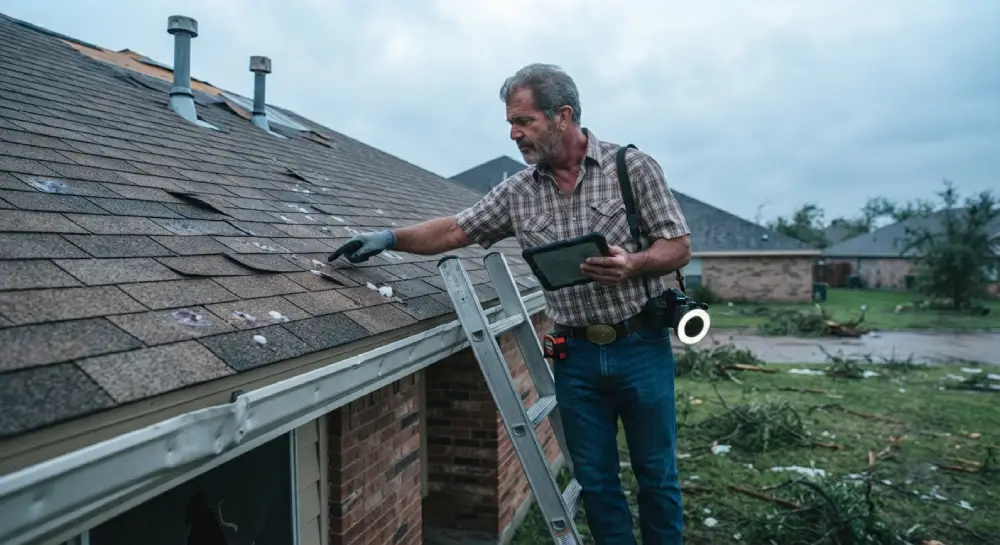
We inspect accessible areas of the Pleasanton property and document visible damage. The inspection may include roofing, exterior elevations, interior rooms, detached structures, commercial spaces, and affected building components.
The specific inspection depends on the type of loss and safe access. Specialized professionals may be needed when engineering, environmental, electrical, plumbing, roofing, or other technical questions arise.
3. Damage Documentation
We organize photographs, measurements, notes, repair information, inventories, and supporting records. A well-prepared claim presentation should allow the carrier to understand what was damaged, where it was located, how it relates to the loss, and what work is being requested.
4. Scope and Estimate Review
We compare the carrier’s estimate against the documented property conditions. When appropriate, we prepare or coordinate a detailed scope that addresses missing quantities, components, rooms, trades, and repair steps.
5. Claim Presentation and Negotiation
We communicate with the insurance company, answer claim-related questions, submit documentation, address scope differences, and negotiate based on the policy and evidence.
We cannot guarantee a particular settlement or timeline. Every claim depends on its facts, coverage, documentation, carrier response, and dispute history. Our responsibility is to advocate for the policyholder and present the claim as thoroughly as possible.
6. Settlement Review
When the carrier issues a revised estimate, coverage decision, or payment, we review it with the property owner. We explain remaining differences and discuss available next steps within the public-adjusting process.
Why Choose TX Public Adjusting
Licensed Texas Representation
TX Public Adjusting is operated by Rise Public Adjusting LLC, Texas License #3356839. We provide public adjusting services for Texas policyholders and understand the types of property losses common across the state.
We Work for Policyholders
Insurance-company adjusters work for the carrier. Public adjusters represent insured property owners. Understanding the difference between a public adjuster vs. independent adjuster can help property owners identify who each professional represents during the claim. Our obligation is to the policyholder we have been retained to assist.
Residential and Commercial Experience
Our experience includes the review of thousands of residential and commercial claim files involving hail, wind, water, fire, smoke, roofing, and large property losses. We understand that a family home, apartment property, retail operation, church, warehouse, and industrial building each require a different approach.
Detailed Claim Documentation
Strong claims depend on organized evidence. We focus on damage documentation, scope completeness, estimate review, policy-related issues, and clear communication with the insurer.
Independent Claim Analysis
We are not hired by the insurance carrier, and we do not base our inspection solely on the company adjuster’s conclusions. We independently evaluate the property and claim materials from the policyholder’s perspective.
No Upfront Fees
Pleasanton property owners can request a free initial claim review. Public adjusting services are typically provided on a contingency basis under a written agreement, so there are no upfront fees. Applicable terms are explained before engagement.
Areas We Serve Near Pleasanton
TX Public Adjusting assists property owners throughout Pleasanton and surrounding Atascosa County communities, including:
- Jourdanton
- Poteet
- Charlotte
- Lytle
- Leming
- Christine
- Campbellton
- Amphion
- McCoy
- Rossville
- North Pleasanton
- Rural areas surrounding State Highway 97 and US Highway 281
We also serve policyholders throughout South Central Texas and across the state.
Pleasanton’s proximity to Jourdanton and its position along important regional routes make it a hub for residents, businesses, and rural property owners. Local points of reference include the Atascosa River, Pleasanton River Park, Pleasanton Country Club, and the city’s commercial corridors. Pleasanton River Park is a prominent community recreation area with riverside amenities, trails, and outdoor facilities.
Frequently Asked Questions
What does a public adjuster do for a Pleasanton property owner?
A public adjuster represents the policyholder during a property insurance claim. We review the policy and carrier documents, inspect the loss, identify missing damage, prepare supporting documentation, communicate with the insurer, and negotiate disputed scope or valuation issues.
The insurance company’s adjuster represents the carrier. TX Public Adjusting represents the Pleasanton homeowner, landlord, business owner, or property manager who hires us.
How much does a public adjuster cost in Pleasanton?
Public adjusters generally charge a percentage of the insurance recovery under a written contingency-fee agreement. The exact fee and services should be explained before the agreement is signed.
TX Public Adjusting offers a free claim review and does not charge upfront fees. The engagement terms depend on the claim and are presented clearly before representation begins.
Can I hire a public adjuster after my insurance company has already inspected the property?
Yes. Many Pleasanton property owners contact a public adjuster after the carrier has inspected the loss or issued an initial estimate.
The earlier we review the claim, the more opportunity there may be to preserve evidence and address missing information. However, we may also assist with open claims that have already received an estimate, payment, delay notice, or denial.
Can a public adjuster help with an underpaid roof claim?
Yes. We can review the carrier’s roof estimate, inspect accessible damage, examine omitted components, evaluate related exterior and interior damage, and present documented scope differences.
A low roof estimate may result from missed hail impacts, limited test areas, repair assumptions, omitted flashing or accessories, depreciation, or failure to include connected water damage.
What should I do after hail or wind damage in Pleasanton?
Protect people first and avoid climbing onto a damaged roof. Photograph visible conditions from safe locations, prevent additional damage when possible, keep emergency-repair receipts, and report the loss according to the policy.
Do not discard damaged materials before documenting them. It is also wise to review the insurer’s estimate carefully before assuming every affected component has been included.
Can you help if my Pleasanton claim was denied?
We can review the denial letter, policy provisions, inspection findings, photographs, estimates, and other available evidence. Some denials are based on exclusions or conditions that may apply. Others may involve disputed facts, incomplete documentation, or an incorrect cause-of-loss conclusion.
A claim review does not guarantee that a denial can be reversed, but it can clarify the carrier’s reasoning and whether additional evidence should be presented.
Does homeowners insurance cover flood damage in Pleasanton?
Standard homeowners insurance generally does not cover rising surface water or flooding. Separate flood insurance may be required for that exposure. However, storm-created openings, sudden plumbing failures, and other water events may be treated differently depending on the policy.
Because “water damage” can describe several causes, coverage should never be assumed from the visible result alone. The source of the water and the policy language are critical.
Do you handle commercial insurance claims in Pleasanton?
Yes. TX Public Adjusting handles residential and commercial property claims. We assist owners and managers of retail buildings, offices, restaurants, churches, multifamily properties, warehouses, workshops, agricultural facilities, and other commercial structures.
Commercial claims may involve building damage, equipment, inventory, tenant improvements, extra expense, rental income, or business interruption. Coverage varies, so the policy and financial documentation must be reviewed carefully.
How long does a Pleasanton insurance claim take?
There is no single timeline. A straightforward claim with clear coverage and complete documentation may move faster than a large loss involving several trades, disputed causation, engineering questions, inventories, or business-income calculations.
Carrier response times, inspection scheduling, document requests, supplemental estimates, and policy conditions can all affect the process. Our guide explaining how long an insurance adjuster has to contact you provides additional information about communication delays and possible next steps.
Is it too late to hire a public adjuster after receiving payment?
Not necessarily. An initial insurance payment does not always mean the claim is complete. Some policies and claims allow additional documentation or supplemental requests when covered damage was omitted.
Deadlines, proof-of-loss requirements, suit limitations, repair conditions, and claim status can affect available options. The safest approach is to request a review promptly rather than assume more time is available. Read more about when it is too late to hire a public adjuster and the deadlines or claim conditions that may affect your options.
Get a Free Pleasanton Insurance Claim Review
A damaged property is stressful enough without having to determine whether every roofing component, interior finish, detached structure, inventory item, and repair step was included in the insurance estimate.
TX Public Adjusting helps Pleasanton policyholders understand the claim, identify documented omissions, and communicate with the carrier from a stronger position.
Contact TX Public Adjusting for a Free Claim Review.
- Licensed Texas Public Adjuster
- Rise Public Adjusting LLC
- Texas License #3356839
- Residential and Commercial Claims
- No Upfront Fees
- Independent Policyholder Representation
Do not accept an underpaid estimate simply because it looks detailed. Let us review the damage, documentation, and insurance scope before the claim is closed.