

Property damage in Humble can turn into an insurance dispute faster than many owners expect. A Gulf Coast thunderstorm may lift shingles, drive rain through flashing, damage fencing, or send water into a commercial building. A tropical system can create several causes of loss at once. Even a broken supply line can affect flooring, cabinets, drywall, insulation, and electrical components across multiple rooms.
TX Public Adjusting provides insurance claim help in Humble for residential and commercial property owners who need an experienced advocate on their side. We inspect the damage, review the policy and carrier estimate, prepare supporting documentation, and negotiate the claim from the policyholder’s perspective.
TX Public Adjusting is operated by Rise Public Adjusting LLC, Texas License #3356839. We are independent of the insurance company and work for the property owner.
Need help with a new, denied, delayed, or underpaid claim? Contact TX Public Adjusting for a free claim review. There are no upfront fees.
Why Property Owners Hire a Public Adjuster in Humble
Humble sits in northeastern Harris County, close to Houston, Lake Houston, Bush Intercontinental Airport, and several fast-growing residential and commercial communities. The area’s location creates a distinct mix of property risks.
Humble properties can be affected by:
- Tropical storms and hurricanes moving inland from the Gulf
- Wind-driven rain that enters through roofs, walls, windows, and doors
- Flash flooding and drainage backups during intense rainfall
- Hail and straight-line wind from severe thunderstorms
- Falling trees and flying debris
- Plumbing leaks and appliance failures
- Fire, smoke, and electrical damage
- Business interruption after a covered commercial loss
Flood exposure is particularly relevant in the Houston–Humble region. Risk does not stop at the edge of a mapped high-risk flood zone, and deep flooding from major events may affect many properties at once.
A public adjuster can be valuable when the carrier’s estimate does not reflect the full extent of damage, the claim involves several trades, or the insurer disputes which parts of the loss are covered. Property owners who are unfamiliar with the role can learn more about what a public adjuster does during a Texas property insurance claim.
A Public Adjuster Represents the Policyholder
The insurance company’s adjuster evaluates the claim for the carrier. A public adjuster has a different role. Understanding the difference between a public adjuster vs. insurance company adjuster can help Humble property owners decide whose interests each professional represents.
We represent you.
That distinction matters when the loss involves hidden moisture, disputed roof damage, code-related work, damaged contents, business income, or repair items omitted from the initial estimate. Our job is to develop and present the policyholder’s claim, not protect the insurer’s financial interests.
When It May Be Time to Call
Humble property owners often contact TX Public Adjusting when:
- The carrier’s estimate appears too low
- A roof claim has been partially denied
- Interior water damage was treated as cosmetic
- The insurer says old damage caused the loss
- The claim has stalled
- Important rooms, materials, or trades are missing from the estimate
- Depreciation was applied incorrectly
- A commercial claim is interfering with normal operations
- The owner does not have time to manage inspections, estimates, and claim communications
Even after an inspection or initial payment, it may not be too late to hire a public adjuster. The answer depends on the claim status, policy deadlines, available evidence, and whether repairs have already begun. A free claim review can help identify whether meaningful damage or coverage issues have been overlooked.
Property Claim Risks Specific to Humble
Humble is part of the Greater Houston region, but its claim patterns are shaped by local drainage, dense tree cover, suburban growth, nearby waterways, and exposure to Gulf Coast weather.
Hurricanes and Tropical Storms
Tropical systems can remain destructive after moving inland. Humble may experience high winds, prolonged rainfall, wind-driven water, falling limbs, power interruptions, and damage from debris.
These claims are rarely limited to one visibly damaged roof section. A serious tropical-storm claim may involve:
- Roofing materials
- Roof decking
- Flashing and roof penetrations
- Gutters and downspouts
- Siding and exterior finishes
- Windows and doors
- Attic insulation
- Interior ceilings and walls
- Flooring
- Electrical systems
- Fencing and detached structures
- Commercial signs and rooftop equipment
Coverage questions can become complicated when wind and flood contribute to the same event. Our guide to hurricane property damage explains how roof, interior, structural, equipment, and water-related losses can overlap after a major storm. Standard property policies and separate flood policies may respond differently, which makes early documentation especially important.
Heavy Rain and Flood-Related Damage
Humble property owners know that a storm does not need to be a named hurricane to cause serious water damage. Slow-moving thunderstorms can produce intense rainfall and localized street flooding across Harris County and surrounding communities. Recent Houston-area advisories have included Harris County during periods of rainfall capable of producing localized flooding.
Water claims may involve two very different sources:
- Water entering because wind damaged a covered part of the structure.
- Rising surface water entering from outside the building.
The distinction may affect which policy applies. Owners should photograph water lines, entry points, exterior conditions, roof damage, damaged contents, and affected building materials before cleanup changes the scene.
The Texas Department of Insurance advises owners to photograph or record damage as soon as it is safe and to avoid discarding damaged property before speaking with an adjuster.
Severe Thunderstorms, Hail, and Straight-Line Wind
Humble is also exposed to severe convective storms. These systems may produce hail, strong wind, lightning, and isolated tornado activity. Wind can crease shingles, loosen edge metal, damage ridge caps, displace flashing, and break seals without leaving a dramatic opening in the roof.
Hail damage can be equally difficult to evaluate. Depending on the roofing material, hail may cause:
- Granule displacement
- Bruising or fractures
- Cracked tile
- Dents in metal roofing
- Damage to vents, flashing, gutters, and HVAC equipment
- Soft-metal impacts that help establish storm direction
- Water intrusion that appears later
A quick visual review from the ground is not enough to determine the complete scope of a hail or wind claim.
Falling Trees and Debris
Mature trees are common around Humble, Kingwood, Atascocita, and the Lake Houston area. Saturated soil and high winds can cause limbs or entire trees to fall onto roofs, garages, fences, vehicles, and utility connections.
The visible impact point may only be part of the loss. Structural movement, damaged rafters, decking separation, electrical damage, moisture intrusion, and interior cracking may also require investigation.
Freeze and Plumbing Losses
Although Humble is known for heat and humidity, winter freezes can create expensive claims. Frozen pipes, cracked exterior lines, failed plumbing connections, and damaged fire-suppression systems may release large volumes of water after temperatures rise.
Water can travel behind cabinets, under flooring, through wall cavities, and between floors. If the carrier estimates only the visible drywall or flooring, the scope may not include access, removal, drying, antimicrobial treatment, insulation, trim, cabinetry, electrical work, or matching materials.
Common Insurance Claims in Humble
Hail Damage Claims
Hail claims frequently become underpaid when damage is described as normal wear, blistering, installation defects, or cosmetic impact. The issue is not just whether hail fell near the property. A properly prepared hail damage insurance claim should connect documented storm evidence to the roofing system, exterior components, and any resulting interior damage. The inspection should connect storm evidence to the affected roofing system and related exterior components.
TX Public Adjusting reviews the roof, soft metals, elevations, gutters, vents, fencing, HVAC equipment, and interior signs of water intrusion. We also compare the observed damage with the carrier’s estimate and coverage position.
Water Damage Claims
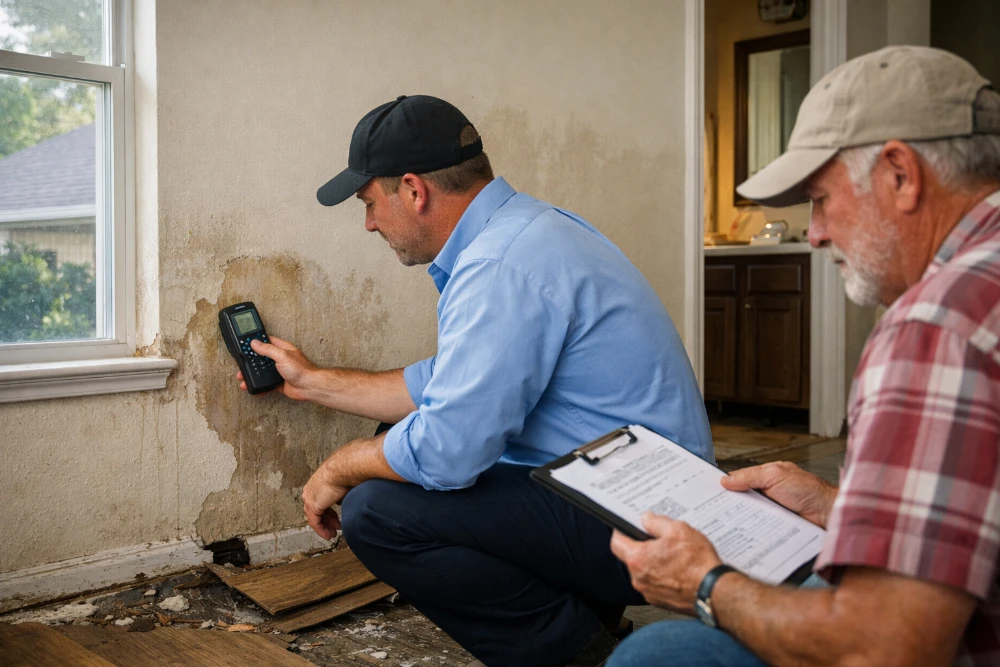
Water losses can begin with a failed appliance line, overflowing plumbing fixture, broken pipe, roof opening, HVAC drain, or fire-suppression system. Property owners dealing with a water damage insurance claim should document the source, affected materials, mitigation work, and the path the water traveled through the building.
A complete water claim may require documentation of:
- The source and path of water
- Moisture readings
- Emergency mitigation
- Demolition needed to reach wet materials
- Drying equipment and monitoring
- Damaged flooring, trim, cabinets, and finishes
- Personal property
- Potential microbial growth
- Matching and continuity issues
The carrier’s first estimate may be prepared before the full extent of moisture migration is known. That is one reason water claims often require supplements.
Fire and Smoke Damage Claims
A fire claim is not limited to what burned. A fire insurance adjuster can evaluate structural damage, smoke contamination, contents, cleanup costs, and other parts of the loss that may extend beyond the immediate burn area. Smoke, soot, heat, water from suppression efforts, and firefighting access can affect areas far from the point of origin.
The claim may include:
- Structural repairs
- Smoke and soot cleaning
- Odor treatment
- Electrical evaluation
- HVAC cleaning or replacement
- Debris removal
- Contents inventory
- Temporary relocation
- Code-related repairs
- Business interruption
Significant losses may also involve house fire debris removal, including demolition, hauling, disposal, cleaning, and site preparation. commercialSmoke residue behaves differently depending on what burned, how hot the fire became, and how air moved through the property. A superficial cleaning allowance may not be enough to restore the building safely and consistently.
Storm and Wind Damage Claims
Windstorm claims often involve disagreement over causation. The carrier may attribute damage to age, maintenance, workmanship, or long-term deterioration. The property owner may see leaks that appeared immediately after a storm.
A detailed inspection can help separate pre-existing conditions from storm-created damage. It can also identify related work that may be necessary to complete a proper repair.
Roof Damage Claims
Roof claims are among the most frequently disputed property claims in Humble. Common issues include:
- Partial repair versus full replacement
- Repairability of aged or brittle materials
- Matching discontinued shingles or tiles
- Damage to underlayment and decking
- Flashing and ventilation requirements
- Code upgrades
- Interior water damage
- Contractor overhead and profit
- Steep or high-roof charges
- Access and safety requirements
The roof is a system. An estimate that counts only individual damaged shingles may not account for the work needed to restore that system.
Commercial Property Claims
Humble has a varied commercial environment that includes properties near FM 1960, Interstate 69, Deerbrook Mall, Humble Civic Center, Old Town Humble, and the airport corridor.
We assist with claims involving:
- Retail centers
- Restaurants
- Office buildings
- Warehouses
- Churches
- Medical offices
- Apartment and multifamily properties
- Hospitality properties
- Industrial facilities
- Self-storage properties
Commercial claims often require more than a repair estimate. Equipment damage, inventory, tenant improvements, lost income, extra expense, debris removal, and operational interruptions may all need to be documented.
Claim Concerns Across Humble-Area Neighborhoods
Every property must be evaluated individually, but construction type, drainage, tree cover, roof design, and property use can influence the way a loss develops.
Old Town Humble and Central Humble
Older buildings near Old Town Humble may contain multiple generations of roofing, electrical, plumbing, and interior materials. A loss can reveal pre-existing modifications that complicate repair planning.
Commercial properties may also face access restrictions, tenant concerns, signage damage, and lost revenue while repairs are underway.
Atascocita
Atascocita contains large residential communities, retail corridors, schools, churches, and commercial properties. Severe storms can create a high volume of roof and exterior claims across the area.
Properties with complex rooflines may have numerous valleys, penetrations, transitions, and flashing points where wind-driven rain can enter.
Kingwood
Kingwood’s dense tree canopy and proximity to waterways create a distinct combination of wind, falling-tree, drainage, and water-loss concerns. Homes may sustain roof impacts, broken fencing, window damage, and interior water intrusion during the same event.
Owners should document exterior and interior damage before emergency work removes storm evidence.
Fall Creek and the Airport Corridor
Properties in and around Fall Creek and the Bush Intercontinental Airport corridor include newer homes, multifamily buildings, hotels, warehouses, and service businesses.
Commercial roof systems in this area may include modified bitumen, TPO, metal, built-up roofing, or combinations of systems. Older commercial buildings with layered roofing systems may require a more detailed built-up roof repair assessment before the full repair scope can be determined. Damage to membrane seams, edge metal, rooftop units, and drainage components can be missed during a brief inspection.
Eagle Springs, Walden on Lake Houston, and Lake Houston Communities
Master-planned communities around Lake Houston often contain large homes with multiple roof slopes, decorative elevations, outdoor structures, and upgraded interior finishes.
A storm claim may include roofing, gutters, screens, fencing, garage doors, exterior lighting, detached structures, and interior finish damage. Material matching can become a major issue when original products are no longer available.
Why Humble Insurance Claims Become Underpaid
A low claim payment does not always mean one major item was denied. Many common property insurance claim mistakes involve incomplete documentation, missed deadlines, premature repairs, or accepting an estimate before the full scope is known. More often, many smaller omissions reduce the estimate.
Missed or Hidden Damage
The initial inspection may not include attic areas, roof test squares, moisture mapping, rooftop equipment, all exterior elevations, or every affected room.
Damage concealed behind walls, under flooring, or beneath roofing materials may become visible only after mitigation or repair work begins.
Scope Omissions
An estimate may include replacement materials but omit necessary labor and associated work.
Common omissions include:
- Detaching and resetting fixtures
- Moving and protecting contents
- Debris handling
- Access work
- Drywall texture
- Painting adjacent surfaces
- Flooring transitions
- Cabinet removal and resetting
- Permit costs
- Roofing accessories
- Contractor overhead and profit
- Cleaning after construction
Each omission may appear minor. Together, they can create a substantial gap between the insurance estimate and the real cost of restoration.
Low Measurements or Pricing
Incorrect roof measurements, room dimensions, waste factors, labor assumptions, or material prices can distort the claim value.
Commercial buildings are especially vulnerable to measurement errors because roof areas, parapets, mechanical units, drainage systems, and multiple finish types increase estimating complexity.
Depreciation Problems
Depreciation may be applied to labor, materials, contents, or building components depending on the policy and carrier position. Owners may also be unclear about what is recoverable and what documents are required to claim withheld depreciation.
We review how depreciation was calculated and whether it is consistent with the policy and documented condition of the property.
Documentation Gaps
Insurance carriers make claim decisions based on what is reported and supported. A contractor proposal alone may not establish the complete cause, scope, and amount of loss.
A well-developed claim file may include:
- Photographs and video
- Measurements
- Moisture data
- Repair estimates
- Damage inventories
- Contractor and specialist reports
- Invoices and receipts
- Policy provisions
- Weather information
- A chronology of communications
Causation Disputes
Humble roof and water claims can become disputed when the insurer attributes damage to wear, deterioration, maintenance, construction defects, or repeated leakage.
The timing of the loss, storm-created openings, water pathways, material condition, and supporting evidence all matter when causation is contested.
Our Public Adjusting Process
Step 1: Claim Review
We begin by reviewing the known facts, the policyholder’s concerns, the insurance company’s estimate, and available claim correspondence.
This helps us identify immediate deadlines, coverage questions, missing documents, and areas requiring further inspection.
Step 2: Property Inspection
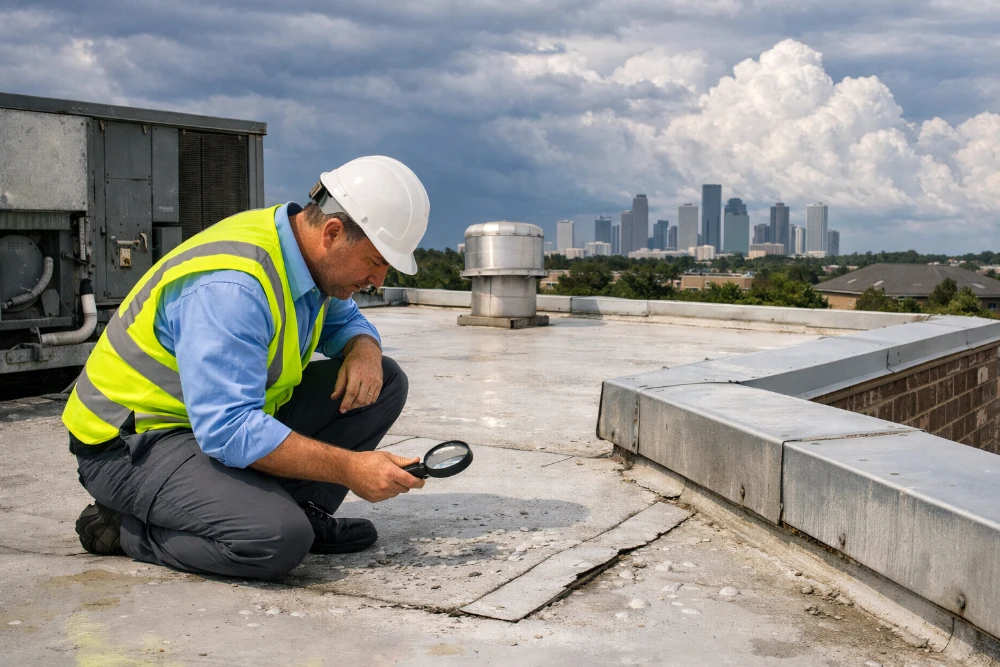
We inspect accessible damaged areas and document conditions relevant to the claim.
Depending on the loss, the inspection may include:
- Roofing and exterior elevations
- Attic spaces
- Interior rooms
- Moisture-affected materials
- Commercial roofing systems
- Mechanical equipment
- Damaged contents
- Detached structures
Step 3: Scope and Documentation
We organize the evidence and prepare a claim presentation based on the observed damage and applicable policy.
The objective is to connect each requested repair or payment category to documented loss conditions.
Step 4: Claim Communication and Negotiation
TX Public Adjusting communicates with the insurance company, responds to claim questions, addresses scope differences, and presents supporting documents.
We keep the property owner informed while working to move the claim toward a fair resolution.
Step 5: Settlement and Next Steps
When the carrier issues a revised position or payment, we review the result with the policyholder and explain remaining items, depreciation requirements, or repair documentation that may still be needed.
Concerned that your Humble insurance estimate is missing damage? Request a free claim review from TX Public Adjusting. No upfront fees.
Why Choose TX Public Adjusting
Licensed Texas Representation
TX Public Adjusting is operated by Rise Public Adjusting LLC, Texas License #3356839.
Licensing matters. It provides a verifiable standard of accountability and distinguishes a public adjuster from an unlicensed person attempting to negotiate a policyholder’s claim.
Texas-Focused Claim Experience
Our work is focused on Texas property claims and the losses Texas owners regularly encounter, including hail, wind, water, fire, freeze, hurricane, roof, and commercial claims.
We understand how several causes of damage can overlap after a Gulf Coast storm.
Residential and Commercial Knowledge
A single-family home claim differs from a hotel, church, warehouse, apartment complex, or retail-center claim.
We work with both residential and commercial losses and understand the different documentation, estimating, operational, and income-related issues that may arise.
Independent Policyholder Advocacy
We do not work for the insurance company. We represent the policyholder’s interests throughout the claim.
That independence is central to the service we provide.
Detailed Claim Preparation
Our team has reviewed thousands of residential and commercial claims. That experience helps us recognize patterns such as omitted trades, incomplete roof scopes, overlooked moisture damage, unsupported depreciation, and missing commercial-loss categories.
No result is guaranteed, but a properly documented claim gives the carrier a clearer and more complete basis for evaluation.
Free Claim Review and No Upfront Fees
Property owners can speak with TX Public Adjusting about the claim before deciding how to proceed.
There are no upfront fees for the initial claim review.
Areas We Serve Near Humble
TX Public Adjusting assists property owners throughout Humble and surrounding northeastern Harris County communities, including:
- Atascocita
- Kingwood
- Fall Creek
- Eagle Springs
- Walden on Lake Houston
- Summerwood
- Lake Houston
- Porter
- New Caney
- Spring
- Aldine
- Huffman
- Crosby
- Sheldon
- Greater Houston
We also assist Texas property owners with residential and commercial claims outside the Humble area.
Frequently Asked Questions
What does a public adjuster in Humble do?
A public adjuster represents the policyholder during a property insurance claim. The work may include reviewing the policy, inspecting damage, preparing estimates, organizing supporting records, communicating with the insurer, and negotiating disputed claim items.
TX Public Adjusting works for the property owner rather than the insurance carrier.
When should I hire a public adjuster after property damage?
Many owners hire a public adjuster shortly after a significant loss so the damage can be documented before cleanup and repairs alter the scene. You may also hire one after receiving an estimate that appears incomplete or a claim decision you disagree with.
Do not assume it is automatically too late because the carrier has already inspected or issued payment. The claim’s status, policy deadlines, repair activity, and available evidence should be reviewed.
Can you help with an underpaid roof claim in Humble?
Yes. We review residential and commercial roof claims involving hail, wind, falling debris, water intrusion, and related damage.
The review may include measurements, roofing components, repairability, flashing, ventilation, code items, interior damage, and differences between the carrier estimate and the work needed to restore the property.
Can a public adjuster help after the insurance company denies my claim?
A denial does not always end the matter. The denial letter, policy language, reported cause of loss, inspection findings, and supporting evidence should be evaluated together.
We can review the available information and explain whether the claim appears to have unresolved documentation or scope issues. We do not guarantee that a denial will be reversed.
Does homeowners insurance cover flooding in Humble?
Standard homeowners policies generally distinguish rising surface water from water that enters because a covered event damaged the building. Separate flood insurance is commonly needed for rising-water losses.
Because tropical systems can involve both wind and flood, owners should preserve evidence showing where and how water entered. Coverage ultimately depends on the specific policy and facts of the loss.
What should I do immediately after storm damage?
Protect people first. When it is safe, photograph and record the exterior, interior, damaged contents, water lines, debris, and visible entry points. Make reasonable temporary repairs to prevent additional damage and keep every receipt.
Avoid permanent repairs or discarding damaged materials before the property has been properly documented and the insurer has had a reasonable opportunity to inspect.
How much does a public adjuster cost in Texas?
Public adjusters commonly work under a written contingency-fee agreement, meaning the fee is tied to the insurance recovery handled under the contract. Our guide to public adjuster fees explains how these agreements generally work and what property owners should review before signing.
TX Public Adjusting offers a free initial claim review and charges no upfront fee for that review.
How long does a Humble property claim take?
The timeline depends on the type of damage, policy questions, inspection availability, documentation, carrier response, and whether experts or additional estimates are required. Property owners experiencing delays may also review how long an insurance adjuster has to contact you and what steps may help move the claim forward.
A straightforward claim may move more quickly than a commercial loss, large fire, disputed roof claim, or event involving both wind and water. We work to keep the file organized and respond promptly when the carrier requests relevant information.
Do you handle commercial property claims near Deerbrook Mall and FM 1960?
Yes. We assist commercial property owners in Humble and nearby business corridors with roof, hail, wind, fire, water, equipment, contents, and business-interruption claims.
Commercial claims require careful documentation because the loss may affect the building, tenant improvements, inventory, operations, income, and extra expenses at the same time.
Can I hire TX Public Adjusting after receiving an insurance payment?
Receiving a payment does not necessarily mean every covered item has been resolved. Many claims remain open for supplements, recoverable depreciation, additional damage, or disputed scope items.
We can review the estimate, payment summary, policy documents, photographs, and repair information to determine whether additional claim issues may remain.
Get a Free Humble Insurance Claim Review
A property claim should reflect the documented damage—not just the items identified during a brief carrier inspection.
TX Public Adjusting helps Humble homeowners, landlords, business owners, commercial property managers, churches, and multifamily owners prepare and present property damage claims.
Our team can review:
- New insurance claims
- Hail and wind claims
- Hurricane and tropical-storm claims
- Water damage
- Fire and smoke losses
- Roof claims
- Denied claims
- Underpaid claims
- Commercial property claims
- Business interruption issues
TX Public Adjusting is operated by Rise Public Adjusting LLC, Texas License #3356839.
Contact TX Public Adjusting for a free claim review. No upfront fees. Residential and commercial claims accepted throughout Humble and Texas.