

Property damage in Goodrich can become complicated quickly. A severe East Texas thunderstorm can damage a roof in minutes, wind can send tree limbs into structures, heavy rain can expose roof or drainage failures, and a fire or sudden plumbing loss can affect far more of a property than the first inspection reveals. When the insurance company’s estimate does not reflect the full scope of covered damage, a Public Adjuster in Goodrich, TX can help document the loss and present the policyholder’s claim.
TX Public Adjusting represents homeowners, landlords, business owners, and other policyholders—not insurance companies. We review property damage, examine insurance estimates and coverage, document missing items, prepare detailed scopes, and communicate with the carrier throughout the claim.
TX Public Adjusting is operated by Rise Public Adjusting LLC, Texas License #3356839.
Have a denied, delayed, or underpaid property claim in Goodrich? Get a Free Claim Review from TX Public Adjusting. No upfront fee is required for the initial claim review.
Goodrich is a small incorporated community in Polk County, about seven miles south of Livingston along the U.S. 59/I-69 corridor. The area includes rural homes, farms, ranches, lake-oriented properties, small subdivisions, and commercial or industrial facilities. Local planning documents identify areas including Goodrich North, Pennington, Sleepy Hollow, Goodrich Old Town, Armitage Addition, Hoot Owl Hollow, and Sunnyside.
Why Property Owners Hire a Public Adjuster in Goodrich
An insurance company assigns an adjuster to investigate a loss on behalf of the insurer. A public adjuster serves a different role. Understanding the difference between a public adjuster vs. independent adjuster can help Goodrich property owners understand who each adjuster represents during an insurance claim. Under Texas Department of Insurance guidance, licensed public insurance adjusters may be hired by policyholders to negotiate property claims, and they work for the insured rather than the insurance company.
That distinction can become especially important after significant storm, roof, fire, or water damage.
A Goodrich property owner may contact TX Public Adjusting when:
- The insurance company’s estimate appears too low.
- Roof or exterior damage was omitted from the scope.
- A claim was partially denied.
- Interior water damage was attributed to an exclusion without adequate investigation.
- The carrier applied substantial depreciation.
- Repair estimates are significantly higher than the insurer’s estimate.
- Matching materials, code-related work, or associated repairs are disputed.
- A commercial loss involves multiple buildings, contents, equipment, or business operations.
- The claim has become difficult to document or manage.
- A previous inspection did not appear to capture the entire loss.
We review the available documentation and help identify where the carrier’s estimate, scope, or claim position may deserve a closer look.
TX Public Adjusting has experience reviewing thousands of residential and commercial claims, giving our team practical familiarity with property-loss documentation, estimates, insurance policies, damage scopes, and claim negotiations.
A Claim Review Focused on the Policyholder
A public adjuster should not simply produce a larger number. The objective is to develop an accurate, supportable claim based on the actual damage, applicable policy provisions, available documentation, and reasonable repair requirements.
That can mean inspecting more than the most obvious damaged area.
For example, after a windstorm damages roofing near Sleepy Hollow or along the FM 1988 corridor, the claim may involve shingles or metal panels as well as flashing, vents, gutters, fascia, interior ceilings, insulation, paint, and other components affected by water intrusion.
Small omissions multiplied across an entire property can create a substantial gap between an insurance estimate and the actual scope of repairs.
Goodrich Storm and Property Damage Risks
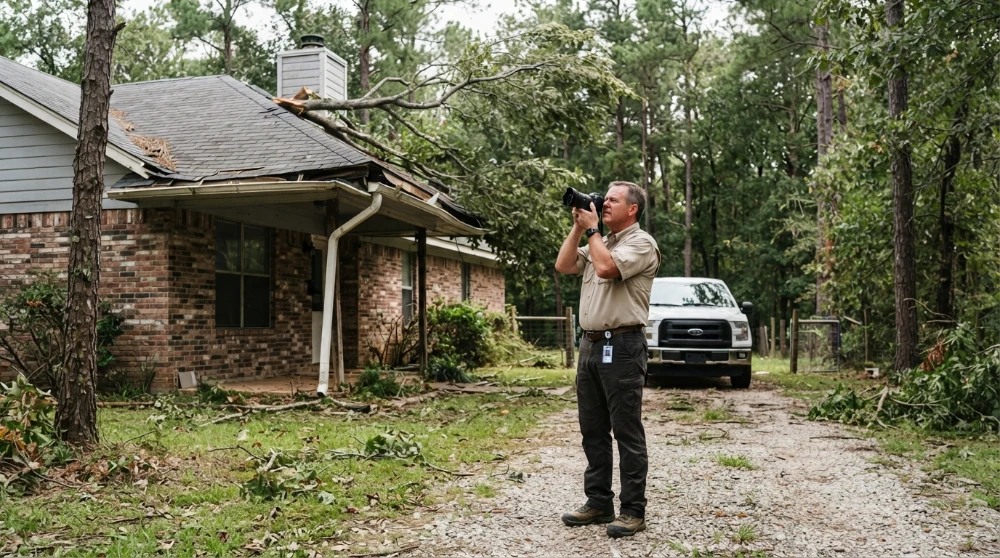
Goodrich sits in an East Texas environment where property owners can face several different weather-related hazards rather than one dominant type of loss.
The area receives strong thunderstorms capable of producing damaging wind, hail, lightning, and heavy rainfall. On August 27, 2026, for example, the National Weather Service tracked a strong thunderstorm near Goodrich with potential wind gusts up to 50 mph and hail.
That type of weather is especially relevant in a community with heavily wooded rural properties, detached structures, metal buildings, older roofs, acreage, and homes exposed to falling branches.
Wind and Thunderstorm Damage
Straight-line wind can affect:
- Asphalt shingle roofs
- Metal roofing
- Ridge caps and flashing
- Siding
- Gutters and downspouts
- Windows and exterior doors
- Fences
- Barns and detached buildings
- Carports
- Commercial roofing systems
Tree damage is another concern around wooded Goodrich properties. A limb does not need to fall through a roof to create a claim issue. Impact can loosen roofing materials, puncture coverings, damage gutters, or create openings that allow rain into the building.
Hail Damage
Hail damage is not always obvious from ground level.
Depending on roofing material and storm intensity, hail can affect shingles, soft metals, vents, flashing, gutters, siding, window screens, HVAC components, fencing, and commercial roof systems.
After a storm, the question is not simply whether hail fell. The important issue for the claim is what damage occurred to the insured property and whether it is properly documented.
Heavy Rain and Water Intrusion
Heavy East Texas rainfall can expose vulnerabilities around roof penetrations, flashing, windows, doors, and previously damaged roofing.
Water may travel before becoming visible inside a building. A ceiling stain in one room can originate from a roof opening several feet away.
That makes moisture documentation and inspection of adjoining materials important.
Homeowners should also understand the distinction between water entering because of covered property damage and rising surface water or flooding. Coverage depends on the policy and cause of loss, and standard property policies may treat flood differently from wind-driven or plumbing-related water damage.
Tropical Storm and Hurricane Effects
Goodrich is well inland from the Texas Gulf Coast, but inland communities in southeast and East Texas can still experience tropical-system rain, strong wind, falling trees, prolonged power outages, and water intrusion.
These losses can involve roofs, exterior openings, interiors, trees, electrical systems, equipment, and other components. Our guide to hurricane property damage explains the types of damage Texas property owners should document after a major tropical system.
A weakened hurricane or tropical storm does not need to make landfall in Polk County to cause insured property damage there.
Winter Freeze Claims
Hard freezes can also produce claims in Goodrich. Frozen or ruptured plumbing can damage drywall, insulation, cabinets, flooring, ceilings, electrical components, personal property, and other building materials.
A pipe repair may be relatively small while the resulting water loss is extensive.
Common Insurance Claims in Goodrich
Hail Damage Claims
Hail claims often require careful documentation because damage may be spread across multiple roofing slopes and exterior components. Property owners dealing with a hail damage roof insurance claim should document not only shingles, but also gutters, vents, flashing, siding, soft metals, and other exterior components that may have been affected.
TX Public Adjusting can review the insurer’s inspection and estimate, document affected materials, and determine whether relevant portions of the property were omitted.
A hail claim may involve far more than shingles. Gutters, vents, flashing, metal surfaces, siding, screens, detached buildings, and exterior equipment can also require evaluation.
Water Damage Claims
Common water losses include plumbing failures, roof-related intrusion, appliance leaks, and other sudden events. A water damage public adjuster can review the carrier’s scope when damaged flooring, drywall, cabinets, insulation, contents, or other affected materials appear to have been omitted.
- Burst pipes
- Plumbing leaks
- Appliance supply-line failures
- Roof-related water intrusion
- HVAC condensate problems
- Water damage following covered storm openings
The resulting claim can involve demolition, drying, drywall, insulation, trim, flooring, cabinets, paint, contents, and other repairs.
Detailed documentation matters because the visible wet area is not always the complete affected area.
Fire and Smoke Damage Claims
A structure fire can produce several overlapping categories of loss: direct fire damage, smoke contamination, soot, water used during firefighting, demolition, contents damage, temporary living expenses, and rebuilding costs. A fire insurance adjuster representing the policyholder can help organize these different portions of the loss and identify items that may not appear in the carrier’s initial estimate.
Smoke can travel through rooms and HVAC systems that were never directly touched by flames.
For Goodrich homeowners and commercial property owners dealing with a serious fire loss, a detailed inventory and room-by-room scope can be critical.
Storm Damage Claims
Strong thunderstorms can produce combinations of wind, hail, rain, lightning, and falling-tree damage in a single event.
These losses can become difficult when the insurer attributes different portions of the damage to different causes.
Our job is to document the physical condition of the property and present the claim using evidence that supports the covered loss.
Roof Damage Claims
Roof disputes are among the most common reasons property owners seek independent insurance claim assistance. A public adjuster for a roof claim can compare the insurer’s estimate with the actual roof damage, measurements, repair requirements, and associated exterior or interior damage.
Disagreements may involve:
- Repair versus replacement
- Number of damaged slopes
- Shingle or panel availability
- Flashing
- Underlayment
- Ventilation
- Drip edge
- Gutters
- Interior water damage
- Depreciation
- Scope quantities
- Labor requirements
Properties around Goodrich North, Pennington, Sleepy Hollow, Hoot Owl Hollow, Sunnyside, and the U.S. 59/FM 1988 area can vary substantially in age, construction, roofing material, and exposure. One generic roof estimate does not fit every loss.
Commercial Property Claims
Goodrich may be small, but its property mix extends beyond conventional single-family homes. Polk County economic-development information describes the community as including rural areas, farms, ranches, lake subdivisions, and gas or oil compression facilities along the U.S. 59/I-69 corridor.
A large commercial loss can involve multiple structures, roofing systems, equipment, inventory, contents, and business operations. Working with a commercial public adjuster can be particularly useful when the insurer’s estimate does not capture all affected portions of the property.
- Retail buildings
- Warehouses
- Offices
- Metal buildings
- Agricultural structures
- Multifamily properties
- Churches
- Restaurants
- Equipment
- Inventory
- Business personal property
- Multiple structures at one location
Large commercial losses demand careful organization because omissions can occur across roofing, interiors, mechanical systems, contents, and exterior components.
Concerned that your Goodrich insurance estimate missed damage? TX Public Adjusting offers a Free Claim Review for residential and commercial property owners.
Why Insurance Claims Become Underpaid
A low payment does not always result from one obvious mistake. More often, several estimating or documentation issues combine to reduce the scope.
Some underpayments also begin with avoidable property insurance claim mistakes, such as incomplete documentation, disposing of damaged materials too early, overlooking secondary damage, or accepting an estimate without reviewing its scope.
Damage Was Missed During the Initial Inspection
Carrier inspections may occur quickly, especially after a regional storm when adjusters are managing large volumes of claims.
Damage behind finishes, on secondary roof elevations, inside attic spaces, or across detached structures can be overlooked.
The Estimate Leaves Out Necessary Work
An estimate might acknowledge the primary damaged component but omit associated work required to complete the repair.
For example, replacing damaged roofing may also affect flashing, vents, edge components, accessories, or adjoining materials.
Quantities Are Incorrect
Roof area, wall dimensions, flooring quantities, cabinetry, insulation, or other measurements can significantly affect an estimate.
Even relatively small measurement differences matter on larger properties.
Depreciation Creates Confusion
Replacement cost, actual cash value, recoverable depreciation, nonrecoverable depreciation, deductibles, and policy limits all affect payment differently.
Property owners sometimes receive the first check and assume it represents the complete value of the claim.
Documentation Is Incomplete
Insurance claims depend heavily on documentation.
Photographs, inventories, measurements, contractor information, invoices, receipts, estimates, moisture records, and communications can all help establish the scope of a loss.
The Texas Department of Insurance advises policyholders to photograph damage, keep repair receipts, and provide information requested by the insurer.
Repair Costs and Carrier Estimates Do Not Match
A contractor’s actual repair scope may be substantially different from the estimate prepared for the insurance company.
When that happens, the difference should be examined item by item instead of treated as one unexplained total.
Our Public Adjusting Process
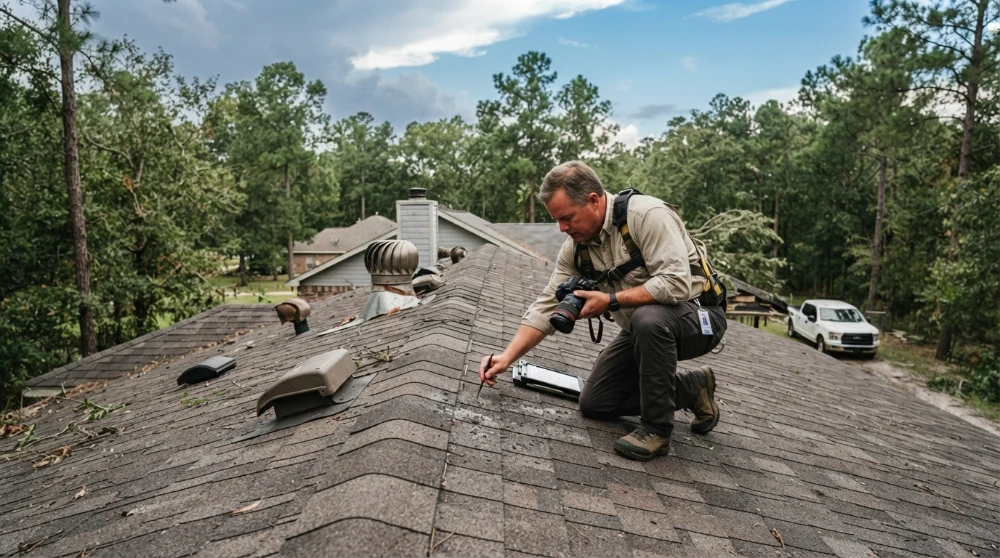
Every loss is different, but our process is built around evidence, documentation, and clear communication.
1. Claim Review
We begin by reviewing the circumstances surrounding the loss.
That may include:
- Insurance policy documents
- Carrier estimates
- Claim letters
- Photographs
- Contractor estimates
- Previous payments
- Denial or coverage letters
- Repair invoices
We identify the issues that require closer examination.
2. Property Inspection
When appropriate, we inspect the property and assess the claimed damage.
Our focus is not limited to repeating what appears on the insurance company’s estimate. We look at the damaged property itself and determine what should be documented.
3. Documentation and Scope Development
We organize available evidence and prepare a detailed loss presentation.
That can include photographs, measurements, damaged components, contents information, repair scope, estimates, and supporting records.
4. Claim Communication and Negotiation
We communicate with the insurance company regarding documented differences and disputed claim items.
When the carrier’s scope differs from ours, the discussion can focus on specific line items and supporting evidence rather than vague disagreement over the total.
5. Settlement and Claim Resolution
Our goal is to help the policyholder pursue the insurance benefits supported by the policy and documented damage.
Texas law establishes certain deadlines for insurers after receiving claim information, although extensions and catastrophe-related exceptions may apply. TDI states that insurers generally must acknowledge receipt of a claim within 15 days and make a coverage decision within 15 business days after receiving the information they need, subject to specified extensions.
Why Choose TX Public Adjusting for a Goodrich Property Claim?
Licensed Texas Public Adjuster
TX Public Adjusting operates through Rise Public Adjusting LLC, Texas License #3356839.
Texas requires public insurance adjusters to be licensed.
We Represent Policyholders
We work for insured property owners—not insurance companies.
That allows our claim analysis to focus on the policyholder’s documented loss.
Texas-Focused Claim Experience
Texas properties face a distinctive combination of hail, wind, tornadoes, tropical systems, freezes, fire, and water losses.
Our practice is focused on Texas claims rather than treating the state as one small part of a national service footprint.
Residential and Commercial Experience
We review both residential and commercial claims, from individual homes to complex losses involving larger buildings, multiple structures, contents, or business property.
Thousands of Claims Reviewed
Experience matters when comparing estimates, spotting omitted scope items, organizing documentation, and communicating disputed damage to insurance carriers.
Our team brings experience from reviewing thousands of claims involving Texas residential and commercial properties.
Free Claim Review
You do not need to guess whether the insurer’s estimate deserves another look.
Send us the estimate and tell us what happened. We can review the situation and explain whether public adjusting services may make sense for your Goodrich claim.
Areas We Serve Near Goodrich
Our work is not limited to properties inside Goodrich city limits. We assist policyholders throughout Polk County and surrounding East Texas communities.
Nearby areas may include:
- Livingston
- West Livingston
- Seven Oaks
- Onalaska
- Shepherd
- Coldspring
- Point Blank
- Cedar Point
- Lake Livingston-area communities
- Other residential and commercial properties throughout Polk County
Goodrich lies roughly seven miles south of Livingston along the U.S. 59 corridor, making it closely connected to the larger Livingston and Lake Livingston area.
Within and around Goodrich itself, local references include Goodrich City Hall, the Goodrich Community Center, Goodrich Independent School District, the historic Goodrich Old Town area, FM 1988, and the U.S. 59/I-69 corridor.
Frequently Asked Questions About Public Adjusters in Goodrich
1. What does a public adjuster in Goodrich do?
A public adjuster represents the policyholder during a property insurance claim. The work may include reviewing the insurance policy and carrier estimate, inspecting damage, preparing documentation, developing a repair scope, and negotiating disputed claim items.
This is different from the insurance company’s adjuster, who is handling the claim for the insurer. Texas Department of Insurance guidance confirms that policyholders may hire licensed public adjusters to help negotiate claims.
2. When should I call TX Public Adjusting about my Goodrich claim?
You can contact us after a loss occurs or later if you believe the existing claim payment is inadequate.
Common reasons include a low estimate, partial denial, disputed roof damage, missing interior repairs, excessive depreciation, disagreement over the cause of damage, or a claim that has become difficult to manage.
You do not necessarily have to wait for a claim to be completely denied.
3. Can a public adjuster help with a Goodrich hail damage claim?
Yes. Hail claims are a common type of property claim handled by public adjusters.
We can inspect the property, compare our findings with the insurance company’s estimate, and document relevant damage to roofing and other affected exterior components.
The amount and type of damage will depend on the specific storm, construction, materials, and property.
4. What if the insurance company already inspected my roof?
A previous insurance inspection does not prevent you from obtaining another professional review.
If you believe roof slopes, flashing, vents, gutters, interior water damage, detached structures, or other items were missed, TX Public Adjusting can examine the existing scope and determine whether documented differences should be presented to the carrier.
5. Can you help if my Goodrich insurance claim was underpaid?
Potentially. We first need to review what the carrier inspected, what it estimated, what it paid, and what damage exists.
An underpaid claim can involve missed damage, incorrect quantities, pricing differences, depreciation, omitted repair operations, or coverage disagreements.
A Free Claim Review is the easiest way to determine whether further action may be appropriate.
6. Can you reopen an older property claim?
Older claims sometimes still have options, but timing matters.
Policies can contain notice requirements, proof-of-loss provisions, suit limitations, repair deadlines, and other conditions. Texas law may also affect deadlines.
If you have an older Goodrich claim that was closed, denied, or paid below the repair cost, contact us promptly so the available documentation and timing can be reviewed. For more information, see our guide on When Is It Too Late to Hire a Public Adjuster?
7. How much does a public adjuster cost in Texas?
Public adjuster compensation must be addressed in a written contract. The Texas Department of Insurance states that a public adjuster’s fee generally may not exceed 10% of the claim settlement, subject to applicable rules and circumstances.
TX Public Adjusting offers a Free Claim Review, so you can first determine whether professional claim assistance appears appropriate before deciding how to proceed.
8. Can a public adjuster help with a water claim if the insurer says the damage is from flooding?
Coverage depends heavily on the source of the water and the specific policy.
Water from a burst plumbing line, storm-created roof opening, wind-driven rain, or rising outside floodwater can be treated differently. The physical damage and cause of loss must be documented carefully.
We can review the insurer’s position and available evidence. Public adjusters do not provide legal advice, and coverage disputes requiring legal interpretation may need to be referred to an attorney.
9. Do you handle commercial property claims near Goodrich?
Yes. TX Public Adjusting works with both residential and commercial policyholders.
Goodrich and the surrounding Polk County area include retail property, agricultural buildings, metal structures, industrial facilities, churches, multifamily properties, and other commercial risks.
Commercial claims can involve building damage, roofing, contents, equipment, inventory, and other covered loss components.
10. What should I do immediately after storm damage in Goodrich?
Protect people first, then take reasonable steps to prevent additional damage when it is safe to do so.
Photograph the property before temporary repairs when possible. Keep receipts, damaged-item information, contractor documents, and all communication from your insurance company. Avoid permanently disposing of evidence before it has been adequately documented.
TDI similarly recommends photographing damage, making temporary repairs as needed to protect the property, and keeping receipts.
If the carrier’s inspection or estimate does not appear to reflect the complete loss, contact TX Public Adjusting for a second review.
Get a Free Goodrich Insurance Claim Review
A damaged property does not become easier to repair because the insurance estimate came in low.
If you own a home, rental property, commercial building, ranch property, or other insured structure in Goodrich, Polk County, or the surrounding Lake Livingston area, TX Public Adjusting can review your claim and help you understand what may have been missed.
TX Public Adjusting
Rise Public Adjusting LLC
Texas License #3356839
Licensed Texas Public Adjuster
Residential & Commercial Claims
Free Claim Review
No upfront fee to begin your claim review
Contact TX Public Adjusting today and let us take a closer look at your property damage claim.