

Property damage in Holiday Lakes, Texas can become complicated quickly. This small Brazoria County community is built around a network of lakes near Oyster Creek and only a few miles from the Brazos River, creating a property-risk profile that is very different from a typical inland Texas suburb. Tropical systems can bring strong winds and wind-driven rain, severe thunderstorms can damage roofs and exterior materials, and heavy rainfall can create difficult water and flood-loss questions. Holiday Lakes developed around Lake Alaska, Lake Yukon, Timber Lake, and Lake Aniak, with additional residential areas surrounding the community’s other small lakes.
When an insurance company’s estimate does not reflect the damage you see at your property, TX Public Adjusting can provide independent insurance claim assistance. We represent homeowners, landlords, and commercial property owners—not insurance companies.
TX Public Adjusting operates through Rise Public Adjusting LLC, Texas Public Adjuster License #3356839. Our team has experience reviewing thousands of residential and commercial property claims throughout Texas involving hail, wind, water, fire, roof damage, hurricanes, and other covered losses.
Free Claim Review • No Upfront Fees • Residential & Commercial Claims
If your Holiday Lakes property claim was underpaid, delayed, partially denied, or simply does not make sense, contact TX Public Adjusting for a free claim review.
Why Property Owners Hire a Public Adjuster in Holiday Lakes
Insurance claims are built around documentation. The carrier needs to determine what happened, what parts of the property were damaged, what repairs are required, what the policy covers, and what the repairs should cost.
A disagreement in any one of those areas can change the outcome of the claim.
The insurance company sends an adjuster to investigate on its behalf. A public adjuster represents the policyholder. That difference becomes especially valuable when a claim involves multiple areas of damage or when the carrier’s estimate leaves out repair items.
A public adjuster may help by:
- Inspecting the property and identifying damaged components
- Reviewing the insurance carrier’s estimate
- Comparing the estimate with actual site conditions
- Photographing and documenting damaged materials
- Preparing a detailed scope of loss
- Reviewing relevant policy provisions
- Organizing supporting estimates and invoices
- Communicating with the insurance company
- Preparing supplements for omitted damage
- Negotiating the documented amount of the claim
For property owners in Holiday Lakes, local conditions can make that documentation particularly important. The town sits on Oyster Creek and approximately two miles east of the Brazos River. Holiday Lakes itself directs residents to Brazos River and Oyster Creek flood gauges for local weather and flooding information.
That means a storm claim may involve more than one cause of damage. Wind can affect a roof while rain enters through a damaged roofing component, for example, while rising surface water may present a separate flood-coverage issue. Establishing the cause of each damaged area matters.
Property Damage Risks in Holiday Lakes and Brazoria County
Holiday Lakes is not simply another Houston-area community. Its location in west-central Brazoria County creates a combination of Gulf Coast wind exposure, tropical rainfall, severe thunderstorms, nearby waterways, and occasional winter freeze conditions.
The Texas Department of Insurance places Holiday Lakes in Brazoria County’s Inland II wind zone, illustrating the importance of wind-resistant construction throughout this part of the county.
Hurricanes and Tropical Storms
Even when the center of a hurricane does not pass directly over Holiday Lakes, tropical systems can produce damaging gusts, long periods of rain, fallen trees, roof uplift, damaged fencing, and water intrusion.
After a major wind event, property owners should look beyond obvious missing shingles.
Storm damage may also involve:
- Ridge and hip shingles
- Roof vents and pipe jacks
- Flashing
- Fascia and soffit
- Gutters and downspouts
- Exterior siding
- Windows and doors
- Detached structures
- Fencing
- Interior ceilings and walls affected by water entry
Wind-driven rain can also make the claim more technical because the source of the water may determine how the policy responds.
Heavy Rain, Oyster Creek, and Flooding Concerns
Water is a particularly important issue around this lakeside community. Holiday Lakes was developed around several small lakes and sits along Oyster Creek, with the Brazos River nearby.
Property owners should understand the distinction between covered water damage and flooding. The Texas Department of Insurance explains that most homeowners policies do not cover flood damage and that separate flood insurance is generally needed for damage caused by rising floodwater. Sudden and accidental water losses, wind-created openings, burst plumbing, and other sources can be treated differently depending on the policy and facts of the loss.
That distinction matters after a tropical storm or prolonged rain event. A property can experience several types of damage during the same storm, and each should be documented separately.
Hail and Severe Thunderstorms
Brazoria County can also experience thunderstorms capable of producing hail and strong straight-line winds.
Hail damage is not always immediately visible. Asphalt shingles may show impact marks or granule loss. Property owners dealing with a hail damage insurance claim should document not only the roof surface but also gutters, vents, flashing, siding, windows, and other exterior components. Metal surfaces can dent. Gutters, vents, flashing, siding, window screens, fencing, and outdoor equipment may also provide evidence of the storm.
When a carrier’s inspection focuses only on a few visible roof impacts, the resulting estimate may not account for the entire affected system.
Freeze and Burst-Pipe Losses
Southeast Texas properties are also vulnerable during unusual hard freezes.
Frozen plumbing can lead to broken supply lines, damaged water heaters, wet insulation, damaged drywall, flooring losses, cabinet damage, and moisture inside wall or ceiling cavities. Texas insurance guidance notes that many homeowners policies cover sudden and accidental water damage such as burst pipes, while gradual leakage can be treated differently.
Common Insurance Claims in Holiday Lakes
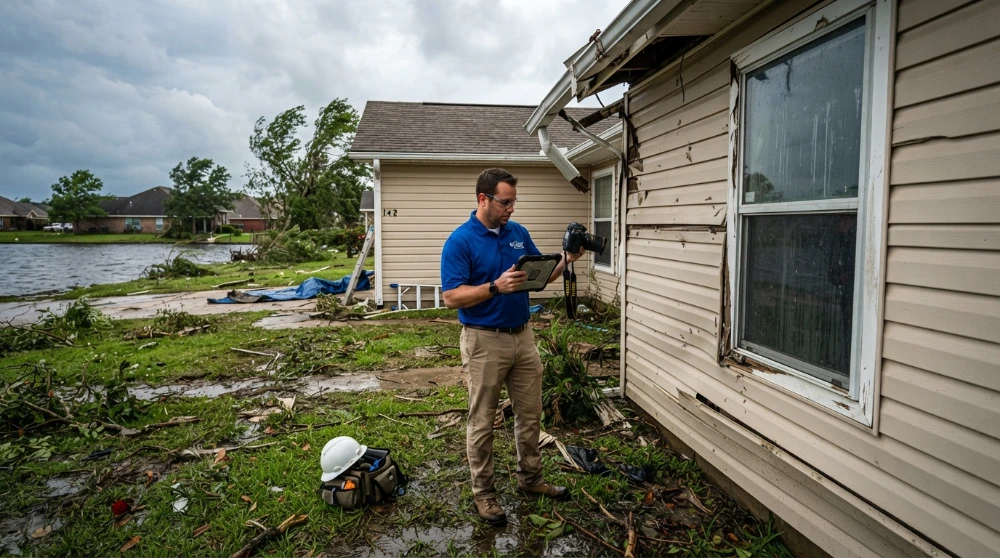
The following are among the property losses we commonly review for Texas homeowners and commercial property owners.
| Claim Type | Damage That May Need Documentation |
| Hail damage | Shingles, metal roofing, vents, flashing, gutters, siding and exterior components |
| Wind and storm damage | Roof uplift, missing materials, trees, fencing, windows and exterior damage |
| Water damage | Drywall, insulation, flooring, cabinets, ceilings and contents |
| Fire damage | Structure, smoke, soot, contents and additional living expenses |
| Roof damage | Roofing materials, underlayment, flashing, ventilation and related interior damage |
| Commercial claims | Roofing systems, interiors, equipment, inventory and business-property damage |
Hail Damage Claims
A hail claim can become underpaid when the inspection treats individual impacts as isolated damage instead of evaluating the roof and exterior as complete systems. For a deeper explanation of roof inspections, carrier estimates, documentation, and supplements, see our hail damage roof insurance claim guide.
Our review may include the roofing surface, soft metals, vents, gutters, flashing, siding, screens, fencing, and interior evidence of water intrusion.
Water Damage Claims
Water losses require careful documentation because moisture often travels farther than the visible stain. A water damage public adjuster can review the visible damage along with affected insulation, flooring, drywall, cabinets, ceilings, and other components that may have been omitted from the carrier’s scope.
A small ceiling opening can be associated with wet insulation, affected framing, damaged drywall, flooring problems, baseboards, cabinetry, or electrical components.
Our job is to document what was actually affected and present a defensible repair scope based on the loss.
Fire and Smoke Damage Claims
Fire claims often extend far beyond the room where the flames originated. When the scope includes structural damage, smoke, soot, contents, or extensive restoration work, a fire insurance adjuster working for the policyholder can help document the full extent of the loss.
Smoke and soot can travel through HVAC systems and into adjoining rooms. Contents may need to be cleaned, replaced, inventoried, stored, or evaluated individually. Structural repairs can involve demolition, electrical work, framing, drywall, insulation, finishes, odor treatment, and code-related issues.
A complete fire claim should tell the entire story of the loss.
Storm and Wind Damage Claims
Holiday Lakes property owners may experience storm damage from tropical systems, severe thunderstorms, straight-line winds, or falling trees.
These claims can involve roof damage, detached structures, fencing, windows, exterior finishes, interior water intrusion, and debris removal.
Roof Damage Claims
Roof claims often become disputes over scope, not simply whether damage exists. A public adjuster for a roof claim can compare the insurance company’s estimate with the actual damaged roofing system and the work required to complete a proper repair.
An insurer may approve several shingles while the contractor finds that the proposed spot repair cannot restore the roof properly. Other line items such as underlayment, flashing, starter course, ridge materials, vents, tear-off labor, access requirements, or damaged decking may also be missing.
TX Public Adjusting reviews the complete repair scope rather than focusing only on the most visible damaged component.
Commercial Property Claims
Commercial property claims may involve different roofing systems, larger building footprints, multiple tenants, specialized equipment, inventory, interior finishes, and business-related expenses.
We assist Texas commercial property owners with documentation and claim preparation for storm, hail, wind, water, fire, and roof losses.
Local Claim Considerations Around Holiday Lakes
Holiday Lakes is small enough that traditional subdivision names do not describe the community very well. Local property references are more commonly associated with the lakes and residential corridors themselves.
The town developed around Lake Alaska, Lake Yukon, Timber Lake and Lake Aniak, and current property records also reference streets and areas such as Creekside Drive, North and South Texas Avenue, Alaska Avenue, Igloo Lane, North Lake Drive, Austin Drive, and Holiday Lakes Section 4.
That geography creates very different claim conditions even within a small town.
A lake-adjacent property may have different drainage and moisture concerns than a home closer to Texas Avenue. A property near Creekside may have different site conditions from one around Lake Alaska or the northern residential streets.
Recognizable local points include the community’s interconnected lakes, Holiday Lakes City Park, the Town Hall area on North Texas Avenue, and nearby Brazos River County Park.
When we review a property damage claim, we evaluate the actual building and loss conditions rather than relying on a generic storm estimate.
Why Insurance Claims Become Underpaid
A low insurance payment does not always mean the carrier rejected the entire claim. Often, the disagreement comes from dozens of smaller scope differences.
Missed Damage
A short inspection can miss damage that is difficult to see from the ground or concealed behind finished materials.
Examples include wet insulation, damaged flashing, roof accessories, hidden moisture, damaged underlayment, and secondary interior damage.
Scope Omissions
An estimate may include the main repair but omit the work necessary to complete it.
For example, replacing roof shingles may also require removing and resetting accessories, replacing damaged flashing, addressing underlayment, disposing of debris, or protecting surrounding areas.
Depreciation Issues
Insurance estimates frequently separate replacement cost from depreciated value.
Policyholders may have questions about how depreciation was calculated, what can be recovered after repairs, and which documentation is required. We review the carrier’s calculations and the applicable policy terms.
Low Repair Estimates
An estimate can be technically detailed and still fail to reflect the actual repair.
Quantity differences, labor assumptions, omitted materials, access conditions, and the repair method can all affect the final number.
Documentation Problems
Insurance companies make claim decisions based on information in the file.
Incomplete photographs, missing invoices, vague contractor estimates, incomplete contents lists, or undocumented interior damage can weaken an otherwise valid claim.
That is why proper documentation is central to our work.
Our Public Adjusting Process
1. Claim Review
We start by understanding what happened, what the carrier has already done, and where you believe the claim may be incomplete.
We can review estimates, claim correspondence, photographs, repair proposals, and other available documents.
2. Property Inspection
When appropriate, we inspect the damaged property and document conditions throughout the affected areas.
The objective is to identify the complete scope of covered damage, not simply repeat the carrier’s estimate.
3. Documentation and Estimating
We organize photographs, measurements, estimates, inventories, contractor information, invoices, and other documentation needed to support the claim.
4. Carrier Communication and Negotiation
TX Public Adjusting communicates with the insurance company regarding the documented loss.
Where legitimate repair items were omitted or undervalued, we present the supporting scope and negotiate on behalf of the policyholder.
5. Claim Resolution
We continue working through outstanding scope and valuation issues toward an appropriate settlement under the policy.
Every claim is different, and no public adjuster can guarantee a specific settlement amount. Our responsibility is to document the loss carefully and advocate for the policyholder based on the evidence and applicable coverage.
Already received an estimate? You do not have to assume the first number is the final word.
Request a Free Claim Review from TX Public Adjusting.
Why Choose TX Public Adjusting
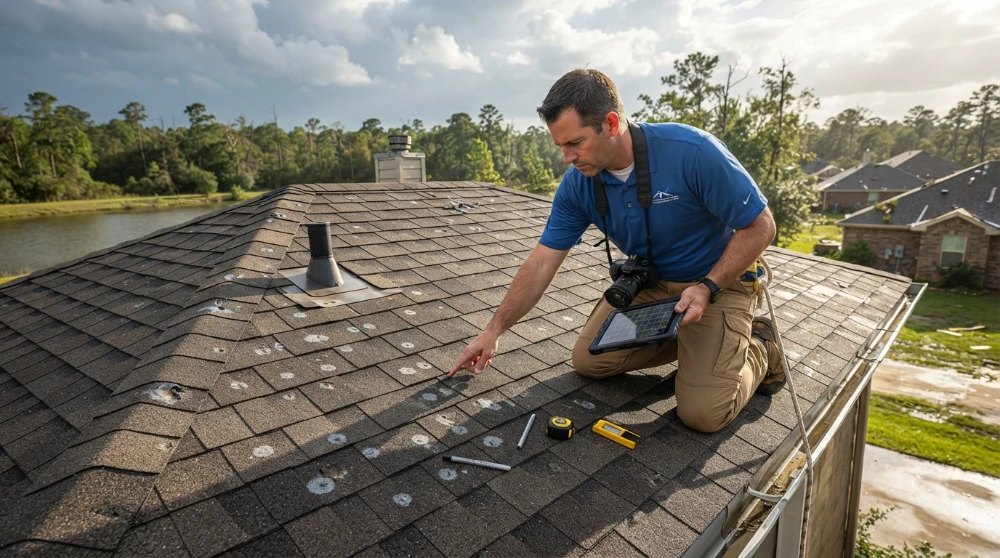
Licensed Texas Public Adjuster
TX Public Adjusting operates through Rise Public Adjusting LLC.
Texas Public Adjuster License #3356839
We Represent Policyholders
An insurance company adjuster represents the insurer.
A public adjuster represents the property owner.
Our role is independent claim representation for the policyholder.
Texas Property Claim Experience
Our team has experience reviewing thousands of Texas property claims involving residential, multifamily, commercial, hail, roof, water, wind, hurricane, and fire losses.
That experience helps us recognize the issues that are frequently missed when claims are rushed or narrowly scoped.
Residential and Commercial Claims
We work with:
- Homeowners
- Rental property owners
- Commercial building owners
- Multifamily property owners
- Retail properties
- Offices
- Warehouses
- Churches and institutional properties
Detailed Claim Documentation
A strong claim is more than a demand for additional money.
It should explain what was damaged, how it was damaged, what repairs are necessary, what those repairs reasonably involve, and how the documentation supports the requested amount.
That is the standard we bring to property damage claims.
Areas We Serve Near Holiday Lakes
TX Public Adjusting serves property owners throughout Brazoria County and surrounding Southeast Texas communities. Our nearby service areas include property owners looking for a Public Adjuster West Columbia, Public Adjuster Danbury, or Public Adjuster Bailey’s Prairie, along with homeowners and commercial property owners throughout the surrounding Brazoria County area.
Nearby service areas include:
- Angleton
- Bailey’s Prairie
- Brazoria
- West Columbia
- Danbury
- Richwood
- Lake Jackson
- Clute
- Sweeny
- Wild Peach Village
- Freeport
- Pearland
Holiday Lakes is only a short distance northwest of Angleton, making it part of a broader Brazoria County service area where Gulf Coast storms, heavy rainfall, hail, wind and water losses frequently overlap.
Frequently Asked Questions
1. What does a public adjuster in Holiday Lakes do?
A public adjuster in Holiday Lakes represents the policyholder during a property insurance claim. We inspect damage, review the policy and carrier estimate, prepare documentation, organize repair scopes, and communicate with the insurance company.
Unlike the carrier’s adjuster, our responsibility is to the homeowner or property owner who hires us.
2. When should I contact a public adjuster after storm damage?
Contacting a public adjuster early can be helpful when the damage is significant, multiple parts of the property are affected, or you are unsure how to document the loss.
You can also hire a public adjuster after the carrier has already inspected the property. Many property owners contact us only after receiving a payment that seems too low or an estimate that leaves out obvious repairs. Even if the insurance company has already inspected or paid the claim, there may still be options depending on the policy, claim status, and applicable deadlines. Read more about when it is too late to hire a public adjuster.
3. Can you review an insurance claim that has already been paid?
Yes. A payment does not necessarily mean every claim issue has been resolved.
Depending on the status of the claim, policy terms, deadlines, and circumstances, additional documentation may still be submitted. We can review the carrier estimate and existing claim file to identify possible scope or valuation issues.
4. Are flooding and water damage treated the same by insurance?
No. This distinction is especially relevant in Holiday Lakes because of the community’s lakes, Oyster Creek, and proximity to the Brazos River.
Texas insurance guidance states that most standard homeowners policies do not cover flooding caused by rising water; flood coverage usually requires a separate policy. Sudden plumbing losses, rain entering through covered storm damage, and other water losses may be evaluated differently. Coverage always depends on the actual policy and cause of loss.
5. Can a public adjuster help with hurricane wind damage?
Yes. Hurricane and tropical-storm claims can involve roofing, windows, exterior finishes, fencing, fallen trees, water intrusion, and interior damage.
We document the different components of the loss and help distinguish wind-related building damage from other sources of water or deterioration.
6. My roof claim only approved a repair. Can you review it?
Yes. Partial roof approvals are a common reason property owners request a second review.
We can compare the carrier’s proposed repair with the roof’s actual condition and examine related components such as ridge materials, flashing, underlayment, vents, accessories, and interior water damage.
7. Do you handle manufactured homes and smaller residential properties?
We review residential property claims based on the loss and applicable insurance coverage rather than the size of the home.
That is particularly relevant in Holiday Lakes, where the housing stock includes a mixture of traditional single-family properties and manufactured or smaller residential structures.
8. Can you help with a denied claim?
Potentially. A denial should be reviewed alongside the policy, carrier correspondence, reported cause of loss, inspection findings, and available documentation.
Sometimes the dispute centers on coverage. In other cases, the issue is evidence, timing, cause of damage, or a disagreement about what actually occurred. A claim review can help determine what questions remain.
9. How much does a public adjuster cost?
Public adjuster compensation should be clearly stated in the written agreement before representation begins.
TX Public Adjusting offers a free initial claim review with no upfront fee for the review, so you can first understand whether professional claim assistance may make sense for your situation.
10. Why use a local Texas public adjuster for a Holiday Lakes property claim?
Texas property claims involve Texas policies, Texas insurance rules, and weather conditions that can vary substantially across the state.
Holiday Lakes has its own local considerations because it combines Brazoria County’s Gulf Coast storm exposure with nearby Oyster Creek, multiple lakes, and proximity to the Brazos River. Working with an experienced Texas public adjuster means your claim is reviewed with those conditions in mind rather than treated as a generic property loss.
Get a Free Holiday Lakes Insurance Claim Review
If your home, rental property, or commercial building has been damaged, you do not have to evaluate the insurance company’s estimate by yourself.
TX Public Adjusting can review claims involving:
- Hail damage
- Hurricane and wind damage
- Roof damage
- Water damage
- Fire and smoke damage
- Burst pipes
- Storm damage
- Commercial property losses
- Underpaid claims
- Partial denials
- Supplemental claims
TX Public Adjusting
Rise Public Adjusting LLC
Texas Public Adjuster License #3356839
Free Claim Review • No Upfront Fees • Residential & Commercial Claims
Contact TX Public Adjusting and let us review the damage, the carrier’s estimate, and the current status of your claim.