

Property damage in Bridge City can become complicated quickly. A tropical system may damage the roof, drive rain through exterior openings, flood part of the property, interrupt electrical service, and leave moisture hidden behind walls—all during the same event. When the insurance company’s estimate addresses only the most visible damage, a Bridge City property owner may be left with an incomplete scope and too little money to complete proper repairs.
As a licensed Texas public adjuster, TX Public Adjusting helps residential and commercial policyholders understand, document, and present property insurance claims. We work for the policyholder, not the insurance carrier. Our team reviews the damage, studies the policy, prepares supporting documentation, and communicates with the insurance company regarding the covered loss.
TX Public Adjusting is operated by Rise Public Adjusting LLC, Texas License #3356839. Property owners in Bridge City can request a free claim review with no upfront fees to determine whether professional claim assistance may be appropriate.
Licensed Texas Public Adjuster | Residential and Commercial Claims | Free Claim Review
Property Damage Risks in Bridge City
Bridge City sits in Orange County near the waterways and low-lying coastal plain of Southeast Texas. Its location places local homes, rental properties, churches, offices, retail buildings, warehouses, and other commercial structures within a region exposed to tropical storms, hurricanes, prolonged rainfall, and flood-related disruption. Orange County maintains an emergency-management program that includes threat identification, disaster planning, hazard mitigation, response coordination, and post-disaster recovery.
The local claim environment differs from inland Texas cities. Hail and severe thunderstorms still matter, but Bridge City property owners must also prepare for wind-driven rain, storm surge effects, drainage backups, rising water, fallen trees, damaged exterior openings, and humidity-related moisture problems after a storm.
The distinction between wind damage and flood damage can be especially important. A standard property policy may cover wind-created openings and rain entering through those openings while excluding surface water or storm-surge flooding. Flood insurance is generally written separately. Determining which source caused each area of damage can affect how the loss should be documented and which policy may respond.
Bridge City’s local identity is closely connected to Roundbunch Road, Cow Bayou, the Bridge City Historical Museum, Bridge City High School, the city’s youth sports facilities, and the routes connecting the community with Orange, Port Arthur, and the greater Beaumont area. The Bridge City Historical Museum, located with the Chamber of Commerce on West Roundbunch Road, preserves the area’s local history.
When widespread damage reaches properties near Roundbunch Road, Texas Avenue, Ferry Drive, FM 1442, or the Cow Bayou corridor, contractors and carrier representatives may be handling many losses at once. That pressure can contribute to rushed inspections, simplified estimates, and missed damage.
Concerned that your Bridge City insurance claim is too low, delayed, or incomplete? Contact TX Public Adjusting for a free claim review.
Why Property Owners Hire a Public Adjuster in Bridge City
An insurance claim is more than a request for payment. It is a documented presentation of what happened, what was damaged, which policy provisions apply, and what work is reasonably required to restore the property.
The insurance company assigns its own adjuster to investigate the loss on behalf of the carrier. A public adjuster represents the policyholder’s financial interests during the property claim.
Bridge City property owners often seek help when:
- The carrier’s estimate is lower than contractor estimates
- The inspection seemed rushed or limited
- Roof damage was classified as cosmetic or caused by age
- Interior water damage was included, but the source was omitted
- Some rooms, elevations, or structures were left out
- The claim involves both wind and flood questions
- Repair costs have increased after a regional disaster
- The carrier applied substantial depreciation
- The claim was partially denied
- Business interruption or commercial contents were not fully documented
- The policyholder does not have time to manage repeated inspections and requests
- New damage is discovered after demolition begins
A public adjuster can organize the claim around the actual damage rather than relying only on the carrier’s initial estimate. That may involve a detailed inspection, photographs, measurements, repair scopes, contents inventories, contractor documentation, policy review, and ongoing communication with the insurance company.
TX Public Adjusting has reviewed thousands of property claims involving residential and commercial losses across Texas. We understand that two buildings affected by the same Bridge City storm may have very different damage depending on roof design, elevation, construction type, drainage, maintenance history, and the direction of the wind.
Common Insurance Claims in Bridge City
Hurricane and Tropical Storm Claims
Hurricanes and tropical storms can create several overlapping types of property damage. Strong winds may lift shingles, loosen flashing, damage metal panels, break fencing, tear exterior cladding, and allow rain into attics or wall systems. Fallen limbs may puncture a roof or damage detached structures. Extended rain may then worsen openings created earlier in the storm. Property owners dealing with widespread wind, rain, roof, and interior damage can also review our guide to property damage after a hurricane for a closer look at the building systems commonly affected by major storms.
Orange County’s disaster-planning activity specifically addresses hurricane and debris-generating events, including the possibility that a major disaster could create extremely large volumes of debris requiring coordinated removal.
A hurricane claim should not be reduced to a single line for “roof repair.” A proper review may need to address:
- Roofing materials and accessories
- Underlayment and decking
- Flashing and roof penetrations
- Gutters, downspouts, and fascia
- Siding, brick, stucco, or exterior finishes
- Windows and doors
- Interior ceilings and walls
- Insulation
- Flooring and cabinetry
- Electrical or mechanical components
- Fences, sheds, and detached structures
- Debris removal
- Temporary repairs
- Commercial equipment and inventory
- Business-income losses when covered
Wind-Driven Rain and Water Damage Claims
Wind-driven rain can enter through damaged shingles, lifted flashing, broken windows, displaced doors, roof vents, soffits, or compromised siding. Property owners who are already communicating with the carrier may benefit from understanding the challenges involved in dealing with an insurance adjuster after water damage. The visible stain on a ceiling may represent only a small part of the loss.
Water can travel through insulation, framing cavities, light fixtures, wall assemblies, and flooring systems before becoming visible. In Bridge City’s warm, humid climate, delayed drying can increase the potential for microbial growth, odors, swelling, corrosion, and material deterioration.
A complete water-damage claim may require documentation of:
- The storm-created opening or covered source
- Moisture readings
- Wet insulation and concealed materials
- Drying and dehumidification
- Removal of unsalvageable materials
- Cleaning or treatment
- Matching concerns
- Plumbing or mechanical access
- Temporary protection
- Rebuilding costs
Flood-Related Property Losses
Flooding is one of the most serious property risks in the Bridge City and Orange County area. County-level National Flood Insurance Program data show a substantial history of flood claims, including especially heavy activity during 2017. Those figures cover Orange County as a whole rather than Bridge City alone, but they demonstrate the wider region’s exposure.
Flood and property-insurance claims must be carefully separated. Surface water, rising waterways, and storm surge may fall under a flood policy, while roof openings, wind damage, or falling-object damage may fall under a homeowners or commercial property policy. The correct answer depends on the policy language and the facts of the loss.
A public adjuster can help document timelines, water lines, exterior damage, points of entry, damaged building materials, contents, and other evidence relevant to the cause of loss. We do not assume that every wet material belongs under one policy without examining how the damage occurred.
Roof Damage Claims
Roof claims are common after hurricanes, tropical systems, hailstorms, and severe thunderstorms. Some roof damage is obvious, such as missing shingles or a fallen tree. Other damage is less visible from the ground.
Common roof-claim disputes include:
- Repair versus replacement
- Storm damage versus wear and tear
- Functional versus cosmetic damage
- Matching discontinued materials
- Damage to multiple roof slopes
- Underlayment and decking replacement
- Metal roof dents or displaced seams
- Flashing and accessory omissions
- Code-required work
- Interior damage related to the roof opening
When the carrier’s estimate does not address the full roofing system, hiring a public adjuster for a roof claim may help the policyholder identify missing materials, labor, accessories, and related interior damage. An estimate that includes only a small shingle patch may not address brittle materials, repairability, matching, flashing, underlayment, ventilation components, access, or interior consequences.
Hail Damage Claims
Bridge City’s greatest weather concerns are often tied to tropical systems and flooding, but hail can still damage asphalt shingles, metal roofing, gutters, vents, air-conditioning components, skylights, windows, siding, and exterior equipment. Our Texas hail damage insurance claim guide explains how roof, gutter, siding, vent, and exterior-component damage may be documented after a hailstorm.
Hail claims may be underpaid when the carrier documents only obvious dents or inspects a limited test area. Damage can vary across roof slopes because of wind direction, roof pitch, surrounding trees, and the size and density of the hail.
Fire and Smoke Damage Claims
A fire loss can affect far more than the area touched by flames. Smoke, soot, heat, firefighting water, and airborne residue can travel through HVAC systems and adjoining rooms. Because these losses often extend beyond the visibly burned area, property owners should understand how fire damage insurance claims may involve structural repairs, smoke cleaning, contents, debris removal, and additional living expenses.
A Bridge City fire claim may involve:
- Structural repairs
- Smoke and soot cleaning
- Odor remediation
- Electrical-system evaluation
- HVAC cleaning or replacement
- Contents cleaning
- Textile and furniture restoration
- Debris removal
- Temporary housing
- Code upgrades
- Business interruption
- Inventory loss
The scope should reflect the full path of smoke and heat, not only the visibly burned room.
Commercial Property Claims
Bridge City businesses may face losses involving retail buildings, restaurants, professional offices, churches, light-industrial facilities, warehouses, multifamily properties, and service businesses.
Commercial claims can include building damage, tenant improvements, machinery, stock, electronic equipment, signage, refrigeration, lost income, extra expenses, and temporary relocation costs. The documentation requirements are often more extensive than those associated with a residential claim.
A commercial policyholder may need to coordinate repair estimates, financial records, inventory lists, lease obligations, mitigation invoices, and operational timelines. TX Public Adjusting assists both residential clients and businesses with commercial property claims, presenting each loss from the policyholder’s side.
Why Bridge City Insurance Claims Become Underpaid
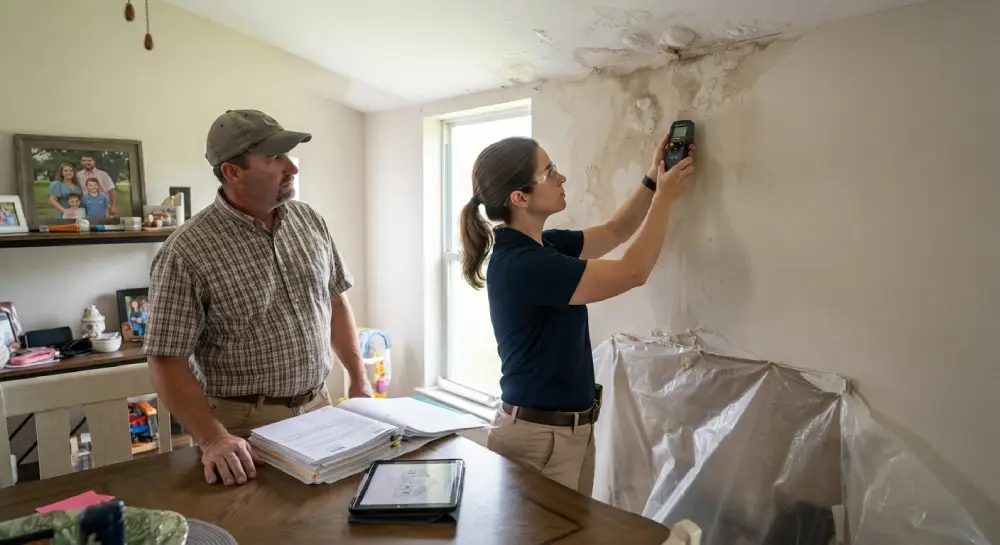
The Inspection Does Not Capture the Entire Property
A carrier’s representative may inspect the roof and one interior room while missing exterior elevations, detached structures, attic damage, mechanical systems, fencing, or concealed moisture.
This risk can increase after a regional storm because adjusters may be handling a high volume of claims. A fast inspection is not necessarily a complete inspection.
The Estimate Contains Scope Omissions
An estimate may recognize the basic damaged item but omit the related work required to complete the repair.
For example, a roof estimate might omit:
- Tear-off of additional layers
- Underlayment
- Flashing
- Drip edge
- Starter course
- Ventilation
- Steep- or high-roof labor
- Debris disposal
- Interior protection
- Code-related requirements
A water claim may include drywall but omit insulation, texture, paint transitions, baseboards, flooring manipulation, cabinetry, drying equipment, or access.
The Cause of Loss Is Oversimplified
Bridge City storm claims can involve wind, rain, falling objects, drainage issues, rising water, and pre-existing conditions. If the insurer assigns all damage to an excluded cause without carefully evaluating the sequence of events, covered damage may be overlooked.
Cause-of-loss analysis is especially important when both a property policy and flood policy may be involved.
Depreciation Is Applied Incorrectly or Not Explained
Insurance estimates may include recoverable and nonrecoverable depreciation. Property owners sometimes receive an initial payment without understanding what was withheld, what must be completed, or what documentation is needed to request additional recoverable amounts.
A public adjuster can review how depreciation was applied and explain the claim calculation.
Pricing Does Not Reflect Post-Storm Conditions
After a major storm, labor and material demand can rise. Specialty trades may be difficult to schedule, and temporary measures may add to the cost. An estimate prepared from generalized assumptions may not reflect the work required at the specific Bridge City property.
Documentation Is Incomplete
Insurance companies make decisions based on documentation. A contractor’s one-page proposal may not identify quantities, materials, labor steps, or policy-related issues in enough detail.
A well-prepared claim file may include photographs, measurements, moisture data, estimates, invoices, inventories, receipts, expert findings, and written explanations. Many underpayments begin with avoidable documentation and communication problems. Reviewing these common property insurance claim mistakes can help Bridge City policyholders preserve evidence and avoid weakening the claim.
Our Public Adjusting Process
1. Free Claim Review
We begin by learning what happened and reviewing the current status of the claim. This may include the policy, carrier estimate, payment letters, denial letters, contractor proposals, photographs, and communications.
We then explain whether the claim appears to warrant a more detailed review.
2. Property Inspection
When retained, we inspect the affected building and document visible damage. The inspection may include the roof, exterior, interior, attic, detached structures, contents, and commercial areas relevant to the loss.
The purpose is to build a complete damage picture—not simply repeat what appears on the carrier estimate.
3. Policy and Coverage Review
We review the applicable policy language, endorsements, deductibles, limitations, exclusions, and valuation provisions. Coverage decisions remain subject to the policy and carrier, but a clear understanding of the contract helps organize the claim correctly.
For Bridge City storm losses, this step may include examining whether different damage components relate to wind, rain, flood, equipment failure, or another cause.
4. Documentation and Scope Preparation
We organize photographs, measurements, repair requirements, contents information, invoices, and other supporting material. When appropriate, we prepare a detailed estimate or scope of loss.
This documentation identifies what needs repair and why the work belongs in the claim.
5. Claim Presentation and Negotiation
TX Public Adjusting communicates with the insurance carrier, responds to claim-related requests, presents supporting documentation, and addresses differences between the competing scopes.
Negotiation may involve additional inspections, estimate comparisons, supplements, questions about causation, and policy-based discussions.
6. Settlement Review
When the insurance company issues a revised estimate or payment decision, we review it against the documented loss. We explain the result and identify unresolved differences when appropriate.
No public adjuster can guarantee a particular payment. Our role is to professionally document and advocate for the policyholder’s claim under the applicable policy.
A Bridge City Claim Requires Local Awareness
Bridge City is not simply a generic “Texas” service area. Local claims are influenced by proximity to waterways, low-lying terrain, humid conditions, hurricane exposure, regional contractor demand, and the connection between Orange County and the Beaumont–Port Arthur industrial corridor.
Properties near Cow Bayou may face different drainage or access concerns than properties closer to central Roundbunch Road. Buildings near major corridors may have commercial signage, flat roofing, inventory, or tenant improvements that require separate documentation. Rural-edge properties toward Orangefield may include workshops, detached garages, equipment storage, fences, and larger accessory structures.
Local references that matter to Bridge City property owners include:
- Roundbunch Road
- Texas Avenue
- Ferry Drive
- Cow Bayou
- Bridge City Historical Museum
- Bridge City High School
- Bridge City Little League
- The routes toward Orange, Port Arthur, and Beaumont
These details matter because an insurance claim must reflect the actual property and its use. A slab-on-grade home, metal workshop, retail suite, church campus, and waterfront-adjacent property should not be adjusted from the same simplified template.
Why Choose TX Public Adjusting
We Represent Policyholders
The insurance company’s adjuster works for the carrier. TX Public Adjusting works for the policyholder.
Our responsibility is to document the loss, explain the claim, and advocate for the client’s interests under the policy.
Texas-Focused Property Claim Experience
Texas property claims involve hail, hurricanes, tornadoes, freezes, fires, windstorms, plumbing losses, and water damage. Our experience reviewing thousands of claims helps us recognize common scope gaps and documentation problems.
Residential and Commercial Expertise
We assist homeowners, landlords, investors, business owners, churches, associations, and commercial property operators. Commercial losses require particular attention to building systems, inventory, tenant improvements, income records, and operational disruption.
Licensed and Identifiable
TX Public Adjusting is operated by Rise Public Adjusting LLC.
Texas Public Adjuster License #3356839
Property owners should verify licensing and understand who the adjuster represents before signing an agreement.
Detailed Claim Documentation
We focus on evidence: photographs, measurements, repair requirements, policy provisions, estimates, inventories, invoices, and organized communication.
Free Claim Review and No Upfront Fees
Bridge City property owners can request a free initial review. There are no upfront fees for the review, and any engagement terms are explained before representation begins.
Already received an estimate? A second look may uncover omitted rooms, roof components, exterior damage, or water-related work. Request a free claim review from TX Public Adjusting.
Areas We Serve Near Bridge City
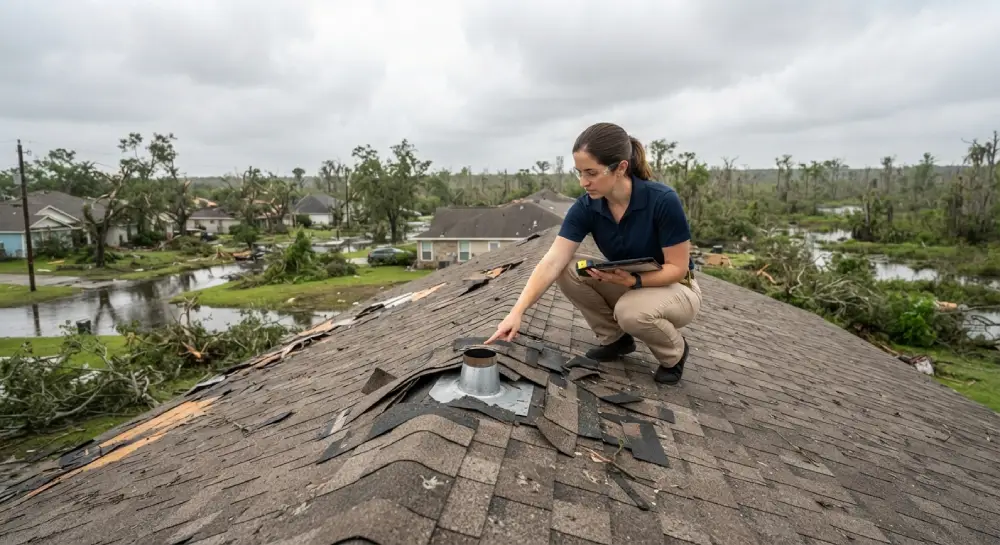
TX Public Adjusting assists policyholders in Bridge City and surrounding Southeast Texas communities, including:
- Orange
- West Orange
- Pinehurst
- Orangefield
- Vidor
- Mauriceville
- Port Neches
- Groves
- Nederland
- Port Arthur
- Beaumont
- Little Cypress
- Cove
- Rose City
We also handle qualifying residential and commercial property claims throughout our Texas service areas.
Frequently Asked Questions
How can a public adjuster help with a Bridge City hurricane claim?
A public adjuster can inspect the property, document wind and rain damage, review the policy, prepare a detailed repair scope, and communicate with the insurance carrier. This can be useful when a hurricane affects the roof, exterior, interior, contents, and detached structures during the same event.
Bridge City claims may also involve questions about wind versus flood. A public adjuster can help organize the evidence and separate damage components according to the reported cause, policy language, and available documentation.
Does homeowners insurance cover flooding in Bridge City?
Standard homeowners policies generally exclude flooding caused by rising surface water or storm surge. Flood coverage is commonly purchased through a separate flood policy. Wind-created openings and rain entering through those openings may be treated differently, depending on the policy and facts.
Because the same storm can create both wind and flood damage, property owners should photograph exterior damage, visible water lines, roof openings, and the timing of water entry. Do not assume that all storm-related water damage belongs under only one policy.
When should I hire a public adjuster after property damage?
A public adjuster can be hired shortly after the loss, during an active claim, after receiving a low estimate, or in some cases after a partial denial. The best timing depends on the claim status, policy deadlines, and available evidence.
Early involvement can help preserve documentation and organize the claim before repairs remove visible evidence. Help may still be available later, but waiting can make causation and scope disputes harder to resolve.
Can you review an insurance estimate I already received?
Yes. TX Public Adjusting can compare the carrier’s estimate with the observed damage, contractor information, photographs, and policy terms.
We look for omitted areas, low quantities, missing repair steps, depreciation issues, pricing differences, and damage that may not have been included in the original inspection.
What does a Bridge City public adjuster charge?
Public-adjuster fees are generally based on the engagement agreement and applicable Texas requirements. The fee structure should be explained in writing before representation begins.
TX Public Adjusting offers a free claim review and does not charge an upfront fee for that initial evaluation. A policyholder should always review the full agreement and ask questions before hiring any adjuster.
Can a public adjuster help if my roof claim was denied?
A public adjuster may be able to help review the denial, inspect the roof, examine the carrier’s stated reason, and assemble additional documentation. Common disputes include wear and tear, age, prior damage, cosmetic damage, and lack of a storm-created opening.
A denial is not automatically incorrect, and representation does not guarantee reversal. The first step is determining whether the facts and policy support a reasonable basis for further claim presentation.
What happens when wind and flood damage occur together?
The damage must be evaluated component by component. Roof or siding damage caused by wind may be different from lower-wall damage caused by rising water. Photographs, timelines, water lines, debris patterns, weather information, and inspection findings may help distinguish the causes.
A property owner with both a homeowners or commercial property policy and a flood policy may need to submit documentation under each policy. Consistency and careful organization are essential.
Do you handle commercial claims in Bridge City?
Yes. TX Public Adjusting assists with commercial building, contents, inventory, equipment, tenant-improvement, and business-income claims when covered.
Bridge City businesses may face roof damage, water intrusion, signage damage, electrical issues, spoiled stock, equipment interruption, or temporary closure after a major storm. Commercial documentation should address both physical damage and the operational impact.
What should I do immediately after storm damage?
Protect people first and follow local emergency instructions. When it is safe, photograph the exterior, roof areas visible from the ground, interior damage, water lines, damaged contents, and temporary repairs. Take reasonable steps to prevent further damage without discarding important evidence.
Keep receipts, contractor communications, drying records, hotel costs, and damaged-item inventories. Report the claim promptly and review your policy for duties and deadlines.
Can TX Public Adjusting guarantee a larger settlement?
No reputable public adjuster should guarantee a specific settlement. Payment depends on the policy, cause of loss, condition of the property, evidence, applicable deductibles, and the carrier’s coverage determination.
TX Public Adjusting’s role is to identify and document covered damage, prepare a professional claim presentation, and advocate for the policyholder during the adjustment process.
Get a Free Bridge City Claim Review
A low estimate does not always mean the claim is complete. Missing roof components, hidden moisture, exterior damage, contents, code-related work, and commercial losses can materially affect the amount required to restore a property.
TX Public Adjusting helps Bridge City homeowners and business owners review hurricane, wind, water, fire, hail, roof, and commercial property claims.
TX Public Adjusting
Operated by Rise Public Adjusting LLC
Texas License #3356839
Request a free claim review with no upfront fees. Contact TX Public Adjusting to discuss your Bridge City property damage claim and determine the next practical step.