

Property damage in Cut and Shoot can turn into an insurance dispute faster than many property owners expect. A severe thunderstorm can damage shingles, metal roofing, siding, fencing, windows, and outbuildings in a matter of minutes. Heavy rain can expose roof leaks or drainage problems. Fire, burst pipes, falling trees, and wind-driven rain can create losses that affect far more than the immediately visible area.
If you need a public adjuster in Cut and Shoot, TX, TX Public Adjusting represents homeowners, business owners, landlords, and other policyholders throughout Montgomery County. We inspect property damage, review insurance estimates, document the scope of loss, and negotiate with the insurance carrier on behalf of the policyholder.
TX Public Adjusting is operated by Rise Public Adjusting LLC, Texas License #3356839.
If your claim has been delayed, denied, underpaid, or you simply want a second set of experienced eyes on the carrier’s estimate, request a Free Claim Review. There are no upfront fees.
Why Property Owners Hire a Public Adjuster in Cut and Shoot
Cut and Shoot sits east of Conroe in Montgomery County along the Highway 105 corridor. Property in this part of the county ranges from established homes and acreage properties to newer residential construction, manufactured homes, shops, detached garages, barns, and small commercial buildings.
That mix matters after a loss.
A storm claim involving a house on a larger tract may also involve fencing, a detached structure, exterior equipment, trees, gates, or other insured improvements. A commercial loss can include roofing, inventory, interior finishes, equipment, signage, and interruption to normal operations. A carrier inspection that focuses on only one obvious area of damage may not capture the full scope.
A public adjuster works for the policyholder, not the insurance company. Property owners who want to understand the difference between the professionals involved in an insurance claim can read our public adjuster vs. independent adjuster guide.
Our role is to examine the property and claim from your side of the table. That can include:
- Reviewing the insurance policy and carrier estimate
- Inspecting visible and potentially overlooked damage
- Photographing and documenting damaged building components
- Comparing the carrier’s scope with conditions at the property
- Preparing or reviewing repair estimates
- Identifying omitted line items
- Organizing supporting claim documentation
- Communicating with the insurance company
- Negotiating the claim based on the documented loss
Property owners often call us after receiving a settlement that simply does not appear consistent with what contractors are finding at the property.
Others contact us before the claim gets that far.
If the loss is substantial, getting the scope organized early can help prevent important damage from being overlooked.
Need help with a Cut and Shoot property claim? Request a Free Claim Review from TX Public Adjusting.
Property Damage Risks in Cut and Shoot and Montgomery County
Cut and Shoot has a different storm profile than many inland Texas communities. Its location in southeastern Texas means property owners have to be prepared for severe thunderstorms as well as tropical systems capable of carrying heavy rain and damaging winds well inland.
Severe Thunderstorms and Hail
Hail is a serious concern for roofs throughout Montgomery County.
Even when a roof does not leak immediately after a storm, hail can affect asphalt shingles, vents, flashing, gutters, downspouts, window screens, HVAC components, metal roofing, fencing, and other exterior materials.
That is one reason a quick ground-level inspection is not always enough.
Damage may appear as:
- Shingle bruising or fractured matting
- Granule loss
- Dents in soft metals
- Damaged roof vents and flashing
- Dented gutters and downspouts
- Window or screen damage
- Impact marks on metal roofing
- Cracked exterior components
- Damage to detached structures
Properties around Cut-N-Shoot Estates, Crystal Forest, Tanglewilde Farms, Cagle Branch Estates, Forest Trace, and other communities around the 77303 and 77306 areas can have very different roof ages, building types, and exterior materials. A proper storm inspection needs to account for those differences.
High Winds and Tornadoes
Strong thunderstorms moving across Montgomery County can produce straight-line winds as well as tornadoes.
Wind claims frequently involve more than missing shingles. We may find lifted or creased shingles, ridge damage, compromised flashing, broken fencing, fallen limbs, detached-building damage, damaged siding, and openings that allow rain into the structure.
Cut and Shoot also has direct tornado history. That makes wind damage more than a theoretical concern for local property owners.
After a severe storm, it is worth examining the entire building envelope rather than assuming the damage is confined to whichever section is easiest to see from the driveway.
Heavy Rain and Water Intrusion
Cut and Shoot and the surrounding Montgomery County area can experience intense rainfall during thunderstorms and tropical weather.
Water damage claims become especially complicated when an insurer disputes where the water entered, how long the condition existed, or which portions of the resulting damage are covered.
For example, wind may damage roofing or flashing first. Rain then enters through the storm-created opening and damages insulation, drywall, ceilings, flooring, cabinets, or personal property.
The roof damage and interior water damage should be investigated together.
Tropical Storm and Hurricane Effects
Cut and Shoot is inland, but it is still close enough to the Gulf Coast for tropical systems to matter.
A hurricane or tropical storm does not need to make landfall directly in Montgomery County to produce substantial property damage. Inland effects can include prolonged heavy rainfall, falling trees, wind damage, roof failures, electrical problems, and water intrusion.
Properties with mature trees or acreage can face additional exposure from limbs and trees striking roofs, accessory buildings, fences, vehicles, and utility components. For more information about wind, rain, roof, interior, and structural losses, see our guide to property damage after a hurricane.
Winter Freeze Damage
Hard freezes are less frequent than thunderstorms, but they can produce expensive claims.
Frozen plumbing lines can rupture inside walls, attics, garages, and other spaces. Once temperatures rise and the pipe thaws, significant water damage can occur before the source is discovered.
A freeze-related claim may involve plumbing access, drywall, insulation, flooring, cabinets, contents, drying, and other repairs.
Common Insurance Claims in Cut and Shoot
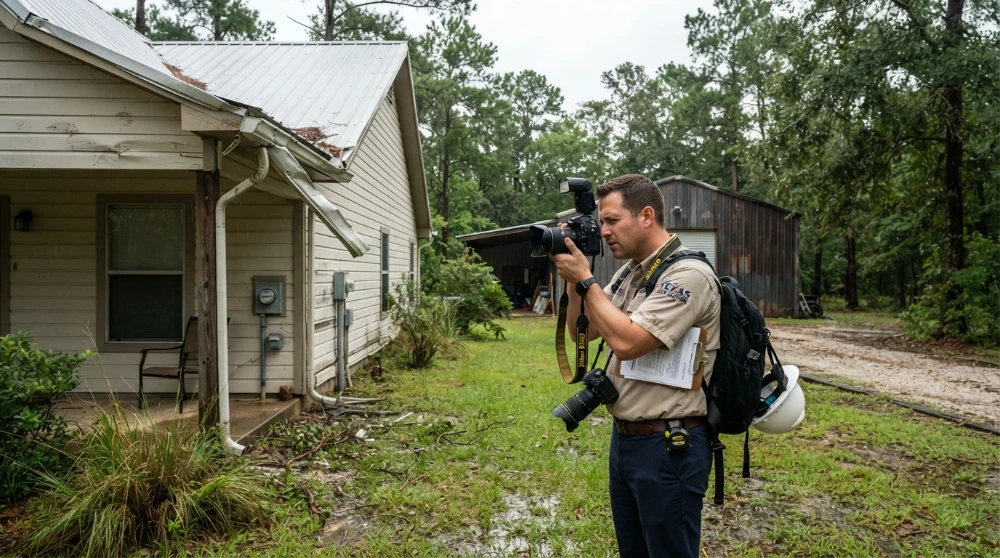
We assist Cut and Shoot property owners with both residential and commercial property losses.
| Claim Type | Damage We Commonly Review |
| Hail Damage | Roofing, gutters, vents, flashing, siding, windows and exterior metals |
| Wind & Storm Damage | Shingles, trees, fencing, siding, structural openings and detached buildings |
| Water Damage | Ceilings, drywall, insulation, flooring, cabinets and contents |
| Fire & Smoke Damage | Structure, contents, smoke residue, odor and related restoration |
| Roof Claims | Shingles, metal systems, decking, flashing, penetrations and interior leaks |
| Commercial Claims | Roofing, interiors, equipment, inventory and business-related property damage |
Hail Damage Claims
Hail claims often become underpaid because the carrier and property owner disagree over what was actually damaged.
The adjuster’s estimate may allow for spot repairs while a contractor identifies damage across multiple roof slopes. Exterior accessories may be omitted. Interior staining associated with the storm may receive little attention.
TX Public Adjusting evaluates the entire loss rather than focusing solely on the most obvious roof damage.
For a deeper look at inspections, documentation, and carrier scope issues, read our hail damage roof insurance claim guide for Texas property owners.
Water Damage Claims
A plumbing failure, roof leak, appliance leak, storm opening, or other covered event can spread water beyond the point where it first becomes visible.
Water can move behind drywall, under flooring, into cabinets, through insulation, and between rooms.
We review the documented cause of loss, damaged areas, mitigation records, repair scope, photographs, and the carrier’s estimate to identify potential gaps.
If the carrier’s estimate does not reflect the full affected area, a water damage public adjuster can review the documented loss and identify potential scope omissions.
Fire Damage Claims
Fire losses are often among the most detailed property claims.
The claim may include direct burn damage along with smoke, soot, odor, water used during firefighting, damaged contents, electrical components, HVAC contamination, debris removal, and temporary living expenses when coverage applies.
Inventory documentation can become especially important after a serious residential or commercial fire.
Property owners dealing with a major fire loss can also review our fire insurance adjuster guide for more information about documenting structure, contents, smoke, and related damage.
Storm Damage Claims
A single Montgomery County thunderstorm may produce wind, hail, rain, lightning, and falling-tree damage at the same property.
That makes storm claims particularly dependent on a thorough inspection.
We look at how the different parts of the loss connect. A damaged roof, for example, may explain ceiling staining several rooms away. A fallen tree may damage roofing, fascia, framing, fencing, and electrical components at the same time.
Roof Damage Claims
Roof claims are one of the most common reasons property owners contact a public adjuster.
Disagreements can develop over:
- Repair versus replacement
- Number of damaged slopes
- Roofing accessories
- Flashing and penetrations
- Underlayment
- Ventilation
- Metal components
- Interior water damage
- Contractor pricing
- Depreciation
- Building-code-related items when applicable
If you received an estimate that does not appear to match the damage your roofer found, learn how a public adjuster for a roof claim can review the carrier’s estimate, roofing scope, measurements, and potentially overlooked damage.
Commercial Property Claims
Businesses and commercial property owners along the Highway 105 corridor and throughout eastern Montgomery County can face losses involving much more than the exterior of the building.
Commercial claims may include:
- Low-slope and metal roofing systems
- Interior build-outs
- Tenant improvements
- Inventory
- Equipment
- Electrical systems
- HVAC equipment
- Signage
- Water mitigation
- Business-related documentation when applicable under the policy
TX Public Adjusting works with both residential and commercial policyholders. Business and property owners with larger losses can learn more about our commercial public adjuster services for Texas properties.
Why Cut and Shoot Insurance Claims Become Underpaid
An insurance settlement is based heavily on what makes it into the carrier’s documented scope.
That is where problems frequently begin.
Damage Was Missed During the Initial Inspection
Storm damage is not always obvious. An inspection may identify roof damage but miss gutters, vents, fencing, exterior finishes, interior staining, or a detached structure.
Once an incomplete scope becomes the foundation of the estimate, the settlement can also be incomplete.
The Estimate Leaves Out Necessary Work
A carrier may recognize that something is damaged but leave out work needed to complete the repair properly.
One missing line item may not look significant. Ten or twenty omissions across a larger claim can make a substantial difference.
Depreciation Creates Confusion
Many policies and estimates distinguish between replacement cost and actual cash value. Recoverable depreciation may also depend on policy language and completion of repairs.
Property owners sometimes look only at the first payment and assume it represents the full claim value.
We review the estimate, payment summary, and relevant policy provisions to help determine how the numbers were calculated.
Contractor and Carrier Estimates Do Not Match
The contractor may identify a much larger scope than the carrier.
That does not automatically mean either estimate is correct. The disagreement needs to be broken down component by component.
We compare scopes, quantities, measurements, pricing, and supporting documentation so the dispute can be addressed specifically rather than with a general statement that the estimate is “too low.”
Documentation Is Incomplete
Photographs, measurements, invoices, mitigation records, contents inventories, expert reports, repair estimates, and communications can all become important parts of a property claim.
When documentation is scattered or missing, proving the full loss becomes harder.
Our Public Adjusting Process
Every claim is different, but our work generally follows a structured process.
1. Claim Review
We begin by discussing what happened, when the damage occurred, what the carrier has done so far, and where you believe the claim may be falling short.
If a claim has already been inspected, we can review the carrier estimate and related documents.
2. Property Inspection
We inspect the property and evaluate the areas associated with the reported loss.
For a Cut and Shoot storm claim, that could include roofing, exterior components, detached structures, fencing, interior rooms, and areas where water entered the building.
3. Damage Documentation
We organize photographs, measurements, estimates, inventories, reports, and other supporting information needed to present the claim.
The goal is to build a clear, defensible record of the damage.
4. Scope and Estimate Review
We compare the documented loss with the insurance company’s scope.
If important work appears to be missing, we identify the discrepancy and support the requested correction with appropriate documentation.
5. Insurance Company Negotiation
TX Public Adjusting communicates and negotiates with the insurance carrier on behalf of the policyholder.
That allows the discussion to focus on the scope, documentation, policy, and cost required to address the covered loss.
Why Choose TX Public Adjusting for a Cut and Shoot Claim?
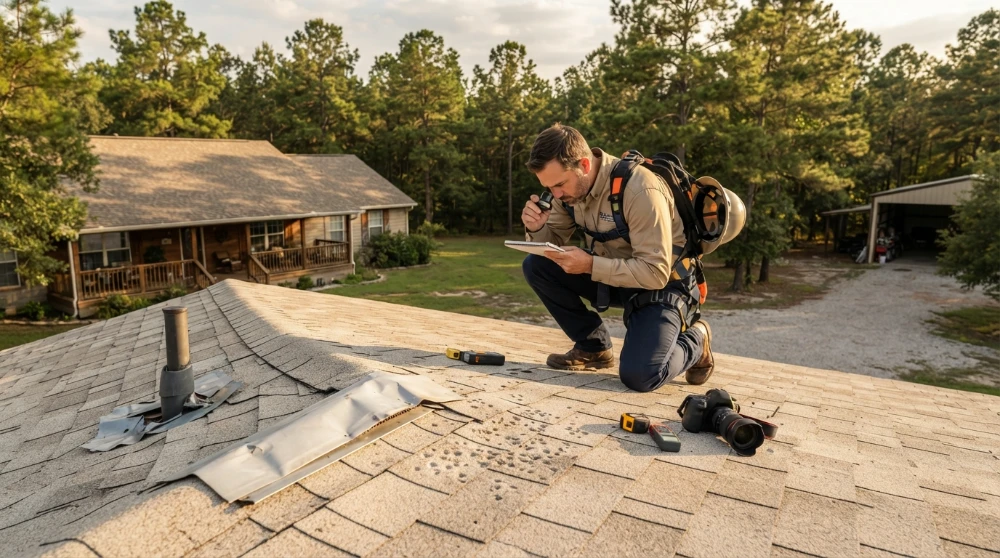
Property owners hire us because they want experienced representation from someone who understands insurance claims and works for them—not their insurance company.
Licensed Texas Public Adjuster
TX Public Adjusting operates through Rise Public Adjusting LLC, Texas License #3356839.
We Represent Policyholders
Insurance companies employ or retain adjusters to investigate claims for the carrier.
A public adjuster has a different role. We represent the insured property owner.
Texas-Focused Claim Experience
Texas claims come with their own weather patterns, building systems, policy issues, and repair challenges.
Our work includes thousands of claim reviews involving residential and commercial properties across Texas.
Residential and Commercial Experience
We work with homeowners as well as business and commercial property owners dealing with significant property losses.
Detailed Claim Documentation
A strong insurance claim is built on evidence.
Our work may include property inspection, photographs, estimate analysis, scope review, damage documentation, inventories, and organized communication with the insurance carrier.
Free Claim Review
You do not have to guess whether your claim warrants professional help.
Contact TX Public Adjusting for a Free Claim Review with no upfront fees.
Local Claim Help Throughout Cut and Shoot
Cut and Shoot may be a small city, but the properties around it are spread across a broad part of eastern Montgomery County.
We assist policyholders around:
- Cut-N-Shoot Estates
- Crystal Forest
- Tanglewilde Farms
- Cagle Branch Estates
- Forest Trace
- Crockett-area subdivisions
- Oak Forest Estates
- Nearby acreage along Highway 105
- FM 1484 and surrounding roads
- FM 1485 and eastern Montgomery County
The community’s unusual name dates back to a local dispute in 1912, and Cut and Shoot retains the small-town identity that distinguishes it from the larger development around Conroe.
Today, Highway 105 remains one of the area’s defining routes. Cut and Shoot City Hall, nearby residential subdivisions, wooded acreage, schools, churches, shops, and local businesses create a property mix very different from a dense Houston neighborhood.
Those local differences matter when documenting a claim.
A storm loss on acreage with a house, shop, fencing, and detached structures should not be treated exactly like a claim involving a suburban home on a small lot.
Areas We Serve Near Cut and Shoot
TX Public Adjusting assists property owners throughout Montgomery County and nearby Southeast Texas communities. We also provide claim assistance for property owners looking for a public adjuster in Conroe, a public adjuster in Willis, a public adjuster in Panorama Village, or a public adjuster in Oak Ridge North.
- Conroe
- Willis
- Panorama Village
- Splendora
- New Caney
- Woodloch
- Shenandoah
- Oak Ridge North
- Cleveland-area communities
- Roman Forest
- Porter and surrounding areas
If your property is outside the Cut and Shoot city limits but within the surrounding Montgomery County area, contact us to discuss the loss.
Frequently Asked Questions About Public Adjusters in Cut and Shoot
What does a public adjuster in Cut and Shoot do?
A public adjuster represents the property owner during an insurance claim. We review the policy and insurance estimate, inspect the damage, document the loss, identify potential omissions, and negotiate with the carrier for the policyholder. If you are new to the process, our Texas property-owner guide explains what a public adjuster does and how public adjusting works.
That differs from the insurance company’s adjuster, whose assignment comes from the carrier.
When should I hire a public adjuster after a Cut and Shoot storm?
You can involve a public adjuster early in a significant claim or after a problem develops.
Cut and Shoot property owners commonly seek help when a storm claim appears underpaid, damage has been omitted, the carrier and contractor disagree over the scope, a claim is delayed, or the policyholder feels overwhelmed by the documentation required.
Can you help if my insurance company already inspected my property?
Yes. Many clients contact us after the carrier has completed its first inspection.
We can review the carrier’s estimate against the conditions at the property and determine whether additional documentation or a more detailed scope review may be appropriate.
What if my Cut and Shoot roof claim was underpaid?
Start by comparing the carrier estimate with what your roofing contractor says is required.
If there is a significant gap, TX Public Adjusting can review the roof damage, the insurance estimate, photographs, measurements, and related interior or exterior damage. We then identify specific differences rather than relying on a vague disagreement over the total price.
Does hail damage always mean I need a new roof?
No. The appropriate repair depends on the actual damage, roofing system, age and condition of the materials, policy provisions, and other factors.
The purpose of an inspection is to document what the storm actually damaged. We do not assume every hail claim requires full replacement, but we also do not assume a small repair is adequate when the documented damage supports a broader scope.
Can you help with water damage caused by a storm?
Potentially, yes.
If wind or another covered event damages the building and rain enters through the resulting opening, both the exterior damage and resulting interior water damage may need to be documented. Coverage always depends on the individual policy and circumstances of the loss.
Do you handle fire claims in Cut and Shoot?
Yes. We assist with residential and commercial fire losses.
Fire claims can involve structural damage, smoke, soot, contents, water damage, debris removal, electrical systems, HVAC contamination, and temporary living or business-related expenses when covered by the policy.
Do you work on commercial insurance claims in Montgomery County?
Yes.
TX Public Adjusting handles both residential and commercial property claims. Commercial losses may involve roofing systems, interiors, equipment, inventory, tenant improvements, mitigation costs, and other business-property issues.
Is it too late to hire a public adjuster after I received a settlement?
Not necessarily.
Receiving an initial payment does not always mean every claim issue has been resolved. The answer depends on the status of the claim, the policy, applicable deadlines, releases or agreements, and the circumstances surrounding the loss.
Read our guide explaining when it is too late to hire a public adjuster, or contact us so we can review where your claim currently stands.
How much does it cost to have TX Public Adjusting review my claim?
The initial claim review is free, and there are no upfront fees for that review.
We explain our agreement and compensation before you retain us so you can decide whether professional representation makes sense for your claim.
Get a Free Cut and Shoot Insurance Claim Review
If a storm, hail, fire, water loss, roof problem, or another covered event damaged your Cut and Shoot property, you do not have to rely solely on the insurance company’s estimate to understand the loss.
TX Public Adjusting can review what happened, inspect the documentation you have received, and help determine whether important damage or repair costs may have been overlooked.
TX Public Adjusting
Rise Public Adjusting LLC
Texas License #3356839
Free Claim Review
- No upfront fees
- Licensed Texas Public Adjuster
- Residential and commercial claims
- Hail, storm, roof, water, and fire losses
- Independent representation for policyholders
Contact TX Public Adjusting today to request your Free Claim Review.