

Property damage in Sanger can turn into a complicated insurance claim faster than many owners expect. A spring hailstorm may affect shingles, vents, gutters, fencing, siding, and detached structures across the same property. Wind-driven rain can enter through a damaged roof and create interior water damage that is not obvious during the first inspection. A fire or plumbing loss can involve demolition, contents, temporary repairs, and code-related work.
TX Public Adjusting provides professional insurance claim help for Sanger homeowners, landlords, business owners, and commercial property managers. We document covered damage, review the insurance company’s estimate, identify missing scope items, and negotiate from the policyholder’s side of the claim.
TX Public Adjusting is operated by Rise Public Adjusting LLC, Texas License #3356839.
Request a Free Claim Review: Speak with a licensed Texas public adjuster before accepting an estimate that may not account for the full extent of your loss. There are no upfront fees for the initial claim review.
Insurance Claim Help for Sanger Property Owners
Sanger is a growing North Texas community in northern Denton County. It sits along Interstate 35, north of Denton and within convenient reach of Lake Ray Roberts. The city’s location gives residents access to the larger Dallas–Fort Worth region while preserving the small-town character found around Historic Downtown Sanger, FM 455, and the rural properties surrounding the city.
That location also exposes Sanger properties to some of North Texas’s most damaging weather patterns. Severe thunderstorms can arrive with large hail, straight-line winds, lightning, heavy rain, and occasional tornado activity. During late fall and winter, hard freezes can contribute to burst pipes, damaged plumbing systems, and interior water losses.
The property mix in Sanger makes insurance claims especially varied. Our public adjusters may be asked to evaluate:
- Established homes near Historic Downtown Sanger
- Newer residential construction in communities such as Sable Creek, Heritage West, Lake Ridge Estates, and Arrowhead Estates
- Rural homes, workshops, barns, fencing, and outbuildings outside the denser parts of the city
- Retail, restaurant, office, warehouse, and service properties near Interstate 35
- Rental homes and investment properties
- Church, school, and community facilities
- Properties near the FM 455 and Lake Ray Roberts corridor
Sanger’s residential areas include a mix of older construction, newer subdivisions, and acreage properties. That variety affects how damage should be inspected and estimated. An older home may require matching discontinued materials or addressing repairs involving multiple layers of previous construction. A newer home may have manufacturer-specific components, modern ventilation systems, and current code requirements. Rural properties may include several insured structures that must be documented separately.
Why Property Owners Hire a Public Adjuster in Sanger
The adjuster sent by an insurance carrier evaluates the claim for the insurance company. A public adjuster works for the policyholder. Understanding the difference between a public adjuster and an insurance company adjuster can help Sanger property owners decide whose interests each professional represents during the claim.
That distinction matters when the damage is extensive, the estimate is incomplete, or the insurer disputes part of the claimed loss. A Sanger public adjuster can independently examine the property, review the policy, prepare a detailed scope, organize supporting evidence, and communicate with the carrier about covered damage.
Property owners commonly contact TX Public Adjusting when:
- The carrier’s estimate is substantially lower than contractor estimates
- Important rooms, elevations, roofing components, or structures were omitted
- The insurer approved a repair when replacement may be necessary
- The claim involves several types of damage
- Depreciation appears excessive or unexplained
- The property owner does not understand the settlement paperwork
- The claim has been delayed, partially denied, or closed
- A commercial loss is disrupting operations
- The owner does not have time to manage inspections, estimates, inventories, and carrier communications
We have experience reviewing thousands of residential and commercial claims. That experience helps us recognize where estimates often fall short and which documentation may be needed to support a more complete evaluation.
Hiring a public adjuster does not automatically mean a dispute will occur. In many claims, the most productive first step is a careful comparison between the observed damage, the policy, the contractor’s findings, and the carrier’s scope.
Sanger’s Most Significant Storm and Property Risks
Large Hail and Roof Damage
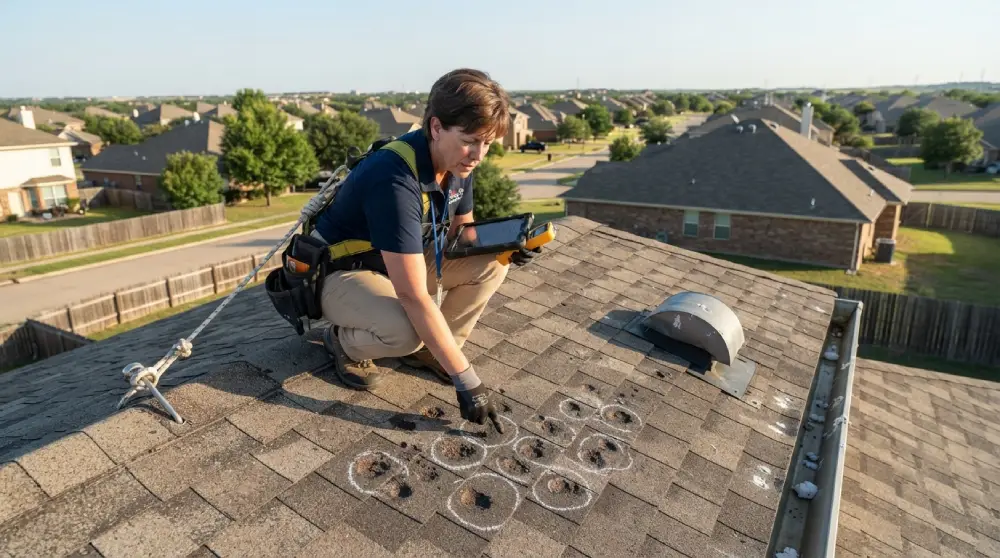
Hail is one of the most important property risks for Sanger and the surrounding North Texas region. Hail can bruise asphalt shingles, fracture matting, dislodge granules, dent metal roofing, damage vents, and leave visible impact marks on gutters, downspouts, window screens, fencing, and air-conditioning components. Property owners can review our Texas hail damage insurance claim guide for a closer look at roof damage, documentation, carrier inspections, and commonly missed claim items.
The National Weather Service has documented North Texas severe-weather outbreaks involving numerous reports of large hail, damaging winds, flooding, and tornadoes. During the April 24–29, 2026 outbreak, the Fort Worth forecast office recorded 226 reports of large hail, with some stones reaching softball size. Denton County has also experienced storms that produced significant hail damage even when no tornado was ultimately confirmed.
A hail claim should not be limited to a quick view of the shingles. A complete inspection may need to address:
- Shingles or other roof coverings
- Ridge caps, flashing, valleys, and roof penetrations
- Gutters and downspouts
- Metal vents, turbines, and chimney caps
- Siding and exterior finishes
- Windows, screens, and glazing
- Garage doors
- Fencing and gates
- Exterior lighting
- HVAC condenser fins
- Detached garages, sheds, barns, or workshops
Some hail damage is functional, while some is cosmetic. Coverage can depend on the policy language, the affected material, and whether the damage changes the component’s expected service life or ability to perform.
Straight-Line Wind and Tornado-Related Claims
Sanger lies within a region where severe thunderstorms can generate strong straight-line winds and tornado conditions. Denton County storm records include widespread wind damage, scattered large hail, and tornado activity associated with powerful storm systems moving through North Texas.
Wind losses can involve more than missing shingles. A thorough claim review may identify:
- Lifted, creased, or displaced shingles
- Damaged roof edges and flashing
- Wind-driven rain intrusion
- Broken windows or doors
- Damaged siding, soffit, and fascia
- Fallen trees or limbs
- Fence and gate damage
- Damage to outdoor equipment
- Detached-structure losses
- Interior staining, wet insulation, or damaged drywall
Wind damage can be difficult to document after emergency repairs have been completed. Property owners should photograph the condition before temporary work whenever it is safe to do so and retain invoices, receipts, damaged materials, and contractor reports.
Water Damage and Plumbing Failures
Water losses in Sanger may result from burst supply lines, appliance failures, plumbing leaks, roof openings, overflowing fixtures, or freeze-related pipe damage. The visible water is often only part of the loss.
Moisture can move beneath flooring, behind cabinets, into wall cavities, and through insulation. The claim may involve water extraction, drying equipment, demolition, antimicrobial treatment, plumbing access, reconstruction, and replacement of materials that cannot be successfully dried.
Coverage often depends on the cause and timing of the loss. A public adjuster can help organize photographs, mitigation records, moisture readings, invoices, and repair estimates so the insurer can evaluate the claimed scope.
Heavy Rain and Drainage Problems
Heavy thunderstorms may overwhelm local drainage, create roof leaks, and cause water to collect around structures. Surface flooding and rising water are commonly treated differently from rain entering through storm-created openings, so the source and pathway of the water should be carefully documented.
The distinction may affect whether the loss falls under a property policy, a flood policy, or both. Property owners should avoid assuming that every form of water damage is excluded. The actual policy language and facts of the event must be reviewed.
Fire, Smoke, and Electrical Damage
Fire claims can affect far more than the area where flames were visible. Smoke and soot may travel through HVAC systems, settle on contents, enter wall cavities, and affect rooms located far from the fire’s origin.
A Sanger fire damage claim may include:
- Structural repairs
- Smoke and soot cleaning
- Odor treatment
- HVAC cleaning or replacement
- Electrical evaluation
- Plumbing repairs
- Debris removal
- Personal-property inventory
- Temporary housing
- Business interruption
- Professional or engineering evaluations
The carrier’s first estimate may not include every affected room, item, trade, or required cleaning method. Detailed documentation is especially important before damaged materials and contents are discarded.
Freeze and Cold-Weather Claims
North Texas winters are generally milder than those in many northern states, but sudden freezes can still cause major property losses. Pipes in exterior walls, attics, garages, vacant buildings, and detached structures may be especially vulnerable.
A freeze claim can involve plumbing repairs, water mitigation, damaged flooring, cabinets, drywall, insulation, electrical components, and personal property. Commercial owners may also face interrupted operations or damaged equipment.
Common Insurance Claims in Sanger
Hail Damage Claims
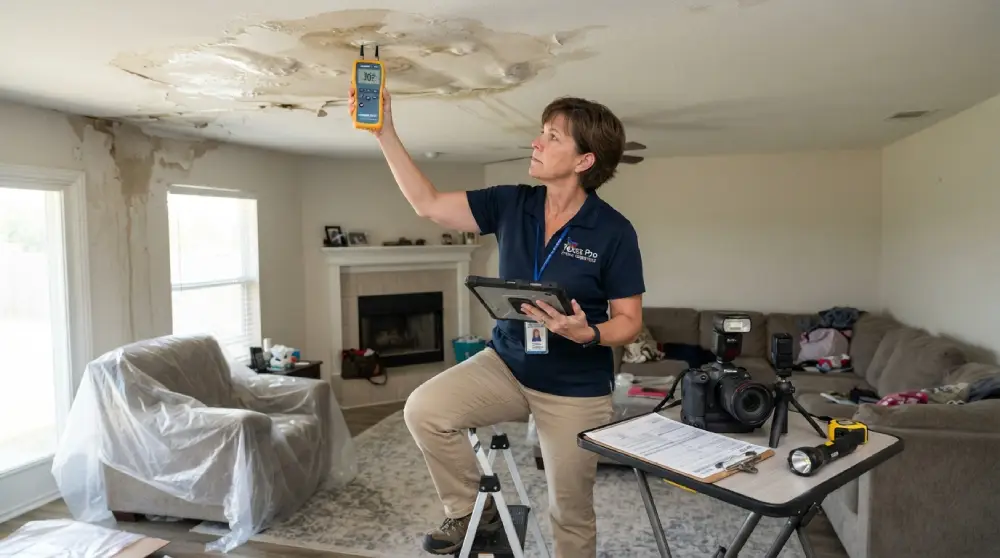
Hail damage claims are common across Denton County. We assess the roof and related exterior components rather than treating the loss as a single line item. When necessary, the claim documentation may include roof measurements, photographs, material identification, repairability concerns, and contractor findings.
Roof Damage Claims
Roof claims may arise from hail, wind, falling limbs, fire, or water intrusion. Disagreements frequently involve whether the roof can be repaired, whether materials can be reasonably matched, and which accessories must be removed and replaced to complete the covered work. A public adjuster for a roof claim can review the carrier’s measurements, scope, repair assumptions, and omitted roofing components.
Water Damage Claims
Water damage can spread beyond the room where the leak began. A water damage public adjuster can evaluate damaged areas, mitigation records, affected materials, moisture documentation, and the reconstruction scope presented to the insurance company. We also compare the carrier’s estimate with the work reasonably required to return the property to its pre-loss condition, subject to policy terms.
Fire and Smoke Damage Claims
Fire claims often require coordination between mitigation contractors, contents specialists, engineers, electricians, cleaning vendors, and reconstruction professionals. A fire insurance adjuster working for the policyholder can help organize those moving parts into one documented claim that addresses structural damage, smoke contamination, contents, debris removal, and related expenses.
Storm and Wind Damage Claims
Severe thunderstorms can cause simultaneous roof, siding, window, fence, tree, and interior damage. When the insurance company separates these issues or misses part of the loss, we prepare a consolidated scope supported by photographs and estimates.
Commercial Property Claims
Commercial claims can create immediate operational pressure. A damaged roof, wet inventory, electrical loss, or inaccessible building may interrupt income while expenses continue. A commercial public adjuster can help document the building loss, business personal property, equipment damage, income interruption, and extra expenses when those coverages apply.
TX Public Adjusting assists owners and managers of:
- Retail and restaurant properties
- Offices and professional buildings
- Warehouses and light-industrial properties
- Multifamily and rental properties
- Churches and nonprofit facilities
- Agricultural and rural-use structures
- Mixed-use properties
Commercial claims may include building damage, business personal property, loss of income, extra expense, tenant improvements, code issues, and damage to specialized equipment.
Why Sanger Insurance Claims Become Underpaid
An underpaid claim is not always caused by a single obvious mistake. Several smaller omissions can reduce the estimate substantially.
Damage Was Missed During the First Inspection
Carrier inspections may be brief, especially after a major North Texas storm creates a high volume of claims. Damage to secondary roof slopes, detached structures, exterior elevations, fencing, or interior rooms may be overlooked.
The Estimate Includes Too Little Work
The insurer may acknowledge damage but write a scope that does not include every step needed to perform the repair. Missing labor, access, disposal, protection, detachment, resetting, finish work, or permit-related items can create a major gap.
Repairability Was Not Fully Considered
A component may be physically patchable but not reasonably restorable because the material is brittle, discontinued, mechanically fastened, interlocked, or impossible to match. These conditions should be documented rather than assumed.
Depreciation Was Misunderstood
Insurance estimates may include recoverable and nonrecoverable depreciation. Property owners sometimes accept the first payment without realizing that additional funds may become available after covered repairs are completed and documentation is submitted.
Contractor Estimates and Carrier Estimates Use Different Scopes
A higher contractor estimate does not automatically prove that the insurance estimate is wrong. The two documents must be compared line by line. One may include work the other omits, use different quantities, or make different assumptions about repair versus replacement.
Documentation Was Incomplete
A valid loss can become difficult to support when photographs, damaged materials, receipts, mitigation logs, or inventories are missing. Early and organized documentation gives the claim a stronger factual foundation.
Our Public Adjusting Process
1. Claim Review
We review the claim status, available policy documents, carrier correspondence, estimates, photographs, contractor proposals, and payment records. We identify the areas that require further investigation.
2. Property Inspection
Our inspection focuses on the cause, location, and extent of the reported damage. Depending on the loss, this may include the roofing system, exterior elevations, interior finishes, contents, detached structures, and commercial areas.
3. Damage Documentation
We prepare supporting documentation that may include photographs, measurements, inventories, estimates, invoices, reports, and a detailed scope of loss.
4. Claim Presentation
We submit the documented claim to the insurance company and explain disputed or omitted items. Our presentation is based on the observed damage, policy provisions, and available supporting evidence.
5. Negotiation and Follow-Through
We communicate with the carrier’s representatives, respond to questions, attend additional inspections when appropriate, and negotiate disputed scope or pricing issues.
The insurance company makes the final coverage decision, and no public adjuster can guarantee a particular settlement. Our role is to make sure the policyholder’s position is professionally documented and clearly presented.
Concerned that your Sanger claim is missing damage? Request a free scope and claim review from TX Public Adjusting.
Why Choose TX Public Adjusting
Licensed Texas Representation
TX Public Adjusting is operated by Rise Public Adjusting LLC, Texas License #3356839. We focus on property claims within Texas and understand the types of weather losses that repeatedly affect North Texas communities.
We Represent Policyholders
We do not work for the insurance carrier. Our responsibility is to the residential or commercial policyholder who hires us.
Residential and Commercial Experience
Our experience includes thousands of claim reviews involving homes, rental properties, multifamily buildings, retail locations, warehouses, offices, churches, and other insured properties.
Detailed Claim Documentation
A claim is stronger when the scope is supported by evidence. We focus on documenting the actual damage, required repair steps, quantities, pricing, and supporting records.
Help at Different Claim Stages
You may contact us when the claim is first reported, after the insurance inspection, after receiving an estimate, or when a claim appears underpaid or has been denied. The available options will depend on the policy, claim history, deadlines, and current condition of the property.
Free Initial Claim Review
We offer a free initial review with no upfront review fee. We explain what we see, where the estimate may need closer examination, and whether public adjusting assistance appears appropriate.
Areas We Serve Near Sanger
TX Public Adjusting assists property owners in Sanger and surrounding North Texas communities, including:
- Denton
- Valley View
- Krum
- Pilot Point
- Aubrey
- Cross Roads
- Gainesville
- Era
- Tioga
- Ponder
- Northlake
- Justin
- Argyle
- Corinth
- Lake Dallas
Sanger’s location places it near Denton to the south, Valley View to the north, and the Lake Ray Roberts area to the east. This regional position means the same storm system may generate claims across several communities in a single event.
We serve properties near Historic Downtown Sanger, the Interstate 35 corridor, FM 455, Sanger High School, Downtown Park, John Porter Sports Park, and residential or rural areas extending toward Lake Ray Roberts. Downtown Park is located within Sanger’s historic district, while the city describes Lake Ray Roberts as one of the area’s most notable recreational and natural resources.
Frequently Asked Questions
What does a public adjuster in Sanger do?
A public adjuster represents the policyholder during a property insurance claim. The work may include reviewing the policy and carrier estimate, inspecting the property, documenting damage, preparing a repair scope, communicating with the insurer, and negotiating disputed claim items.
The insurance company’s adjuster works for the carrier. TX Public Adjusting works for the Sanger property owner who hires us.
When should I hire a public adjuster after a Sanger hailstorm?
You can hire a public adjuster before filing, while the claim is open, or after receiving an estimate that appears incomplete. Early involvement may help preserve evidence and organize the claim from the beginning.
Many Sanger owners contact us after discovering that the insurer’s roof estimate does not include gutters, vents, siding, windows, fencing, interior water damage, or detached structures. Property owners who already received an estimate or settlement can also review when it is too late to hire a public adjuster before assuming that no further claim assistance is available.
Can a public adjuster help with an underpaid roof claim?
Yes. We can compare the carrier’s estimate with the observed damage, roof measurements, contractor findings, repair requirements, and policy terms.
An estimate may be low because it uses incorrect quantities, omits necessary components, allows for a limited repair, or does not account for related exterior and interior damage.
Can you reopen a closed insurance claim?
Some claims can be reopened or supplemented when additional covered damage or omitted costs are documented. The answer depends on the policy, the reason the claim was closed, applicable deadlines, prior payments, and whether repairs have already been completed.
A closed file should not automatically be treated as the end of the process. We can review the records and explain whether further action appears available.
Do you handle denied claims in Sanger?
We review denied and partially denied property claims. For storm-specific guidance, property owners can also read what to do if your hail claim was denied. A denial may involve the cause of loss, maintenance allegations, wear and tear, exclusions, late notice, or insufficient evidence.
We examine the denial letter, policy language, photographs, reports, and loss history. Depending on the circumstances, additional documentation or professional evaluation may be appropriate. We are public adjusters, not attorneys, and will recommend legal counsel when the issue requires legal advice.
How much does a public adjuster cost in Texas?
Public adjusters commonly work under a written fee agreement tied to the claim recovery. The actual fee structure depends on the claim and applicable Texas requirements.
TX Public Adjusting provides a free initial claim review and explains the fee agreement before representation begins. There is no upfront fee for the initial review.
Is every hail mark covered by insurance?
Not necessarily. Coverage depends on the policy and whether the observed condition qualifies as covered direct physical damage. Cosmetic-only damage may be treated differently under some policies, especially when endorsements apply.
The roof material, impact pattern, storm date, functional effect, and policy wording should all be reviewed before reaching a conclusion.
What should I do immediately after storm damage in Sanger?
Protect people first. Avoid unstable structures, fallen electrical lines, broken glass, and unsafe roof access. Photograph the damage from safe locations, prevent additional damage with reasonable temporary measures, save receipts, and report the loss according to the policy.
Do not discard damaged materials or authorize extensive permanent repairs until the condition has been documented, unless immediate work is necessary for safety or to prevent further damage.
Can you help with commercial property claims?
Yes. We assist Sanger business and commercial property owners with building damage, contents, equipment, inventory, tenant improvements, business-income issues, and extra expenses when those coverages apply.
Commercial claims require careful coordination because repairs, operations, leases, vendors, and income records may all affect the presentation.
How long does a Sanger property insurance claim take?
The timeline depends on the severity of the loss, availability of inspections, complexity of coverage questions, completeness of documentation, contractor involvement, and how quickly disputed issues are resolved.
A straightforward roof claim may progress faster than a fire loss involving structural work, contents, temporary housing, and several specialists. We keep the claim organized and respond to carrier requests so avoidable documentation gaps do not slow the process.
Get a Free Sanger Insurance Claim Review
A low insurance estimate does not always reflect the full cost of restoring a damaged property. Missing roofing components, incomplete water mitigation, overlooked exterior damage, excessive depreciation, and omitted commercial expenses can leave the policyholder responsible for costs that should have been evaluated within the claim.
TX Public Adjusting helps Sanger homeowners and business owners understand what the carrier included, what may be missing, and what evidence is available to support the claimed loss.
Contact TX Public Adjusting for a free Sanger property claim review.
- Licensed Texas Public Adjuster
- Rise Public Adjusting LLC
- Texas License #3356839
- Residential and Commercial Property Claims
- No upfront fee for the initial claim review
- Independent representation for policyholders