

Property damage in Roanoke can escalate quickly. A spring thunderstorm may leave hail marks across a roof near Fairway Ranch, high winds can damage commercial buildings along State Highway 114, and a burst pipe can spread water through a home before the source is found. When the insurance estimate does not reflect the full damage, a public adjuster in Roanoke can help document the loss and present the policyholder’s claim.
TX Public Adjusting represents residential and commercial property owners—not insurance companies. Our team reviews policies, inspects damaged property, prepares detailed claim documentation, and communicates with carriers throughout the settlement process. TX Public Adjusting is operated by Rise Public Adjusting LLC, Texas License #3356839.
Request a Free Claim Review. There are no upfront fees to have us evaluate your situation and explain the available next steps.
Why Property Owners Hire a Public Adjuster in Roanoke
Roanoke sits in southern Denton County at a busy point in the Dallas–Fort Worth region. The city combines established residential neighborhoods, newer master-planned communities, historic buildings, restaurants, retail centers, warehouses, offices, and properties near major transportation corridors.
That variety creates different insurance claim challenges. A wind claim on a commercial flat roof requires a different inspection than a hail claim on an asphalt-shingle home. Water damage in an older building near Historic Downtown Roanoke may involve hidden moisture, specialty materials, and code-related repair considerations. A newer home in Fairway Ranch or Briarwyck may have roofing, fencing, window, gutter, exterior finish, and interior damage from the same storm.
Insurance carriers investigate claims through their own representatives. Those adjusters may be professional and experienced, but they work within the carrier’s claim-handling structure. A licensed public adjuster works for the policyholder. Understanding the difference between a public adjuster vs. independent adjuster can help clarify who each professional represents. A public adjuster is retained by the property owner, while an independent adjuster is generally hired by the insurance carrier.
Property owners often contact TX Public Adjusting when:
- The carrier’s estimate appears too low.
- Part of the damage was left out of the scope.
- The insurer approved a repair when replacement may be necessary.
- A roof claim includes disputed hail or wind damage.
- Interior water damage is more extensive than first estimated.
- The claim has stalled or become difficult to manage.
- A business owner cannot devote enough time to documentation and carrier communication.
- A claim was denied and the owner wants an independent review.
- Supplements, depreciation, or repair estimates are creating confusion.
- Multiple contractors and mitigation vendors are involved.
Hiring a public insurance adjuster in Roanoke does not guarantee a particular settlement. It gives the policyholder professional representation, organized documentation, and a claim presentation based on the observed damage, policy terms, and reasonable repair scope.
Roanoke Property Risks: Hail, Wind, Tornadoes, and Water
Roanoke’s emergency-management resources identify hail, wind, tornadoes, lightning, flooding, wildfire, drought, winter weather, heat, and fire among the city’s hazards. The city’s outdoor warning sirens may be activated for tornado warnings, sustained winds above 70 mph, or hail measuring two inches or larger.
Hailstorms
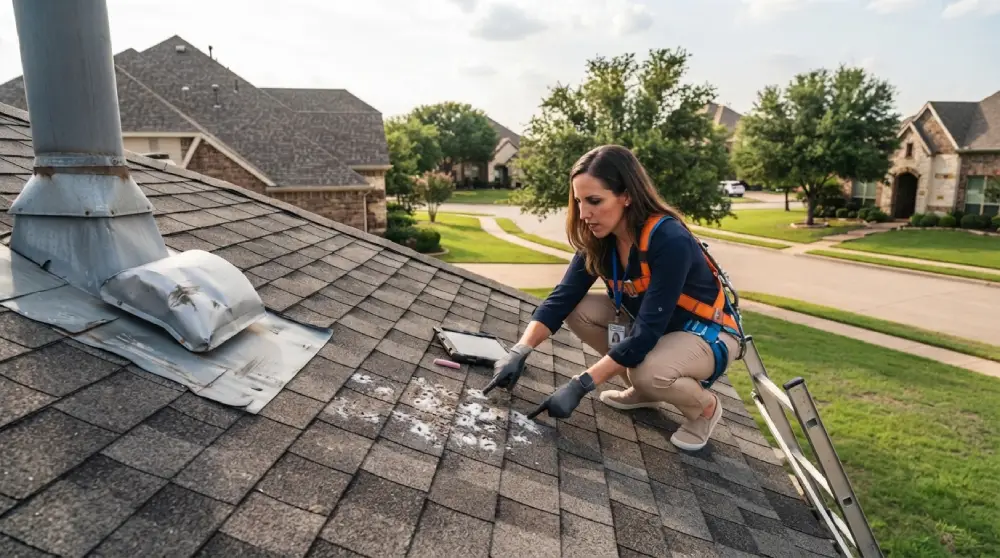
Hail is one of the most common causes of disputed property claims in North Texas. Property owners dealing with a disputed hail damage insurance claim should document both the roof and related exterior components before repairs begin. Damage may be visible immediately, but it can also be subtle. Asphalt shingles may show bruising, fractured mats, loosened granules, or impact marks that are difficult to identify from the ground.
A complete hail inspection may also include:
- Gutters and downspouts
- Metal roof vents
- Flashing
- Window screens
- Fences
- Garage doors
- Siding
- Exterior paint
- HVAC condenser fins
- Skylights
- Commercial rooftop equipment
A carrier estimate that addresses only shingles may overlook related exterior components. TX Public Adjusting reviews the entire reported loss rather than focusing on one visible area.
Straight-Line Wind and Tornado Activity
Strong winds may lift shingles, loosen flashing, damage roof edges, break tree limbs, push rain into the building envelope, and damage fences or detached structures. Tornado-producing storms can create more severe structural damage involving roofs, walls, windows, doors, utility systems, and contents.
Wind claims are often disputed when there is disagreement over whether damage resulted from a recent storm, installation problems, wear, or prior deterioration. Detailed photographs, weather information, repair history, and a clear damage analysis can be critical.
Water Damage
Water losses in Roanoke may result from burst supply lines, plumbing leaks, appliance failures, overflowing fixtures, roof openings, or wind-driven rain. Even a limited release can affect drywall, insulation, flooring, cabinetry, trim, electrical systems, and personal property.
Some of the most expensive parts of a water claim are not immediately visible. Moisture can travel under flooring, behind cabinets, inside wall cavities, and between levels of a building. A water damage public adjuster can compare moisture reports, mitigation invoices, contractor estimates, photographs, and the carrier’s scope to identify omissions or inconsistencies.
Winter Weather
North Texas freezes can cause plumbing failures, roof leaks, interior water damage, and business interruptions. After a freeze, claims may involve the initial pipe failure, demolition, drying, damaged finishes, plumbing access, temporary repairs, and the cost of restoring the affected rooms.
Fire and Smoke
Residential and commercial fire claims often include much more than burned materials. A fire insurance adjuster working for the policyholder can help document structural damage, smoke contamination, contents, debris removal, and additional living or business expenses. Smoke residue can travel throughout a structure and affect HVAC systems, furnishings, electronics, inventory, insulation, and rooms far from the source.
These claims may require documentation for:
- Structural damage
- Smoke and soot cleaning
- Contents
- Debris removal
- Temporary housing
- Business income
- Equipment
- Code-related repairs
- Odor remediation
- Temporary protection of the property
Common Insurance Claims in Roanoke
Hail Damage Claims
Roanoke homeowners and business owners frequently encounter hail-related roof claims. A carrier may approve a small repair, attribute damage to age, or omit collateral damage to gutters, screens, vents, fencing, and exterior finishes.
TX Public Adjusting can inspect the reported damage, review the carrier’s estimate, and prepare documentation supporting the full observed scope.
Water Damage Claims
Water damage claims become complicated when the source, duration, or repair method is disputed. The insurer may agree to replace a section of drywall but omit flooring, cabinetry, painting, plumbing access, or adjoining materials.
We review mitigation records, drying documentation, moisture readings, photographs, contractor estimates, and policy provisions that may affect the loss.
Fire Damage Claims
A serious fire can generate hundreds of claim decisions. Property owners may need to address structural repairs, personal property inventories, cleaning, replacement costs, temporary living expenses, code upgrades, and contractor coordination.
Our role is to organize those details and present a documented claim that reflects the full loss.
Storm and Wind Damage Claims
Storm damage can affect a roof, siding, windows, fencing, detached structures, landscaping, electrical systems, and interior finishes during one event. We look beyond the most obvious damage and evaluate how the storm affected the property as a whole.
Roof Damage Claims
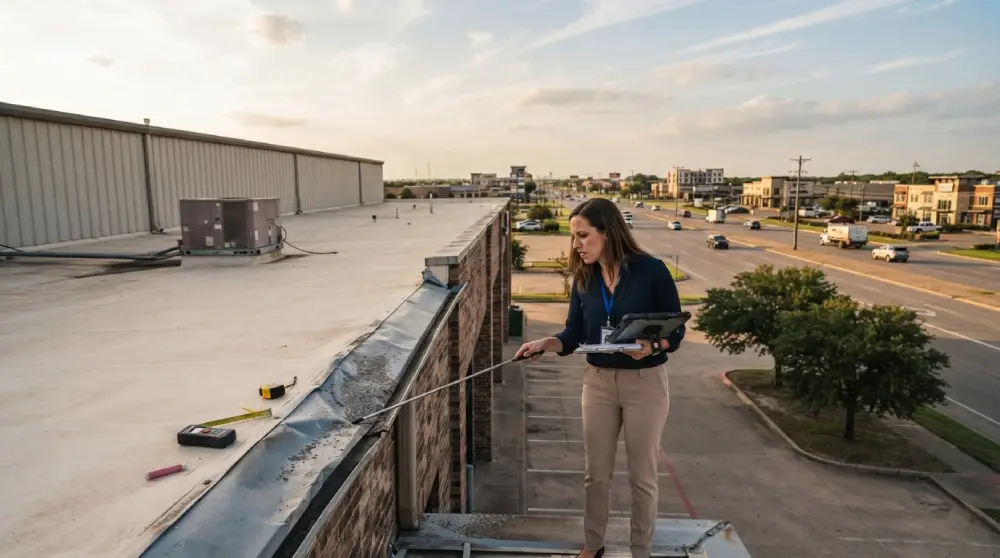
Property owners may consider hiring a public adjuster for a roof claim when the carrier’s inspection or estimate appears incomplete. Roof claims are often underpaid because necessary materials, accessories, labor, or related interior damage were left out of the initial scope. Common omissions include underlayment, flashing, vents, drip edge, decking, gutters, roof accessories, steep or high charges, waste, interior damage, and code-related work.
A roof should not be evaluated in isolation. The claim scope should account for the complete repair process and all storm-affected components.
Commercial Property Claims
Roanoke’s commercial environment includes restaurants, retail businesses, offices, industrial facilities, service businesses, and properties near the Highway 114, Highway 377, and Highway 170 corridors. The city is widely promoted as the “Unique Dining Capital of Texas,” with more than 60 dining options and an active downtown district.
Commercial claims may involve:
- Flat or low-slope roofing
- Mechanical equipment
- Interior build-outs
- Inventory
- Tenant improvements
- Business personal property
- Loss of income
- Extra expenses
- Multiple buildings
- Lease responsibilities
- Temporary operations
- Specialized equipment
A commercial public adjuster can help Roanoke business owners coordinate the building, contents, equipment, tenant, and income-related portions of a property claim.
Why Roanoke Insurance Claims Become Underpaid
An underpaid claim does not always result from one major error. It may be caused by several smaller omissions that add up.
Missed Damage
An inspection may focus on the roof while overlooking gutters, vents, windows, screens, fencing, siding, exterior lighting, HVAC equipment, and interior water staining.
Scope Omissions
A carrier may agree that damage occurred but leave necessary repair tasks out of its estimate. Examples include demolition, debris disposal, material matching, access, masking, protection, setup, finish work, and general contractor coordination.
Depreciation Issues
Replacement cost policies often involve an initial actual-cash-value payment followed by recoverable depreciation after repairs. Confusion about deadlines, invoices, proof of completion, and nonrecoverable depreciation can reduce the amount ultimately paid.
Low Repair Estimates
Pricing differences can arise from labor costs, material availability, project complexity, regional demand, and missing line items. A low estimate may not reflect what qualified contractors are charging to restore the property.
Documentation Problems
Insurance claims depend on evidence. Many common property insurance claim mistakes involve missing photographs, incomplete inventories, discarded materials, weak contractor estimates, or unclear timelines. These gaps can make it harder to establish the full extent of the loss.
Cause-of-Loss Disputes
Carriers may attribute roof or interior damage to age, maintenance, deterioration, installation defects, or prior conditions. The policyholder may need stronger documentation connecting the damage to a covered event.
Our Public Adjusting Process
1. Free Claim Review
We begin by discussing what happened, when it happened, the type of property involved, and the status of the claim. We may review the policy, carrier correspondence, estimates, photographs, denial letters, contractor proposals, and payment records.
2. Property Inspection
We inspect accessible areas related to the reported loss. Depending on the claim, that may include roofing, exterior elevations, interiors, mechanical systems, detached structures, contents, or commercial equipment.
3. Damage Documentation
We organize the evidence needed to explain the claim. This can include photographs, measurements, repair estimates, inventories, moisture reports, invoices, timelines, and supporting records.
4. Scope and Estimate Review
We compare the observed damage and necessary repairs against the insurer’s estimate. The review focuses on omitted components, quantities, pricing, repair methods, depreciation, and related damage.
5. Carrier Communication and Negotiation
TX Public Adjusting communicates with the carrier and presents the claim documentation on behalf of the policyholder. We address questions, attend inspections when appropriate, and work through disputed scope or valuation issues.
6. Settlement and Claim Follow-Through
We help the property owner understand the settlement documentation, payment structure, depreciation requirements, and remaining claim obligations.
Concerned that your Roanoke insurance claim is incomplete or underpaid? Request a Free Claim Review from TX Public Adjusting.
Why Choose TX Public Adjusting
Licensed Texas Public Adjuster
TX Public Adjusting is operated by Rise Public Adjusting LLC, Texas License #3356839.
Independent Policyholder Representation
We represent homeowners, landlords, investors, associations, and business owners. We do not work for the insurance carrier.
Texas Claim Experience
Our team has reviewed thousands of property claims involving hail, wind, water, fire, roof damage, and commercial losses. That experience helps us recognize documentation gaps and estimate issues that may be missed during an initial inspection.
Residential and Commercial Expertise
A residential roof claim, restaurant fire claim, office water loss, and industrial storm claim each require different documentation. We tailor the process to the property and the type of loss.
Detailed Claim Preparation
We focus on the details that support a claim: measurements, photographs, estimate line items, repair sequencing, invoices, inventories, and policy-related documentation.
Direct Communication
Property owners often hire us because they are overwhelmed by inspections, phone calls, requests for documents, and changing estimates. We provide one organized point of representation throughout the process.
No Upfront Fees
Property owners can request a free initial claim review without an upfront fee. Any service agreement and fee structure should be reviewed and understood before representation begins.
Serving Roanoke Neighborhoods and Developments
TX Public Adjusting assists property owners throughout Roanoke, including areas near:
- Historic Downtown Roanoke
- Oak Street
- Fairway Ranch
- Briarwyck
- Highlands Glen
- Marshall Creek
- The Homestead
- Glenmere
- Roanoke Gateway
- Town Centre at Roanoke
- Bobcat Corners
- Slaughter Ranch
These names appear in the city’s planning materials as established districts or planned developments.
Roanoke’s property mix changes considerably from one area to another. Historic buildings around Oak Street may involve older construction methods and specialty materials. Newer communities may contain large roofing systems, modern exterior finishes, attached garages, fencing, and multiple elevations vulnerable to wind-driven hail.
Commercial properties along major roadways may have membrane roofs, rooftop equipment, signage, storefront glass, inventory, tenant spaces, and business-income exposure.
Local Roanoke Landmarks and Property Context
Historic Downtown Roanoke is one of the city’s defining areas. The Roanoke Visitor Center and Museum occupies a restored 1886 rock building that formerly housed the Silver Spur Saloon. The building is a Recorded Texas Historic Landmark, and the city’s historic district is recognized on the National Register of Historic Places.
Other recognizable local destinations include:
- Historic Oak Street
- The Roanoke Visitor Center and Museum
- Hawaiian Falls Roanoke
- The Roanoke Water Tower
- Nearby Texas Motor Speedway
These landmarks reflect the range of property types in and around Roanoke—from historic masonry buildings and restaurants to modern entertainment facilities, retail properties, and nearby residential development.
Areas We Serve Near Roanoke
TX Public Adjusting also serves policyholders across nearby Denton and Tarrant County communities, including:
- Trophy Club
- Westlake
- Southlake
- Keller
- Northlake
- Justin
- Argyle
- Flower Mound
- Haslet
- Fort Worth
- Grapevine
- Lewisville
- Denton
Property damage does not follow city limits. A single North Texas hailstorm may affect properties across several of these communities, and our team can coordinate residential and commercial claims throughout the region.
Frequently Asked Questions
What does a public adjuster in Roanoke do?
A public adjuster represents the policyholder during a property insurance claim. Property owners who want a more detailed explanation of what a public adjuster does can review our complete guide. The work may include reviewing the policy and carrier estimate, inspecting the damage, preparing documentation, estimating repair costs, communicating with the insurer, and negotiating disputed claim issues.
The carrier’s adjuster represents the insurance company. A public adjuster represents the homeowner or business owner.
When should I hire a public adjuster after storm damage?
The strongest time to involve a public adjuster is often early, before evidence disappears and before major claim decisions are made. Early involvement can help preserve photographs, measurements, damaged materials, repair estimates, and documentation of temporary work.
A public adjuster may also be hired after an estimate, partial payment, denial, or stalled claim. Our guide explaining when it is too late to hire a public adjuster discusses how claim status, policy deadlines, prior payments, and available evidence may affect the options still available.
Can TX Public Adjusting review an underpaid Roanoke roof claim?
Yes. We can review the insurer’s estimate, photographs, inspection records, contractor proposals, and payment documentation. We then compare those materials with the observed storm damage and the work reasonably required to restore the property.
The review may identify omitted roofing components, collateral exterior damage, interior water damage, pricing issues, or disputed repair methods.
Do I need a public adjuster for a small claim?
Not every loss requires professional representation. A straightforward claim with a complete inspection, reasonable estimate, and prompt payment may be handled directly by the policyholder.
A free claim review can help determine whether the disputed amount, documentation burden, or complexity justifies hiring a public adjuster.
Can a public adjuster help after my claim was denied?
A public adjuster can review a denial, but cannot guarantee that the decision will change. The review may focus on the stated reason for denial, the policy language cited, the evidence collected, the reported cause of loss, and whether additional documentation is available.
Some denied claims involve coverage or legal issues that may require an attorney. We can explain when the matter appears to extend beyond public adjusting.
How much does a public adjuster cost in Texas?
Public adjusters commonly work under a written fee agreement tied to the insurance recovery or additional recovery obtained. The exact arrangement depends on the claim and applicable Texas requirements.
Before signing, the property owner should understand the fee, services, cancellation rights, and responsibilities of both parties. TX Public Adjusting offers a free initial claim review and does not charge an upfront fee for that evaluation.
Can you help with commercial claims in Roanoke?
Yes. We assist with commercial hail, wind, water, fire, roof, equipment, contents, and business-related claims. Commercial losses may involve multiple policies, tenants, contractors, income records, and specialized building systems.
We organize the claim into clear categories so the building, contents, equipment, and income-related damages are properly documented.
What should I do immediately after hail or wind damage?
Protect people first. Follow emergency instructions and avoid unsafe roofs, downed lines, broken glass, or unstable structures.
When conditions are safe, photograph visible damage, save damaged materials when practical, document temporary repairs, keep receipts, report the claim promptly, and avoid signing permanent repair contracts before understanding the scope of damage.
What if the insurance company already sent an adjuster?
You can still request an independent claim review. The initial carrier inspection is not necessarily the final opportunity to document damage. Claims may be supplemented when additional covered damage or repair costs are properly supported.
A public adjuster can compare the carrier’s findings with the condition of the property and available contractor information.
How long does a Roanoke property claim take?
There is no single timeline for a Roanoke property claim. Property owners who are waiting for an initial response can review how Texas rules and claim circumstances may affect how long an insurance adjuster has to contact you. A straightforward claim may progress quickly, while a large commercial loss, fire claim, disputed roof claim, or multi-room water loss may require repeated inspections and extensive documentation.
Timing can also depend on carrier responsiveness, contractor availability, engineering reviews, inventories, mortgage-company requirements, and whether the cause or scope is disputed.
Get Insurance Claim Help in Roanoke
A low estimate can affect every stage of recovery. Missing roof components, incomplete water-damage scope, overlooked contents, or weak commercial documentation may leave the property owner responsible for costs that should have been evaluated during the claim.
TX Public Adjusting helps Roanoke homeowners and business owners understand the claim, document the damage, and communicate with the insurance carrier from a policyholder-focused position.
TX Public Adjusting is operated by Rise Public Adjusting LLC, Texas License #3356839.
Contact TX Public Adjusting today for a Free Claim Review. There are no upfront fees for the initial evaluation.