

Property damage in Jacksonville can create a much bigger insurance problem than many owners initially expect. A spring hailstorm may leave subtle shingle bruising across an entire roof. Strong East Texas winds can lift flashing, loosen metal panels, break tree limbs, and allow rain into walls or ceilings. A plumbing failure, kitchen fire, or commercial water loss can also lead to repair costs that extend far beyond the first visible signs of damage.
A public adjuster in Jacksonville, TX represents the policyholder during the property insurance claim process. TX Public Adjusting helps residential and commercial property owners document damage, review insurance estimates, identify missing claim items, and present a detailed claim to the insurance company. Property owners who want a deeper explanation can read our guide to what a public adjuster does during a residential or commercial insurance claim.
TX Public Adjusting is operated by Rise Public Adjusting LLC, a licensed Texas public adjusting firm under Texas License #3356839. We work for property owners—not insurance carriers.
Request a Free Claim Review: If your Jacksonville property claim has been delayed, denied, underpaid, or poorly documented, contact TX Public Adjusting for an initial review. There are no upfront fees.
Property Damage Risks in Jacksonville, Texas
Jacksonville is located in Cherokee County in the wooded hills of East Texas. The city includes older homes near downtown, newer residential development around the edges of the community, commercial buildings along the major highway corridors, agricultural structures, churches, rental properties, and lake-area homes near Lake Jacksonville.
The landscape is part of what makes Jacksonville distinctive. It is also relevant when evaluating property damage. Mature pine and hardwood trees can fall onto roofs during high-wind events. Heavy rainfall can overwhelm drainage around foundations and commercial buildings. Humidity can make hidden moisture problems worse when roof or plumbing damage is not dried quickly.
Jacksonville is in Cherokee County, and recognizable local destinations include Love’s Lookout, Lake Jacksonville, the Tomato Bowl, and the downtown area associated with the city’s long tomato-growing heritage. Love’s Lookout rises above the surrounding terrain and provides long views across East Texas, while Lake Jacksonville serves as both a water resource and an important recreational area.
Severe Thunderstorms, Hail, and Wind
Jacksonville property owners should be prepared for thunderstorms capable of producing:
- Hail damage to shingles, metal roofs, gutters, vents, siding, and HVAC equipment
- Straight-line wind damage
- Falling trees and branches
- Wind-driven rain
- Tornado-related structural damage
- Power surges and electrical damage
- Flash flooding and drainage-related water intrusion
Property owners dealing with roof or exterior impacts can also review our guide to filing a hail damage insurance claim in Texas, including documentation steps and common scope issues. Texas regularly experiences damaging severe-weather events involving hail, tornadoes, high winds, and flooding. NOAA’s Texas disaster records identify severe storms as a recurring source of major property losses across the state.
Jacksonville’s inland East Texas location means hurricanes do not generally create the same storm-surge exposure found along the Gulf Coast. However, the remnants of tropical systems can still bring prolonged rain, saturated soil, falling trees, roof leaks, and localized flooding into Cherokee County.
Tree Damage in Wooded Jacksonville Properties
Many Jacksonville homes and commercial properties are surrounded by mature trees. When soil becomes saturated, roots may lose stability. A tree does not need to fall through the center of a building to produce a complicated claim. Large limbs can puncture decking, damage gutters, bend metal roofing, crack masonry, or create openings that allow rainwater into insulation and wall cavities.
Tree-related claims may involve several separate issues:
- Emergency tree removal
- Temporary roof covering
- Structural repairs
- Interior water mitigation
- Personal property damage
- Debris removal
- Electrical or utility repairs
- Code-related construction items
A quick carrier inspection may not capture all of these categories.
Why Property Owners Hire a Public Adjuster in Jacksonville
Insurance policies are detailed contracts. After a loss, the property owner must establish what happened, which property was damaged, what repairs are reasonably required, and how much the covered work should cost.
The insurance company assigns its own adjuster to investigate the claim for the carrier. A public adjuster performs a different role. The public adjuster works for the policyholder and helps prepare and present the claim from the property owner’s side. Our comparison of a public adjuster vs. independent adjuster explains who each adjuster represents and how their responsibilities differ.
Jacksonville homeowners and business owners commonly seek public insurance claim assistance when:
- The carrier’s estimate appears too low
- Important rooms, surfaces, or building components were omitted
- The claim was denied
- The carrier attributes storm damage to wear and tear
- The roof was repaired partially instead of being evaluated as a complete system
- Interior water damage was not fully scoped
- The claim involves several buildings
- The property owner is overwhelmed by requests for documents
- A commercial loss is interrupting operations
- The insurer has delayed payment or communication
- The owner wants an independent review before accepting a settlement
A well-prepared claim requires more than photographs of obvious damage. It may require measurements, repair estimates, inventories, moisture records, roofing assessments, contractor documentation, policy analysis, and a clear explanation of why each claimed item relates to the covered loss.
Common Insurance Claims in Jacksonville
Hail Damage Claims
Hail can damage a Jacksonville roof without creating an immediate leak. Asphalt shingles may show bruising, fractured matting, granule loss, or impact marks that become more serious over time. Metal roofing may sustain dents or damage to seams, coatings, fasteners, vents, and accessories.
Related damage may also appear on:
- Gutters and downspouts
- Window screens
- Siding
- Fence staining or painted surfaces
- Outdoor equipment
- Skylights
- Roof vents
- HVAC condenser fins
- Detached garages and storage buildings
A hail claim should be evaluated as a complete property loss rather than as a handful of isolated roof marks.
Because hail can affect roofing, exterior finishes, HVAC equipment, and detached structures at the same property, the loss should be documented as a complete claim. Jacksonville owners can use our hail damage insurance claim in Texas guide to understand what to photograph, preserve, and review before accepting an estimate.
Wind and Storm Damage Claims
Strong winds can lift shingles, break adhesive seals, loosen ridge caps, pull flashing away from walls, and damage roof edges. Wind-driven rain may then enter through openings that are difficult to see from the ground.
Jacksonville storm claims often become disputed when an insurance inspection finds no obvious missing shingles. Wind damage can still exist even when the roof looks intact from the driveway. Creased shingles, displaced materials, lifted flashing, damaged pipe boots, and compromised fasteners may require close inspection.
Water Damage Claims
Water losses can begin with a burst supply line, failed water heater, appliance leak, plumbing backup, roof opening, or HVAC drain problem. The visible water stain is often only one part of the loss.
Moisture may spread into:
- Drywall
- Insulation
- Cabinets
- Flooring
- Wall framing
- Baseboards
- Electrical components
- Contents
- Crawl spaces
- Ceiling assemblies
Our guide to dealing with an insurance adjuster after water damage covers documentation, carrier inspections, and common disagreements over the repair scope. Public adjusting support can be especially useful when the carrier pays for drying but does not include all necessary demolition and reconstruction.
Fire and Smoke Damage Claims
A fire claim can involve far more than the room where the flames originated. Smoke travels through doorways, ductwork, attics, wall cavities, and porous materials. A fire insurance adjuster can help evaluate damage that extends beyond the visibly burned area, including smoke, soot, contents, and structural components. Heat can damage wiring, windows, framing, appliances, finishes, and structural components.
A Jacksonville fire claim may involve:
- Emergency board-up
- Structural repairs
- Smoke and soot cleaning
- Demolition
- Debris removal
- Electrical evaluation
- HVAC cleaning or replacement
- Personal property inventories
- Temporary living expenses
- Code upgrades
- Commercial income interruption
The site’s existing fire-insurance resources can support Jacksonville property owners dealing with these losses, including the guides on fire insurance adjusting and fire-damage coverage. The sitemap confirms those existing resources and related claim articles available for internal linking.
Roof Damage Claims
Roof claims are frequently under-scoped because the estimate focuses only on replacing a limited number of shingles or repairing a small visible section.
A complete roof evaluation may need to address:
- Shingles, metal panels, or other roofing materials
- Underlayment
- Decking
- Flashing
- Valleys
- Drip edge
- Ridge materials
- Pipe jacks and vents
- Chimney components
- Skylights
- Gutters
- Interior damage
- Access and labor requirements
- Matching and repairability concerns
A public adjuster for a roof claim can compare the carrier’s estimate with the documented roof system, related exterior damage, and interior water intrusion. TX Public Adjusting reviews the carrier’s scope against the documented damage and the work reasonably required to restore the property.
Commercial Property Claims
Jacksonville has local retailers, restaurants, churches, offices, agricultural businesses, service companies, warehouses, rental properties, and other commercial facilities. A commercial loss may affect both the physical building and the business operating inside it.
Commercial claims may include:
- Roof and exterior damage
- Water intrusion
- Fire and smoke damage
- Inventory loss
- Equipment damage
- Tenant improvements
- Business personal property
- Debris removal
- Extra expenses
- Business interruption
- Multiple-building losses
Commercial documentation is often more involved than a residential claim. Owners may need to coordinate estimates, inventories, leases, invoices, financial records, restoration vendors, and operational plans.
Concerned that your Jacksonville claim is missing damage? Contact TX Public Adjusting for a Free Claim Review before accepting the carrier’s estimate as final.
Why Jacksonville Insurance Claims Become Underpaid
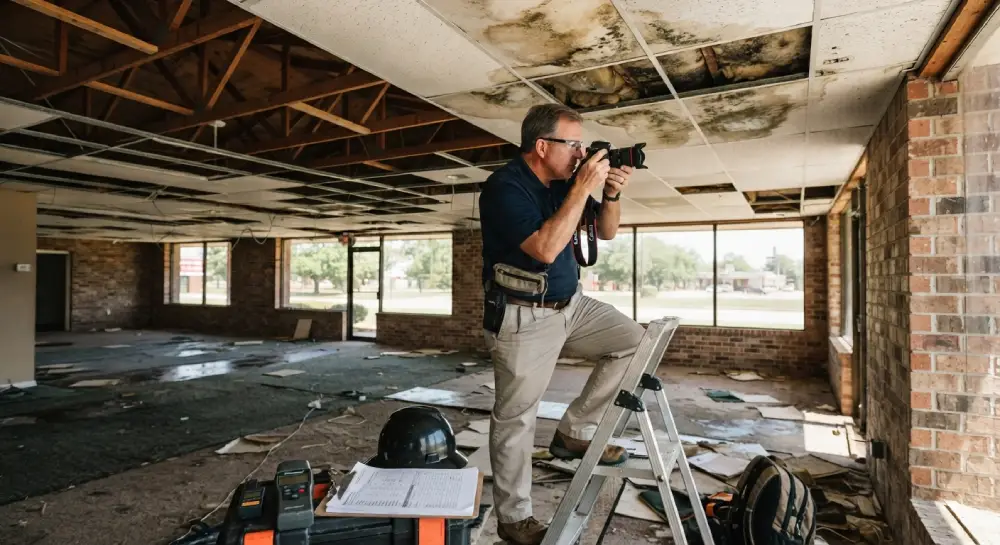
Damage Is Missed During the First Inspection
Carrier inspections may be brief, especially after a widespread storm. The adjuster may inspect only the roof or the room with the clearest damage. Secondary areas can be overlooked.
Examples include attic moisture, detached structures, HVAC damage, cracked exterior finishes, interior staining, damaged contents, and tree-related impacts.
The Estimate Contains Scope Omissions
A claim estimate may include the primary repair while omitting related work required to complete it.
For example, an estimate may include drywall but omit insulation, texture blending, painting adjacent surfaces, moving contents, detach-and-reset labor, or access costs. A roof estimate may omit flashing, vents, edge metals, steep-slope charges, or necessary decking repairs.
Depreciation Reduces the Initial Payment
Many property policies apply depreciation based on age and condition. Depending on the policy, some depreciation may be recoverable after repairs are completed and documented.
Confusion about depreciation can lead owners to believe the first payment is the total settlement. A claim review can help clarify how the carrier calculated depreciation and what documentation may be required.
Repair Prices Are Too Low
Material and labor prices vary by location, project size, contractor availability, and the complexity of the work. A carrier estimate may use assumptions that do not match the actual requirements of the Jacksonville property.
Documentation Is Incomplete
Property owners dealing with emergency repairs often focus on protecting the building, not creating a perfect claim file. Unfortunately, missing photographs, discarded materials, vague invoices, or incomplete inventories can create problems later.
A public adjuster helps organize the claim so the documentation supports the requested scope and cost. Reviewing these common property insurance claim mistakes can help owners avoid missing photographs, incomplete inventories, weak invoices, and other documentation problems.
The Cause of Loss Is Disputed
Insurance carriers may distinguish between covered storm damage and excluded deterioration, maintenance problems, long-term leakage, or wear and tear.
These disputes are common in roof claims. Careful documentation of the storm-created damage, the condition of surrounding materials, and the resulting interior loss can become critical.
Our Public Adjusting Process
1. Claim Review
We begin by reviewing the known facts of the loss, the carrier’s correspondence, the insurance estimate, and available policy documents.
The initial review helps identify potential omissions, timing concerns, coverage questions, and the next documentation steps.
2. Property Inspection
We inspect the damaged areas that are reasonably accessible and document the condition of the property. Depending on the claim, this may include roofing, interiors, exterior elevations, detached structures, commercial spaces, equipment, or damaged contents.
3. Damage Documentation
We organize photographs, measurements, estimates, inventories, invoices, reports, and other supporting materials. The objective is to build a clear claim file that explains what was damaged and what is needed to repair or replace it.
4. Scope and Estimate Review
We compare the carrier’s scope with the documented loss. Missing quantities, materials, labor operations, and related repairs are identified and addressed.
5. Claim Presentation and Negotiation
TX Public Adjusting communicates with the insurance company and presents the policyholder’s position. We respond to questions, discuss disputed items, and support the requested claim amount with documentation.
6. Settlement Support
As the claim progresses, we help the owner understand payments, depreciation, supplements, requested documents, and remaining issues.
No public adjuster can guarantee a specific settlement. The goal is to give the property owner experienced, independent representation and a properly prepared claim.
Why Choose TX Public Adjusting
Licensed Texas Public Adjuster
TX Public Adjusting operates through Rise Public Adjusting LLC under Texas License #3356839.
We Represent Policyholders
We do not work for the insurance company. Our responsibility is to the residential or commercial policyholder who hires us.
Texas-Focused Claim Experience
Texas claims involve hail, tornadoes, windstorms, freezes, plumbing failures, fires, tropical weather, and other serious losses. Our work is focused on the documentation and presentation of Texas property claims.
Residential and Commercial Experience
We assist homeowners, landlords, business owners, commercial property owners, and other insured parties with losses of varying size and complexity.
Detailed Claim Reviews
Our team has reviewed thousands of property claim files. That experience helps us recognize recurring problems such as missed damage, narrow scopes, unsupported repair assumptions, and incomplete documentation.
No Upfront Fees
Property owners can request an initial claim review without paying an upfront fee. Compensation terms are explained in the public adjusting agreement before representation begins.
Jacksonville Areas and Nearby Communities We Serve
TX Public Adjusting assists policyholders throughout Jacksonville and the surrounding Cherokee County area.
Local service areas may include:
- Downtown Jacksonville
- Properties near the Tomato Bowl
- The Lake Jacksonville area
- Residential areas along the U.S. 69 corridor
- Homes and businesses near U.S. 79
- West and southwest Jacksonville
- North Jacksonville and the Love’s Lookout area
- Craft
- Turney
- Tecula
- New Summerfield
- Rusk
- Bullard
- Gallatin
- Reklaw
- Cuney
- Maydelle
- Other communities throughout Cherokee County and East Texas
Jacksonville’s best-known local sites include Lake Jacksonville, the historic Tomato Bowl, downtown, and Love’s Lookout. The Tomato Bowl is recognized for its distinctive red iron-ore construction and local football tradition, while Lake Jacksonville lies southwest of the city and supports both municipal and recreational uses.
Frequently Asked Questions
What does a public adjuster do for a Jacksonville property owner?
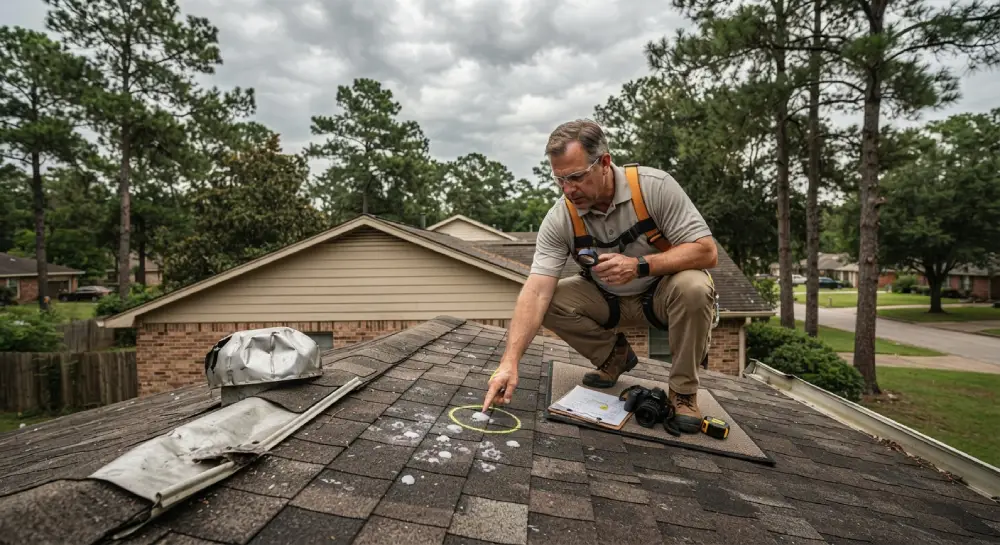
A public adjuster represents the policyholder in the insurance claim. The adjuster reviews the loss, documents damage, evaluates the carrier’s estimate, prepares a detailed claim scope, and communicates with the insurance company.
The insurance carrier’s adjuster works for the insurer. A licensed public adjuster works for the property owner.
When should I hire a public adjuster in Jacksonville?
Property owners often hire a public adjuster after receiving a low estimate, denial, partial payment, or request for extensive documentation. You may also hire one earlier when the loss is large, technically complicated, or likely to interrupt a business.
It is generally helpful to obtain advice before signing releases, completing major repairs, or accepting the insurer’s position as final. Our guide explains when it may be too late to hire a public adjuster and why policy deadlines and claim status matter.
Can TX Public Adjusting help with an existing claim?
Yes. A public adjuster can often become involved after the claim has already been filed. The available options will depend on the policy, claim status, deadlines, prior payments, and documentation.
Bring the carrier estimate, payment letters, photographs, contractor proposals, and relevant emails to the initial review.
How much does a public adjuster cost in Texas?
Public adjusters are commonly paid through a fee tied to the claim recovery, subject to the agreement and Texas requirements. The exact fee should be discussed before representation begins.
TX Public Adjusting provides a Free Claim Review and does not charge an upfront fee to evaluate whether the claim may benefit from representation.
Can a public adjuster help after hail damage in Jacksonville?
Yes. Hail claims are a common reason owners seek public adjusting assistance. A public adjuster can inspect the affected property, document roof and exterior damage, identify related interior loss, and compare the findings with the carrier’s estimate.
This can be especially valuable when the carrier pays for spot repairs or concludes that visible damage is cosmetic or age-related.
What should I do immediately after storm damage?
Protect people first. When it is safe, take photographs and video before moving damaged materials. Make reasonable temporary repairs to prevent additional loss, save receipts, and notify the insurance company.
Do not discard damaged building materials or contents unless safety requires removal. When possible, document them before disposal.
Can you help with water damage from a roof leak?
Possibly. Coverage depends on why the roof leaked, when the opening occurred, the policy language, and whether the damage was sudden or developed over time.
A public adjuster can help document the roof condition, the path of water intrusion, damaged interior materials, and the reasonable repair scope.
Do you handle commercial claims in Jacksonville?
Yes. TX Public Adjusting assists with commercial building, contents, equipment, inventory, and business-related property claims.
Commercial files may require coordination among owners, tenants, contractors, mitigation companies, accountants, and the insurance carrier. Organized documentation is especially important.
What if the insurance company says the damage is wear and tear?
Ask the insurer to explain its conclusion in writing and identify the policy language being applied. Do not assume the dispute is resolved simply because the first inspection classified the condition as aging.
Storm damage and long-term deterioration can sometimes exist on the same building. A more detailed inspection may help separate the conditions.
Is it too late to hire a public adjuster after receiving payment?
Not necessarily. Receiving a payment does not always mean the claim is closed or that every issue has been resolved. However, deadlines, signed documents, prior repairs, and policy requirements can affect the available options.
The best next step is to have the claim reviewed promptly. TX Public Adjusting also maintains a detailed resource explaining when it may be too late to hire a public adjuster.
Get a Free Jacksonville Claim Review
A low insurance estimate can leave a property owner trying to repair a roof, home, rental property, or business with insufficient funds. Missing even a few major scope items can significantly change the cost of restoring the property.
TX Public Adjusting helps Jacksonville policyholders evaluate the claim from their side. We inspect, document, estimate, and communicate with the carrier so the owner does not have to manage every technical claim detail alone.
TX Public Adjusting
Operated by Rise Public Adjusting LLC
Texas Public Adjuster License #3356839
Free Claim Review
No Upfront Fees
Residential and Commercial Property Claims
Contact TX Public Adjusting to discuss your Jacksonville, Texas property insurance claim.