

If you’re searching for a Public Adjuster in Lewisville, TX, you’re likely dealing with property damage that has disrupted your home, business, or investment property. Whether your building was impacted by a severe hailstorm, straight-line winds, plumbing failure, fire, or another covered loss, the insurance claim process can quickly become overwhelming. Between documenting damage, understanding policy language, reviewing estimates, and negotiating with the insurance company, many Lewisville property owners discover that filing a claim is far more complicated than expected.
At TX Public Adjusting, our licensed Texas public adjuster team represents policyholders—not insurance companies. As Rise Public Adjusting LLC (Texas License #3356839), we help homeowners and businesses pursue the full value of covered insurance claims. We conduct independent inspections, prepare detailed claim documentation, evaluate repair scopes, and negotiate directly with insurance carriers so our clients can focus on restoring their properties.
Free Claim Review
If your insurance claim has been denied, delayed, or appears underpaid, contact TX Public Adjusting for a no-obligation claim review. There are no upfront fees, and we only succeed when we help recover additional claim benefits.
Why Property Owners Hire a Public Adjuster in Lewisville
Lewisville sits in Denton County, one of the fastest-growing counties in Texas. With established neighborhoods, expanding commercial corridors, and its location along the Interstate 35E corridor, the city experiences a wide variety of property losses every year.
Property owners throughout Lewisville often face:
- Severe spring hailstorms
- Straight-line wind events
- Tornado-producing thunderstorms
- Roof damage
- Water damage from plumbing failures
- Fire and smoke losses
- Commercial property interruptions
- Frozen pipe damage during winter weather
Many insurance claims begin with a simple inspection by the carrier’s adjuster. However, that inspection represents only one opinion regarding the extent and value of the loss. Hidden damage, overlooked building components, code upgrades, and interior moisture can easily be missed during a limited inspection.
A public adjuster provides an independent evaluation focused entirely on protecting the policyholder’s interests.
Our team routinely helps clients by:
- Reviewing insurance policies
- Identifying overlooked damages
- Preparing comprehensive repair estimates
- Organizing supporting documentation
- Working with engineers and contractors when necessary
- Negotiating directly with insurance companies
Our objective is to ensure the claim reflects the actual damage—not merely the first estimate prepared after the loss.
Property Damage Risks Unique to Lewisville
Unlike many Texas communities that primarily deal with hurricanes or wildfires, Lewisville faces a combination of North Texas weather patterns that create recurring insurance claims.
Hailstorms
Lewisville sits within one of the nation’s most active hail corridors.
Large hail frequently damages:
- Asphalt shingles
- Metal roofing
- Gutters
- Skylights
- HVAC systems
- Windows
- Siding
- Solar panels
Even moderate hail can significantly reduce the lifespan of roofing materials while leaving damage that is difficult to recognize from the ground.
High Winds
Straight-line winds accompanying severe thunderstorms routinely exceed 60 mph.
These storms may cause:
- Missing shingles
- Roof uplift
- Fence damage
- Fallen trees
- Broken windows
- Water intrusion
Wind damage often creates secondary issues that become more expensive weeks or months after the storm.
Water Damage
Water losses remain one of the most common residential insurance claims in Lewisville.
Typical causes include:
- Burst supply lines
- Slab leaks
- Water heater failures
- Overflowing appliances
- HVAC condensation
- Roof leaks
While visible damage may appear limited, moisture can spread inside walls, beneath flooring, and into insulation before becoming apparent.
Fire Damage
House fires frequently involve much more than burned materials.
Insurance claims often include:
- Smoke contamination
- Soot cleanup
- Water damage from firefighting efforts
- Structural repairs
- Debris removal
- Personal property inventories
- Temporary housing expenses
Proper documentation is critical because smoke damage often extends well beyond the room where the fire originated.
Winter Freeze Events
Although Lewisville generally enjoys mild winters, North Texas freeze events have demonstrated how vulnerable plumbing systems can become.
Frozen pipes frequently lead to:
- Ceiling collapses
- Mold growth
- Flooring damage
- Cabinet damage
- Electrical issues
- Extensive interior repairs
Common Insurance Claims We Handle in Lewisville
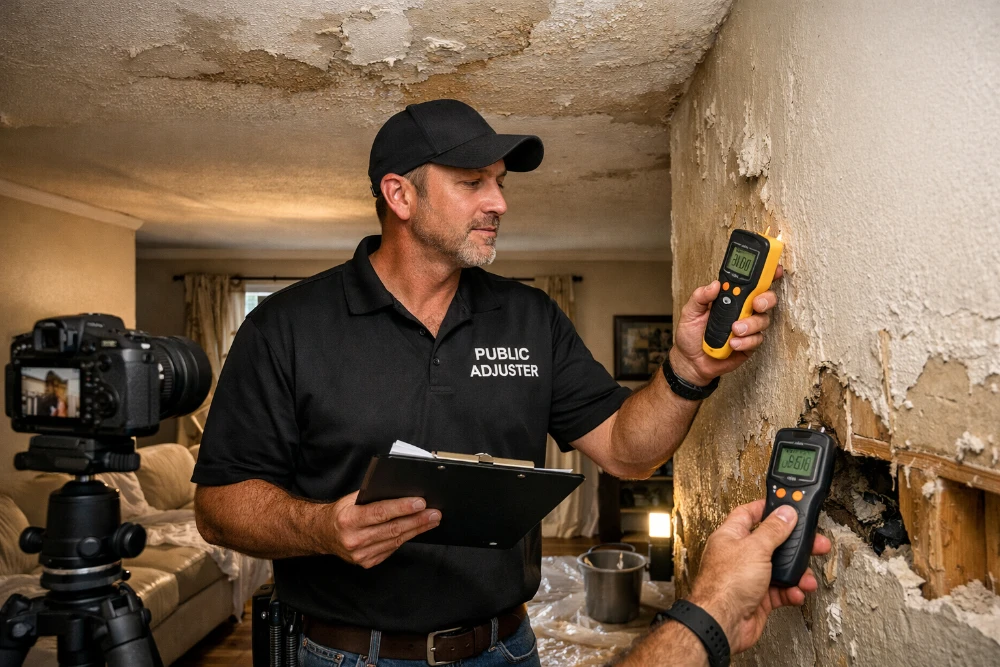
Hail Damage Claims
Hail claims are among the most common hail damage insurance claims throughout Lewisville. Learning how to properly document hail damage immediately after a storm can significantly strengthen your insurance claim.
Our inspections frequently identify:
- Functional roof damage
- Granule loss
- Impact fractures
- Soft metal damage
- Vent damage
- Flashing failures
- Hidden roof deterioration
Insurance companies sometimes approve only partial roof repairs when replacement may actually be warranted under building standards or manufacturer guidelines.
We carefully document the full extent of hail-related damage before negotiations begin.
Roof Damage Claims
Roof damage is rarely limited to shingles.
Our inspections evaluate:
- Roof decking
- Flashing
- Ridge vents
- Chimneys
- Gutters
- Underlayment
- Skylights
- Ventilation systems
Overlooking one component may allow future leaks that become far more expensive than addressing the damage correctly during the initial claim. If you’re dealing with a roof damage insurance claim, understanding what should be included in the repair scope is critical, especially after severe North Texas storms.
Water Damage Claims
Working with a water damage public adjuster can help ensure hidden moisture, structural drying, and damaged materials are properly documented before repairs begin.
We help clients document:
- Moisture migration
- Material damage
- Structural drying needs
- Mold concerns
- Damaged personal property
- Hidden damage behind finished surfaces
Many insurance estimates only include visible damage while overlooking moisture trapped within the structure.
Fire Damage Claims
Fire claims involve extensive documentation beyond structural repairs. A licensed fire insurance adjuster can help document smoke damage, soot contamination, contents losses, and additional living expenses that may otherwise be overlooked.
Our team assists with:
- Building damage
- Smoke damage
- Soot contamination
- Contents inventories
- Additional living expenses
- Cleaning costs
- Code upgrades
Fire losses often become significantly more complex than homeowners initially expect.
Storm Damage Claims
Storm losses often combine several forms of damage into one claim.
Examples include:
- Wind damage
- Hail damage
- Fallen trees
- Water intrusion
- Fence damage
- Window damage
- Exterior finish damage
Proper claim preparation helps ensure every covered component is documented.
Commercial Property Claims
Lewisville’s growing business community includes:
- Warehouses
- Retail centers
- Restaurants
- Office buildings
- Industrial facilities
- Medical offices
- Multi-tenant commercial properties
Our team regularly assists with complex commercial property claims, including business interruption, inventory losses, and large-scale building damage.
Commercial insurance policies contain significantly more complex valuation provisions than residential policies, making professional claim preparation especially valuable.
Why Insurance Claims Become Underpaid
Many property owners assume that once a claim is approved, the estimate reflects every covered repair. In reality, initial estimates can vary significantly depending on the scope of the inspection, available documentation, and how policy provisions are interpreted.
Common reasons claims become underpaid include:
Missed Damage
Not all damage is immediately visible. Roof systems, wall cavities, insulation, flashing, HVAC equipment, and structural components may require closer inspection than a routine site visit provides.
Incomplete Repair Scopes
Some estimates address only the most obvious damage while leaving out related repairs needed to restore the property properly. Missing line items can add up quickly.
Depreciation Issues
Insurance carriers often apply depreciation to certain building components. Reviewing how depreciation has been calculated—and whether recoverable depreciation is available—can make a meaningful difference in the final claim value.
Documentation Gaps
Claims are only as strong as the documentation supporting them. Missing photographs, measurements, moisture readings, inventories, or contractor information can limit what is included in the estimate.
Code Requirements
Building codes change over time. Depending on the policy and local requirements, code-related upgrades may need to be considered during the repair process. If they are overlooked early, they may not appear in the initial estimate.
Pricing Differences
Repair estimates are typically built using estimating software, but the selected quantities, labor assumptions, and material specifications can vary. A detailed review helps determine whether the estimate accurately reflects the work required to return the property to its pre-loss condition.
Free Claim Review
If you’ve received an insurance estimate and you’re unsure whether it fully accounts for your damage, TX Public Adjusting can review the documentation, inspect the property, and explain your options. We represent policyholders throughout Lewisville and across Texas, with no upfront fees. Our role is to help ensure your claim is thoroughly documented and fairly evaluated.
Our Public Adjusting Process
Every insurance claim is different, but our process is built around one objective: developing a well-documented claim that accurately reflects the damage to your property and supporting it throughout negotiations with the insurance company.
1. Free Claim Review
We begin with a discussion about your property, the damage, and the status of your insurance claim. If you’ve already received an estimate or denial letter, we’ll review those documents as part of the initial evaluation.
During this stage, we determine whether additional investigation or documentation may benefit your claim.
2. Comprehensive Property Inspection
A thorough inspection is the foundation of a successful property damage claim.
Our inspection may include:
- Roofing systems
- Exterior elevations
- Interior rooms
- Attic spaces
- Moisture intrusion
- Structural components
- HVAC equipment
- Detached structures
- Commercial building systems
Rather than focusing only on visible damage, we document conditions that may affect the full scope of repairs.
3. Documentation & Scope Development
Insurance claims rely on evidence.
Our team prepares documentation that may include:
- High-resolution photographs
- Detailed measurements
- Damage inventories
- Repair scope reports
- Supporting contractor documentation
- Personal property inventories when applicable
Clear documentation helps demonstrate the extent of the covered loss and provides a stronger foundation for discussions with the insurance carrier.
4. Claim Negotiation
Once the documentation is complete, we communicate directly with the insurance company regarding the scope and valuation of the claim.
This may involve:
- Responding to requests for information
- Reviewing revised estimates
- Discussing overlooked damage
- Addressing pricing differences
- Supporting additional covered repairs when appropriate
Our role is to advocate for the policyholder throughout the adjustment process.
5. Settlement Review
Before repairs move forward, we review the settlement documentation with you to help ensure you understand what has been approved, what remains under consideration, and how the claim aligns with your policy.
Even after a settlement is reached, additional covered damage may sometimes be identified during repairs. When appropriate, supplemental documentation can be prepared to support those findings.
Why Choose TX Public Adjusting?
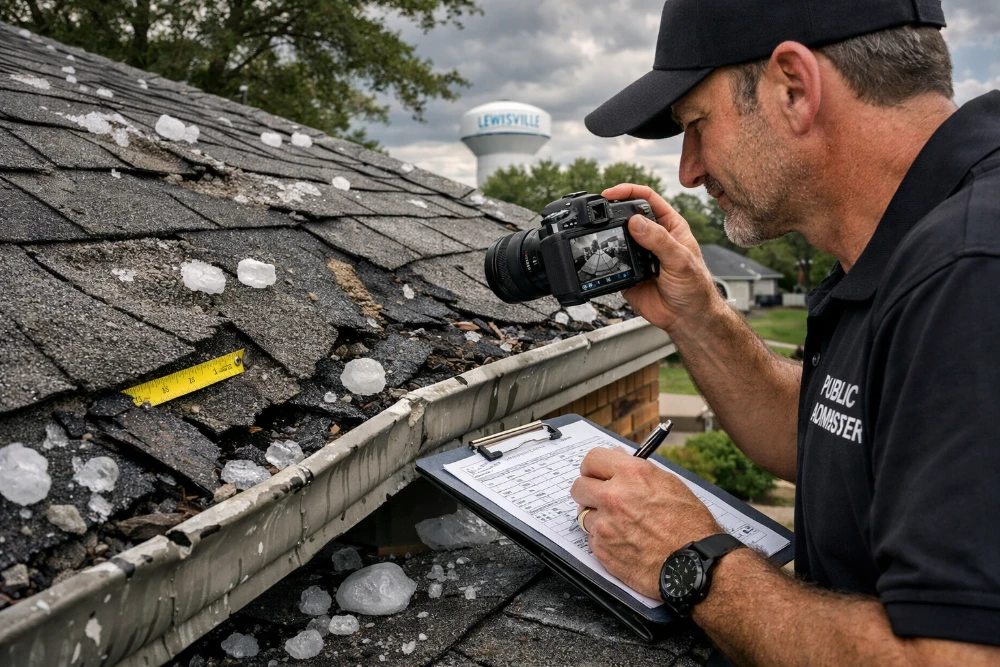
Property owners throughout Texas trust TX Public Adjusting, a division of Rise Public Adjusting LLC, because we work exclusively for policyholders—not insurance companies.
Licensed Texas Public Adjuster
We operate under Texas Public Adjuster License #3356839, giving clients confidence that their claim is being handled by a licensed professional familiar with Texas insurance regulations and property claims.
Texas-Focused Experience
Our work is centered on Texas properties and the claim challenges that come with them, including:
- North Texas hailstorms
- Severe wind events
- Fire losses
- Water damage
- Commercial property claims
- Freeze-related damage
- Storm losses
Having reviewed thousands of residential and commercial claims, we understand how different types of property damage can affect repair scopes and claim documentation.
Independent Representation
Insurance company adjusters represent the insurance carrier.
Contractors represent their construction business.
A public adjuster represents you, the policyholder.
Our responsibility is to evaluate your loss independently, prepare accurate documentation, and advocate for your interests throughout the claims process.
Residential & Commercial Expertise
We assist owners of:
- Single-family homes
- Luxury residences
- Condominiums
- Apartment communities
- Office buildings
- Retail centers
- Warehouses
- Industrial facilities
- Churches
- Multi-family properties
Whether the loss involves a family home or a large commercial building, our approach remains focused on detailed documentation and thorough claim preparation.
Areas We Serve Near Lewisville
In addition to Lewisville, TX Public Adjusting assists property owners throughout the surrounding communities, including:
- Flower Mound
- Highland Village
- The Colony
- Coppell
- Carrollton
- Grapevine
- Irving
- Denton
- Corinth
- Lake Dallas
- Little Elm
- Frisco
- Plano
- Farmers Branch
- Dallas
- Argyle
If your property is located anywhere in Denton County or the greater Dallas–Fort Worth Metroplex, our team can help evaluate your insurance claim.
Frequently Asked Questions
1. What does a public adjuster do?
A public adjuster evaluates property damage, reviews insurance coverage, documents the loss, prepares claim support, and negotiates directly with the insurance company on behalf of the policyholder.
If you’re unsure about the differences, read our guide comparing a public adjuster vs. insurance company adjuster before deciding how to move forward.
2. Should I hire a public adjuster before filing my claim?
Many property owners contact us immediately after discovering damage, while others reach out after receiving an estimate they believe is incomplete.
A public adjuster can become involved before the claim is filed, during the investigation, or after the insurance company has issued its initial estimate, depending on the circumstances.
3. Can you help if my claim has already been denied?
Yes.
Depending on the reason for the denial and the available documentation, it may be possible to review the decision, identify additional supporting information, or pursue available options under the policy. If your roof claim has already been rejected, our guide on what to do if your hail claim was denied explains common next steps.
4. How much does a public adjuster cost?
TX Public Adjusting works on a contingency-fee basis.
That means there are no upfront fees, and our fee is based on the outcome of the claim as outlined in our agreement.
5. Do you work with commercial property owners?
Absolutely.
We regularly assist owners of retail centers, office buildings, warehouses, apartment communities, restaurants, churches, and other commercial properties throughout North Texas.
Commercial claims often require extensive documentation due to their size and complexity.
6. What types of insurance claims do you handle?
We assist with:
- Hail damage
- Wind damage
- Fire damage
- Smoke damage
- Water damage
- Roof damage
- Storm damage
- Commercial property claims
- Business interruption claims
- Freeze damage
7. My roof doesn’t leak. Could it still have hail damage?
Yes.
Many hail-damaged roofs continue to shed water for months or even years before leaks become apparent.
Damage to shingles, flashing, vents, or protective granules may not immediately result in interior water intrusion, making a professional inspection valuable after a significant storm.
8. How long does the insurance claim process take?
The timeline depends on several factors, including the complexity of the damage, responsiveness of the parties involved, and whether additional inspections or supplemental documentation are needed.
Simple residential claims may move more quickly than large commercial or multi-structure losses. Texas law also establishes timelines for insurers. Learn more about how long does an insurance adjuster have to contact you after you file a claim.
9. Why is Lewisville particularly vulnerable to insurance claims?
Lewisville’s location in North Texas exposes it to frequent hailstorms, severe thunderstorms, high winds, occasional tornado activity, and freeze events.
These weather patterns create recurring roof, siding, water, and structural damage claims for both residential and commercial properties.
10. Why choose TX Public Adjusting instead of handling the claim alone?
Insurance policies are detailed legal contracts, and property damage claims often involve technical estimating, documentation, and negotiation.
Having an experienced public adjuster advocate on your behalf can provide an independent evaluation of the damage and help ensure the claim is fully documented throughout the process.
Request Your Free Claim Review
Property damage can affect every aspect of your home or business, but you don’t have to navigate the insurance claim process alone.
Whether you’re dealing with hail damage after a North Texas storm, water damage from a plumbing failure, fire and smoke loss, or a complex commercial property claim, TX Public Adjusting is ready to help.
As Rise Public Adjusting LLC, Texas License #3356839, we proudly represent policyholders throughout Lewisville and surrounding communities.
Whether you’re dealing with hail, wind, fire, or water damage, our team can review your claim at no upfront cost. If you’re wondering when is it too late to hire a public adjuster, or you’re handling a denied or underpaid claim, contact TX Public Adjusting today for a free claim review.