

Property damage in Prairie View can become an insurance problem quickly. Severe thunderstorms, hail, straight-line winds, heavy rainfall, plumbing losses, roof leaks, and fire damage can leave homeowners, landlords, and commercial property owners trying to determine what the insurance company actually owes. If you need a public adjuster in Prairie View, TX, TX Public Adjusting provides independent claim representation for policyholders—not insurance companies.
Prairie View is located in Waller County, along the U.S. 290 corridor northwest of Houston. The city is closely identified with Prairie View A&M University, one of Texas’ historic public institutions, and includes residential areas around the university, Alta Vista, Clark Street, University Drive, and properties extending toward the U.S. 290 frontage roads.
TX Public Adjusting, operated by Rise Public Adjusting LLC, Texas License #3356839, helps residential and commercial policyholders document property damage, analyze insurance estimates, identify missing claim items, and negotiate covered losses.
Need help with a Prairie View property damage claim? Request a Free Claim Review. There are no upfront fees to have us review your situation and explain your options.
Why Property Owners Hire a Public Adjuster in Prairie View
When an insurance company sends an adjuster to inspect a damaged property, that adjuster is handling the claim on behalf of the carrier. A public adjuster serves a different role. If you are unfamiliar with the process, our guide explaining what is a public adjuster covers how policyholder representation differs from the insurance company’s adjusting process. We represent the policyholder and prepare the claim from the property owner’s side.
That distinction can become especially important when a claim involves more than one damaged component.
A hailstorm, for example, may affect more than shingles. Damage can involve:
- Roofing materials
- Flashing and roof penetrations
- Gutters and downspouts
- Window screens
- Exterior trim
- Fencing
- HVAC components
- Siding
- Interior finishes if water enters the building
A commercial loss can involve even more moving parts, including roofing assemblies, mechanical systems, tenant improvements, inventory, business contents, and repair sequencing.
Our job is to identify and document the complete covered loss instead of focusing only on the most obvious damage.
Property owners in Prairie View commonly contact a public insurance adjuster when:
- The carrier’s estimate appears too low.
- Damage was omitted from the original scope.
- A roof claim was partially approved.
- The insurance company believes repairs are sufficient when replacement may be required.
- Water damage spread beyond the initially inspected area.
- A fire claim includes extensive contents or smoke damage.
- The claim has become difficult to manage.
- A commercial loss involves multiple trades or building systems.
- The property owner wants independent documentation before negotiating with the insurer.
Our team has experience reviewing thousands of residential and commercial property claims throughout Texas. That experience helps us recognize scope problems that can be difficult for a property owner to identify from an insurance estimate alone.
Prairie View Property Damage Risks Are Different From Other Texas Cities
Prairie View sits in a part of Southeast Texas where property owners can experience weather coming from several directions. Gulf moisture can fuel heavy rainfall, while spring and warm-season thunderstorms can produce strong winds, lightning, and hail. Severe storms have occurred in and around Prairie View, including storms capable of damaging winds and tornado development. Tropical systems can also bring wind and heavy rainfall inland, so Prairie View property owners should understand how to document property damage after a hurricane or tropical storm.
Flooding also deserves particular attention. FEMA’s Waller County flood study specifically includes the City of Prairie View in its assessment of flood hazards across the county.
For insurance purposes, however, flood damage and water damage are not automatically the same thing. A standard property policy may treat wind-driven rain, a burst plumbing line, roof leakage following covered storm damage, sewer backup, and rising surface water differently. Coverage depends on the policy, endorsements, exclusions, and cause of loss.
That makes identifying the cause of damage especially important after a major rain event.
Hail and Severe Thunderstorm Damage
Prairie View is close enough to the Houston metropolitan region to experience the powerful thunderstorms that regularly move across Southeast Texas. Hail can leave obvious dents in soft metals while causing less visible damage to asphalt shingles and other roofing materials.
Some hail losses become underpaid because the inspection focuses on one roof surface but overlooks collateral damage to gutters, vents, flashing, window screens, fencing, or exterior equipment.
After hail strikes a Prairie View property, documentation should begin before temporary repairs or restoration work removes evidence of the loss. Property owners dealing with a hail damage roof insurance claim should document both the roofing surface and collateral damage before repairs alter the evidence.
Wind and Roof Damage
Straight-line winds can lift shingles, loosen roofing components, damage flashing, break tree limbs, and create openings where rain enters the building.
The resulting insurance claim may involve two connected issues:
- Exterior storm damage.
- Interior water damage caused by the storm-created opening.
If those components are evaluated separately or the cause of loss is poorly documented, significant repair items can disappear from the claim estimate.
Heavy Rain and Water Intrusion
The open terrain around Prairie View and Waller County can receive intense rainfall during tropical systems and severe thunderstorms.
Roof leaks, damaged exterior openings, plumbing failures, and other covered water events can affect:
- Drywall
- Insulation
- Flooring
- Baseboards
- Cabinets
- Electrical components
- Ceilings
- Personal property
Water also travels. A stain on one ceiling does not necessarily show the full path of moisture behind walls or above finished surfaces.
Fire and Smoke Damage
Residential fires, cooking fires, electrical failures, equipment fires, and commercial building losses can create claims that extend far beyond visible burn damage.
A complete fire claim may include:
- Structural repairs
- Smoke cleaning
- Contents cleaning or replacement
- Odor remediation
- Electrical work
- HVAC cleaning
- Demolition
- Debris removal
- Temporary protection
- Additional living expenses when applicable
Smoke migration can affect rooms that were never directly exposed to flames, which is one reason careful documentation matters.
Common Insurance Claims in Prairie View
Hail Damage Claims
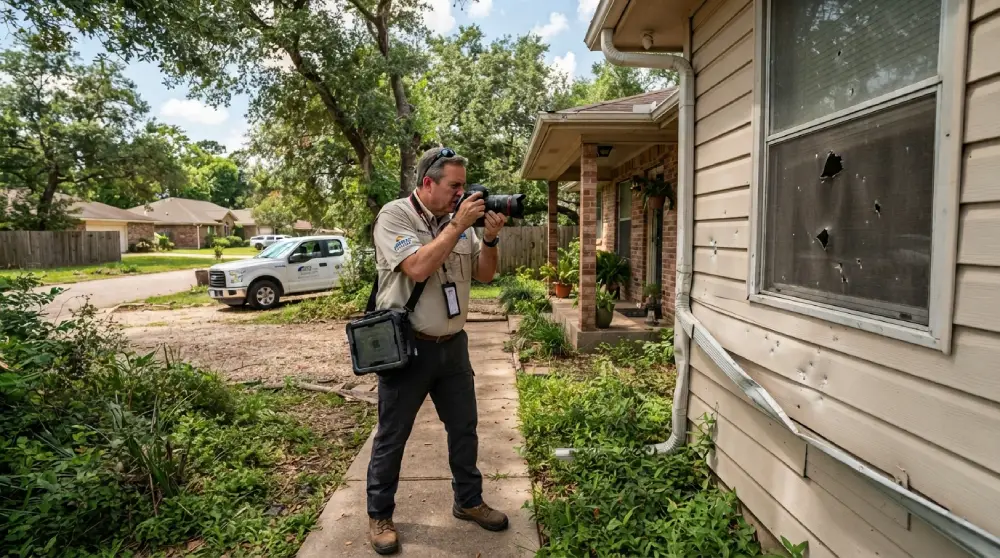
Hail damage is one of the property losses we evaluate for Prairie View homeowners and commercial property owners.
Roof damage can be subtle. Asphalt shingles may show impact marks, granule displacement, mat damage, bruising, or compromised edges. Metal components may show dents that help establish storm impact even when roof damage is disputed.
A strong hail claim connects photographs, roof measurements, storm information, repair requirements, and an appropriate construction scope.
Water Damage Claims
Water losses can originate from plumbing failures, appliance leaks, supply lines, damaged roofs, or storm-created openings.
One common claim problem is stopping the estimate at what can be seen from the room. Wet materials may continue behind cabinets, under flooring, within insulation, or inside wall assemblies.
We review the cause, affected areas, mitigation records, photographs, estimates, and policy documentation to determine whether important claim components are missing. When moisture has spread beyond the immediately visible area, a water damage public adjuster can help evaluate the documented scope of the covered loss.
Fire Damage Claims
Fire claims require organization. For larger losses involving structural damage, smoke contamination, contents, and debris removal, working with a fire insurance adjuster who represents the policyholder can help keep the claim organized.
Structural damage, smoke contamination, contents, temporary living arrangements, cleaning requirements, debris removal, and repair estimates can all become separate pieces of the same loss.
TX Public Adjusting helps Prairie View policyholders assemble those pieces into a documented claim instead of relying on a series of disconnected inspections and estimates.
Storm Damage Claims
A single storm can create roof damage, exterior damage, broken windows, interior water intrusion, fallen-tree damage, and electrical problems.
Storm claims are frequently under-scoped when each area is viewed independently instead of as one loss event.
Roof Damage Claims
Roof claims commonly involve disputes over:
- Repair versus replacement
- The number of damaged slopes
- Matching considerations
- Flashing
- Underlayment
- Drip edge
- Vents
- Penetrations
- Code-related work where covered
- Interior damage associated with the roof loss
A public adjuster for a roof claim can compare the carrier’s scope with the actual roofing components, storm damage, measurements, and repair requirements. Prairie View has a mixture of older homes, newer residential construction, rental housing, university-area properties, and commercial structures. The correct repair scope depends on the actual building and roofing system—not a generic roof estimate.
Commercial Property Claims
Prairie View’s relationship with Prairie View A&M University creates a local mix of apartments, rental properties, student-oriented housing, restaurants, service businesses, offices, and commercial properties along the U.S. 290 corridor.
Prairie View A&M’s campus itself is a defining local landmark, and Panther Stadium at Blackshear Field is a 15,000-seat athletic facility within the community.
Commercial insurance losses can involve:
- Flat and low-slope roofing
- HVAC systems
- Electrical equipment
- Tenant improvements
- Interior finishes
- Business personal property
- Inventory
- Multiple units
- Temporary repairs
- Business-income issues where applicable
For larger losses involving multiple building systems, tenants, contents, or repair trades, a commercial public adjuster can help organize the property owner’s claim into a detailed, documented scope. Commercial claims often benefit from a detailed scope because even a small omission repeated across a large building can materially affect the cost of restoration.
If your Prairie View residential or commercial claim appears underpaid, contact TX Public Adjusting for a Free Claim Review before accepting the estimate as complete.
Why Prairie View Insurance Claims Become Underpaid
An insurance claim can be underpaid even when the carrier acknowledges that covered damage occurred.
The disagreement may concern the amount of damage rather than whether there was a loss at all.
Missed Damage
An inspection may overlook roof accessories, elevations, interior rooms, detached structures, equipment, or secondary damage.
Scope Omissions
The estimate might include shingles but omit flashing, gutters, vents, underlayment, interior repairs, or other work necessary to restore the property.
Depreciation Issues
Replacement-cost and actual-cash-value calculations can affect the initial payment. Recoverable depreciation may also depend on policy terms and completion requirements.
We review how depreciation is being applied instead of assuming every deduction is automatically correct.
Low Repair Estimates
Pricing, quantities, labor operations, waste factors, access requirements, and repair sequencing can all change the actual cost of completing the work.
An estimate can look detailed while still being incomplete.
Documentation Problems
Insurance companies evaluate what can be proven.
Photographs, measurements, inventories, contractor estimates, mitigation records, receipts, expert reports, and a clearly organized scope can make a major difference when supporting a property damage claim.
Our Public Adjusting Process
1. Claim Review
We begin by reviewing the loss and the claim’s current status.
That can include:
- Insurance estimates
- Coverage correspondence
- Photographs
- Contractor proposals
- Payment documents
- Prior inspection reports
- Relevant portions of the policy
We want to understand what the carrier has included, what may be missing, and where the dispute actually exists.
2. Property Inspection
When appropriate, we inspect the damaged property.
For a Prairie View storm claim, that may mean looking at the roof, exterior elevations, soft metals, windows, interiors, detached structures, and other affected components rather than checking only one obvious area.
3. Documentation and Scope Preparation
We document the damage and prepare a claim scope based on the conditions we identify.
Depending on the loss, documentation may include:
- Photographs
- Measurements
- Damage inventories
- Repair estimates
- Contents documentation
- Supporting invoices
- Contractor information
- Additional claim records
4. Claim Presentation and Negotiation
We communicate with the insurance company and present the documented claim from the policyholder’s perspective.
When the carrier’s estimate differs from our findings, we identify those differences and support the disputed items with documentation.
5. Settlement and Claim Resolution
The goal is to obtain the insurance benefits owed under the policy based on the documented covered loss.
No public adjuster can guarantee a particular settlement amount. Every claim depends on its facts, policy language, damage, documentation, and coverage.
What we can do is make sure the property owner’s position is organized, documented, and professionally presented.
Why Choose TX Public Adjusting in Prairie View?
Licensed Texas Public Adjuster
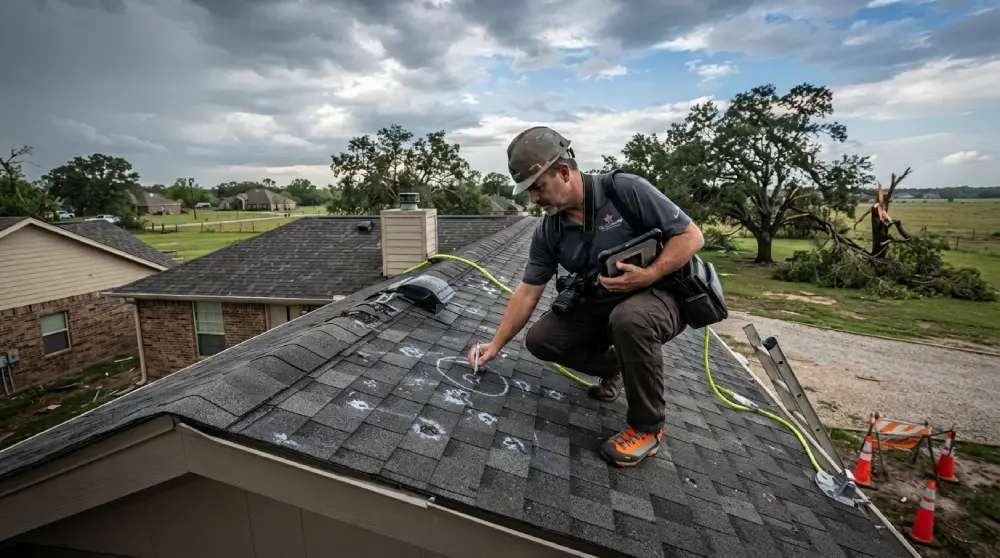
TX Public Adjusting operates through Rise Public Adjusting LLC, Texas License #3356839.
We Represent Policyholders
A public adjuster works for the insured property owner, not the insurance company.
Our job is to evaluate the claim from your side of the policy.
Texas-Focused Experience
Texas properties face a distinctive mix of hail, wind, tropical weather, water losses, freeze damage, and severe thunderstorms.
Our work is centered on Texas property claims.
Residential and Commercial Claim Experience
We assist with both home and commercial insurance claims, including complex losses involving multiple structures, roofing systems, contents, and building components.
Detailed Claim Documentation
We focus on the scope.
Missing one damaged component may seem minor. Missing dozens of components across a roof, building exterior, or commercial property is not.
Free Claim Review
If you are unsure whether your Prairie View claim needs professional help, start with a review.
We can examine the situation and explain whether hiring a public adjuster makes sense for the claim.
Prairie View Areas and Communities We Serve
Prairie View is a relatively compact city, so local property references are often based more on subdivisions, streets, the university area, and surrounding Waller County communities than on dozens of formally named urban neighborhoods.
We assist property owners throughout:
- Alta Vista
- Residential areas near Prairie View A&M University
- University Drive and campus-adjacent properties
- The Clark Street area
- Properties near the U.S. 290 corridor and frontage roads
- Rural and acreage properties around Prairie View
- Rental and multifamily properties serving the university community
We also serve nearby communities including:
- Hempstead
- Waller
- Pine Island
- Hockley
- Brookshire
- Pattison
- Northwest portions of the greater Houston region
Prairie View is bordered by Hempstead to the west, Waller to the east, and Pine Island to the south, making these communities a natural part of the surrounding service area.
Local Landmarks That Define Prairie View
Few Texas cities are as closely connected to one institution as Prairie View is to Prairie View A&M University.
The university’s main campus sits at 700 University Drive and is one of the community’s central landmarks.
Other recognizable local reference points include:
- Panther Stadium at Blackshear Field
- Prairie View A&M’s campus and historic academic buildings
- The U.S. 290 corridor
- Prairie View City Hall and the surrounding civic area
These landmarks also illustrate why property claims in Prairie View are not limited to traditional single-family homes. The area contains educational facilities, rental properties, apartments, commercial buildings, student housing, and rural acreage, each with different insurance and construction considerations.
Frequently Asked Questions About Public Adjusters in Prairie View
What does a public adjuster in Prairie View do?
A public adjuster represents the property owner during an insurance claim. We review the loss, inspect damage when appropriate, analyze the carrier’s estimate, document missing items, prepare claim support, and negotiate the claim from the policyholder’s perspective.
The insurance company’s adjuster handles the claim for the carrier. TX Public Adjusting represents you.
When should I hire a public adjuster after a Prairie View storm?
You can hire a public adjuster at different points in the claim. If your claim is already underway, you may also be wondering when is it too late to hire a public adjuster; the answer depends on the status of the claim, applicable deadlines, and the remaining options available under the policy. Some property owners contact us shortly after the loss because they want help documenting everything correctly from the beginning. Others call after receiving an estimate that appears too low.
The earlier documentation begins, the easier it can be to preserve evidence before repairs or cleanup change the property.
Can you help if my Prairie View claim has already been paid?
Potentially. An initial payment does not always mean every covered item has been addressed.
We can review the carrier estimate, damage documentation, payment information, and claim status to determine whether additional covered damage may need to be presented.
What if my roof claim was only partially approved?
Partial roof approvals are common reasons property owners request a second look.
We can compare the carrier’s roof scope against documented conditions, measurements, roofing components, collateral storm damage, and repair requirements.
Can a public adjuster help with water damage in Prairie View?
Yes. Water claims can involve plumbing failures, storm-created openings, roof leaks, appliances, or other causes.
The cause matters because different sources of water may be treated differently under the policy. We focus on documenting both the cause and the complete extent of resulting damage.
Does homeowners insurance cover flooding in Prairie View?
Standard homeowners policies generally distinguish rising surface-water flooding from many other forms of water damage. Flood losses may require separate flood coverage.
Because FEMA’s Waller County flood study includes Prairie View, property owners should understand their particular flood exposure and policy structure rather than assuming every type of water intrusion is covered the same way.
Can you handle commercial insurance claims near Prairie View A&M?
Yes. We work with commercial property owners as well as residential policyholders.
Commercial claims can involve roofing systems, apartments, rental properties, offices, restaurants, retail spaces, mechanical equipment, interior buildouts, inventory, and other property components.
How much does a Prairie View public adjuster charge?
Public adjuster compensation is typically governed by a written agreement and applicable Texas requirements. The fee structure should be clearly explained before representation begins.
TX Public Adjusting offers a Free Claim Review, so you can first determine whether professional claim assistance is appropriate for your situation.
Can you guarantee that my insurance settlement will increase?
No responsible public adjuster should guarantee a specific settlement result.
Claim outcomes depend on coverage, policy terms, the cause of loss, documented damage, repair costs, prior payments, and the individual facts of the claim. Our role is to prepare and support the strongest accurate claim the documentation allows.
Why choose a local Texas public adjuster instead of handling the claim myself?
Property owners are allowed to handle their own claims, and some straightforward losses can be resolved without professional representation.
A public adjuster becomes particularly useful when the loss is substantial, the scope is complicated, multiple trades are involved, the carrier estimate appears incomplete, or the owner simply does not have the time or experience to manage the documentation and negotiation process.
For a Prairie View property owner dealing with hail, wind, water, fire, roof, or commercial damage, having someone focused exclusively on the policyholder’s side can make the process much more manageable.
Get Insurance Claim Help in Prairie View, TX
Property damage is stressful enough without spending weeks trying to determine why the insurance estimate does not match the repairs your property needs.
If your Prairie View home, rental property, apartment building, or commercial property has suffered covered damage, TX Public Adjusting can review the claim and help you understand the next step.
TX Public Adjusting
Rise Public Adjusting LLC
Texas License #3356839
- Licensed Texas Public Adjuster
- Residential & Commercial Claims
- Independent Policyholder Representation
- Detailed Claim Documentation
- Free Claim Review
- No Upfront Fees
Contact TX Public Adjusting today for a Free Claim Review and find out whether your Prairie View insurance claim is fully documented.