

Property damage in Waller can turn into an insurance dispute faster than many owners expect. A spring thunderstorm can leave hail marks across a roof and metal components, a Gulf system can push heavy rain and damaging wind well inland, and a plumbing failure can affect flooring, cabinets, drywall, insulation, and contents before the source is stopped. If the carrier’s estimate does not reflect the actual damage, a public adjuster in Waller, TX can represent your interests throughout the claim.
TX Public Adjusting helps residential and commercial property owners document losses, review insurance estimates, identify missing scope items, and negotiate covered property claims. We are operated by Rise Public Adjusting LLC, Texas License #3356839, and we work for policyholders—not insurance companies.
Need help with a Waller insurance claim? Request a Free Claim Review from TX Public Adjusting. There are no upfront fees to have your claim reviewed.
Waller has a local character that is different from Houston’s inner suburbs. The city sits along the US 290 corridor northwest of Houston and actually extends into both Waller County and Harris County. That mix of growing residential development, older homes, rural acreage, commercial properties, metal buildings, farm structures, and highway-oriented businesses creates a wide range of potential property claims.
Why Property Owners Hire a Public Adjuster in Waller
An insurance company sends an adjuster to evaluate its side of a claim. A public adjuster serves a different role: representing the policyholder’s interests and preparing the claim from the property owner’s perspective.
That can become particularly useful when a Waller claim involves more than one damaged component.
A hailstorm, for example, may affect more than shingles. Damage can extend to gutters, downspouts, vents, flashing, fencing, windows, siding, HVAC equipment, detached structures, and commercial rooftop components. Wind can create openings that allow rain into an attic or interior. Water entering through one portion of the building can travel before staining appears somewhere else.
The visible damage may only be the beginning.
Property owners commonly contact TX Public Adjusting when:
- The insurance estimate appears too low.
- Important damage is missing from the carrier’s scope.
- A roof has been approved for a repair when the owner believes broader replacement is justified.
- The claim involves hail, wind, water, fire, or multiple causes of damage.
- Depreciation or pricing has significantly reduced the initial payment.
- The carrier and contractor disagree about repair scope.
- A commercial claim is interfering with business operations.
- The owner does not have time to manage inspections, estimates, documentation, supplements, and insurance correspondence.
- A previous claim was denied or underpaid.
- Newly discovered damage raises questions about reopening or supplementing a claim.
Waller’s location is also relevant. The city is part of the greater Houston region but still retains the rural and small-town property mix associated with Waller County. The county describes itself as part of the Houston Metropolitan Area while maintaining a rural environment, and the region has been undergoing substantial residential and commercial growth.
That means a Waller public adjuster may be reviewing anything from a single-family roof claim to damage involving acreage improvements, warehouses, retail buildings, agricultural structures, multifamily properties, or growing commercial development along major transportation corridors.
Waller Weather Risks and Property Insurance Claims
Weather is one of the biggest reasons property owners in this part of Southeast Texas file claims.
Waller is inland, but it is not isolated from Gulf Coast weather. Severe thunderstorms, hail, damaging wind, tornado-producing storms, tropical systems, heavy rain, and occasional winter weather can all create property losses.
Hail Damage in Waller
Hail deserves particular attention.
National Weather Service historical records document severe thunderstorms producing 1.50-inch hail in Waller and 2-inch hail in nearby Hempstead during a June severe-weather event. The significance for property owners is simple: hail large enough to damage roofing systems has occurred locally.
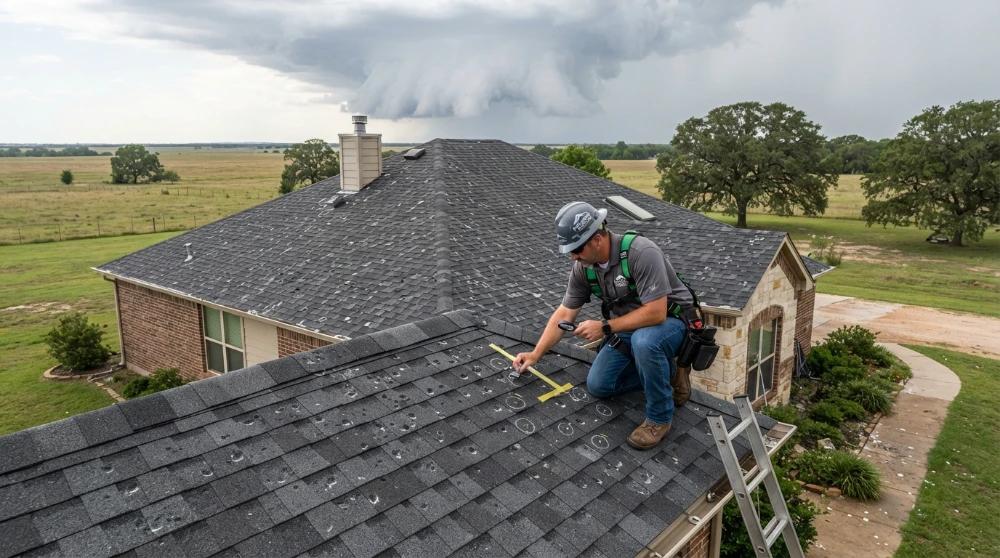
After a Waller hailstorm, we look beyond obvious broken materials. A detailed claim inspection may include:
- Asphalt shingle impact marks
- Granule loss and exposed mat
- Metal roof dents
- Soft-metal damage
- Gutters and downspouts
- Roof vents and flashing
- Window screens and glazing
- Siding
- Fences and exterior finishes
- HVAC condenser fins
- Detached garages and outbuildings
- Commercial membrane and metal roofing systems
Hail claims can become underpaid when the inspection focuses too narrowly on the roof covering and misses the connected exterior components needed to return the property to its pre-loss condition. Property owners dealing with this type of loss can also review our guide to a hail damage roof insurance claim to understand common roof-damage issues that arise during the insurance process.
Wind and Severe Thunderstorm Damage
Straight-line wind can lift shingles, loosen flashing, damage siding, move exterior components, break tree limbs, and create openings where water enters.
That is especially significant around Waller because properties frequently have more exposure than tightly packed urban neighborhoods. Homes on larger lots, commercial buildings along US 290, rural structures outside the town center, and buildings near open fields may experience substantial wind exposure during severe thunderstorms.
Wind damage is not always dramatic. A roof may remain in place while tabs, seals, fasteners, edge metals, or penetrations are compromised. That is why documenting the entire storm-created damage pattern matters.
Tornado and Rotating-Storm Risk
Waller County also experiences tornado-producing severe weather. Local emergency officials issue tornado and flash-flood alerts when conditions warrant, and a funnel cloud was photographed over a residential development in Waller County during a severe-weather event.
Tornado or severe convective wind claims can involve roofing, siding, windows, doors, fencing, detached structures, trees, electrical systems, interior water damage, and structural components.
Heavy Rain and Water Damage
Heavy rainfall can create another layer of claim complexity.
Some water losses are caused by storm-created openings. Others come from burst supply lines, failed appliances, plumbing leaks, HVAC systems, or other covered sources. The cause matters because flood water entering from the ground and water damage caused by a covered building loss are treated differently under many policies.
A strong claim file should therefore document both where the water came from and what it damaged.
Waller Is Growing, but It Still Has a Distinct Property Mix
Waller was established in the late nineteenth century around the railroad and later developed into part of the expanding Houston metropolitan area. Today, US 290 plays much the same growth role that rail transportation once did.
Unlike Houston, Waller does not have dozens of widely recognized named urban neighborhoods. Local geography is better understood through its town center, transportation corridors, schools, surrounding acreage, and nearby communities.
Properties we may assist include those around:
- The historic Waller town center and Farr Street area
- The US 290 commercial corridor
- Areas around FM 2920
- Residential streets surrounding Waller ISD facilities
- Larger tracts and rural properties outside the central grid
- Properties toward Fields Store and Prairie View
- The Waller-Hockley side of the US 290 corridor
Waller City Hall on Farr Street is one of the recognizable civic anchors of the community. Nearby, Prairie View and Prairie View A&M University give the northern Waller County area another major local landmark, while Skydive Houston Airport sits south of Waller in unincorporated Waller County.
These local differences matter when inspecting a claim. An older single-family home near the traditional center of Waller presents different estimating questions than a newer subdivision property, a metal commercial building, or an agricultural structure on acreage.
Common Insurance Claims in Waller, TX
Hail Damage Claims
Hail is one of the most important storm-loss categories for Waller property owners.
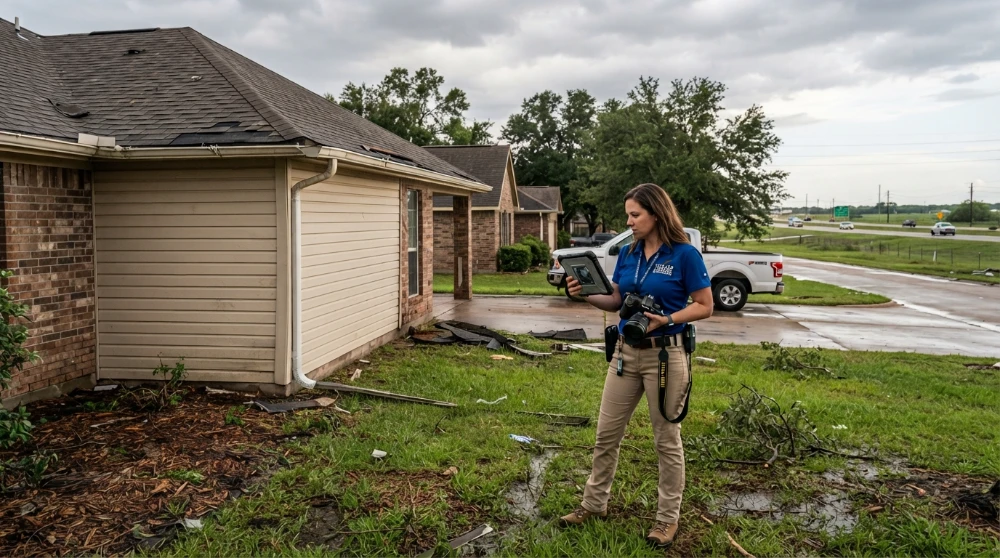
A proper hail claim may require documentation of roofing, soft metals, gutters, exterior finishes, HVAC components, windows, detached buildings, and resulting interior water damage. If the insurance estimate addresses only a portion of that scope, TX Public Adjusting can review what was omitted. Before or immediately after filing, property owners should also know how to document hail damage for an insurance claim, including photographs, affected components, dates, and supporting records.
Water Damage Claims
Water losses can spread rapidly.
A failed supply line behind a cabinet can affect drywall, insulation, flooring, trim, contents, and adjacent rooms. Wind-driven rain entering through storm damage may create a completely different documentation problem.
We review the claimed cause, affected areas, mitigation records, moisture-related documentation, estimates, and policy considerations relevant to the loss. For a deeper look at these issues, see how a water damage public adjuster can assist when important portions of a water-loss claim are disputed or missing.
Fire and Smoke Damage Claims
Fire claims are rarely limited to the area that burned.
Smoke can move through rooms, HVAC systems, insulation, porous materials, contents, and concealed spaces. Fire suppression may introduce additional water damage.
A thorough fire claim can involve structure, contents, debris removal, cleaning, smoke remediation, odor treatment, temporary repairs, and additional living or operating expenses where the policy provides coverage. When the scope of a fire loss becomes disputed, a fire insurance adjuster working for the policyholder can help document structural, smoke, contents, and related damage from the owner’s perspective.
Storm Damage Claims
A Waller storm claim may combine several categories at once: hail, wind, fallen trees, roof openings, water intrusion, electrical damage, and detached-structure damage.
Those claims need to tell one consistent story—what happened, what was damaged, and what work is reasonably necessary to restore the property.
Roof Damage Claims
Roof disputes often start with a simple disagreement: repair or replace?
But the answer may depend on the extent and distribution of damage, roof materials, slope, matching considerations, repairability, manufacturer requirements, related components, and the language of the policy.
TX Public Adjusting reviews roof claims alongside the rest of the property so the roof is not evaluated in isolation. Property owners facing a repair-versus-replacement disagreement can learn more about using a public adjuster for a roof claim when the carrier’s scope does not appear to account for all covered damage.
Commercial Property Claims
Commercial property claims can create substantially more complicated documentation and estimating issues than a typical residential loss.
A loss may affect roofing systems, inventory, tenant spaces, equipment, electrical systems, building envelope components, signage, operations, and multiple structures.
Around Waller, that may include warehouses, retail properties, offices, self-storage facilities, agricultural businesses, restaurants, industrial buildings, apartment properties, and other businesses tied to continued development along the US 290 corridor.
If your Waller residential or commercial claim feels incomplete, request a Free Claim Review before assuming the carrier’s estimate is the final word.
Why Insurance Claims Become Underpaid
An underpaid claim does not always result from one dramatic mistake. More often, several smaller omissions accumulate.
Missed Damage
The adjuster’s inspection may have focused on one area while related damage elsewhere went undocumented.
Scope Omissions
An estimate may identify the damaged material but leave out work required to remove, access, reinstall, finish, or protect surrounding components.
Depreciation Issues
Replacement cost and actual cash value provisions can affect how and when claim funds are paid. Recoverable depreciation may also depend on policy terms and completion of qualifying repairs.
Low or Incomplete Estimates
Two estimates for the same property can differ significantly because they use different measurements, material assumptions, labor operations, quantities, or repair approaches.
Documentation Problems
Photographs alone rarely tell the entire story.
A strong claim may require measurements, damage mapping, estimates, inventories, receipts, contractor documentation, expert information, mitigation records, correspondence, and a clear chronology.
The job of a public insurance adjuster in Waller is to organize that information into a claim presentation the carrier can evaluate.
Our Public Adjusting Process
1. Claim Review
We begin by understanding the loss.
That includes what happened, when it happened, what the carrier has done so far, what documents have been issued, and what concerns you have about the claim.
If you already received an estimate, payment, reservation-of-rights letter, partial denial, or complete denial, we review those materials as part of the process.
2. Property Inspection
We inspect the claimed damage and compare observed conditions with the carrier’s scope.
For storm claims, that may mean reviewing roofing, exterior elevations, detached structures, metal components, interiors, and other areas connected to the event.
3. Documentation and Estimating
Next comes the detail work.
We organize photographs, measurements, damaged components, repair requirements, contents information where applicable, and supporting documentation. We then prepare or evaluate the scope needed to present the policyholder’s position.
4. Carrier Communication and Negotiation
TX Public Adjusting communicates with the insurance company regarding the documented claim.
When differences exist between estimates, scope, quantities, or damage determinations, we work to explain and support the policyholder’s position through the claim process.
5. Settlement and Claim Resolution
Our goal is to help the claim reach a properly documented resolution based on the covered loss and terms of the policy.
Every claim is different. Hiring a public adjuster does not guarantee coverage or a particular settlement amount, but detailed documentation can make a major difference when important damage has been overlooked.
Why Choose TX Public Adjusting for a Waller Claim?
Property owners should know who is representing them.
TX Public Adjusting is operated by Rise Public Adjusting LLC, Texas License #3356839.
Our approach is built around several principles:
- Texas-focused representation. We work with property claims across Texas and understand the types of weather losses common to Southeast Texas.
- Licensed public adjusting services. Rise Public Adjusting LLC operates under Texas License #3356839.
- Policyholder representation. We work for property owners, not their insurance carriers.
- Residential and commercial experience. Our team has reviewed thousands of claims involving homes, businesses, roofs, water losses, fires, storms, and other property damage.
- Detailed claim preparation. We look at the scope as a connected restoration project rather than a list of isolated damaged items.
- Free Claim Review. You can have the situation reviewed before deciding how you want to proceed.
- No upfront fees. Talk with us about the claim and engagement structure before making a commitment.
Experience matters because claim disagreements are often buried in small details: a missed roof accessory, omitted demolition, an incorrect quantity, a room that was never measured, a commercial roof component that was treated as cosmetic, or interior damage that was separated from the storm event.
Those details can add up.
Areas We Serve Near Waller
TX Public Adjusting assists property owners throughout the surrounding region, including communities across Waller County, Harris County, and the greater northwest Houston area.
Nearby service areas include:
- Hempstead
- Prairie View
- Pine Island
- Hockley
- Fields Store
- Monaville
- Pattison
- Brookshire
- Katy
- Cypress
- Magnolia
- Northwest Houston
Waller County includes communities such as Hempstead, Brookshire, Pattison, Prairie View, Pine Island, and Waller, with Harris County immediately east of the county.
If your property is outside Waller city limits but nearby, contact TX Public Adjusting to confirm service.
Frequently Asked Questions About Public Adjusters in Waller
What does a public adjuster in Waller do?
A public adjuster represents the property owner during an insurance claim. If you want a detailed explanation of what a public adjuster does, our Texas guide covers the role in more detail. That can include reviewing the policy and carrier paperwork, inspecting damage, preparing estimates and documentation, communicating with the insurance company, and negotiating disputed claim issues.
TX Public Adjusting represents policyholders rather than insurance companies.
When should I call a public adjuster after a Waller hailstorm?
You can call before the claim becomes disputed. Early involvement can help establish documentation while storm damage is still fresh.
Property owners also contact us after receiving a low estimate, partial approval, repair-only roof decision, denial, or settlement that appears to leave important damage out.
Can you help if my Waller roof claim was underpaid?
Yes. We can review the carrier’s roof estimate and compare it with the observed damage and repair scope.
Roof underpayments can involve missed slopes, accessories, flashing, vents, gutters, soft metals, interior damage, quantities, or differences over whether the roof can reasonably be repaired. If the issue began with hail, you may also want to review what options exist when a hail claim was denied or the carrier concluded that the observed roof conditions were not covered storm damage.
Does Waller get damaging hail?
Yes. Severe hail has been documented in Waller and elsewhere in Waller County. National Weather Service historical records include 1.50-inch hail in Waller during a severe thunderstorm event.
That is one reason hail-related roof and exterior claims deserve a detailed inspection rather than a quick visual check from the ground.
Can a public adjuster help with water damage in Waller?
Yes, depending on the circumstances and policy.
We help document the source, affected materials, extent of damage, mitigation information, and repair scope. Coverage depends on the policy and cause of loss, so storm-created openings, plumbing failures, appliance leaks, and ground flooding should not automatically be treated as the same type of water event.
Can you reopen or supplement an existing claim?
In some situations, yes.
A claim that has already been inspected or paid may still have disputed or newly documented damage. The available options depend on the policy, claim status, timing, prior communications, and other facts. We can review the file and explain what options appear available.
Do public adjusters work for insurance companies?
No. That distinction is fundamental.
Insurance-company adjusters and independent adjusters retained by carriers evaluate claims for the insurer. A public adjuster is retained by the policyholder to represent the policyholder’s interests. Our guide comparing a public adjuster vs. independent adjuster explains that distinction in more detail.
Do you handle commercial property claims in Waller?
Yes. TX Public Adjusting works with both residential and commercial claims.
That is particularly relevant in Waller because development along US 290 and throughout Waller County includes warehouses, retail space, industrial properties, offices, multifamily buildings, agricultural businesses, and other commercial structures.
How much does a Waller public adjuster charge?
Public adjusting fees depend on the claim and engagement agreement. Texas regulates public adjusters, and the agreement should clearly explain how compensation is handled.
TX Public Adjusting offers a Free Claim Review, so you can discuss the property loss and understand the next steps before deciding whether to hire us.
Is it too late to hire a public adjuster if my insurer already paid me?
Not necessarily.
Many property owners contact a public adjuster only after seeing the carrier’s estimate and realizing that significant work may be missing. Timing, deadlines, policy provisions, prior settlement documents, and the status of repairs can affect what options remain. Having the file reviewed promptly is usually better than waiting. The answer is highly dependent on the claim’s status, so our guide explaining when it is too late to hire a public adjuster is a useful next step if your insurer has already inspected or paid the loss.
Get a Free Waller Insurance Claim Review
A carrier estimate is an evaluation of the claim—not necessarily the last word on what the damage actually requires.
If your Waller property has been damaged by hail, wind, water, fire, a severe thunderstorm, or another covered loss, TX Public Adjusting can review the documentation and help you understand where the claim stands.
We work with homeowners, commercial property owners, landlords, investors, and other Texas policyholders.
TX Public Adjusting
Operated by Rise Public Adjusting LLC
Texas License #3356839
Request your Free Claim Review today. No upfront fees. Contact TX Public Adjusting and find out whether important damage or scope has been left out of your claim.