

Property damage in Prairie Hill can create a much bigger insurance problem than the damage visible from the driveway. Hail can bruise shingles and dent metal components, straight-line winds can lift roofing and damage barns or outbuildings, a plumbing failure can spread water beneath floors, and a fire can affect both the structure and contents of a home. For rural property owners, getting every damaged component properly inspected and documented can be especially important.
As a Texas public adjuster, TX Public Adjusting represents homeowners, landowners, business owners, and other policyholders during property insurance claims. We work for the insured—not the insurance company—and help identify damage, prepare documentation, review estimates, and negotiate covered property claims.
TX Public Adjusting is operated by Rise Public Adjusting LLC, Texas License #3356839.
Prairie Hill is an unincorporated Limestone County community centered near Farm Roads 339 and 73, roughly 22 miles northwest of Groesbeck. Its location between smaller rural communities and the Waco–Limestone County corridor gives local properties a different risk profile from homes in a dense metropolitan neighborhood.
Free Claim Review | Residential & Commercial Claims | Licensed Texas Public Adjuster
If your insurance carrier has already inspected the property, issued a low estimate, delayed the claim, or denied all or part of the loss, you can still have the claim reviewed.
Contact TX Public Adjusting for a free Prairie Hill insurance claim review. No upfront fees.
Why Property Owners Hire a Public Adjuster in Prairie Hill
After a covered loss, the insurance company typically sends an adjuster to evaluate the damage on behalf of the carrier. That inspection is an important part of the process, but it does not mean every damaged component will automatically appear in the carrier’s estimate.
A public adjuster approaches the loss from the policyholder’s side. If you are unfamiliar with the role, our guide explains what a public adjuster does during a Texas property insurance claim.
TX Public Adjusting can help with:
- Reviewing the insurance policy and claim documents
- Performing an independent property inspection
- Identifying damage that may have been omitted
- Photographing and documenting affected building components
- Reviewing the carrier’s repair estimate
- Preparing or reviewing a detailed scope of loss
- Organizing contractor estimates and supporting records
- Documenting personal property when applicable
- Addressing depreciation and replacement-cost questions
- Communicating with the insurance company
- Preparing supplements when additional covered damage is discovered
- Negotiating the claim based on the documented loss
That distinction can matter in Prairie Hill because many properties include more than a primary residence. Depending on the policy, a loss may involve detached garages, workshops, agricultural or storage structures, fencing, exterior equipment, or other improvements that need to be evaluated individually.
Our job is to build a clear, organized claim based on the actual conditions at the property and the coverage available under the policy.
Property Damage Risks in Prairie Hill and Limestone County
Prairie Hill sits in the open prairie country of northwestern Limestone County. The historic community developed near the area between Christmas Creek and the Navasota River, and the surrounding terrain remains largely low-rolling to flat prairie.
That setting creates several practical property-loss concerns.
Severe Thunderstorms and Hail
Central Texas thunderstorms can bring hail with little warning. Hail damage is particularly challenging because significant impacts may not create an immediate roof leak.
Damage can include:
- Bruised or fractured asphalt shingles
- Granule loss
- Dented metal roofing
- Damaged ridge caps
- Bent gutters and downspouts
- Dented roof vents and flashing
- Window screen damage
- Exterior HVAC impacts
- Damaged siding
- Skylight damage
- Impacts to detached buildings
A carrier may identify damage to the roof but overlook collateral impacts elsewhere on the property.
For rural Prairie Hill properties with several structures, documenting each affected building separately can make a meaningful difference in the accuracy of the claim.
Straight-Line Wind and Tornado Damage
Strong thunderstorms can produce powerful wind even when a tornado never reaches the property.
Wind losses may involve:
- Lifted or missing shingles
- Creased shingles
- Detached flashing
- Damaged metal panels
- Broken windows
- Siding damage
- Tree impacts
- Fence damage
- Detached structures
- Wind-driven rain entering through storm-created openings
When different parts of a structure fail during the same storm, the insurance estimate needs to address the complete repair scope rather than treating each visible symptom in isolation.
Heavy Rain and Water Intrusion
Prairie Hill lies within a landscape crossed by creeks and drainage areas, including waterways west and southwest of the community.
Heavy thunderstorms can therefore create drainage problems and water intrusion around some properties.
Property owners should understand that floodwater and covered water damage are not automatically treated the same under an insurance policy. A standard property policy may exclude flooding while covering certain sudden plumbing losses or storm-related water damage under specific circumstances.
Determining the source of water is often one of the first major issues in a disputed claim.
Winter Freezes and Burst Pipes
Central Texas does not experience prolonged freezes every winter, but a hard freeze can cause major losses when exterior plumbing, attic supply lines, water heaters, or pipes in poorly insulated spaces fail.
A burst pipe may damage:
- Drywall
- Insulation
- Flooring
- Cabinets
- Electrical components
- Personal property
- Subflooring
- Structural framing
Drying the visible water is only one part of the loss. The insurance scope should also address covered materials that cannot reasonably be dried, cleaned, or restored.
Common Insurance Claims in Prairie Hill
Hail Damage Claims
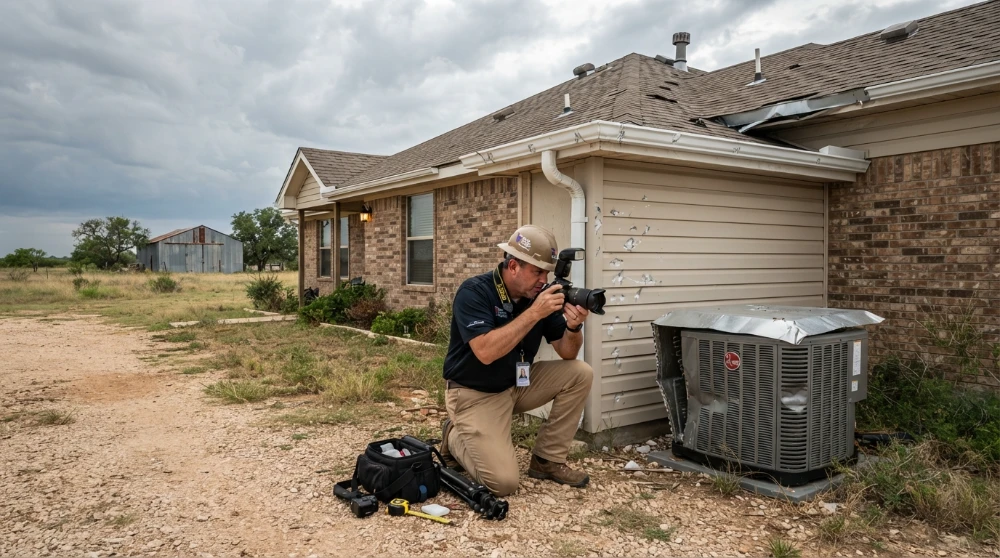
Hail is one of the first loss types we look for after severe weather in this part of Texas. Property owners dealing with a recent storm can also review our hail damage insurance claim guide for additional information about documenting roof and exterior damage.
A proper hail inspection should go beyond counting marks on a few roof shingles. We evaluate the roofing system and related exterior components to determine where the storm produced functional or covered damage.
Items that may need inspection include:
- Shingles or metal roof panels
- Ridge and hip materials
- Flashing
- Pipe jacks and vents
- Gutters
- Downspouts
- Skylights
- Window screens
- Siding
- Exterior HVAC equipment
- Detached garages or workshops
A hail claim can become underpaid when the estimate recognizes obvious roof impacts but excludes associated components required to complete the repair.
Roof Damage Claims
Roof claims often turn into disagreements about scope, not simply whether the storm happened.
For example, a carrier estimate might allow replacement of a limited number of shingles while the contractor identifies repairability problems or damage affecting a larger roof section.
A complete roof claim may need to consider:
- Roofing material
- Underlayment
- Starter materials
- Ridge or hip caps
- Valleys
- Drip edge
- Flashing
- Pipe boots
- Vents
- Detach-and-reset work
- Steep or high-access charges
- Debris removal
- Code-related items when covered and applicable
TX Public Adjusting reviews the loss as a roofing system rather than treating individual impacts as unrelated repairs.
Water Damage Claims
Water can travel much farther than the stain visible on a wall or ceiling.
Common Prairie Hill water losses may involve:
- Burst plumbing lines
- Failed water heaters
- Appliance supply lines
- Roof leaks following storms
- Overflowing fixtures
- HVAC condensate failures
- Frozen pipes
Moisture can migrate beneath flooring, behind cabinets, through insulation, and into wall cavities.
We help document the source, affected materials, mitigation work, repair requirements, and any additional covered damage discovered after demolition begins. A water damage public adjuster can also review whether the carrier’s estimate accounts for the complete covered repair scope.
Fire and Smoke Damage Claims
Fire claims are among the most detailed property claims because the loss rarely stops at the visibly burned area.
A fire can create:
- Structural damage
- Smoke contamination
- Soot deposits
- Odor damage
- Water damage from firefighting
- Electrical damage
- HVAC contamination
- Personal property losses
- Debris removal expenses
- Temporary living expenses when covered
Rural properties may also face practical rebuilding and access considerations that differ from projects inside larger cities.
A detailed fire claim should account for all covered categories rather than focusing only on materials directly touched by flames. For larger losses, working with a fire insurance adjuster on the policyholder’s side can help organize structural damage, smoke contamination, contents, mitigation expenses, and other covered portions of the claim.
Storm and Wind Damage Claims
One severe Prairie Hill thunderstorm can create damage across several parts of the same property.
A roof may lose shingles while gutters bend, a tree damages fencing, wind-driven rain reaches interior finishes, and a detached structure experiences separate damage.
When that happens, each component must be documented and connected to the reported loss.
Commercial Property Claims
TX Public Adjusting also assists owners with commercial property claims involving commercial and income-producing properties throughout Texas.
Commercial losses can involve:
- Retail buildings
- Warehouses
- Offices
- Churches
- Multifamily properties
- Restaurants
- Storage buildings
- Workshops
- Mixed-use properties
- Multi-building locations
Commercial claims often involve more complicated estimating, contents documentation, equipment questions, and business-related coverage issues.
Rural Prairie Hill Properties Require a Complete Inspection
Prairie Hill is not a dense subdivision with identical homes on compact city lots. It is a small, unincorporated community surrounded by rural land and smaller settlements. The community itself developed around FM 339 and FM 73, and nearby populated places include Mustang, Victoria, Delia, Watt, Mart, Mount Calm, and Coolidge.
That matters after a storm.
A local property may include a residence plus:
- Detached garages
- Workshops
- Storage buildings
- Fencing
- Carports
- Metal roofing
- Exterior equipment
- Additional structures listed under the policy
A rushed inspection can focus heavily on the main roof while giving limited attention to collateral damage or other insured structures.
Our approach is to understand the complete insured property first and then document the loss systematically.
Why Insurance Claims Become Underpaid
An underpaid claim does not always result from one major error.
More often, the difference is created by a collection of smaller omissions.
Missed Damage
Damage can exist in locations that are difficult to inspect from ground level or may not be obvious immediately after a storm.
Examples include:
- Roof slopes away from normal viewing areas
- Soft-metal impacts
- Flashing damage
- Interior moisture
- Damage beneath flooring
- Detached structures
- Mechanical equipment
Incomplete Repair Scopes
An estimate may recognize damaged material without including everything required to remove and replace it properly.
That can leave out labor, accessories, adjacent components, or required detach-and-reset work.
Low Repair Pricing
Insurance estimates are built using specific assumptions about materials, labor, measurements, and repair methods.
If those assumptions do not match the conditions at the property, the estimated repair cost may not reflect the actual scope of work.
Depreciation Issues
Some policies initially pay an actual cash value amount and hold back recoverable depreciation until repairs are completed and policy conditions are satisfied.
Property owners may be confused by:
- What has been depreciated
- Whether depreciation is recoverable
- How documentation must be submitted
- What deadlines apply
We review the carrier estimate and policy information so the numbers are easier to understand.
Documentation Problems
A legitimate loss can become harder to resolve when supporting evidence is incomplete.
Photos, measurements, contractor estimates, mitigation invoices, inventories, receipts, and repair documentation can all affect how clearly the loss is presented.
Our Public Adjusting Process
Every claim is different, but our Prairie Hill public adjusting process generally follows five stages.
1. Claim Review
We begin by reviewing what has happened so far.
That may include:
- The date and cause of loss
- Your insurance policy
- Carrier correspondence
- Inspection reports
- Estimates
- Payment information
- Denial or reservation-of-rights letters
- Contractor documents
If the claim has already been paid, we compare the payment and scope against the documented damage.
2. Property Inspection
We inspect the property to identify damaged building components and determine what requires additional documentation.
For storm claims, the inspection may include the roof, elevations, exterior metals, openings, mechanical equipment, interiors, and covered detached structures.
3. Documentation and Scope Preparation
Next, we organize the claim.
Depending on the loss, that may involve:
- Photographs
- Measurements
- Damage descriptions
- Repair estimates
- Contractor documentation
- Contents information
- Mitigation records
- Supporting invoices
The goal is to present the carrier with a clear, defensible account of the covered damage being claimed.
4. Carrier Communication and Negotiation
TX Public Adjusting communicates with the insurance carrier regarding the documented scope.
When estimates differ, we work to identify where the disagreement exists and provide supporting information for additional covered items.
5. Claim Resolution
We continue working through the adjustment process toward a settlement supported by the policy and documented loss.
No public adjuster can guarantee a particular settlement amount. Our role is to make sure the policyholder’s position is thoroughly documented and professionally presented.
Why Choose TX Public Adjusting
Licensed Texas Public Adjuster
TX Public Adjusting operates through Rise Public Adjusting LLC, Texas License #3356839.
We Represent Policyholders
Understanding the difference between a public adjuster vs. independent adjuster can help property owners understand who each professional represents during the claim process.
Our responsibility is to help document and present your claim from your side of the insurance relationship.
Texas-Focused Experience
Property claims in Texas involve recurring hazards including hail, severe thunderstorms, wind, freezes, water losses, fires, and major storm events.
Our team has reviewed thousands of residential and commercial insurance claims, including approximately 1,400 annual claim files based on firm volume. TX Public Adjusting’s current site identifies the firm as a licensed Texas public adjuster serving policyholders statewide.
Residential and Commercial Claims
We work with losses involving:
- Homes
- Rental properties
- Commercial buildings
- Churches
- Warehouses
- Retail properties
- Restaurants
- Multifamily buildings
- Other insured Texas properties
Independent Claim Representation
We do not work for your insurance company.
Our focus is the policyholder’s claim, supporting documentation, and applicable policy coverage.
Property Owners Around Prairie Hill We Serve
Prairie Hill sits in northwestern Limestone County near the McLennan, Hill, and Navarro County corridors.
Nearby communities include:
- Mart
- Coolidge
- Mount Calm
- Hubbard
- Dawson
- Riesel
- Tehuacana
- Penelope
- Axtell
- Mustang
- Delia
- Watt
- Frosa
- Midway
Mart is roughly eight miles southwest of the Prairie Hill area, while Mount Calm and Coolidge are about nine to eleven miles away. Hubbard lies farther north.
We also serve property owners throughout Limestone County and across Texas.
When Should You Contact a Public Adjuster?
You do not have to wait until an insurance claim becomes a major dispute. Property owners who have already received an estimate, payment, or denial often ask when it is too late to hire a public adjuster. Depending on the status of the claim and applicable deadlines, there may still be options for professional claim assistance.
A claim review may make sense when:
- The property suffered significant damage
- Multiple buildings are involved
- You are unsure what should appear in the estimate
- The carrier’s payment seems too low
- Important items are missing
- Your contractor’s estimate is substantially higher
- Part of the claim was denied
- The entire claim was denied
- The carrier has delayed the process
- New damage was discovered during repairs
- You do not have time to manage extensive documentation yourself
Already received an insurance payment? That does not necessarily mean the claim cannot be reviewed.
Contact TX Public Adjusting for a free claim review before assuming the carrier’s first estimate is the final word.
Frequently Asked Questions About Public Adjusters in Prairie Hill
What does a public adjuster in Prairie Hill do?
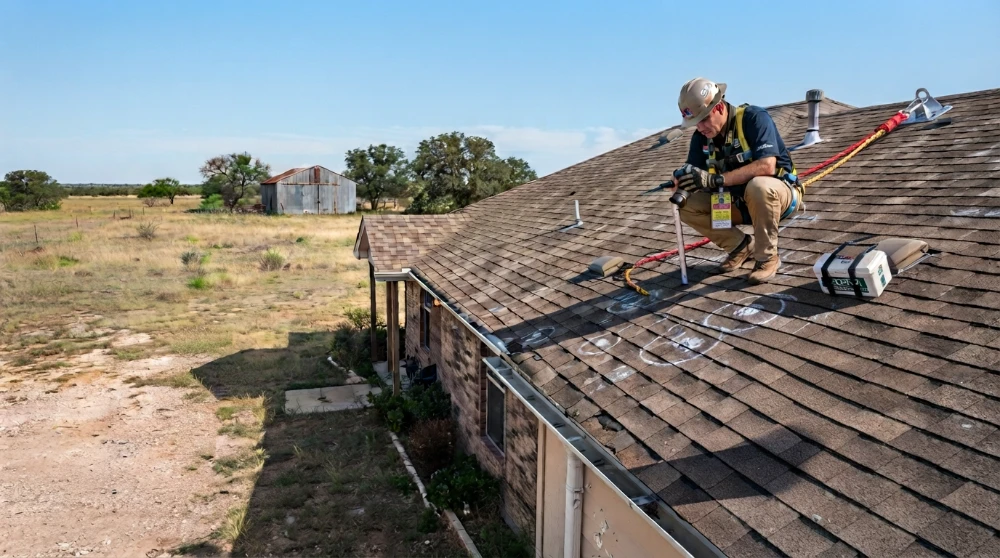
A public adjuster represents the property owner during an insurance claim. We inspect damage, review policy and claim documents, prepare supporting documentation, evaluate estimates, communicate with the carrier, and negotiate covered property damage on behalf of the insured.
Unlike the insurance company’s adjuster, TX Public Adjusting represents the policyholder.
Is TX Public Adjusting licensed in Texas?
Yes. TX Public Adjusting operates through Rise Public Adjusting LLC, Texas Public Adjuster License #3356839.
We assist residential and commercial policyholders with property damage claims throughout Texas.
What types of Prairie Hill insurance claims do you handle?
We assist with hail, roof, wind, storm, water, burst-pipe, fire, smoke, and commercial property claims, along with other covered losses.
For Prairie Hill properties, we also pay close attention to detached structures and exterior components that may be affected during severe weather.
Can you help after my insurance company already inspected the property?
Yes. Many property owners contact a public adjuster after the carrier’s first inspection.
We can independently inspect the property, compare the documented damage with the carrier’s estimate, and identify items that may require additional consideration.
Can a public adjuster help with an underpaid roof claim?
Yes. Roof claims are frequently disputed over scope, repairability, measurements, accessories, or the amount of damage included in the carrier estimate.
We review the complete roof system and supporting documentation rather than focusing only on a few visible damaged areas.
What if my hail damage is not visible from the ground?
That is common. Some hail impacts are difficult or impossible to evaluate accurately from the driveway.
A roof and exterior inspection may reveal impacts to shingles, metal roofing, vents, flashing, gutters, downspouts, window screens, exterior equipment, and other components.
Can you help with water damage from a burst pipe?
Yes. Sudden plumbing losses can affect materials far beyond the initial leak.
We help document visible and concealed damage, mitigation work, affected finishes, repair requirements, and the carrier’s estimate. Coverage depends on the policy and circumstances surrounding the loss.
Do you handle claims involving rural homes and multiple structures?
Yes. Prairie Hill and the surrounding area contain rural properties where the insured location may include a home plus garages, workshops, storage structures, or other improvements.
We review the policy and inspect the applicable insured structures so the claim is not limited unnecessarily to the most obvious area of damage.
Can I hire a public adjuster after receiving an insurance payment?
Potentially, yes.
A prior payment does not automatically prevent additional covered damage from being documented. If items were omitted or the repair scope is incomplete, the claim may warrant further review subject to the policy, claim status, and applicable deadlines.
How do I get a Prairie Hill claim reviewed?
Contact TX Public Adjusting and explain what happened, where the property is located, and where the insurance claim currently stands.
We offer a free claim review with no upfront fees. We can review the available information and explain whether additional inspection, documentation, or claim assistance may be appropriate.
Get a Free Prairie Hill Insurance Claim Review
If your Prairie Hill home, rural property, rental, business, church, workshop, or commercial building has suffered covered property damage, you do not have to manage the insurance claim alone.
TX Public Adjusting can review:
- Hail claims
- Roof claims
- Wind claims
- Storm claims
- Water damage claims
- Fire and smoke claims
- Underpaid claims
- Denied claims
- Commercial property claims
TX Public Adjusting
Rise Public Adjusting LLC
Texas License #3356839
Free Claim Review
There are no upfront fees to have us evaluate your situation.
Contact TX Public Adjusting today to discuss your Prairie Hill property damage claim and find out whether professional claim representation can help.