

Property damage in Forest Hill can happen fast. A spring thunderstorm can leave hail marks across a roof near Glencrest, straight-line winds can damage a commercial building along the I-20 corridor, and a plumbing failure can spread water through several rooms before anyone notices. When the resulting insurance claim is delayed, disputed, denied, or underpaid, a public adjuster in Forest Hill can help the policyholder document the loss and pursue the benefits available under the policy.
TX Public Adjusting represents residential and commercial property owners—not insurance companies. Our team reviews damage, studies policy language, prepares detailed claim documentation, and communicates with the carrier regarding the scope and value of a covered loss.
TX Public Adjusting is operated by Rise Public Adjusting LLC, a licensed Texas public adjusting firm, License #3356839.
Dealing with a new, delayed, or underpaid claim? Request a free claim review from TX Public Adjusting. There are no upfront fees.
Insurance Claim Help for Forest Hill Property Owners
Forest Hill occupies a compact but active part of south-central Tarrant County between Fort Worth and Arlington. The community sits along the heavily traveled I-20 corridor and is bordered generally by Anglin Street and Wichita Street. It includes roughly 13,000 residents and more than 300 businesses.
That location creates a varied mix of insurance losses. Forest Hill contains older single-family homes, newer residential construction, neighborhood retail properties, churches, offices, warehouses, restaurants, multifamily buildings, and commercial properties serving drivers along I-20, I-820, and US 287.
A storm may affect properties differently across this small area. One roof may lose shingles while the neighboring roof appears intact from the ground. A retail building may have membrane damage, displaced flashing, wet insulation, and interior staining without an obvious opening. A homeowner may see only a small ceiling spot even though moisture has traveled through the attic and wall system.
Insurance carriers generally inspect reported damage, prepare an estimate, and determine what they believe is covered. However, the carrier’s adjuster works for the insurance company. A Forest Hill public adjuster works for the policyholder and develops the claim from the property owner’s side.
Our work may include:
- Reviewing the insurance policy and claim correspondence
- Inspecting visible and reasonably accessible damage
- Identifying areas that may require additional evaluation
- Preparing photographs, measurements, inventories, and repair scopes
- Comparing carrier estimates with observed damage
- Documenting omitted or undervalued repair items
- Communicating with the insurer about the policyholder’s claim
- Assisting with supplements, reopened claims, and disputed scopes
Public adjusting does not guarantee coverage or a particular payment. It gives the policyholder professional assistance when the loss is too large, technical, or time-consuming to manage alone.
Why Property Owners Hire a Public Adjuster in Forest Hill
Many property owners contact TX Public Adjusting because the insurance process has become harder than expected.
A typical claim may involve an initial inspection, emergency repairs, contractor estimates, requests for records, depreciation calculations, proof-of-loss requirements, repair disagreements, and repeated carrier communications. Commercial losses may also involve damaged equipment, inventory, tenant improvements, business interruption issues, code requirements, and multiple affected buildings.
Property owners commonly seek help when:
- The carrier’s estimate appears too low
- Important rooms, elevations, roof components, or finishes were omitted
- A contractor’s scope is significantly higher than the insurer’s estimate
- The claim has been delayed without a clear explanation
- Damage was attributed to wear, deterioration, or maintenance
- The policyholder does not understand the depreciation calculation
- Interior water damage keeps returning after repairs
- The insurer paid for spot repairs instead of a broader repair scope
- A commercial claim is interfering with normal operations
- The property owner lacks time to manage inspections and documentation
- A denied or closed claim may need another review
A public adjuster can also become involved before the first carrier inspection. Early involvement may help preserve evidence, organize documentation, and reduce avoidable mistakes. We also review claims after the carrier has issued an estimate or payment.
Common Insurance Claims in Forest Hill
Forest Hill is exposed to the severe thunderstorm hazards associated with North Texas, including hail, damaging wind, tornadoes, and heavy rainfall. Texas insurance guidance describes windstorm coverage as protection for damage caused by hail or wind from events such as thunderstorms and tornadoes, subject to the terms and exclusions of the individual policy.
The following are among the most common property claims we evaluate in Forest Hill.
Hail Damage Claims
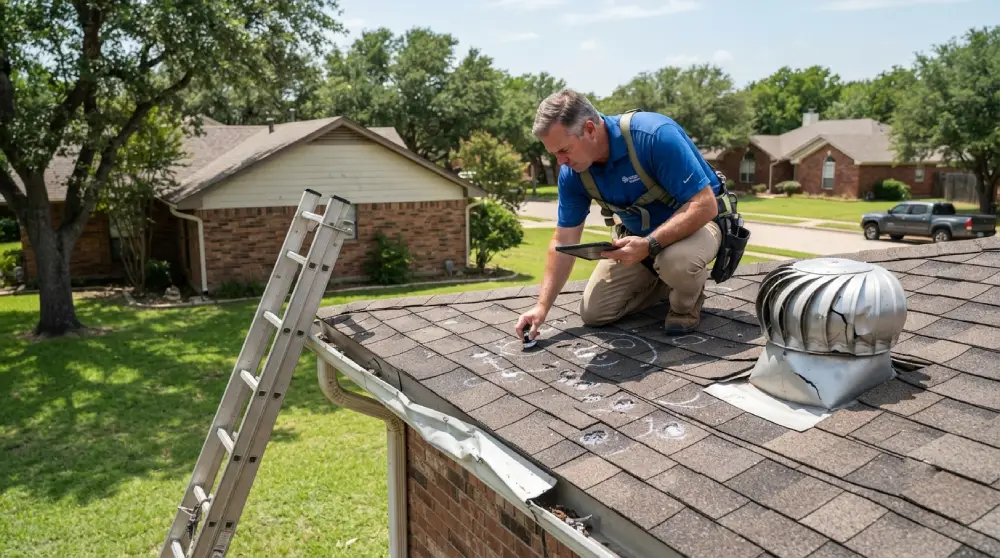
Hail can damage asphalt shingles, metal roofing, tile, gutters, downspouts, vents, skylights, fencing, siding, window screens, air-conditioning equipment, and commercial roof systems.
The challenge is that hail damage is not always visible from the yard. A roof may not leak immediately. Bruising, fractured mats, coating loss, displaced granules, dented soft metals, or impact damage to rooftop equipment may require a closer inspection. Property owners can also review our guide to filing a hail damage insurance claim in Texas for more information about documentation, roof impacts, and common claim disputes.
A hail claim may become disputed because of:
- Questions about the date of loss
- Arguments that damage is cosmetic
- Preexisting wear or prior storm damage
- Different conclusions about hail size or direction
- Repair-versus-replacement disagreements
- Omitted accessories or roof elevations
- Policy endorsements limiting cosmetic damage
- Late reporting or inadequate photographs
Forest Hill is part of the Southern Great Plains, where hail outbreaks are a significant seasonal concern, particularly during the warmer storm months.
Wind and Tornado Damage Claims
Strong thunderstorms can lift shingles, crease tabs, loosen flashing, detach gutters, damage fencing, break windows, move rooftop equipment, and allow rain into the building envelope. Tornadoes and severe straight-line winds can cause more extensive structural loss.
Wind claims often involve disputes over whether the roof was damaged by a storm or by age and installation conditions. The visible damage may also be only part of the loss. Once roofing, flashing, vents, or exterior openings are compromised, water may travel into decking, insulation, ceilings, walls, flooring, and electrical areas.
For Forest Hill properties near open commercial corridors or major roads, windborne debris may also damage storefront glass, signage, exterior lighting, rooftop systems, and parked equipment.
Water Damage Claims
Water losses are not limited to storms. Forest Hill homeowners and businesses may experience damage from:
- Broken supply lines
- Failed water heaters
- Appliance leaks
- Plumbing backups
- Roof openings
- Overflowing fixtures
- HVAC drain failures
- Fire-suppression systems
- Frozen or burst pipes
- Water entering around windows or exterior penetrations
When the carrier’s inspection or estimate does not account for the full extent of the loss, our guide to dealing with an insurance adjuster after water damage explains what property owners should document and review. A water damage claim should account for more than the first visible stain. Moisture can affect drywall, insulation, cabinets, subflooring, baseboards, flooring, electrical components, and personal property.
Coverage depends heavily on the source of water, the timing of the event, policy exclusions, endorsements, and whether the damage was sudden or developed over time. Floodwater entering from outside is commonly treated differently from water released by an internal plumbing system.
Roof Damage Claims
Roof claims are among the most frequently disputed property claims because the carrier and policyholder may disagree about causation, repairability, matching, age, condition, and the amount of storm-created damage.
Forest Hill contains housing stock from different construction periods, including established neighborhoods with older roofing systems. Neighborhood directories identify Glencrest, Echo Heights, Morningside Park, Eastland, Mitchell Boulevard, South Edgewood, and Ramey Place among the communities associated with Forest Hill and the surrounding area.
Older roofs are not automatically excluded from coverage. However, age-related deterioration can complicate the investigation. The key question is whether a covered event caused direct physical damage and what repair scope is supported by the policy and available evidence.
Our review may include:
- Roof coverings and underlayment
- Decking and structural components
- Flashing, vents, and penetrations
- Gutters and drainage components
- Fascia, soffit, and exterior trim
- Skylights and rooftop equipment
- Interior water damage
- Code-related repair requirements
- Accessory structures and detached buildings
Commercial property owners with low-slope systems can also review our guide to built-up roof repair for additional information about roof layers, damage, and repair considerations.
Fire and Smoke Damage Claims
A residential or commercial fire can create several categories of loss at once. Beyond burned materials, a claim may involve smoke residue, soot, heat damage, firefighting water, damaged contents, electrical systems, demolition, debris removal, temporary protection, and additional living expenses.
Commercial fire claims can also affect inventory, machinery, tenant improvements, leased equipment, income, and the cost of operating from a temporary location.
Smoke frequently travels beyond the room where the fire started. Porous materials, ductwork, attic spaces, insulation, furniture, and concealed cavities may require evaluation. Cleaning may be appropriate for some materials, while others may require sealing or replacement. For a closer look at how these losses are evaluated, read our guide to working with a fire insurance adjuster after a residential or commercial fire.
Freeze and Burst-Pipe Claims
Although North Texas is known for heat, winter freezes can produce costly property losses. Pipes may freeze in exterior walls, attics, vacant buildings, unheated areas, and poorly insulated plumbing runs.
The resulting water can damage multiple floors or rooms before the source is discovered. Commercial buildings that are closed overnight or on weekends may experience especially extensive damage.
Freeze claims may involve questions about heat maintenance, vacancy provisions, mitigation efforts, plumbing repairs, and the extent of resulting water damage.
Commercial Property Claims
Forest Hill’s location near I-20, I-820, and US 287 supports a mix of retail, industrial, service, restaurant, office, religious, and multifamily properties. These buildings often contain more complex roofing, electrical, mechanical, and interior systems than a typical residence.
Commercial losses may include:
- TPO, modified bitumen, built-up, metal, or coated roof damage
- Wet insulation beneath a low-slope roofing system
- Storefront and glazing damage
- Inventory and equipment losses
- Damage to signs, awnings, and exterior lighting
- Tenant improvement damage
- Loss of rental income
- Business interruption expenses
- Code upgrade issues
- Damage across several buildings or units
TX Public Adjusting assists both residential and commercial policyholders. Our claim review is structured around the property, the policy, and the actual circumstances of the loss.
Local Claim Risks Across Forest Hill
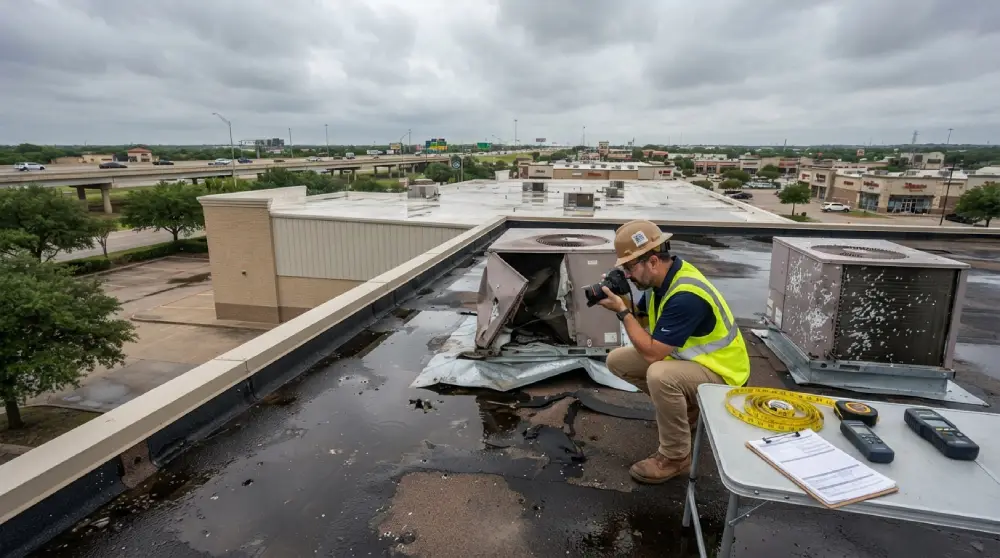
Forest Hill is only a few square miles, but the claim environment changes by property type and location.
Established Residential Areas
Homes around Glencrest, Echo Heights, Eastland, Mitchell Boulevard, Morningside Park, and South Edgewood may have roofs, plumbing, electrical systems, or exterior finishes from different renovation periods. This can complicate matching, repairability, and causation questions.
A storm claim on an established home may involve:
- Aging shingles combined with new hail impacts
- Multiple layers of prior repairs
- Discontinued siding or roofing materials
- Water migration through older wall assemblies
- Code requirements triggered during repair
- Interior finishes that cannot be matched with a spot repair
I-20 and Highway-Adjacent Commercial Properties
Commercial buildings near Forest Hill’s major transportation routes can have broad roof surfaces, rooftop mechanical units, signs, glass storefronts, parking-lot lighting, and multiple tenant spaces.
After a wind or hail event, damage may be scattered across the property. A quick inspection focused only on the main roof membrane may miss HVAC fins, coping, flashing, gutters, signage, fencing, exterior lighting, and water intrusion inside tenant areas.
Tree-Lined Residential Streets
Mature trees provide shade but can become a source of loss during severe wind. Falling limbs may damage roofs, fences, detached structures, vehicles, service lines, and exterior equipment.
Tree-related claims sometimes involve several separate issues:
- Removal of the tree from a covered structure
- Temporary protection of the opening
- Structural and roof repairs
- Interior water damage
- Debris removal
- Damage to personal property
Each category should be evaluated under the applicable policy language.
Drainage and Heavy-Rain Events
Heavy rainfall can overwhelm roof drainage, gutters, parking-lot drainage, and low areas around a structure. The cause of entry matters. Rain entering through storm-created roof damage may be evaluated differently from surface water entering at ground level.
That distinction can become central to coverage. Detailed photographs, weather information, inspection findings, and a clear timeline help explain how the water entered.
Why Insurance Claims Become Underpaid
An underpaid claim is not always the result of a single major error. It often develops through multiple small omissions.
Missed or Hidden Damage
A carrier inspection may not include every roof elevation, room, exterior component, detached structure, or item of damaged personal property. Concealed moisture and damage beneath roofing or flooring may not be apparent during the initial visit.
Incomplete Repair Scope
An estimate may include basic replacement materials but omit:
- Tear-out and disposal
- Access costs
- Underlayment
- Flashing
- Detachment and reset of fixtures
- Texture and paint transitions
- Labor minimums
- Protection and cleaning
- Permit fees
- Code-related items
- General contractor coordination
- Sales tax where applicable
Even modest omissions can create a substantial difference across a whole roof or several damaged rooms.
Depreciation Problems
Replacement cost policies frequently involve an initial actual-cash-value payment with recoverable depreciation paid after qualifying repairs. Confusion can arise when depreciation is applied inconsistently or the policyholder does not understand what must be submitted to recover it.
Some policies also contain nonrecoverable depreciation, roof payment schedules, actual-cash-value endorsements, or other limitations.
Low Pricing or Incorrect Measurements
Differences in measurements, quantities, labor assumptions, material selection, and local pricing can significantly affect an estimate. A public adjuster can compare the carrier’s estimate with site conditions and supporting documentation.
Weak Documentation
A valid loss can become harder to prove when photographs are limited, damaged materials are discarded too early, inventories are incomplete, or repairs begin before the condition is documented.
Emergency mitigation should not be delayed when action is necessary to protect people or property. The key is to preserve evidence whenever safely possible through photographs, videos, invoices, samples, reports, and written records. Several avoidable documentation and communication issues are covered in our guide to common property insurance claim mistakes.
Causation Disputes
Carriers may attribute damage to age, wear, faulty installation, deterioration, maintenance, or an excluded source. These disputes are often technical and fact-specific.
A clear timeline, detailed inspection, weather information, expert findings when appropriate, and careful policy review can help separate preexisting conditions from event-related damage.
Our Public Adjusting Process
TX Public Adjusting uses a structured process designed to develop a clear, well-supported property claim. Property owners who want a broader explanation of the role can read what a public adjuster does before reviewing our claim process below.
1. Free Claim Review
We begin by discussing what happened, when it happened, what has been reported, and what the carrier has done so far.
We may request:
- The insurance policy
- Claim number and date of loss
- Carrier correspondence
- Estimates and payment letters
- Photographs and videos
- Contractor proposals
- Mitigation invoices
- Prior repair records
- Relevant inspection or engineering reports
This initial review helps determine whether public adjusting services may be appropriate.
2. Property Inspection
When retained, we inspect the reported damage and document affected areas. The exact inspection depends on the type of property and loss.
A roof claim may require measurements and documentation of each elevation and accessory. A water claim may involve moisture-related damage across several rooms. A commercial claim may require coordination among property managers, tenants, contractors, and specialists.
3. Policy and Estimate Review
We review the available policy provisions, deductibles, endorsements, limitations, and claim documents. We also compare the carrier’s estimate with the observed damage and the work reasonably required.
Public adjusters interpret and present claims within the scope of their license. Legal questions are referred to qualified attorneys when appropriate.
4. Claim Documentation
We organize the evidence supporting the claim. Depending on the loss, documentation may include:
- Photographs
- Measurements
- Repair estimates
- Contents inventories
- Receipts and invoices
- Contractor reports
- Moisture documentation
- Damage timelines
- Business records
- Proof-of-loss materials
5. Carrier Communication and Negotiation
TX Public Adjusting communicates with the insurance company regarding the policyholder’s claim. We present supported differences, respond to requests, attend inspections when appropriate, and address disputed scope items.
Negotiation does not mean inflating a claim. It means documenting the covered loss thoroughly and pursuing a settlement supported by the policy and evidence.
6. Settlement Review
When the carrier issues a revised estimate or coverage decision, we review it with the policyholder and explain remaining differences.
The final outcome depends on the policy, facts, evidence, carrier decisions, and any applicable dispute process. No public adjuster can guarantee a specific result.
Have a Forest Hill claim that appears incomplete or underpaid? Contact TX Public Adjusting for a free claim review. No upfront fees.
Why Choose TX Public Adjusting
Licensed Texas Representation
TX Public Adjusting is operated by Rise Public Adjusting LLC, Texas License #3356839.
We Represent Policyholders
Insurance company adjusters serve the carrier. Public adjusters represent insured property owners in the preparation and negotiation of first-party property claims. Our comparison of a public adjuster vs. independent adjuster explains how each role serves a different party during the insurance process.
Our responsibility is to the policyholder who hires us.
Texas Claim Experience
Our team focuses on Texas residential and commercial property claims. We understand the practical issues created by hail, wind, fire, water, freeze, and roof losses across the state.
Our professionals have reviewed thousands of claim files involving homes, businesses, multifamily properties, and other insured structures.
Residential and Commercial Knowledge
A house claim and a commercial claim are not the same. Commercial properties may involve specialized roofs, tenant spaces, business income, equipment, inventory, and complex repair sequencing.
TX Public Adjusting adapts its documentation to the building and loss rather than forcing every claim into the same template.
Detailed Scope Review
Claim value often turns on details. We review measurements, materials, labor, code-related items, access requirements, and the connection between exterior and interior damage.
Clear Communication
Property owners deserve to understand what is happening. We explain the process, identify missing information, and communicate claim developments without unnecessary jargon.
No Upfront Fees
TX Public Adjusting offers a free initial claim review and does not charge an upfront fee. Compensation terms are explained in the written public adjusting agreement.
When to Contact a Forest Hill Public Adjuster
Consider seeking a claim review when:
- The loss affects several rooms or building components
- The roof estimate appears incomplete
- The claim involves significant commercial damage
- The insurer has delayed or denied the claim
- The first payment does not appear sufficient for repairs
- The contractor and carrier scopes differ substantially
- You are being asked for records you do not understand
- Depreciation or policy limits are unclear
- New damage was discovered after the first inspection
- You are considering reopening or supplementing the claim
The best timing depends on the facts. A public adjuster may be hired before the initial inspection, after the first estimate, during a supplement, or after an underpayment or denial.
Waiting too long may create practical problems. Evidence can disappear, repairs may cover damaged materials, deadlines may pass, and witnesses may forget important details.
Areas We Serve Near Forest Hill
TX Public Adjusting serves policyholders throughout Forest Hill and nearby Tarrant County communities, including:
- Fort Worth
- Arlington
- Kennedale
- Everman
- Edgecliff Village
- Rendon
- Mansfield
- Burleson
- Haltom City
- North Richland Hills
- Hurst
- Euless
- Bedford
- Grand Prairie
- Dalworthington Gardens
- Pantego
We assist qualifying residential and commercial property owners throughout Texas.
Frequently Asked Questions
What does a public adjuster in Forest Hill do?
A public adjuster represents the policyholder during a property insurance claim. The work can include reviewing the policy, inspecting damage, preparing estimates and inventories, organizing supporting documents, communicating with the insurance carrier, and negotiating disputed claim items.
Unlike the carrier’s adjuster, a public adjuster is hired by the property owner. TX Public Adjusting works to present the policyholder’s claim accurately and thoroughly.
When should I hire a public adjuster for a Forest Hill claim?
You may hire a public adjuster soon after the loss or later if the claim becomes delayed, denied, or underpaid. Early involvement can help preserve evidence and organize the claim before important inspections.
A later review may still be useful when the insurer has omitted damage, issued a low estimate, or closed the claim. The available options depend on the policy, claim status, evidence, and applicable deadlines.
Can you help after the insurance company has already paid me?
Possibly. An initial payment does not always mean the claim is complete. Many claims allow additional documentation or supplemental consideration when previously unknown damage or omitted repair costs are identified.
We review the carrier’s estimate, payment letters, policy information, and supporting evidence to determine whether additional claim work may be appropriate.
Can a public adjuster help with a denied claim?
A public adjuster can review a denial and the documentation supporting the claim. Some denials involve causation disputes, exclusions, late notice, insufficient evidence, or disagreements about the event that caused the damage.
Public adjusters are not attorneys and do not provide legal representation. When a denial presents legal or coverage issues outside the public adjuster’s role, the policyholder may need advice from a qualified insurance attorney.
How much does a public adjuster charge in Texas?
Public adjusters commonly work under a contingency-based agreement in which the fee is tied to the insurance recovery, subject to Texas law and the written contract.
The fee structure should be explained before the agreement is signed. TX Public Adjusting offers a free claim review and charges no upfront fee. Our article about public adjuster fees provides a more detailed explanation of contingency-based compensation and written fee agreements.
Can you help with hail damage to an older Forest Hill roof?
Yes, depending on the facts. Roof age does not automatically determine whether storm damage is covered. The investigation should distinguish normal aging and prior conditions from damage caused by the reported hail event.
Policy endorsements may affect how an older roof is valued. We review the policy, roof condition, carrier findings, photographs, and repair scope before advising on the claim.
Does homeowners insurance cover water damage in Forest Hill?
Some sudden and accidental water losses may be covered, while others may be excluded or limited. Coverage often depends on where the water came from, how long the condition existed, and what policy provisions apply.
A burst interior pipe may be evaluated differently from ground-level flooding or long-term seepage. The property should be protected from further damage, and the source and affected areas should be documented quickly.
Can you handle commercial property claims near I-20?
Yes. TX Public Adjusting assists with commercial claims involving retail buildings, offices, restaurants, churches, warehouses, multifamily properties, and other insured facilities.
Commercial claims may include structural damage, roofing, equipment, inventory, tenant improvements, business income, and additional operating expenses. These losses often require broader documentation and coordination than a typical residential claim.
What should I do immediately after storm damage?
Protect people first. When it is safe, take photographs and video before moving or discarding damaged materials. Make reasonable temporary repairs to prevent further damage and keep all receipts.
Notify the insurer within the policy’s reporting requirements. Avoid permanent repairs until the damage has been documented and the insurer has had a reasonable opportunity to inspect, unless immediate action is necessary for safety or to prevent additional loss.
How long does a Forest Hill insurance claim take?
There is no single timeline. A small, clearly documented claim may move faster than a large commercial loss, fire, disputed roof claim, or claim involving multiple inspections and experts.
Timing can also depend on carrier workload, document requests, contractor availability, the need for supplemental inspections, and disagreements over coverage or scope. A public adjuster helps keep the claim organized and responds to requests, but cannot guarantee how quickly the carrier will complete its review. For more information about early carrier communication, see our guide explaining how long an insurance adjuster has to contact you.
Get a Free Forest Hill Insurance Claim Review
A property claim can affect your home, business, finances, and ability to move forward with repairs. You should not have to guess whether the carrier’s estimate includes all documented damage.
TX Public Adjusting helps Forest Hill policyholders evaluate residential and commercial claims involving hail, wind, tornadoes, water, roof damage, fire, smoke, freeze losses, and other covered events.
Contact TX Public Adjusting for a free claim review.
- Licensed Texas public adjuster
- Residential and commercial claims
- Independent policyholder representation
- No upfront fees
- Rise Public Adjusting LLC
- Texas License #3356839