

Property damage in Buda can develop quickly after a Central Texas hailstorm, wind event, plumbing failure, fire, or roof leak. The damage visible from the driveway may be only part of the loss. Moisture can travel behind walls, wind can loosen roofing components without removing them, and hail can affect shingles, metal panels, vents, gutters, fencing, and exterior finishes across the same property.
When you need a public adjuster in Buda, TX, TX Public Adjusting helps you document the full extent of covered property damage and present a detailed claim to your insurance carrier. We represent homeowners, business owners, landlords, investors, and commercial policyholders—not insurance companies.
TX Public Adjusting is a licensed Texas public adjuster operated by Rise Public Adjusting LLC, Texas License #3356839. We provide residential and commercial insurance claim assistance throughout Buda, Hays County, and surrounding Central Texas communities.
Request a Free Claim Review. There are no upfront fees.
Insurance Claim Help for Buda Property Owners
Buda sits in northeastern Hays County along the I-35 corridor between Austin and San Marcos. The community combines historic properties near downtown, established subdivisions, newer master-planned neighborhoods, retail centers, warehouses, multifamily buildings, and rapidly expanding commercial development. That variety creates very different insurance claim challenges from one property to the next. Because Buda is part of the greater Austin metropolitan area, property owners with buildings across the region may also find our Austin public adjuster services relevant.
A roof claim for a newer home in Sunfield may involve matching materials, code-related items, ventilation components, fencing, and exterior finishes. A loss near Historic Downtown Buda may require additional attention to older construction, specialized materials, or prior repairs. A commercial claim near the I-35 corridor may include roofing systems, mechanical equipment, signage, inventory, tenant improvements, and business-related damage.
Insurance carriers generally investigate claims through their own representatives. Those adjusters may be professional and experienced, but they are assigned by the insurer. A public adjuster works for the policyholder and prepares the claim from the property owner’s side.
Our role may include:
- Reviewing the insurance policy and carrier estimate
- Inspecting residential or commercial property damage
- Identifying omitted or undervalued repair items
- Photographing and documenting damaged areas
- Preparing a detailed scope of loss
- Organizing invoices, estimates, inventories, and supporting records
- Communicating with the insurance company
- Negotiating disputed or underpaid claim items
If your Buda insurance claim feels incomplete, delayed, confusing, or substantially lower than expected, an independent claim review can help you understand where the differences may be.
Why Property Owners Hire a Public Adjuster in Buda
Insurance claims require more than notifying the carrier and waiting for an estimate. The policyholder is responsible for supporting the claim, protecting the property from additional damage, meeting policy requirements, and documenting the loss.
That responsibility becomes difficult when a property owner is also arranging emergency repairs, finding contractors, protecting tenants, replacing damaged belongings, or keeping a business operational.
A Buda public adjuster can help when:
- The insurance company’s estimate appears too low
- The adjuster overlooked damage in part of the property
- The carrier approved a repair when replacement may be necessary
- Interior water damage was excluded from the initial scope
- The claim involves several buildings or structures
- A commercial loss includes equipment, contents, or tenant improvements
- The carrier requests extensive documentation
- The claim has stalled or communication has become inconsistent
- A previous payment does not appear sufficient for covered repairs
- The policyholder needs help preparing a supplement
TX Public Adjusting has experience reviewing thousands of residential and commercial property claims. We understand how policy language, repair scopes, construction details, documentation, depreciation, deductibles, and claim procedures can affect the amount offered.
Buda Storm Risks and Property Damage Patterns
Buda’s location in Central Texas exposes local properties to severe thunderstorms, hail, strong straight-line winds, lightning, heavy rainfall, flash flooding, occasional tornado conditions, extreme heat, and winter freezes.
In April 2026, severe weather warnings affecting the Austin area and nearby communities included Buda, with forecasts and reports involving large hail, winds reaching approximately 60 mph, heavy rainfall, and flash-flood concerns. This combination illustrates why one storm can produce several categories of damage across the same property.
Hail Damage
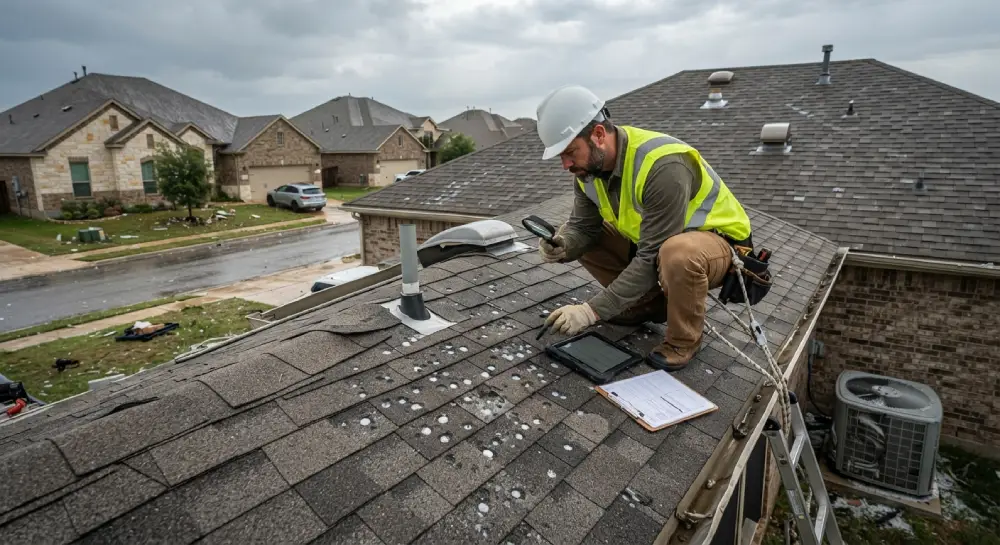
Hail is one of the most common reasons Buda property owners file roof and exterior claims. Even when a roof is not leaking immediately, hail impacts can affect:
- Asphalt shingles
- Metal roofing
- Tile roofing
- Roof vents and flashing
- Gutters and downspouts
- Window screens
- Siding and exterior coatings
- Garage doors
- Fences
- HVAC condenser fins
- Commercial rooftop equipment
Property owners preparing a hail damage insurance claim should document more than the roof surface. Gutters, vents, window screens, fencing, exterior finishes, and HVAC equipment may also show storm-related impacts. Hail damage can be uneven. One roof slope may show more impact than another because of wind direction, tree coverage, roof pitch, or nearby structures. A brief inspection from the ground may not reveal the full pattern.
Wind and Thunderstorm Damage
Strong winds can lift shingles, crease tabs, damage ridge materials, loosen flashing, bend gutters, affect roof edges, and drive rain through openings. Commercial properties may also experience damage to membrane roofs, metal panels, signage, rooftop equipment, awnings, and exterior lighting.
Wind claims often become disputed because some damage is subtle. A shingle may return to its original position after lifting, leaving a crease or weakened seal that is difficult to identify without a close inspection.
Heavy Rain and Water Intrusion
Buda’s growth along the I-35 corridor has brought substantial residential and commercial development. During intense rain, properties may experience roof leaks, drainage backups, window intrusion, water entry around doors, or interior damage following wind-created openings.
Water damage claims can involve more than wet flooring. Moisture may affect drywall, insulation, cabinetry, trim, electrical components, subflooring, framing, and personal property. Commercial losses may also affect inventory, machinery, office equipment, records, and tenant spaces.
Flooding from surface water is commonly treated differently from water entering through a storm-created opening. Coverage depends on the policy, cause of loss, endorsements, exclusions, and available flood insurance. A public adjuster cannot create coverage that is not present, but we can help document the actual cause and resulting damage accurately.
Freeze and Plumbing Damage
Central Texas winter weather can bring freezing temperatures capable of damaging plumbing lines, exterior fixtures, fire-suppression systems, water heaters, and building systems. A broken pipe can release a large volume of water before the source is found.
Freeze claims may involve emergency extraction, demolition, drying, environmental testing, plumbing repairs, damaged contents, and reconstruction. Thorough moisture documentation is especially important when water has moved into concealed spaces.
Fire and Smoke Damage
Residential and commercial fires can cause direct flame damage, smoke contamination, soot deposits, water damage from suppression efforts, electrical damage, structural concerns, and extensive contents losses.
Smoke may move into rooms that were never touched by flames. HVAC systems can distribute soot and odor throughout a building. A complete fire claim may therefore require detailed evaluation of structural components, finishes, mechanical systems, contents, debris removal, cleaning procedures, and temporary living or operating expenses.
Common Insurance Claims in Buda
Hail Damage Claims
Buda hail claims frequently involve roofs, gutters, fencing, screens, vents, siding, exterior finishes, and HVAC equipment. We evaluate the property as a connected system rather than focusing only on the most visible roof impacts.
We also compare the observed damage with the carrier’s estimate to determine whether slopes, elevations, accessories, labor operations, or related components were omitted.
Water Damage Claims
A plumbing leak, appliance failure, roof opening, overflowing fixture, or damaged supply line can affect multiple rooms and construction layers. A water damage public adjuster can help identify affected materials, necessary access work, drying-related items, and reconstruction costs that may be missing from the carrier’s estimate. Water may travel beneath flooring or into wall cavities before becoming visible.
Our documentation can include affected materials, moisture conditions, necessary access, removal requirements, drying-related items, and reconstruction work.
Fire Damage Claims
Fire claims require careful coordination because several types of damage can overlap. A fire insurance adjuster working for the policyholder can evaluate flame damage, smoke migration, soot, suppression water, debris removal, damaged contents, and related repair requirements. A complete scope may need to address fire, smoke, soot, heat, water, debris, contents, temporary repairs, and loss-of-use or business-related expenses.
TX Public Adjusting helps organize these components into a supported claim presentation.
Storm Damage Claims
A severe thunderstorm may produce hail, wind, rain, falling branches, damaged fencing, roof openings, and interior water intrusion during the same event. Treating each affected area separately can lead to missed connections between the cause and the resulting damage.
We inspect the loss broadly and document how the storm affected the property.
Roof Damage Claims
Roof claims can become difficult when the insurer and contractor disagree over repairability, material matching, damage extent, or the number of affected slopes. Our guide explains when a public adjuster for a roof claim may be able to identify missing roofing components, labor operations, exterior damage, and related interior repairs.
We review the carrier’s roof scope and assess related items such as:
- Underlayment
- Flashing
- Drip edge
- Ridge materials
- Pipe jacks and vents
- Valley components
- Starter materials
- Gutters
- Detach-and-reset operations
- Access and labor requirements
Coverage is always controlled by the policy, but an accurate construction scope is necessary before coverage terms can be applied properly.
Commercial Property Claims
Commercial losses in Buda may involve retail buildings, restaurants, offices, warehouses, churches, apartment communities, industrial spaces, self-storage properties, and mixed-use developments. A commercial public adjuster can coordinate the documentation of building damage, business personal property, equipment, tenant improvements, and other insured loss categories.
A commercial claim can include:
- Flat or low-slope roofing
- Metal roofing and wall panels
- HVAC and rooftop equipment
- Interior buildouts
- Electrical and mechanical systems
- Inventory and business personal property
- Signage
- Multiple tenants or buildings
- Temporary repairs
- Business interruption documentation
Commercial claims often require detailed coordination among owners, property managers, contractors, tenants, accountants, and insurance representatives.
Concerned that your Buda property claim was underpaid? Request a Free Claim Review from TX Public Adjusting.
Why Buda Insurance Claims Become Underpaid
An underpaid claim does not always begin with an obvious denial. It often results from small omissions that add up across the estimate.
Missed Damage
An initial inspection may focus on the roof while overlooking gutters, fencing, window screens, HVAC components, interior staining, or damage to detached structures.
Commercial inspections may miss elevations, rooftop equipment, coatings, signage, tenant finishes, or less accessible portions of the building.
Incomplete Scope of Work
An estimate can identify the damaged material but omit the work necessary to remove, access, protect, install, finish, or reconnect it.
For example, replacing damaged drywall may also involve insulation, texture, primer, paint blending, trim removal, contents manipulation, and protection of adjacent areas.
Depreciation Issues
Replacement-cost policies often involve an initial payment based on actual cash value, with recoverable depreciation paid later after repairs and documentation. Confusion about depreciation can leave a property owner unsure about available funds or deadlines.
Some depreciation may be nonrecoverable depending on the policy and item involved. The estimate and policy should be reviewed together.
Low Repair Estimates
Carrier estimates may use different quantities, labor assumptions, pricing data, or repair methods than local contractors. A low estimate does not automatically prove improper handling, but significant differences should be explained and supported.
Documentation Problems
Claims may be delayed or reduced when the file lacks photographs, measurements, inventories, invoices, contractor scopes, proof of ownership, mitigation records, or documentation connecting the damage to the reported event.
A well-organized claim package makes it easier to identify what is being requested and why.
Prior Damage or Maintenance Questions
Insurers may distinguish between sudden covered damage and deterioration, wear, installation defects, or long-term maintenance issues. Buda’s mix of older buildings and fast-growing new construction can make causation especially important.
Clear photographs, weather information, repair history, and inspection findings can help separate recent storm damage from unrelated conditions.
Our Public Adjusting Process
1. Claim Review
We begin by discussing the loss, the current status of the claim, the carrier’s response, and your main concerns. When available, we review the policy, estimate, payment documents, correspondence, photographs, contractor information, and prior claim records.
The purpose is to identify possible scope gaps, documentation needs, coverage questions, and practical next steps.
2. Property Inspection
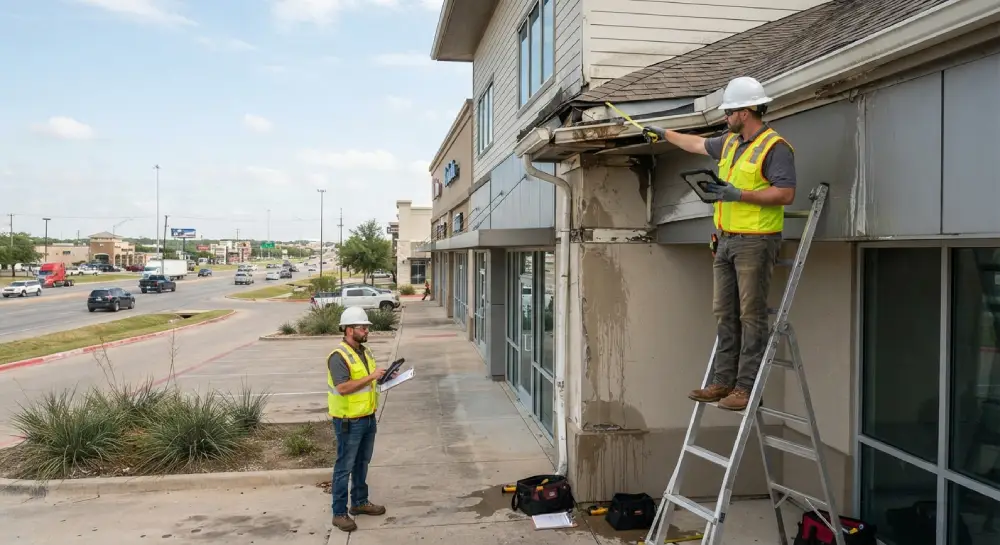
Our team inspects the affected areas and documents visible damage. Depending on the loss, this may include roofing, exterior elevations, interiors, detached structures, commercial systems, contents, or mechanical equipment.
We look beyond the first obvious problem to determine whether related damage exists elsewhere.
3. Documentation and Scope Preparation
We organize photographs, measurements, repair requirements, estimates, inventories, invoices, and other supporting records. For larger losses, this stage may involve coordination with contractors, engineers, hygienists, accountants, or other qualified professionals when appropriate.
The goal is to create a clear, detailed presentation of the claimed damage.
4. Carrier Communication and Negotiation
We communicate with the insurance company regarding documented claim items, estimate differences, inspections, and requested information.
When the carrier disagrees, we seek clarification and present support for the policyholder’s position. A public adjuster does not guarantee a specific outcome, but professional documentation and focused negotiation can help resolve legitimate differences.
5. Settlement and Claim Support
We review carrier responses and settlement documents with the policyholder. When additional requirements apply—such as repair documentation or depreciation requests—we help the client understand the remaining claim steps within the scope of our services.
Why Choose TX Public Adjusting
Licensed Texas Representation
TX Public Adjusting is operated by Rise Public Adjusting LLC, Texas License #3356839. Our work is centered on Texas property claims and the conditions that affect homes and businesses across the state.
We Represent Policyholders
Insurance company adjusters work for or are retained by insurance carriers, while public adjusters represent insured property owners. Property owners who are unclear about the difference can review our guide to a public adjuster vs. insurance company adjuster.
Our responsibility is to prepare and present the policyholder’s claim—not protect the insurance company’s financial interests.
Residential and Commercial Experience
We assist with losses involving single-family homes, rental properties, multifamily communities, retail spaces, offices, churches, warehouses, restaurants, and other commercial properties.
The documentation and operational concerns may differ, but the core objective remains the same: identify the covered damage and support the claim with detailed evidence.
Thousands of Claims Reviewed
Our experience reviewing thousands of insurance claims helps us recognize frequent estimate omissions, scope disputes, documentation gaps, and claim-handling problems.
We do not rely on a one-size-fits-all template. Every property, policy, and loss must be evaluated on its own facts.
No Upfront Fees
You can request a free initial claim review without paying an upfront fee. When TX Public Adjusting is retained, compensation is explained in the written agreement and handled in accordance with applicable Texas requirements.
Clear Communication
Property owners deserve to understand what is happening with their claim. We explain the process, discuss documentation needs, and keep the client informed as the file develops.
Buda Neighborhoods and Local Service Areas
We assist property owners throughout Buda and nearby areas, including homes and businesses near:
- Historic Downtown Buda
- Sunfield
- Garlic Creek
- Whispering Hollow
- Cullen Country
- Shadow Creek
- The Meadows at Buda
- Elm Grove
- Leisurewoods
- Stonefield
- Bradfield Village
- Main Street and the I-35 commercial corridor
- FM 967 and surrounding residential areas
- Cabela’s and nearby retail development
- Stagecoach Park
- Buda City Park
Historic Downtown Buda reflects the community’s railroad-era origins, while large subdivisions and new developments represent its rapid expansion as part of the Austin metropolitan region. Stagecoach Park, Buda City Park, the Main Street district, and the high-traffic retail corridor near I-35 are recognizable parts of the city’s identity.
We also serve surrounding Hays County and Central Texas communities, including:
- Kyle
- San Marcos
- Driftwood
- Mountain City
- Niederwald
- Manchaca
- South Austin
- Wimberley
- Dripping Springs
- New Braunfels
Frequently Asked Questions
What does a public adjuster in Buda do?
A public adjuster represents the policyholder during a property insurance claim. The work may include reviewing the policy and carrier estimate, inspecting damage, preparing a repair scope, organizing supporting documentation, and communicating with the insurance company.
TX Public Adjusting works for Buda homeowners and commercial property owners—not their insurance carriers.
When should I hire a public adjuster for a Buda property claim?
You may consider hiring a public adjuster when the damage is extensive, the carrier estimate appears incomplete, the claim has been underpaid or delayed, or you do not have the time or experience to document the loss properly.
A review may also be useful before accepting a settlement when your contractor’s repair estimate is significantly higher than the insurance company’s scope.
Can a public adjuster help after the insurance company has already paid?
Possibly. An initial payment does not always mean the claim is fully resolved. Additional covered damage or omitted repair items may sometimes be presented through a supplemental claim.
The available options depend on the policy, deadlines, release language, claim history, and current status. It is better to request a review promptly rather than waiting until repairs are complete or important evidence is gone.
How much does a public adjuster cost in Buda, Texas?
Public adjusters typically charge a fee based on the claim recovery, subject to the written agreement and Texas requirements. The exact arrangement should be explained before services begin.
TX Public Adjusting offers a free initial claim review and does not charge upfront fees.
Can you help with a denied Buda insurance claim?
We can review a denied claim to understand the carrier’s stated reason, the policy provisions cited, and the available documentation. Some denials involve exclusions or conditions that cannot be changed. Others may involve disputed facts, causation, missing evidence, or an incomplete investigation.
A public adjuster is not an attorney and does not provide legal advice. When a claim requires legal interpretation or litigation, the property owner may need to speak with a qualified insurance attorney.
Does homeowners insurance cover hail damage in Buda?
Many Texas homeowners policies provide some form of wind and hail coverage, but deductibles, exclusions, cosmetic-damage provisions, roof-payment schedules, and settlement terms vary.
Coverage cannot be determined from the type of storm alone. The policy and the specific damage must be reviewed together.
Can you help with water damage from heavy rain?
That depends on how the water entered the property. Rain entering through an opening created by covered wind or hail damage may be treated differently from rising surface water, groundwater, drainage problems, or long-term seepage.
We document the conditions at the property and review the applicable policy language. Flood damage is commonly excluded from standard property policies unless separate flood coverage applies.
Do you handle commercial claims near the Buda I-35 corridor?
Yes. We assist commercial property owners with hail, wind, roof, water, fire, and other covered-loss claims. Commercial files may involve roofing systems, tenant improvements, inventory, equipment, signage, multiple structures, and business-related expenses.
Early organization is particularly valuable when the loss affects tenants, operations, or several categories of insured property.
How long does a Buda property insurance claim take?
The timeline depends on the size of the loss, the carrier’s investigation, documentation requirements, inspections, coverage questions, estimate disputes, contractor availability, and the responsiveness of everyone involved.
A smaller roof claim may move faster than a commercial fire or widespread water loss. We focus on keeping documentation organized and addressing outstanding claim issues as efficiently as possible.
Is it too late to hire a public adjuster after repairs have started?
Not necessarily, but the claim can become harder to document after damaged materials are removed or discarded. Photographs, invoices, samples, mitigation records, repair estimates, and contractor reports become especially important.
Contacting a public adjuster early helps preserve evidence, but we can review the available records and explain whether meaningful claim work may still be possible. Our guide on when it is too late to hire a public adjuster explains the timing issues property owners should consider.
Get a Free Buda Insurance Claim Review
You do not have to evaluate a complicated property claim alone. If your Buda home, rental property, commercial building, or investment property has suffered hail, wind, water, fire, roof, or storm damage, TX Public Adjusting can review the situation and help you understand the next step.
Rise Public Adjusting LLC is a licensed Texas public adjusting firm. Texas License #3356839.
Contact TX Public Adjusting for a Free Claim Review of your Buda residential or commercial property claim.
- No upfront fees
- Residential and commercial claims
- Independent policyholder representation
- Detailed inspections and claim documentation
- Insurance claim assistance throughout Buda and Hays County