

Property damage in University Park can become expensive quickly. A spring hailstorm may damage slate, tile, metal, or architectural-shingle roofing across several elevations. A plumbing leak can spread beneath hardwood flooring before the moisture is visible. Wind-driven rain may enter through flashing, dormers, windows, or roof penetrations and leave damage that is easy to overlook during a brief insurance inspection.
TX Public Adjusting provides insurance claim help for University Park homeowners, landlords, business owners, and commercial property managers. As a licensed Texas public adjuster, we represent the policyholder—not the insurance company—through the inspection, documentation, estimating, and negotiation process.
TX Public Adjusting operates through Rise Public Adjusting LLC, Texas License #3356839. We assist with new claims, active claims, denied claims, and claims that appear to have been underpaid.
Request a Free Claim Review. There are no upfront fees to have us evaluate the circumstances of your property claim.
Why Property Owners Hire a Public Adjuster in University Park
University Park properties often involve materials, finishes, and construction details that require more than a surface-level inspection. Homes near Preston Road, Lovers Lane, Hillcrest Avenue, and the Southern Methodist University campus may include custom millwork, specialty roofing, hardwood flooring, masonry, imported finishes, detached structures, and integrated mechanical systems.
When one part of the property is damaged, the full repair scope may extend far beyond the visibly affected area.
An insurance company adjuster is assigned by the carrier to investigate the loss and prepare an estimate based on the carrier’s evaluation. A public adjuster works for the policyholder. Our responsibility is to identify covered damage, prepare supporting documentation, review the insurance company’s scope, and present the claim from the property owner’s perspective.
University Park policyholders commonly contact us when:
- The insurance estimate appears too low for the required repairs.
- Roof damage has been classified as cosmetic or attributed to age.
- Water damage was limited to only one room despite broader moisture migration.
- Matching materials are no longer available.
- The claim has stalled or communication has become inconsistent.
- Important exterior components were omitted from the estimate.
- A commercial loss includes business interruption or income-related documentation.
- The claim was denied without a complete inspection of all affected areas.
- Depreciation appears excessive or recoverable depreciation is unclear.
- A second opinion is needed before accepting a settlement.
A properly documented claim is more than a collection of photographs. It should explain what happened, identify the damaged components, connect the loss to applicable policy provisions, and support the cost of completing reasonable repairs. Property owners who are unfamiliar with what a public adjuster does may assume the insurance company’s inspection will automatically identify every covered repair. In practice, damage can be missed, measurements can be incomplete, and necessary repair items may be omitted from the carrier’s estimate.
Property Claim Risks in University Park
University Park is located in Dallas County and sits within the larger North Texas severe-weather region. The city’s compact layout, mature tree canopy, high-value residential inventory, and mixture of older and extensively renovated properties create distinct claim concerns.
Hail and Severe Thunderstorms
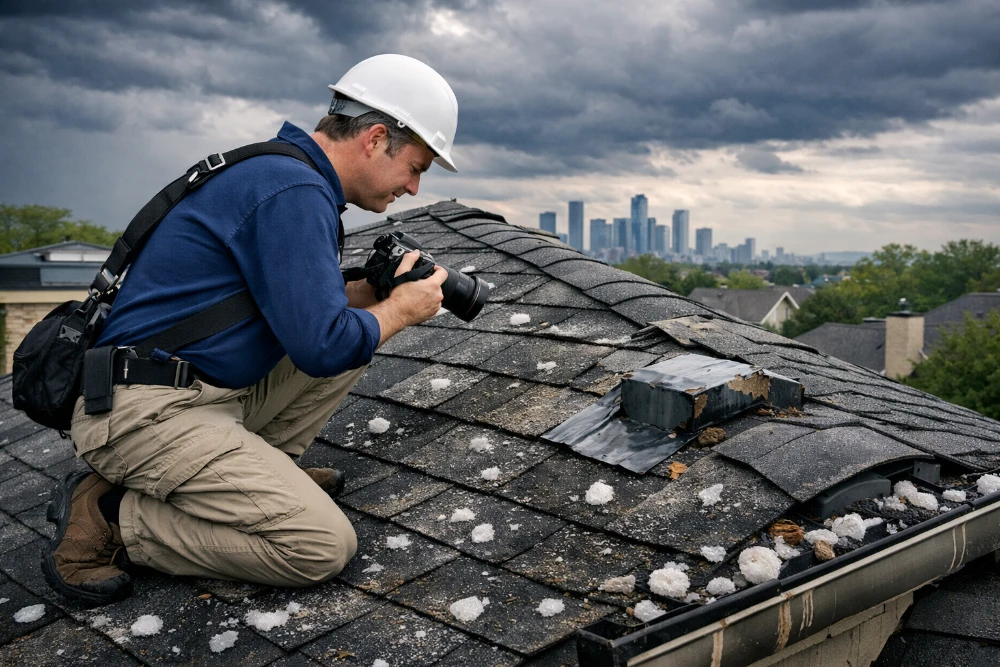
Hail is one of the most significant property risks in North Texas. It can bruise asphalt shingles, fracture tile, dent metal roofing, damage gutters, deform vents, chip painted surfaces, crack skylights, and affect HVAC equipment. Property owners can review our hail damage roof insurance claim guide for a closer look at roof impacts, documentation, insurance inspections, and scope disputes following a North Texas hailstorm.
The damage is not always obvious from the ground. Some roof systems may continue shedding water for months before interior staining appears. That delay can create disputes over the date of loss or whether deterioration occurred after the storm.
The Texas Department of Insurance recommends filing promptly after hail or wind damage and preserving records of temporary repairs.
University Park hail claims may involve:
- Asphalt-shingle bruising and granule displacement
- Slate, clay, or concrete tile fractures
- Copper or metal roofing dents
- Damaged flashing and roof penetrations
- Gutter, downspout, and fascia damage
- Window screen and glazing damage
- Exterior lighting and gate equipment
- HVAC condenser-fin damage
- Garage doors and painted metal surfaces
- Pool equipment, pergolas, and detached structures
A roof-only estimate may miss damage to elevations, windows, drainage components, fencing, landscaping systems, and exterior mechanical equipment.
High Winds and Tornado-Producing Storms
Severe thunderstorms moving across Dallas County can produce damaging straight-line winds, airborne debris, fallen limbs, and localized tornado activity. North Texas storms can also combine hail, wind, heavy rain, and lightning within the same event. NOAA records show that Texas has repeatedly experienced costly severe-weather disasters involving combinations of hail, high wind, flooding, and tornadoes.
Wind claims in University Park may include:
- Lifted or creased shingles
- Displaced tiles
- Damaged ridge caps
- Compromised flashing
- Fallen-tree impact
- Fence and gate damage
- Broken windows
- Chimney or masonry damage
- Water intrusion following roof or opening failure
- Damage to detached garages and accessory structures
The source of interior water is especially important. Rain entering through storm-created openings may be evaluated differently from groundwater or surface flooding. The policy language and physical evidence should be reviewed carefully before conclusions are accepted.
Heavy Rain and Localized Water Intrusion
Intense rainfall can overwhelm roof drainage, expose flashing failures, enter through damaged windows, or contribute to localized street and yard drainage problems. Standard homeowners policies commonly distinguish between water entering through storm-created damage and surface floodwater, so causation must be documented accurately.
A standard property policy may cover certain wind, hail, and lightning losses while excluding flood damage unless separate flood coverage applies.
Interior water damage can affect:
- Hardwood flooring
- Plaster and drywall
- Insulation
- Cabinetry
- Baseboards and trim
- Electrical systems
- Built-in shelving
- Carpet and pad
- Decorative finishes
- Personal property
- HVAC ducts and equipment
Moisture may travel beneath flooring or behind walls far beyond the first visible stain. A claim estimate that relies only on the visible surface can underestimate drying, demolition, access, matching, and reconstruction requirements.
Freeze and Burst-Pipe Losses
University Park is not known for prolonged winter weather, but North Texas freezes can cause major losses when exposed plumbing, attic lines, outdoor kitchens, pool systems, or vacant properties are not adequately protected.
Burst-pipe claims may involve more than the failed plumbing section. Water can move through ceilings, wall cavities, flooring assemblies, insulation, cabinetry, and electrical systems. In multistory homes, one rupture can affect several floors.
Mature Trees and Impact Damage
Mature trees are part of University Park’s character, particularly along established residential streets. During severe weather, falling limbs can damage roofs, chimneys, gutters, fences, vehicles, detached structures, and outdoor living areas.
The claim may require documentation of:
- Emergency tree removal
- Temporary roof covering
- Structural repairs
- Debris removal
- Interior water mitigation
- Personal property damage
- Fence or gate repairs
- Landscaping and irrigation components
Common Insurance Claims in University Park
Hail Damage Claims
Hail claims often become disputed when the carrier labels roof impacts as cosmetic, mechanical, pre-existing, or consistent with ordinary aging.
A complete hail inspection should consider every roof plane and exterior elevation. It should also distinguish storm-related impacts from unrelated wear. Property owners should document hail damage for an insurance claim before permanent repairs begin or damaged materials are discarded. Photographs, measurements, weather information, repair requirements, and material characteristics may all become part of the claim presentation.
Water Damage Claims
Water losses may result from burst pipes, appliance failures, roof leaks, plumbing leaks, supply-line failures, drain backups, or storm-created openings. A water damage public adjuster can review whether the insurer’s scope accounts for moisture migration, demolition, drying, access, matching, and reconstruction.
The visible water line rarely tells the whole story. Moisture mapping, drying records, demolition photographs, invoices, and repair estimates can help establish the actual extent of the loss.
We also review whether the estimate accounts for:
- Removal and replacement of continuous flooring
- Cabinet detachment and resetting
- Drywall texturing and painting
- Insulation replacement
- Access to concealed plumbing
- Baseboard and trim matching
- Temporary storage
- Pack-out and contents handling
- Mold-related limitations or endorsements
Fire and Smoke Damage Claims
Fire losses can affect areas that were never touched by flame. Smoke, soot, heat, suppression water, and firefighting access can damage the structure and contents throughout the property. A fire insurance adjuster representing the policyholder can help organize the building, contents, cleaning, and additional-living-expense portions of the claim.
A University Park fire claim may involve:
- Structural repairs
- Smoke and soot cleaning
- Odor remediation
- Electrical evaluation
- HVAC cleaning or replacement
- Contents inventory
- Debris removal
- Temporary housing
- Code-related upgrades
- Landscaping and exterior repairs
High-end furnishings, artwork, electronics, custom built-ins, and specialty finishes may require detailed inventories and professional evaluation.
Storm and Wind Damage Claims
Storm claims may include roof damage, broken windows, damaged masonry, fallen trees, fence losses, exterior water intrusion, and damage to detached structures.
Wind damage is frequently difficult to document after emergency repairs have begun. Photographs and damaged-material retention can help preserve evidence before temporary work changes the condition of the property.
Roof Damage Claims
University Park contains a wide range of roof systems, including architectural shingles, metal, slate, clay tile, concrete tile, low-slope assemblies, and mixed-material roofs. A public adjuster for a roof claim can compare the carrier’s estimate with the materials, access, flashing, drainage, and labor actually required for the property.
Roof claim disagreements may involve:
- Repairability
- Matching
- Brittle or discontinued materials
- Access requirements
- Code-related work
- Steep and high charges
- Underlayment
- Flashing
- Valley metal
- Gutters and drainage
- Interior damage caused by roof openings
A carrier estimate that lists only shingles may not represent the full work required to return the roof system to its pre-loss condition.
Commercial Property Claims
University Park and the neighboring Park Cities area include offices, retail properties, restaurants, schools, professional buildings, multifamily properties, churches, and mixed-use facilities.
Commercial claims may involve:
- Building damage
- Tenant improvements
- Business personal property
- Inventory
- Equipment
- Loss of income
- Extra expense
- Temporary relocation
- Leasehold responsibilities
- Ordinance or law coverage
Commercial losses require careful coordination between ownership, tenants, contractors, accountants, mitigation providers, and the insurer. Missing documentation early in the process can delay the claim or limit parts of the recovery. Our commercial public adjuster services are available for offices, retail properties, restaurants, schools, professional buildings, multifamily properties, churches, and other insured facilities in and around University Park.
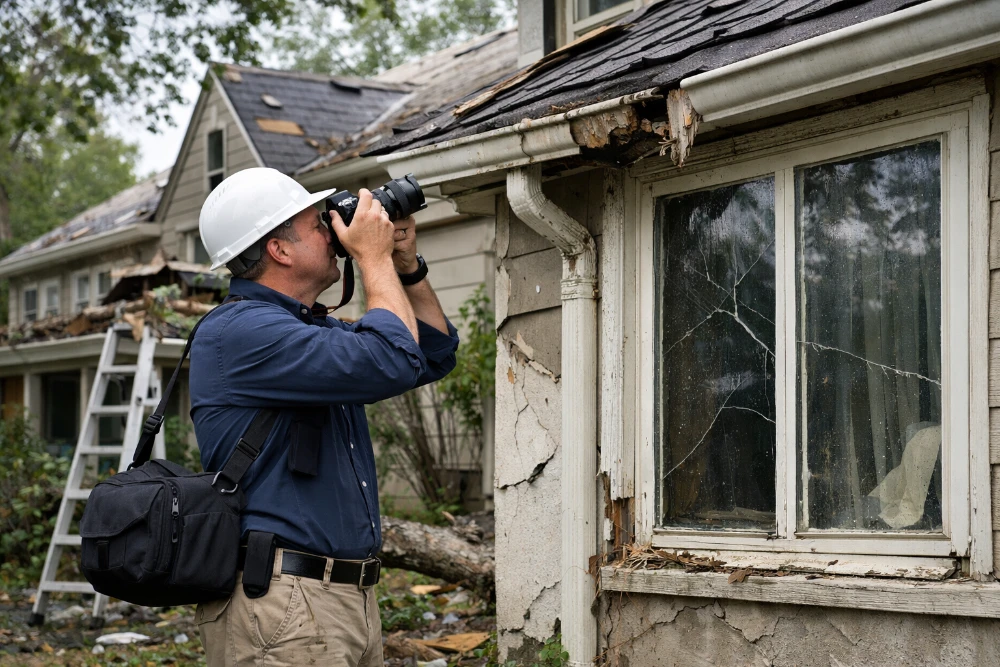
Why University Park Claims Become Underpaid
Damage Is Missed During a Brief Inspection
A short inspection may not identify concealed moisture, damage on steep roof slopes, affected detached structures, or subtle hail impacts on specialty materials.
The Estimate Omits Necessary Work
Carrier estimates may omit access, demolition, disposal, drying, scaffolding, protection, matching, code requirements, or work needed to detach and reset adjacent materials.
Repair Pricing Does Not Reflect the Property
University Park construction costs can vary substantially based on architecture, material quality, roof complexity, finish level, labor availability, and site access. A generic estimate may not reflect the actual cost of appropriate repairs.
Depreciation Is Applied Incorrectly or Excessively
Depreciation can create confusion about what is withheld, what may be recoverable, and what documentation is needed to release additional funds.
We review:
- Actual cash value
- Replacement cost value
- Recoverable depreciation
- Nonrecoverable depreciation
- Deductibles
- Payment conditions
- Repair deadlines
Matching and Continuity Are Overlooked
Partial repairs may leave visible inconsistencies in flooring, roofing, paint, tile, masonry, cabinetry, or exterior finishes.
The issue is not simply whether a similar product exists. The question is whether a reasonable repair can be completed without creating an unacceptable mismatch or damaging adjoining materials.
Documentation Does Not Support the Full Loss
Invoices and photographs alone may not explain causation, scope, repair methodology, or policy relevance. A strong file should connect the evidence into a clear, organized claim narrative.
Our Public Adjusting Process
1. Claim Review
We begin by reviewing the loss, available policy documents, carrier correspondence, estimates, photographs, invoices, and prior inspection findings.
We identify immediate concerns, missing documents, and areas requiring further inspection.
2. Property Inspection
We inspect the reported damage and evaluate related building components. Depending on the claim, this may include roofing, elevations, interiors, mechanical systems, detached structures, and damaged contents.
3. Damage Documentation
We organize photographs, measurements, repair scopes, inventories, contractor information, mitigation records, and other supporting materials.
The goal is to create a claim file that clearly explains the cause and extent of the damage.
4. Estimate and Scope Review
We compare the carrier’s estimate against the observed damage and the work reasonably required to repair the property.
This review may identify:
- Missing line items
- Incorrect measurements
- Low quantities
- Omitted elevations
- Unsupported depreciation
- Missing code requirements
- Inadequate material allowances
- Incomplete water mitigation
- Unaddressed contents damage
- Missing commercial income components
5. Claim Presentation and Negotiation
We communicate with the insurance company, submit supporting documentation, respond to questions, and advocate for a settlement that reflects the documented covered loss.
The final outcome depends on policy terms, evidence, damage, exclusions, deductibles, and the carrier’s evaluation. No public adjuster can guarantee a specific settlement, but experienced representation can improve the quality and organization of the claim.
When to Contact a Public Adjuster
The best time to contact a public adjuster is often before major repairs begin and before important evidence is discarded. Property owners with older, closed, or disputed files can also review when it may be too late to hire a public adjuster before assuming no further options are available. We may also be able to assist after the carrier has inspected the loss or issued an estimate.
Consider requesting a claim review when:
- The damage is extensive.
- Several rooms or structures are involved.
- The property contains specialty materials.
- The claim includes business interruption.
- The estimate does not match contractor findings.
- The carrier has denied part or all of the claim.
- Communication has stalled.
- The insurer requests repeated documentation.
- A settlement has been offered but not accepted.
- You are uncertain whether the claim can still be reopened or supplemented.
Before accepting a low estimate or closing the file, contact TX Public Adjusting for a Free Claim Review.
Why Choose TX Public Adjusting
Licensed Texas Public Adjuster
TX Public Adjusting operates through Rise Public Adjusting LLC, Texas License #3356839.
Independent Policyholder Representation
We work for homeowners, business owners, landlords, and other insured property owners. We do not work for the insurance carrier.
Residential and Commercial Experience
Our experience includes residential and commercial claims involving hail, wind, roofing, water, fire, smoke, freeze damage, contents, and business-related losses.
Texas-Focused Claim Knowledge
Texas property claims involve state regulations, policy forms, severe-weather patterns, deductibles, repair pricing, and regional construction practices. Our work is focused on Texas policyholders.
Thorough Claim Documentation
We help organize the evidence needed to explain the damage and support the requested repair scope.
Experience Reviewing Thousands of Claims
Our team has reviewed thousands of residential and commercial property claims. That experience helps us recognize common omissions, documentation problems, and estimate inconsistencies without inventing or promising a particular result.
Areas We Serve Near University Park
Our University Park public adjuster services are available throughout the Park Cities area and nearby Dallas County communities.
We serve property owners in and around:
- University Park
- Highland Park
- Preston Hollow
- Greenway Parks
- Bluffview
- Devonshire
- Uptown Dallas
- Oak Lawn
- Turtle Creek
- North Dallas
- Lakewood
- Lower Greenville
- Knox-Henderson
- Downtown Dallas
- Richardson
- Addison
- Farmers Branch
Within University Park, we assist properties near Southern Methodist University, Snider Plaza, Curtis Park, Williams Park, Preston Road, Hillcrest Avenue, Lovers Lane, Mockingbird Lane, and surrounding residential streets.
University Park is geographically small, but its property inventory is diverse. Claims may involve early twentieth-century homes, extensively renovated properties, new luxury construction, multifamily buildings, religious facilities, schools, and commercial spaces.
Frequently Asked Questions
What does a public adjuster do for a University Park property owner?
A public adjuster evaluates and documents property damage, reviews the policy and carrier estimate, prepares supporting materials, and negotiates with the insurance company on behalf of the policyholder.
The insurance company’s adjuster works for the carrier. A public adjuster represents the insured property owner.
When should I hire a public adjuster in University Park?
You may benefit from a public adjuster when the loss is large, technically complicated, underpaid, delayed, or denied. It can also help when the property includes custom finishes, specialty roofing, multiple structures, or extensive contents.
Early involvement can help preserve evidence and establish a more complete scope before repairs change the property’s condition.
Can you help if my University Park roof claim was denied?
We can review the denial letter, policy language, photographs, inspection findings, weather information, and roof condition to determine whether additional documentation may support further consideration.
A denial does not automatically mean it can be reversed. The result depends on the policy, evidence, cause of loss, deadlines, and condition of the property.
Can a public adjuster help with an underpaid hail claim?
Yes. We can compare the insurance estimate against the observed hail damage and the work required to complete reasonable repairs.
This may include reviewing roofing, gutters, windows, exterior elevations, HVAC equipment, fences, detached structures, and interior water damage connected to storm-created openings.
How much does a public adjuster cost in Texas?
Public adjusters are generally paid according to the written agreement with the policyholder and applicable Texas requirements. The fee structure should be explained before representation begins.
TX Public Adjusting offers a Free Claim Review and does not charge an upfront fee simply to evaluate whether our services may be appropriate.
Can you assist after the insurance company has already issued payment?
Possibly. An initial payment does not always mean the claim is complete. Additional covered damage may sometimes be documented through a supplement or further claim review.
Do not sign a release, discard damaged materials, or assume the file cannot be revisited without first reviewing the policy, correspondence, deadlines, and payment documents.
Do you handle commercial claims near Snider Plaza and SMU?
Yes. We assist with commercial property claims involving retail spaces, offices, restaurants, professional buildings, schools, churches, multifamily properties, and other insured facilities.
Commercial claims may include building repairs, tenant improvements, equipment, inventory, business personal property, extra expense, and loss-of-income documentation.
Does homeowners insurance cover flooding in University Park?
Standard homeowners insurance generally does not cover surface flooding in the same way it may cover sudden plumbing losses or rain entering through a covered storm-created opening. Separate flood coverage may be required for rising water or overland flooding.
Because coverage depends on the source and path of the water, the cause should be documented before damaged materials are removed whenever it is safe to do so.
What should I do immediately after storm damage?
Protect people first. Then take photographs and video, make reasonable temporary repairs, save receipts, prevent additional damage where possible, and notify the insurer promptly.
Avoid permanent repairs until the damage has been documented. Do not place yourself at risk by climbing onto a steep, wet, or damaged roof.
How long does a University Park property claim take?
The timeline depends on the size of the loss, policy issues, inspection availability, documentation, mitigation, contractor estimates, and whether the scope or coverage is disputed.
Straightforward claims may move more quickly. Large residential, fire, water, specialty-roof, and commercial claims generally require more inspection and documentation.
Free University Park Insurance Claim Review
You purchased insurance to protect your property. When a claim is incomplete, delayed, denied, or underpaid, you should not have to determine the full repair scope on your own.
TX Public Adjusting helps University Park property owners document damage, review carrier estimates, identify omissions, and present claims with greater clarity.
We serve residential and commercial policyholders throughout Dallas County and the surrounding North Texas region.
Contact TX Public Adjusting today for a Free Claim Review. We assist University Park homeowners, landlords, business owners, and commercial property managers with hail, roof, wind, water, fire, smoke, freeze, and underpaid property claims.
- Licensed Texas Public Adjuster
- Residential and Commercial Claims
- No upfront claim-review fee
- Independent policyholder representation
- Rise Public Adjusting LLC
- Texas License #3356839