

Property damage in Roman Forest can become complicated quickly. A severe thunderstorm can tear shingles loose and send tree limbs into a roof. Tropical systems can bring heavy rain, wind-driven water, and widespread tree damage. Plumbing failures and fires create a different set of insurance questions altogether. When the carrier’s estimate does not account for the full loss, a public adjuster in Roman Forest can help document the damage and present the claim from the policyholder’s side.
TX Public Adjusting represents homeowners and commercial property owners—not insurance companies. We review policies, inspect losses, prepare documentation, evaluate carrier estimates, and negotiate property insurance claims throughout Texas. TX Public Adjusting is operated by Rise Public Adjusting LLC, Texas License #3356839.
Roman Forest is a small, heavily residential community in Montgomery County. The city’s planning documents describe approximately 2.2 square miles, with more than 60% of land use devoted to single-family detached housing. That residential character makes roof, interior water, storm, tree-impact, and fire claims especially relevant locally.
Need help determining whether your insurance estimate reflects the actual damage? Contact TX Public Adjusting for a Free Claim Review. There are no upfront fees for the initial review.
Why Property Owners Hire a Public Adjuster in Roman Forest
An insurance company sends an adjuster to evaluate a loss for the carrier. A public adjuster approaches the claim from a different position: the public adjuster works for the policyholder.
That distinction matters when a claim involves multiple damaged building components, disagreement over the cause of loss, missing repair items, disputed pricing, depreciation, or a carrier estimate that simply does not match what contractors are finding at the property.
Roman Forest also has characteristics that can make property claims unusually detailed. Tree-lined residential streets are part of the city’s identity, and the road network includes Roman Forest Boulevard, Appian Way, Galaxy Boulevard, Magnolia Bend, Peach Creek Drive, and surrounding residential streets. The city’s comprehensive plan also identifies residential parcels within mapped floodplain areas.
A public insurance adjuster in Roman Forest may assist with:
- Reviewing the policy and applicable coverage provisions
- Inspecting visible and potentially overlooked property damage
- Comparing the carrier’s scope with conditions at the property
- Preparing photographs, measurements, inventories, and estimates
- Identifying omitted repair components
- Reviewing depreciation and replacement-cost calculations
- Communicating with the insurance carrier during the adjustment process
- Preparing and supporting supplemental claim requests
- Negotiating covered property damage on behalf of the policyholder
The objective is not to inflate a claim. It is to document the covered loss accurately and make sure the claim file reflects the actual scope of damage.
Roman Forest Storm Risks and Property Damage
Roman Forest sits in southeast Montgomery County, where Gulf Coast tropical weather and inland thunderstorms can produce very different types of property loss.
The area’s heavy-rain exposure is not theoretical. During Tropical Storm Imelda in September 2019, a National Weather Service reporting station about three miles southeast of Roman Forest recorded 29.72 inches of storm-total rainfall.
Hurricane Beryl provided another example in July 2024. The National Weather Service reported widespread fallen trees, building damage, and power outages across Montgomery County, while a monitoring location about three miles southeast of Roman Forest measured more than five inches of rain. Significant tree impacts were reported across the county, including nearby Woodbranch.
Those events help explain why Roman Forest property claims can involve several causes of damage at the same time.
| Local Risk | Property Damage Often Investigated |
| Tropical storms and hurricanes | Roof damage, wind-driven rain, fallen trees, siding, fencing, windows |
| Severe thunderstorms | Hail impacts, lifted shingles, gutters, vents, exterior damage |
| Heavy rainfall | Roof leaks, interior water intrusion, drainage-related damage |
| Tree and limb impacts | Roofing, framing, decking, gutters, detached structures |
| Plumbing or freeze events | Drywall, flooring, cabinets, insulation, contents |
| Fire and smoke | Structure, contents, smoke residue, odor remediation, temporary living expenses |
Flooding deserves special attention. Surface flooding and water entering from rising exterior water may be handled differently from a sudden plumbing loss or rain entering through storm-created roof damage. Coverage depends on the policy and the cause of loss. Roman Forest has an effective FEMA flood map, and the Texas State Flood Plan includes both a Roman Forest master drainage study and a Roman Forest Boulevard bridge project associated with storm and riverine flood risk.
That is why identifying how water entered a building can be just as important as documenting how much damage it caused.
Common Insurance Claims in Roman Forest
Hail Damage Claims
Hail can damage asphalt shingles without creating an obvious hole. Property owners dealing with a hail damage insurance claim may be dealing with bruising, granule displacement, cracked matting, damaged vents, dented gutters, window screens, fencing, and soft-metal components. Bruising, granule displacement, cracked matting, damaged vents, dented gutters, window screens, fencing, and soft-metal components may all help establish the extent of a storm loss.
For Roman Forest homeowners, a hail claim should not be evaluated from the roof surface alone. We look at the property as a complete system and document collateral damage when it is relevant.
If a carrier approves only isolated repairs while contractors are identifying broader storm damage, a detailed second review may be worthwhile.
Water Damage Claims
Water claims often expand beyond the room where the problem began. A water damage public adjuster can help identify and document damage involving drywall, baseboards, insulation, flooring, cabinets, and other affected building materials when the insurance scope appears incomplete. A failed pipe, roof opening, appliance leak, or wind-driven rain event can affect drywall, baseboards, insulation, flooring, cabinets, electrical components, and personal property.
The challenge is often proving the full path of the water.
A carrier estimate may include visible drywall repairs but omit wet insulation, continuous flooring, cabinet components, detach-and-reset work, or necessary mitigation. TX Public Adjusting reviews the documented damage alongside the carrier’s estimate to determine where the scope may be incomplete.
Fire Damage Claims
A fire insurance claim can involve far more than rebuilding the area that burned.
When the scope becomes difficult to document, working with a fire insurance adjuster who represents the policyholder can help organize structural damage, contents, smoke remediation, debris removal, and other covered portions of the loss.
Smoke can travel through hallways, HVAC systems, attic spaces, insulation, cabinets, fabrics, and personal property. The claim may involve structure repairs, contents inventory, cleaning, demolition, debris removal, smoke remediation, temporary housing, and code-related work depending on the policy.
For a Roman Forest homeowner dealing with a serious fire, organizing all of those categories into one claim file can be a major undertaking. Our role is to document the loss systematically and communicate with the carrier while the property owner focuses on recovery.
Storm Damage Claims
Storm damage in Roman Forest frequently involves a combination of wind, rain, roofing damage, fallen limbs, fencing, and exterior components.
Wooded residential areas can be particularly vulnerable when strong winds bring trees or large branches down onto roofs, garages, fences, sheds, and other structures. Hurricane Beryl’s impacts across Montgomery County demonstrated how damaging fallen trees can become even well inland from the Gulf Coast.
Storm claims should document both the obvious damage and the secondary consequences. A displaced shingle or punctured roof deck can become an interior water claim if it is not identified promptly.
Roof Damage Claims
Roof claims are among the property losses most likely to involve disagreements over scope. A property owner may consider hiring a public adjuster for a roof claim when the carrier acknowledges storm damage but the estimate leaves out necessary roofing components or related repairs.
An estimate may recognize a few damaged shingles but omit ridge caps, flashing, vents, underlayment, decking, gutters, starter material, or related interior repairs. There may also be disagreements about whether a condition resulted from a recent storm or long-term wear.
Our inspection focuses on documenting the observed damage and comparing it with the carrier’s written scope. For homeowners along Roman Forest Boulevard, Appian Way, Galaxy Boulevard, Magnolia Bend, Peach Creek Drive, and the city’s surrounding residential streets, that second look can be valuable after significant wind or hail.
Commercial Property Claims
Roman Forest itself is primarily residential, but the surrounding New Caney and East Montgomery County area includes retail, offices, restaurants, warehouses, multifamily properties, and other commercial buildings.
Commercial losses can be more complicated because the claim may involve roofing systems, interior buildouts, equipment, inventory, tenant areas, business interruption considerations, and multiple repair trades.
TX Public Adjusting works as a commercial public adjuster for qualifying property losses involving businesses and commercial property owners throughout Texas. Commercial claims can involve roofing systems, interior buildouts, equipment, inventory, tenant areas, business interruption considerations, and multiple repair trades.
Why Insurance Claims Become Underpaid
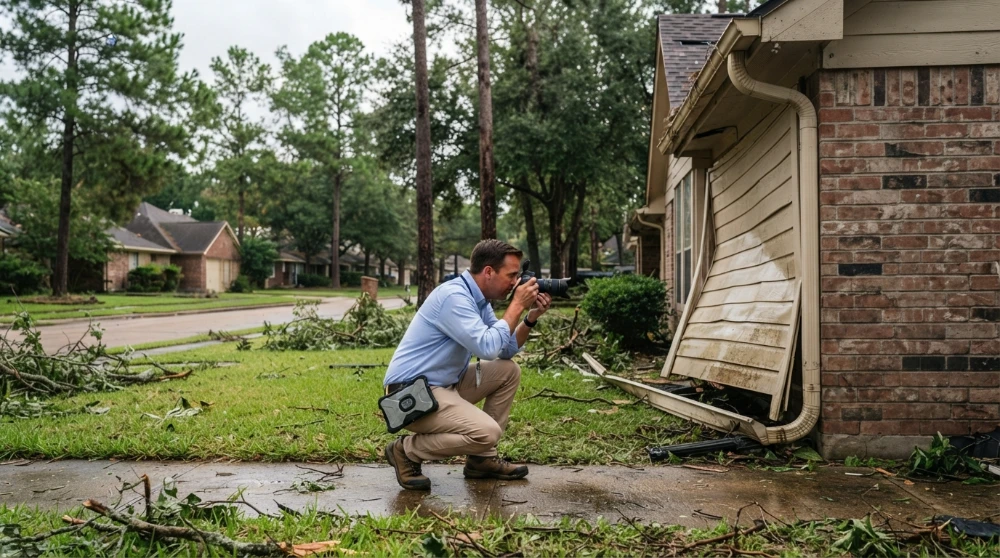
A low insurance payment does not always mean the carrier denied the claim. In many cases, the real problem is an incomplete scope.
Missed Damage
Some storm damage is easy to overlook during a quick inspection. Roof uplift, flashing damage, wet insulation, water migration, damaged soft metals, or concealed interior conditions may not make it into the first estimate.
Scope Omissions
A carrier may agree that damage occurred but leave necessary repair components out of the estimate. Small omissions across multiple trades can create a significant gap between the insurance estimate and the actual restoration scope.
Depreciation Issues
Replacement-cost policies commonly involve depreciation calculations. Recoverable depreciation, nonrecoverable depreciation, roof schedules, age, condition, and policy endorsements can affect how much is initially paid and what may become available later.
Low or Incomplete Estimates
Pricing alone is not always the issue. An estimate can use reasonable unit pricing and still be too low because it lacks required labor, materials, quantities, access, removal, disposal, or related repair operations.
Documentation Problems
A property owner may know that more damage exists but lack the photographs, measurements, reports, invoices, inventories, moisture documentation, or detailed estimate needed to support the claim.
That is where a professional claim review can identify what is missing.
If your Roman Forest insurance claim has already been paid but the estimate does not match the repair scope, TX Public Adjusting can review the claim before you assume the carrier’s first number is the final word. Request a Free Claim Review.
Our Public Adjusting Process
1. Claim Review
We start by understanding the loss, what has already happened with the insurance company, and where the claim currently stands. We may review the policy, carrier estimate, payment documents, photographs, denial letters, contractor estimates, and prior correspondence.
2. Property Inspection
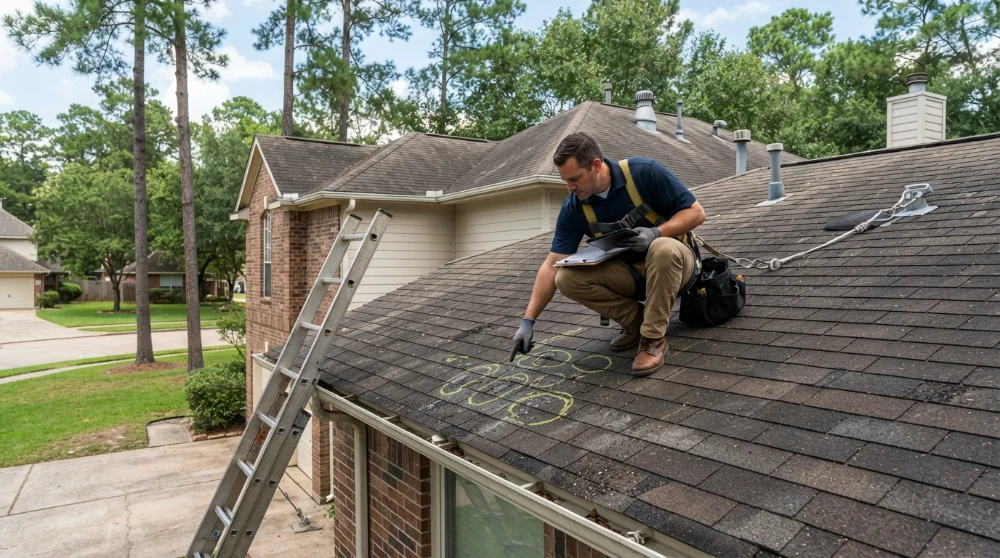
We inspect the reported damage and document the conditions relevant to the claim. Depending on the loss, this can include roofing, exterior elevations, interior rooms, water-affected materials, fire damage, contents, or commercial building components.
3. Documentation and Scope Development
We organize the evidence needed to explain the claim. That may include photographs, measurements, inventories, estimate line items, contractor documentation, invoices, mitigation records, and other supporting materials.
4. Carrier Communication and Negotiation
TX Public Adjusting communicates with the insurer about documented differences in scope, pricing, quantities, or other claim issues. We present the policyholder’s position professionally and support requested adjustments with evidence.
5. Settlement and Claim Resolution
We continue working through the adjustment process toward an agreed claim resolution under the policy. Every claim is different, and no public adjuster can guarantee a particular payment. Our responsibility is to advocate for the policyholder and present the covered loss as thoroughly as possible.
Why Choose TX Public Adjusting in Roman Forest?
Property owners do not need another person simply repeating the carrier’s estimate. They need someone who can independently examine the claim.
TX Public Adjusting brings Texas-focused property claim experience to Roman Forest and surrounding Montgomery County communities.
Licensed Texas Representation
TX Public Adjusting operates through Rise Public Adjusting LLC, Texas License #3356839.
We Represent Policyholders
Public adjusters represent insured property owners. We do not work for the insurance carrier when handling your claim.
Residential and Commercial Experience
Our experience includes residential homes, commercial properties, roof claims, hail losses, water damage, fires, major storms, and complex multi-part claims.
Thousands of Claims Reviewed
Our team has experience reviewing thousands of property claims. That volume matters because recurring claim problems become easier to recognize: omitted roofing components, incomplete water scopes, overlooked contents, depreciation questions, and estimates that do not match the actual repairs.
Detailed Claim Documentation
Strong claims depend on evidence. We focus on the photographs, measurements, estimates, inventories, policy information, and supporting documents needed to explain the loss clearly.
Local Understanding
Roman Forest is not a generic Houston suburb. It is a small Montgomery County city with heavily residential land use, wooded streets, flood and drainage considerations, and direct exposure to southeast Texas tropical weather.
Roman Forest Park and the City of Roman Forest Pool are recognizable community gathering places along the city’s main corridor, while City Hall on Roman Forest Boulevard anchors local government. Nearby Lake Houston Wilderness Park reinforces the wooded character of this part of East Montgomery County.
That local setting shapes the types of losses we expect to see: roofs hit by wind or hail, trees contacting structures, rain entering through storm-created openings, water losses, and residential fire claims.
Roman Forest Neighborhoods and Residential Areas
Roman Forest is compact enough that residents are more likely to identify locations by streets and adjoining communities than by a long list of formal neighborhood names.
Within the city, important residential corridors include Roman Forest Boulevard, Appian Way, Galaxy Boulevard, Magnolia Bend, Peach Creek Drive, Cambridge Boulevard, Forest Drive, and the eastern residential sections. The city’s planning maps show these streets as part of the core local road and residential network.
Immediately outside Roman Forest, growth around Tavola and New Caney has made this section of southeast Montgomery County increasingly connected. Property owners also move between Roman Forest, Woodbranch, Patton Village, Porter, and Splendora for work, shopping, schools, contractors, and services.
For insurance claims, those municipal lines do not change our approach. We serve policyholders throughout the surrounding region.
Areas We Serve Near Roman Forest
TX Public Adjusting provides insurance claim assistance in Roman Forest and nearby communities including New Caney, Tavola, Woodbranch, Patton Village, Splendora, Porter, Kingwood, Huffman, Cut and Shoot, and other communities throughout Montgomery County and East Montgomery County.
If your property is outside the Roman Forest city limits, contact us. TX Public Adjusting serves property owners across Texas.
Frequently Asked Questions
1. What does a public adjuster in Roman Forest do?
A public adjuster represents the policyholder during a property insurance claim. The work can include reviewing the policy, inspecting damage, documenting the loss, preparing estimates, comparing the carrier’s scope with actual conditions, and negotiating disputed or omitted claim items.
TX Public Adjusting works for property owners rather than the insurance company.
2. When should I hire a public adjuster after storm damage in Roman Forest?
Consider getting a claim review when the loss is significant, the carrier’s estimate appears incomplete, your roof claim was partially approved, water damage was omitted, the insurer denied part of the claim, or you are struggling to document the loss.
You do not necessarily have to wait for a denial. A public adjuster can become involved while the claim is still being adjusted, subject to the circumstances and applicable deadlines.
3. Can a public adjuster help after hurricane or tropical storm damage?
Yes. Tropical-weather claims can involve several categories at once: roof damage, tree impacts, siding, fences, windows, interior water, detached structures, and contents.
Roman Forest has experienced major rainfall and wind impacts from Gulf Coast tropical systems, making careful cause-of-loss documentation particularly important. Coverage will depend on the individual policy.
4. What if my Roman Forest roof claim has already been paid?
Receiving a payment does not automatically mean every damaged component was included. The first step is to compare the carrier’s estimate with the observed damage and actual repair scope.
If legitimate covered items appear to be missing, a supplemental claim may be possible depending on the policy, claim status, and applicable deadlines.
5. Can you help with water damage if flooding is involved?
We can review the circumstances, but the source of the water matters. A burst pipe, roof opening, appliance failure, wind-driven rain, and rising surface floodwater may be treated differently under an insurance policy.
Roman Forest has recognized drainage and flood risk, so separating covered building damage from damage requiring separate flood coverage can be an important part of evaluating the claim.
6. Do you handle fire claims in Roman Forest?
Yes. Fire claims may involve structural repair, smoke damage, personal property, demolition, cleaning, debris removal, additional living expenses, and other policy benefits.
These losses can produce large claim files, and careful inventory and scope documentation is essential.
7. Do public adjusters work for the insurance company?
No. A public adjuster works for the policyholder. Carrier adjusters and independent adjusters hired by insurers work on the insurance-company side of the claim. Property owners who want a more detailed explanation can read our guide to public adjuster vs. independent adjuster.
That difference is one of the main reasons property owners hire a public adjuster when they want their own licensed claim representative.
8. Can TX Public Adjusting handle commercial claims near Roman Forest and New Caney?
Yes. We work with both residential and commercial property claims.
Commercial losses may involve flat or low-slope roofs, tenant spaces, equipment, inventory, interior finishes, business operations, and more complicated repair scopes. We organize the documentation and present the covered property claim to the carrier.
9. Is it too late to hire a public adjuster if my claim was denied or closed?
Not necessarily. If you are wondering when is it too late to hire a public adjuster, the answer depends on the status of the claim, policy provisions, applicable deadlines, and what has already happened with the insurance company. Some denied, underpaid, or closed claims may still have options, but deadlines and policy provisions matter.
The safest approach is to have the claim reviewed as soon as possible rather than waiting. Bring the denial or closing letter, carrier estimate, photographs, policy, and any contractor documents you have.
10. How do I start a Free Claim Review in Roman Forest?
Contact TX Public Adjusting and tell us what happened, when the damage occurred, and what the insurance company has done so far. If available, provide your carrier estimate, photographs, policy documents, contractor estimates, or denial correspondence.
We will review the situation and explain whether public adjusting assistance may make sense. There are no upfront fees for the initial claim review.
Get Insurance Claim Help in Roman Forest
If your home or commercial property has been damaged, the quality of the claim documentation can directly affect how smoothly the adjustment process moves.
Do not assume missing damage will automatically be added later. Do not assume an initial roof estimate captured every storm-damaged component. And do not assume a water stain represents the full extent of moisture behind the wall or beneath the floor.
TX Public Adjusting helps Roman Forest property owners document and negotiate residential and commercial property damage claims.
Licensed Texas Public Adjuster
Rise Public Adjusting LLC — License #3356839
Residential & Commercial Claims
Free Claim Review
No Upfront Fees for the Initial Review
Contact TX Public Adjusting for a Free Claim Review and let us review your Roman Forest property insurance claim from the policyholder’s side.