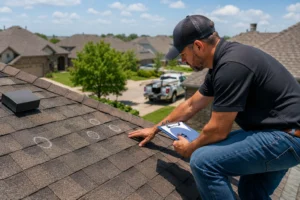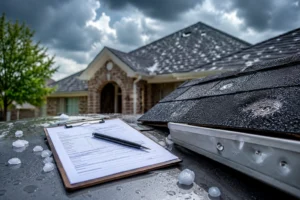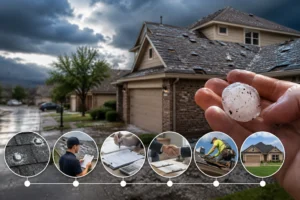

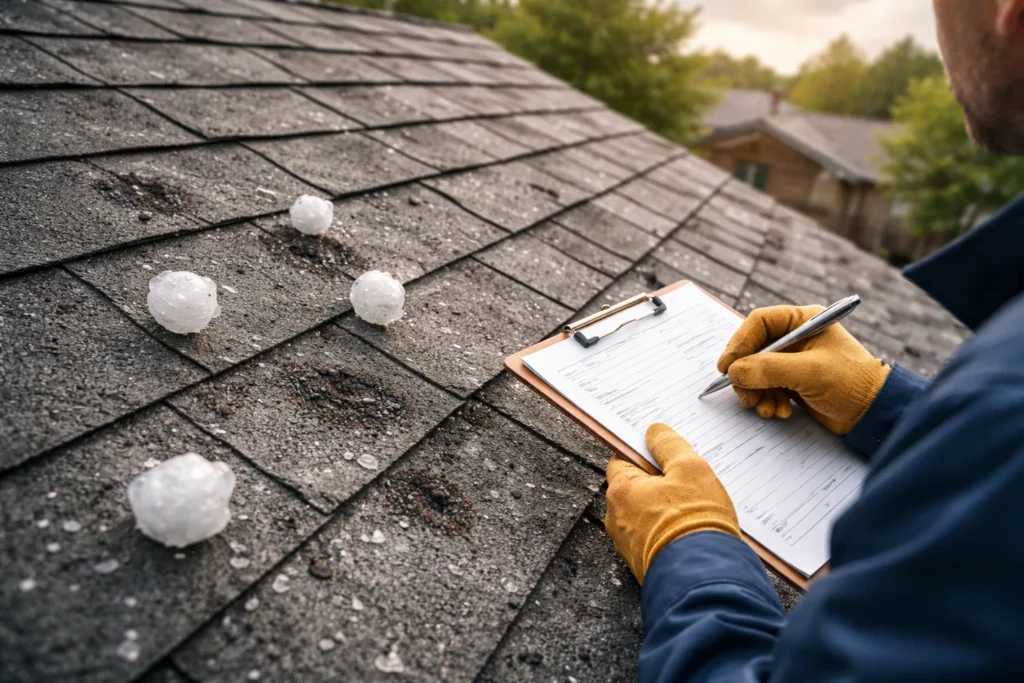
Hailstorms in Texas don’t just pass through they leave lasting damage, especially on your roof. If you’re dealing with a roof hail damage insurance claim Texas, understanding exactly what to look for and how to navigate the process can make the difference between a full payout and a frustrating underpaid claim.
I’ve seen it firsthand. Homeowners miss damage. Insurance carriers overlook key components. Claims get closed too quickly. And thousands of dollars are left on the table. This guide fixes that. We’re going deep. Not surface-level advice but real, actionable insight you can use immediately.
Understanding Hail Damage on Roofs
Hail damage isn’t always obvious. That’s the problem. At a glance, your roof might look fine. But underneath? Compromised materials. Reduced lifespan. Hidden leaks waiting to show up months later. A proper hail damage on roof insurance claim starts with knowing what you’re Actual cash value.
How to Identify Hail Damage by Roof Type
Not all roofs respond to hail the same way. This is where many claims go wrong because damage is interpreted incorrectly. Let’s break it down.
Asphalt Shingle Roofs
This is the most common roof type in Texas and the most misunderstood when it comes to hail damage.
What to look for:
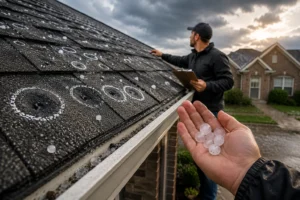
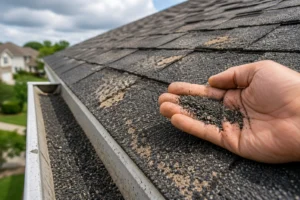
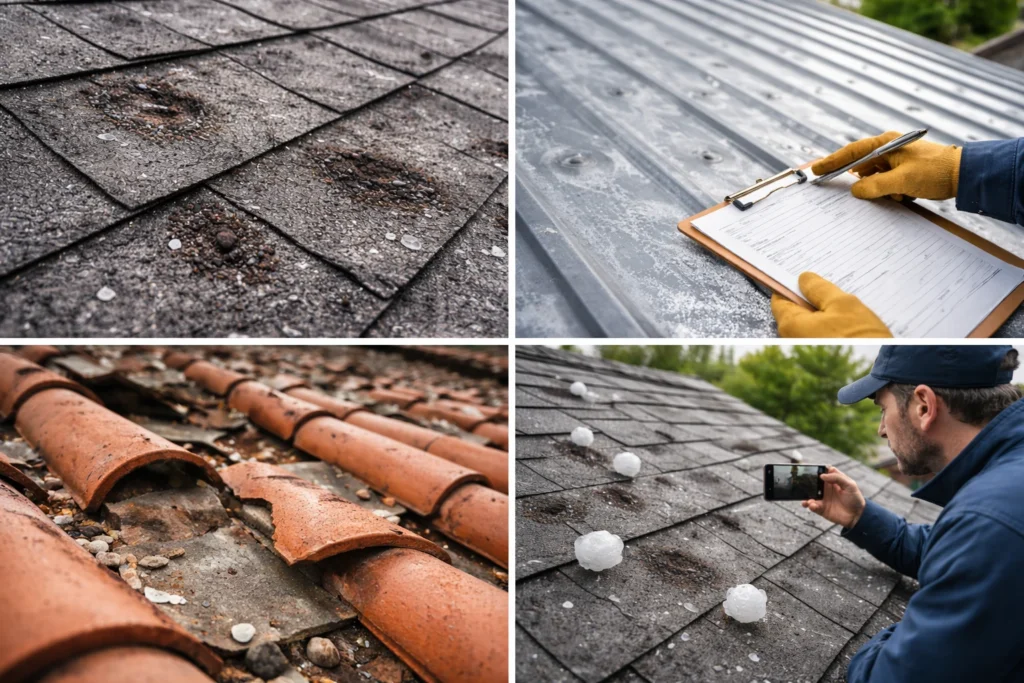
- Granule loss (looks like bald spots)
- Soft “bruising” when pressed
- Circular dark spots
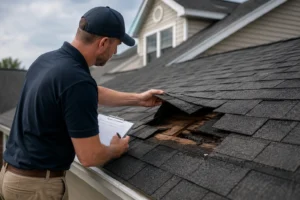
- Shingle cracking or splitting
Granules are not cosmetic. They protect your roof from UV exposure. Once they’re gone, deterioration accelerates fast. Here’s the issue: insurance adjusters sometimes call this “normal wear.” It’s not.
Metal Roofs
Metal roofs are tougher but not immune.
Common hail damage:
- Dents and dings
- Deformation of panels
- Damage to seams or fasteners
Now here’s where it gets tricky.
Insurance companies often label this as “cosmetic damage.” But dents can:
- Affect water drainage
- Compromise structural integrity
- Reduce lifespan
That can absolutely qualify under a hail roof damage insurance claim if documented correctly.
Tile and Slate Roofs
Tile roofs (clay or concrete) react differently.
Signs of damage:
- Cracked tiles
- Broken edges
- Dislodged pieces
- Impact fractures
Even small cracks can lead to leaks. And replacement is rarely just one tile it often requires matching materials and labor-intensive work.
What to Do Immediately After a Hailstorm
This is where speed matters. The hours and days after a storm can define your entire roof hail damage insurance claim Texas.
Step 1: Stay Safe
Don’t climb your roof immediately. Wet surfaces and hidden structural damage can be dangerous.
Step 2: Do a Ground-Level Inspection
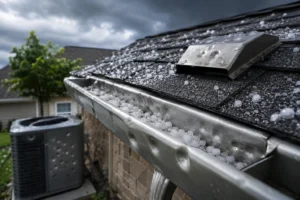
Walk around your home and look for:
- Dented gutters
- Damaged downspouts
- Broken window screens
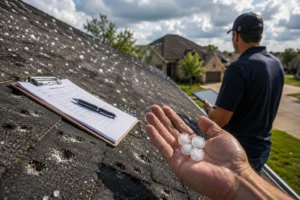
- Hail accumulation
These are indicators your roof likely took a hit.
Step 3: Take Immediate Photos
Document everything even if you’re unsure.
- Exterior damage
- Interior leaks or ceiling stains
- Debris impact areas
Time-stamped photos strengthen your claim.
Step 4: Prevent Further Damage
Use tarps if needed but don’t overdo repairs. Why? Because excessive repairs can:
- Remove evidence
- Complicate your claim
Step 5: Schedule a Professional Inspection
Don’t rely solely on your insurance company’s inspection. An independent inspection ensures:
- Nothing is missed
- Damage is properly categorized
- You have leverage during the claim process
How to Document Roof Damage for Your Claim
Documentation is everything. A weak file leads to a weak payout. A strong file? That’s where real claim value comes from.
Use a Multi-Layer Documentation Approach
Don’t rely on just photos.
Combine:
- Photos (close-up + wide shots)
- Video walkthroughs
- Written notes
- Weather reports from storm date
Capture Before and After Evidence
If you have older photos of your home, use them.
This helps prove:
- Damage was storm-related
- Not pre-existing
Include Supporting Reports
Strong claims often include:
- Roofing contractor assessments
- Inspection reports
- Material estimates
These add credibility and pressure to your claim.
What Insurance Companies Commonly Miss
This is where most homeowners lose money. Insurance adjusters are not always incentivized to find everything. And many initial estimates are incomplete.
1. Underlayment Damage
The layer beneath your shingles is critical.
Hail impact can:
- Compromise waterproofing
- Lead to hidden leaks
Yet it’s often ignored unless obvious damage is visible.
2. Soft Metals
This includes:
- Roof vents
- Flashing
- Gutters
These components show hail impact clearly and help prove storm severity. But they’re often undervalued or excluded.
3. Code Upgrades
Local building codes may require:
- Full replacements
- Updated materials
Insurance policies sometimes cover this but it’s frequently missed in initial estimates.
4. Partial vs Full Replacement
Insurance carriers may try to:
- Replace only damaged sections
But mismatched shingles or materials can:
- Lower property value
- Violate local codes
A full replacement is often justified but must be argued properly.
The Supplement Process Explained
This is where real money is recovered. A supplement is an additional request for funds after the initial claim estimate.
Why Supplements Happen
Initial estimates are often:
- Rushed
- Incomplete
- Based on limited inspection
As more damage is uncovered, additional costs emerge.
What Can Be Included in a Supplement
- Additional labor costs
- Hidden damage
- Code compliance upgrades
- Material price increases
How to File a Supplement
- Gather new evidence
- Submit revised estimates
- Provide supporting documentation
- Negotiate with the carrier
This process can significantly increase your hail damage on roof insurance claim payout.
Common Mistakes That Hurt Your Claim
Even strong cases can fail due to simple mistakes.
Waiting Too Long
Delays can:
- Weaken evidence
- Lead to claim denial
Act quickly.
Accepting the First Offer
Initial payouts are rarely final. Review everything carefully.
Poor Documentation
Missing photos or reports can:
- Reduce claim value
- Create disputes
Relying Only on Insurance Adjusters
Remember they work for the insurance company, not you.
Why a Public Adjuster Changes the Outcome
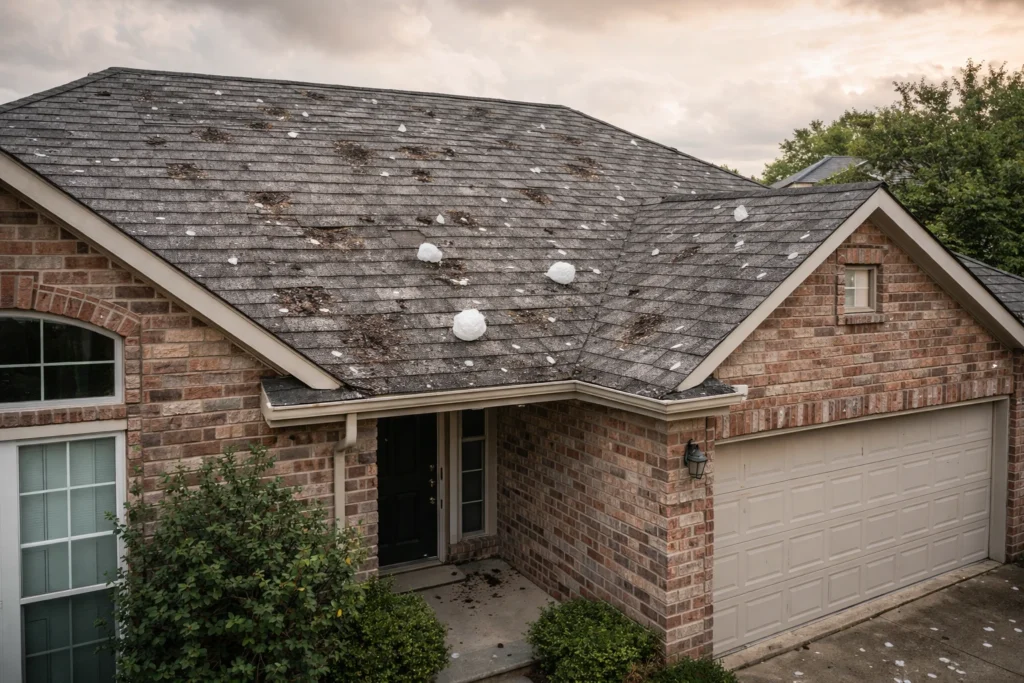
This is the turning point for many claims.
A public adjuster works on your behalf not the insurer’s.
What They Do
- Inspect damage independently
- Prepare detailed claim documentation
- Negotiate directly with the insurance company
- Handle supplements and disputes
Why It Matters
In many cases, homeowners:
- Miss damage
- Accept low estimates
- Don’t challenge decisions
A public adjuster changes that.
They bring:
- Expertise
- Negotiation leverage
- Claim strategy
Real Impact
A properly handled roof hail damage insurance claim Texas often results in:
- Higher payouts
- Faster resolution
- Less stress for homeowners
How the Full Claim Process Works (Step-by-Step)
Let’s simplify everything into one clear path.
Step 1: Storm Hits
Damage occurs.
Step 2: Initial Inspection
You or a professional assesses damage.
Step 3: File Claim
Notify your insurance carrier.
Step 4: Adjuster Inspection
Insurance company evaluates damage.
Step 5: Initial Estimate Issued
First payout or scope provided.
Step 6: Review & Challenge
Identify missing items.
Step 7: Supplement Submission
Request additional funds if needed.
Step 8: Final Settlement
Claim is resolved.
Final Thoughts
If you take one thing from this guide, let it be this: A hail roof damage insurance claim is not just about filing paperwork it’s about strategy.
The more detailed your approach:
- The stronger your claim
- The better your outcome
Don’t rush it. Don’t assume the first estimate is correct. And don’t leave money behind. Because in Texas, hailstorms are common but underpaid claims don’t have to be.
FAQs
Look for granule loss, dents, cracks, and impact marks, or schedule a professional inspection.
Most policies allow up to one year, but it’s best to file as soon as possible.
Yes, if damage is extensive or partial repairs aren’t feasible.
Cosmetic affects appearance, while functional impacts performance both can be claimable depending on the policy.
Yes, exterior roof damage alone can qualify.
You can reopen, appeal, or file a supplement with additional evidence.
It’s not required, but helpful for accurate documentation.
Anywhere from a few weeks to several months, depending on complexity.
Possibly, but storm-related claims are often treated differently.
In many cases, yes they can significantly improve claim outcomes.